Salvete, Readers and Romanophiles!
Welcome to this first post in our exciting new blog series The World of The Hearts of Heroes! In this seven-part series, we’re going to be taking a look at some of the history, people, and places that appear in, and provide the settings for, this seventh book in the award-winning, #1 bestselling, Eagles and Dragons historical fantasy series set in the Roman Empire.
If you’re a fan of the series, and don’t want any spoilers at all, then you may wish to hold off until you’ve read the book.
However, if you just want to get stuck into the history and research that went into this novel, read on! We hope you enjoy it!
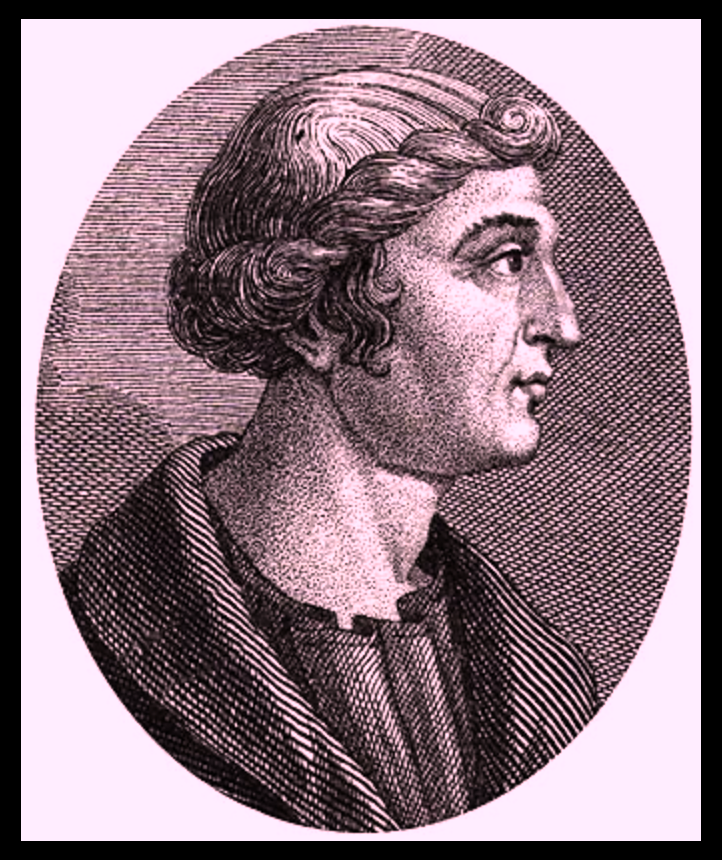
17th Century Illustration of Cassius Dio
It is my desire to write a history of all the memorable achievements of the Romans, as well in time of peace as in war, so that no one, whether Roman or non-Roman, shall look in vain for any of the essential facts.
Although I have read pretty nearly everything about them that has been written by anybody, I have not included it all in my history, but only what I have seen fit to select. I trust, moreover, that if I have used a fine style, so far as the subject matter permitted, no one will on this account question the truthfulness of the narrative, as has happened in the case of some writers; for I have endeavoured to be equally exact in both these respects, so far as possible. I will begin at the point where I have obtained the clearest accounts of what is reported to have taken place in this land which we inhabit.
This land in which the city of Rome has been built.
(Cassius Dio; Roman History, Book I)
The quote above is the opening of Cassius Dio’s Roman History, the main source, and only truly contemporary one of the period of the Severan dynasty of Ancient Rome, when the Eagles and Dragons series takes place.
But who was Cassius Dio? How did he gain such a personal perspective of the Severans? Is he a reliable source for the period? How does he fit into our epic Eagles and Dragons saga?
In this article, we will explore all of these questions to try and get at some idea of the man behind the history.
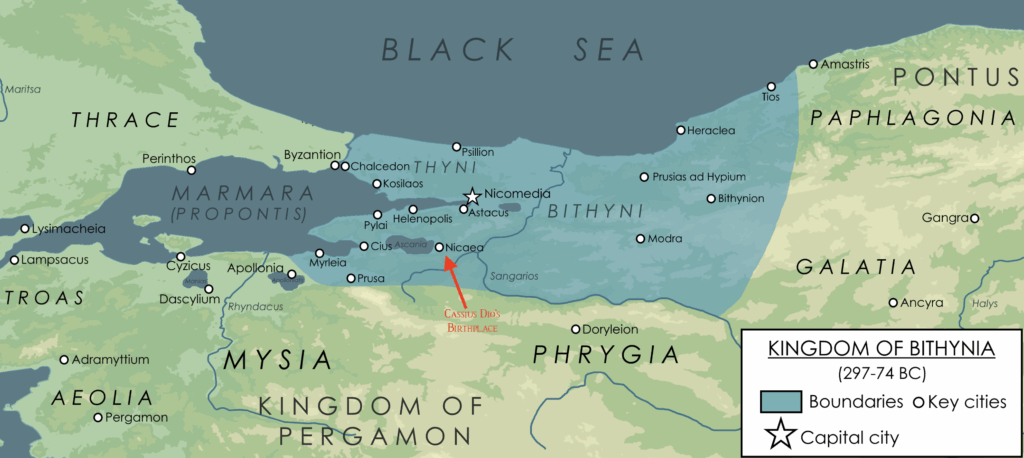
Cassius Dio Cocceianus was born at Nicaea in Bithynia c. A.D. 164 (maybe A.D. 155) to a Roman father and a Greek mother. He was the son of Cassius Apronianus, a Roman senator who was the Governor of Dalmatia and Cilicia under Emperor Marcus Aurelius. Dio was also the grandson of the famous Greek orator, writer, historian and philosopher, Dio Chrysostom (c. A.D. 40-115), after whom he was named.
Growing up the son of a prominent Roman senator, Dio was no stranger to Roman politics. He was with his father when he was Governor of Dalmatia.
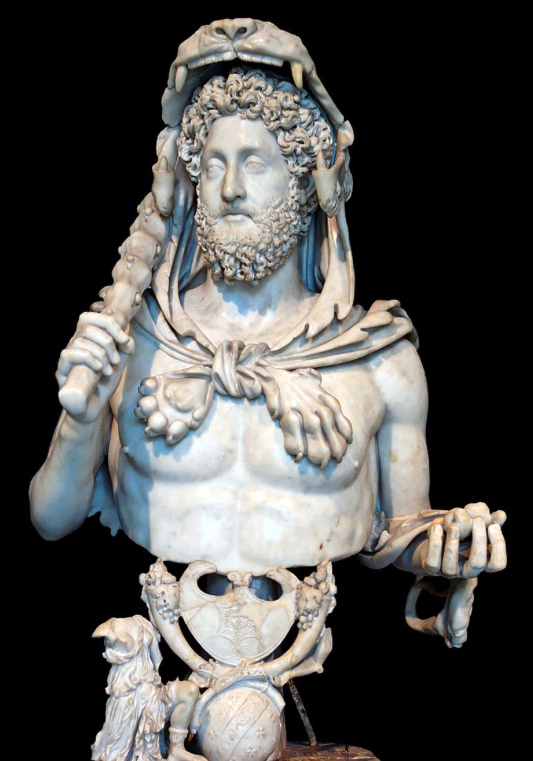
After his father died, Dio then went to Rome in about A.D. 180 where he became a senator under Emperor Commodus at about the age of twenty-five. This was the start of a successful political career where he subsequently became a praetor under Pertinax in A.D. 193.
But Cassius Dio really came into his own during the reign of Emperor Septimius Severus (A.D. 193-211), a ruler whom Dio clearly admired. Under Severus, Dio was made Suffect Consul in A.D. 205, and then later became Consul for a second time under Emperor Alexander Severus, the last of the Severan emperors, in A.D. 229.
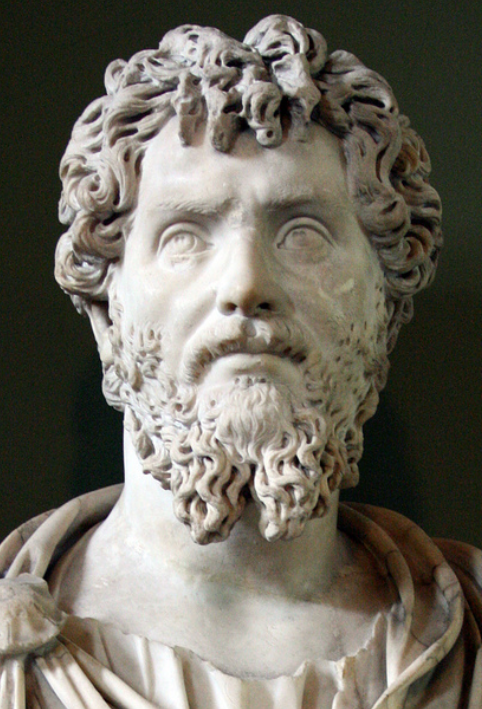
Emperor Septimius Severus
Cassius Dio’s Roman History is vital to our understanding of the events of the late 2nd and early 3rd centuries in Ancient Rome. Not only is his work the main contemporary source for the period, but as one who was close to the imperial court and a first-hand observer of the events that unfolded, from the reign of Commodus and throughout the Severan period, he offers a perspective that is entirely unique.
It is Dio’s first-hand account of the period, as well as his personal observations that, though sometimes in doubt, are unique and have proved invaluable in the creation of the Eagles and Dragons series.
Truthfully, Dio’s history has been crucial to my research throughout the entire series to date. Not only that, he is also a character in some books in the series, truly coming to the fore in The Hearts of Heroes.
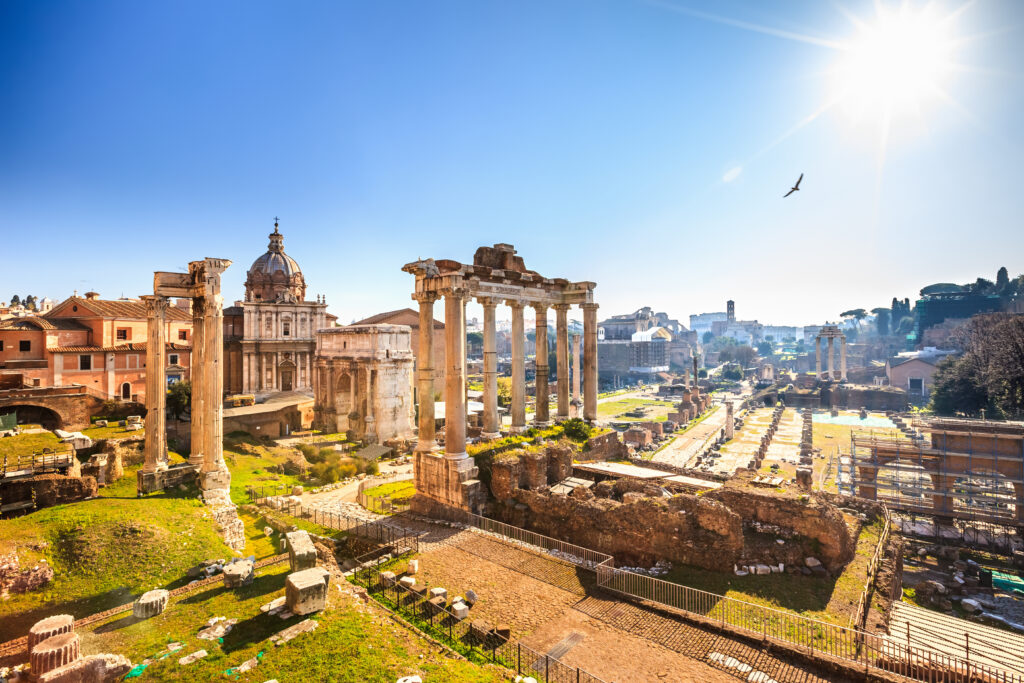
Cassius Dio’s Roman History is not the only work which he produced. He also wrote a biography of Arrian, who was a fellow Bithynian, as well as an account of the reign of Emperor Hadrian. Another fascinating work which he wrote was a book about the dreams of Septimius Severus whom we know placed a great deal of stock in astrology and dreams. The Roman History, however, is Dio’s greatest work without which we would actually know very little about the Severans. Herodian, whom I have also used in research for the period, is our only other source, but as he was not as close to the people about whom he was writing, Dio is preferred.
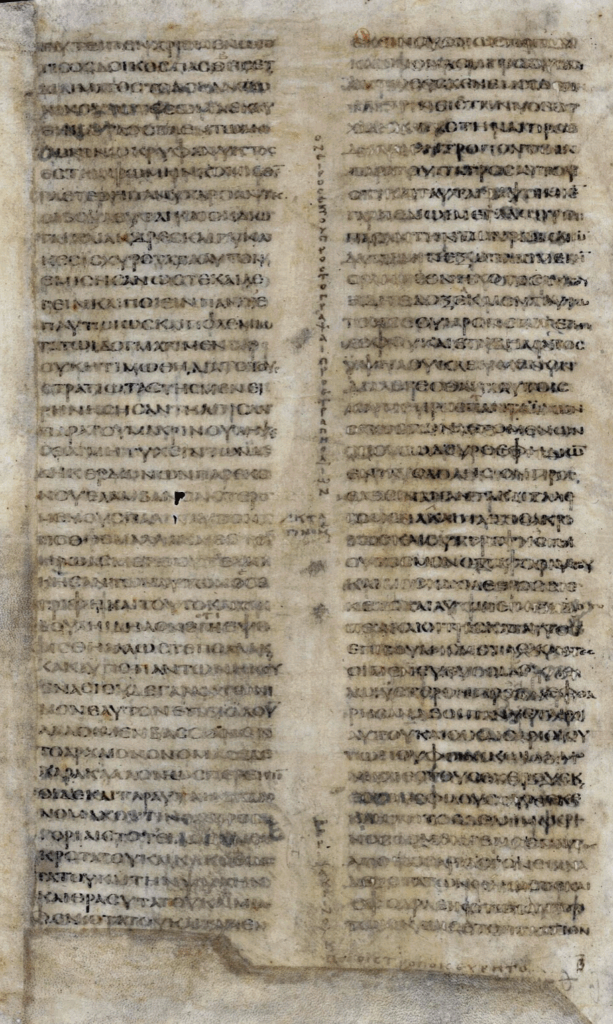
Excerpt of Cassius Dio’s Roman History from a 5th-century manuscript (Wikimedia Commons)
But what about Cassius Dio’s Roman History as a source? What did it cover?
The Roman History is made up of about eighty books which took Dio about twenty-two years to write. Most of the text survives, but other parts are in fragments. Thankfully, more complete text has come down to us by way of an eleventh century epitome (an abridgement or summary) by Xiphilinus, and the twelfth century Epitome of Historical Works by Zonoras, a private secretary of Emperor Alexis I.
In his work, Dio attempts to cover the history of Rome from the landing of Aeneas to his second consulship in A.D. 229, when The Hearts of Heroes takes place. Cassius Dio wrote in Greek, in the Atticist tradition of ancient historians such as Thucydides.
The Roman History, which covers roughly a thousand years, can be divided into three sections: 1) the Republic, 2) the establishment of the Principate (monarchy) until the death of Marcus Aurelius, and 3) the period of Dio’s own life from the ascent of Commodus.
For the periods before his own, it is believed that Dio may have relied heavily upon the works of Livy, but also other historians of Rome such as Pliny the Elder, Tacitus, Caesar’s own commentaries and others. He may also have done more research by delving into the records of Rome, as is evidenced by his naming of minor magistrates.
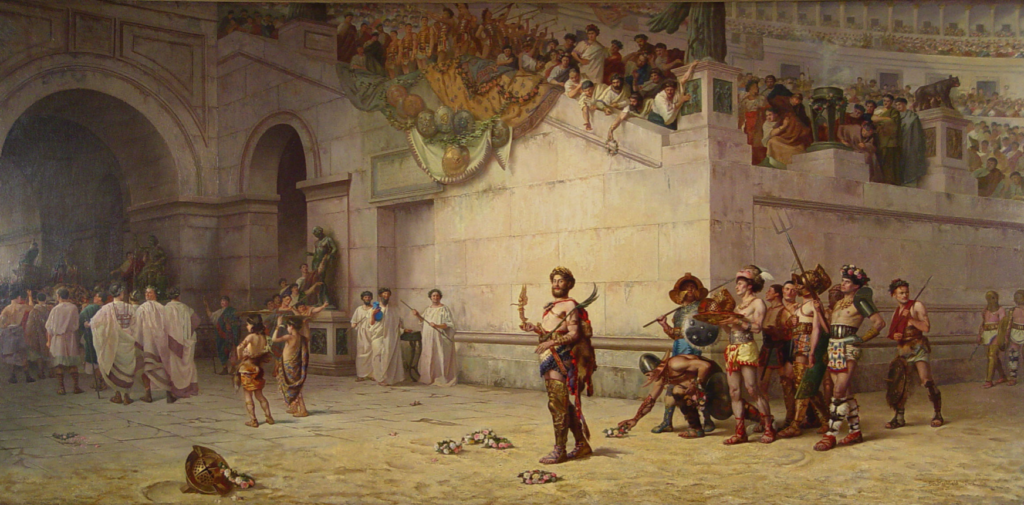
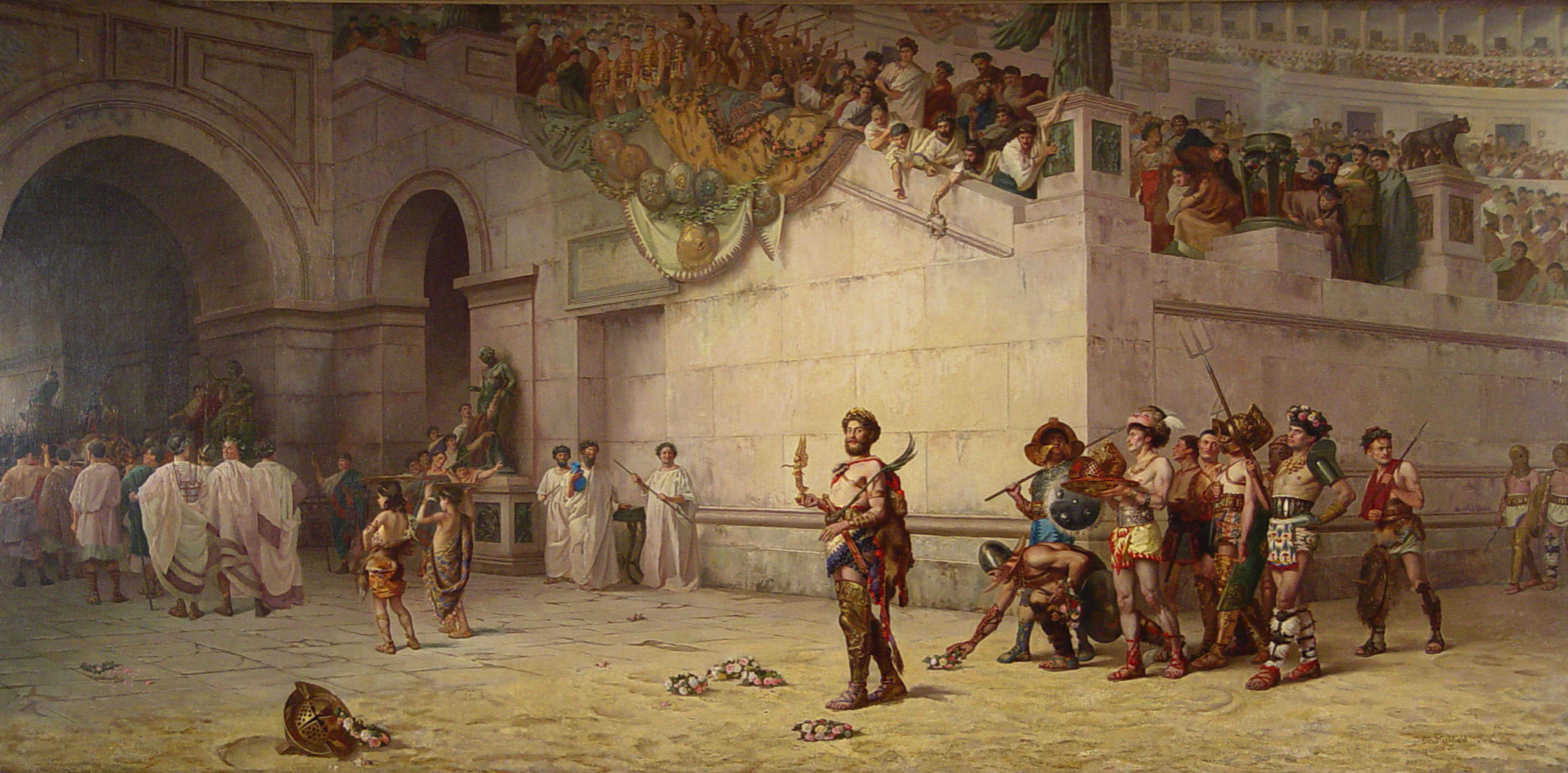
The Emperor Commodus Leaving the Arena at the Head of the Gladiators (by Edwin Howland Blashfield)
For the period covering his own life, there is a sense from Dio of a falling from greatness during Commodus’ reign, leading to hope at the arrival of Septimius Severus. After Severus, there is certainly a returned sense of decline, and this period, from the reign of Caracalla on, could be considered the true beginning of the end of the Roman Empire.
The details of Dio’s own life can be gleaned from casual statements in his history and, when it comes to the period of Rome’s history in which he lived, his observations are based personal experience and not hearsay. He knew most of the people about whom he was writing, and that is what makes his work such a valuable source from the reign of Commodus, when he became a senator, right through to the last Severan, Alexander Severus, under whom he held his second consulship.
This man [Commodus] was not naturally wicked, but, on the contrary, as guileless as any man that ever lived. His great simplicity, however, together with his cowardice, made him the slave of his companions, and it was through them that he at first, out of ignorance, missed the better life and then was led on into lustful and cruel habits, which soon became second nature. And this, I think, Marcus clearly perceived beforehand. Commodus was nineteen years old when his father died, leaving him many guardians, among whom were numbered the best men of the senate. But their suggestions and counsels Commodus rejected, and after making a truce with the barbarians he rushed to Rome; for he hated all exertion and craved the comfortable life of the city.
(Cassius Dio; Roman History, Book LXXIII)
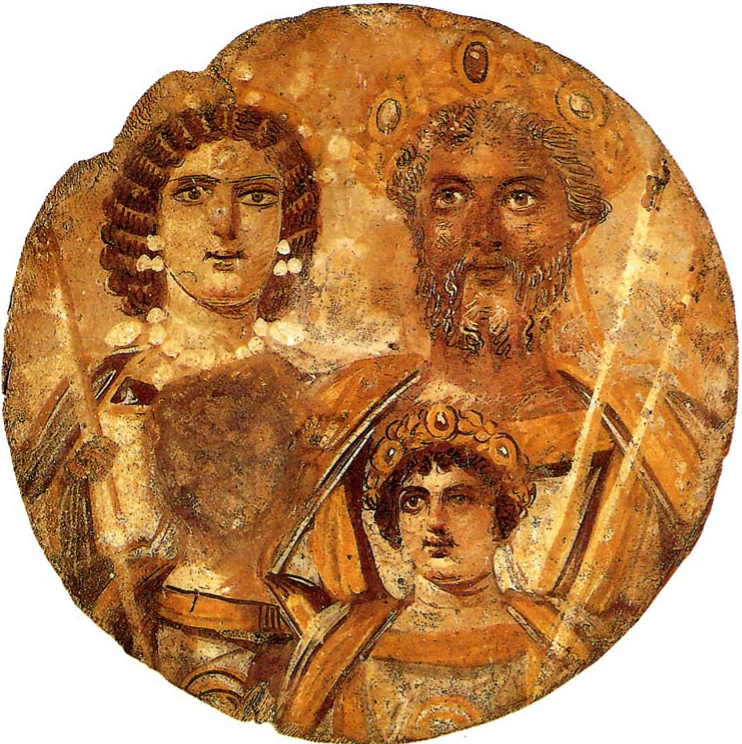
Portrait of the Severan family with Geta’s face erased.
Cassius Dio began writing his history during the reign of Septimius Severus. The fact that he wrote a book about the dreams and omens of Severus makes scholars think he had a great deal of personal interaction with the Emperor. After receiving praise from the Emperor and the public, he undertook the larger Roman History.
With Septimius Severus’ accession to the imperial throne, Cassius Dio’s tone in the history appears hopeful, almost as if he was seeing a new, golden era for Rome. It was clear that Dio admired Severus…
The following is the manner of life that Severus followed in time of peace. He was sure to be doing something before dawn, and afterwards he would take a walk, telling and hearing of the interests of the empire. Then he would hold court, unless there were some great festival. Moreover, he used to do this most excellently; for he allowed the litigants plenty of time and he gave us, his advisers, full liberty to speak. He used to hear cases until noon; then he would ride, so far as his strength permitted, and afterward take some kind of gymnastic exercise and a bath. He then ate a plentiful luncheon, either by himself or with his sons. Next, he generally took a nap. Then he rose, attended to his remaining duties, and afterwards, when walking about, engaged in discussion in both Greek and Latin. Then, toward evening, he would bathe again and dine with his associates; for he very rarely invited any guest to dinner, and only on days when it was quite unavoidable did he arrange expensive banquets. He lived sixty-five years, nine months, and twenty-five days, for he was born on the eleventh of April. Of this period he had ruled for seventeen years, eight months, and three days. In fine, he showed himself so active that even when expiring he gasped: “Come, give it here, if we have anything to do.”
(Cassius Dio; Roman History, Book LXXVII)
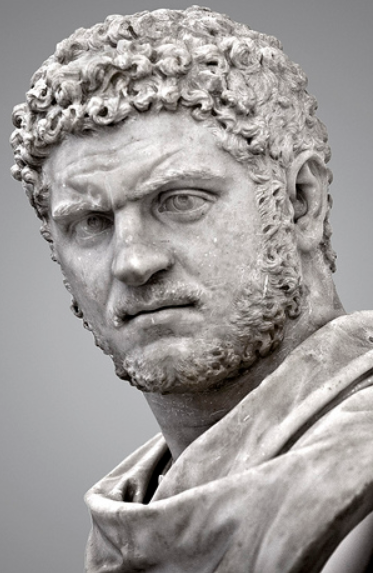
Emperor Caracalla
When one considers the rulers whom Cassius Dio lived and worked under – Commodus, Severus, Caracalla, Macrinus, Elagabalus, and Alexander Severus – you would not be wrong to assume he was quite politically astute, and that he was a survivor. Despite the golden and hopeful period of Severus’ reign, it was a time of terror for many. Here, Dio describes the fear they felt at Commodus’ reign, when the Emperor made them watch him as a gladiator:
This fear was shared by all, by us senators as well as by the rest. And here is another thing that he did to us senators which gave us every reason to look for our death. Having killed an ostrich and cut off his head, he came up to where we were sitting, holding the head in his left hand and in his right hand raising aloft his bloody sword; and though he spoke not a word, yet he wagged his head with a grin, indicating that he would treat us in the same way. And many would indeed have perished by the sword on the spot, for laughing at him (for it was laughter rather than indignation that overcame us), if I had not chewed some laurel leaves, which I got from my garland, myself, and persuaded the others who were sitting near me to do the same, so that in the steady movement of our armies we might conceal the fact that we were laughing.
(Cassius Dio; Roman History, Book LXXIII)
Later, after the murder of Caracalla by Macrinus and the Praetorians, Dio carried on surviving and was made curator ad corrigendum statum civitatum of Pergamun and Smyrna by Macrinus, a role which he carried on in under the insane Elagabalus. When Alexander Severus came to the throne, Dio was made Proconsul of Africa and then Governor of Dalmatia and Upper Pannonia.
Unfortunately, the final book of Dio’s Roman History is fragmented. Little is said of the reign of the young Alexander Severus (he was just fourteen when his grandmother, Julia Maesa, and his mother, Julia Mamaea, put him on the throne). What we know comes from the sixth book of Herodian’s History of the Roman Empire from the death of Marcus Aurelius in A.D. 180 to A.D. 238. At the end of his Roman History, Dio appears rushed, even stating that:
Thus far I have described events with as great accuracy as I could in every case, but for subsequent events I have not found it possible to give an accurate account, for the reason that I did not spend much time in Rome. For, after going from Asia into Bithynia, I fell sick, and from there I hastened to my province of Africa; then, on returning to Italy I was almost immediately sent as governor first to Dalmatia and then to Upper Pannonia, and though after that I returned to Rome and to Campania, I at once set out for home. For these reasons, then, I have not been able to compile the same kind of account of subsequent events as of the earlier ones.
(Cassius Dio; Roman History, Book LXXX)
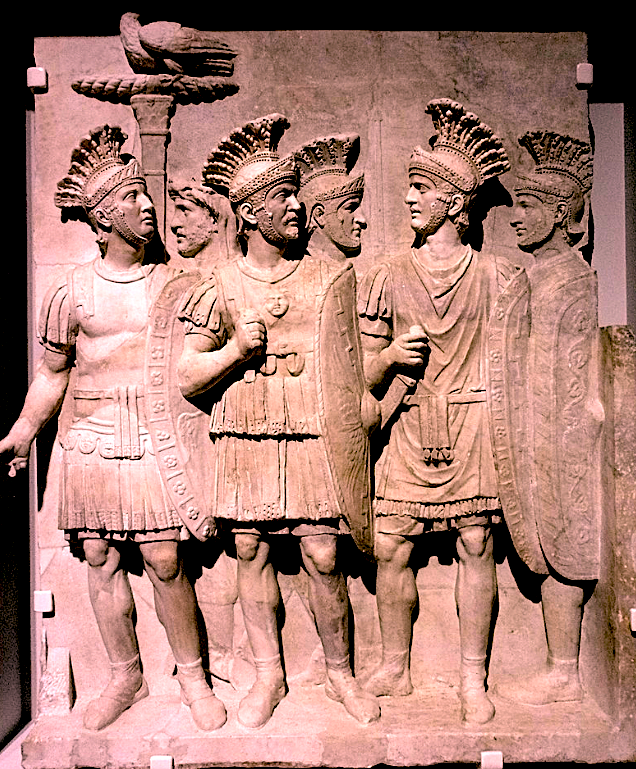
The Praetorian Guard
Though Dio had survived a few emperors whom many would consider to be unstable, or even insane, it appears that the greatest threat he faced was from the dreaded Praetorian Guard. Apparently, after he took disciplinary measures in Pannonia in his role as governor, he became unpopular with the Praetorians, such that he feared for his life.
Emperor Alexander Severus, who seems to have liked Dio, attempted to keep Dio safe by allowing him to live and work away from Rome in Campania.
…I ruled the soldiers in Pannonia with a strong hand; and they demanded my surrender, through fear that someone might compel them to submit to a régime similar to that of the Pannonian troops.
Alexander, however, paid no heed to them, but, on the contrary, honoured me in various ways, especially by appointing me to be consul for the second time, as his colleague, and taking upon himself personally the responsibility of meeting the expenditures of my office. But as the malcontents evinced displeasure at this, he became afraid that they might kill me if they saw me in the insignia of my office, and so he bade me spend the period of my consulship in Italy, somewhere outside of Rome. And thus later I came both to Rome and to Campania to visit him, and spent a few days in his company, during which the soldiers saw me without offering to do me any harm;
(Cassius Dio; Roman History, Book LXXX)
Thankfully, Herodian fills in the gaps of Alexander Severus’ reign for us while Dio was distracted with duty, illness, and fear for his life at the hands of the Praetorians.
One can imagine that Dio would have continued to serve Alexander Severus long and faithfully but, as it was, for his safety and because of his illness and aching body, Cassius Dio was permitted to retire to Nicaea, in his native Bithynia, where he is supposed to have died shortly thereafter over the age of seventy.
…having asked to be excused because of the ailment of my feet, I set out for home, with the intention of spending all the rest of my life in my native land, as, indeed, the Heavenly Power revealed to me most clearly when I was already in Bithynia. For once in a dream I thought I was commanded by it to write at the close of my work these verses:
“Hector anon did Zeus lead forth out of range of the missiles,
Out of the dust and the slaying of men and the blood and the uproar.”
(Cassius Dio; Roman History, Book LXXX)
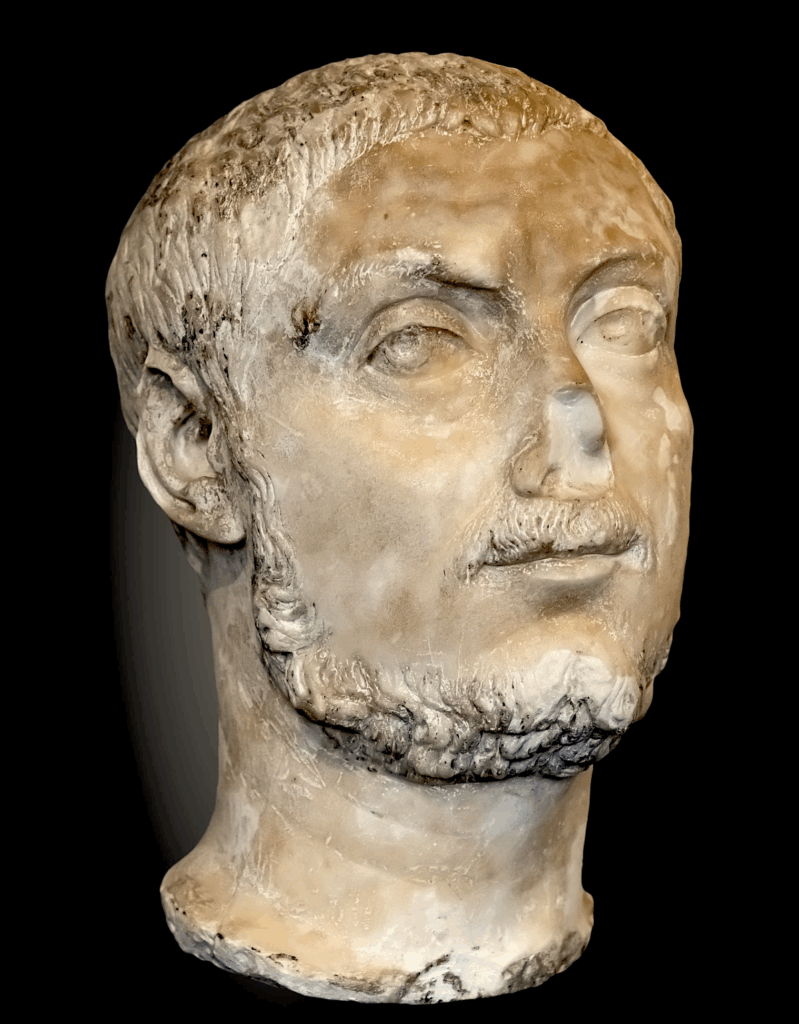
Bust of Alexander Severus, the last Severan Emperor (Wikimedia Commons)
And so ended the Roman History, and the life of Cassius Dio.
Despite the importance of Dio’s Roman History for our knowledge of the Severan period, he has not been without criticism by modern historians. Some point out his use of adornment and personal anecdotes as a flaw when relaying significant events. Though not as salacious as Herodian, he does opt for more dramatic presentation at times. Dio has also been criticized for clouding things with his personal impressions. Sometimes names and exact dates are left out, and some speeches are believed to express Dio’s own views rather than actual events. An example of this is when Agrippa and Maecenas make speeches to Octavian when discussing the establishment of a monarchy in Book LII.
However, apart from his being the main source for the Severan period, Cassius Dio has much to commend him and his history. He pays a great deal of attention to constitutional and administrative matters, showing that he did his due diligence by consulting public records. He used a variety of sources in an attempt to arrive at the truth.
Cassius Dio, though half Greek, writes from a purely Roman viewpoint. And, interestingly, though he was a senator, he appeared to be a true believer in monarchy.
Personally, I have greatly enjoyed reading Dio’s work over the years, as well as including him in the Eagles and Dragons saga. This story would have been very different without his insights, and the personal anecdotes which some historians criticize him for, I actually find to be a boon. The personal, though not always unbiased, touch which Dio brings to the Roman History gives us a personal peek into the private lives of the Severans in a way that other histories do not.
For me, Cassius Dio has been a knowledgeable, accessible, and entertaining travel companion through the Severan age.
Thank you for reading.
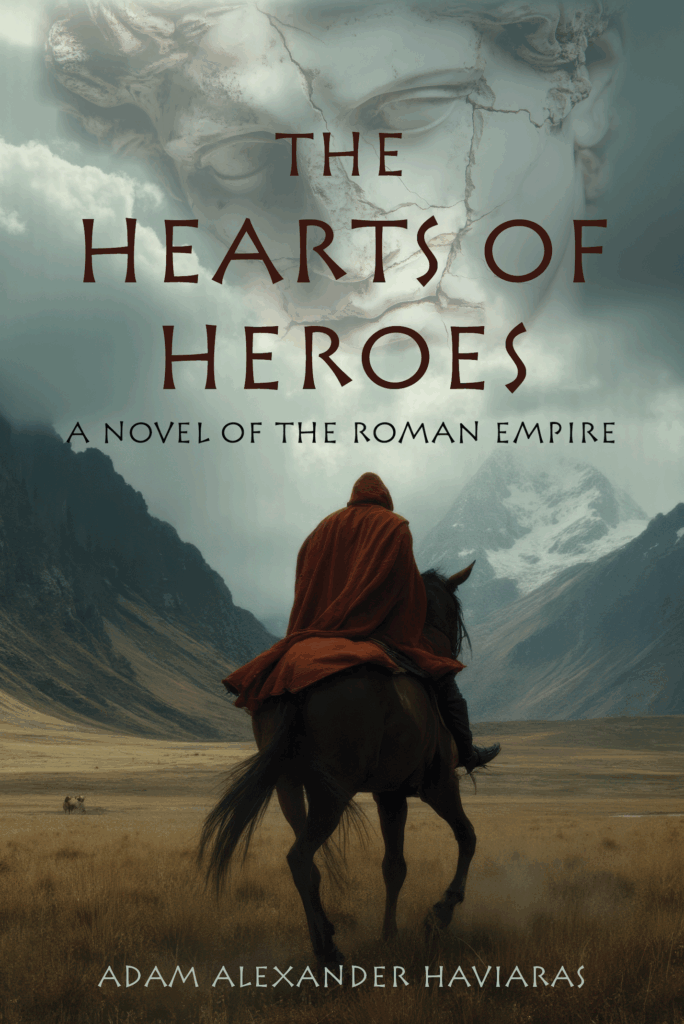
We hope you’ve enjoyed this first post in The World of The Hearts of Heroes blog series. Stayed tuned for Part II in which we will look at the Roman-British civitas of Viroconium Cornoviorum.
If you are interested in reading the full, surviving text of Cassius Dio’s Roman History, you can do so for free by CLICKING HERE.
To read the text of Herodian, the other source for the period, click HERE.
The Hearts of Heroes: A Novel of the Roman Empire is available ebook, paperback and deluxe hardcover editions from all major online retailers, independent bookstores, brick and mortar chains, and your local public library.
CLICK HERE to buy a copy and get ISBN#s for the edition of your choice.
If you are new to the Eagles and Dragons historical fantasy series, you can start your epic adventure with the award-winning, #1 bestselling prequel, A Dragon among the Eagles.