Salvete, readers and history-lovers!
Welcome to The World of Isle of the Blessed!
In this seven-part blog series, we’re going to be taking a look at the research that went into my latest historical fantasy release, Isle of the Blessed, Book IV in the #1 bestselling Eagles and Dragons series.
Over the next few weeks, I’ll take you on a journey through the world of early third-century Roman Britain in which we will look at the history, archaeology, and historical events that took place during this pivotal time in the Roman Empire in which the book is set.
In this first post, we’re taking a closer look at a site that is well-known to Arthurian enthusiasts: the hillfort of South Cadbury Castle.
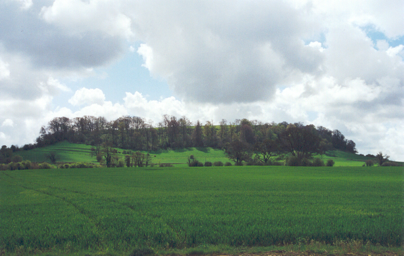
South Cadbury from the North
At the very south ende of the chirche of South-Cadbyri standith Camallate, sumtyme a famose toun or castelle… The people can tell nothing ther but that they have hard say that Arture much resorted to Camallate. (John Leland, Royal Antiquary, 1532)
The hillfort of South Cadbury Castle in Somerset, England, is one of the major locations in Isle of the Blessed. However, most people are familiar with it as a site with strong Arthurian associations. As such, its importance and role is hotly debated.
Though Isle of the Blessed is not a story of King Arthur and the Knights of the Round Table, it is difficult not to speak of this important Iron Age site without discussing the Arthurian connection.
Was South Cadbury Castle the power centre of the historical Romano-British warlord, or dux bellorum, we know as ‘King Arthur’? Was this the actual site of what has come to be known in the popular imagination as ‘Camelot’?
I’ve always been a strong proponent of the theory that there was in fact, an historical ‘Arthur’ who formed the factual basis for all the legends we love and cherish. So, when I look at sites such as South Cadbury, I do so with that in mind. However, that doesn’t mean that I accept a site’s association with Arthur on faith alone.
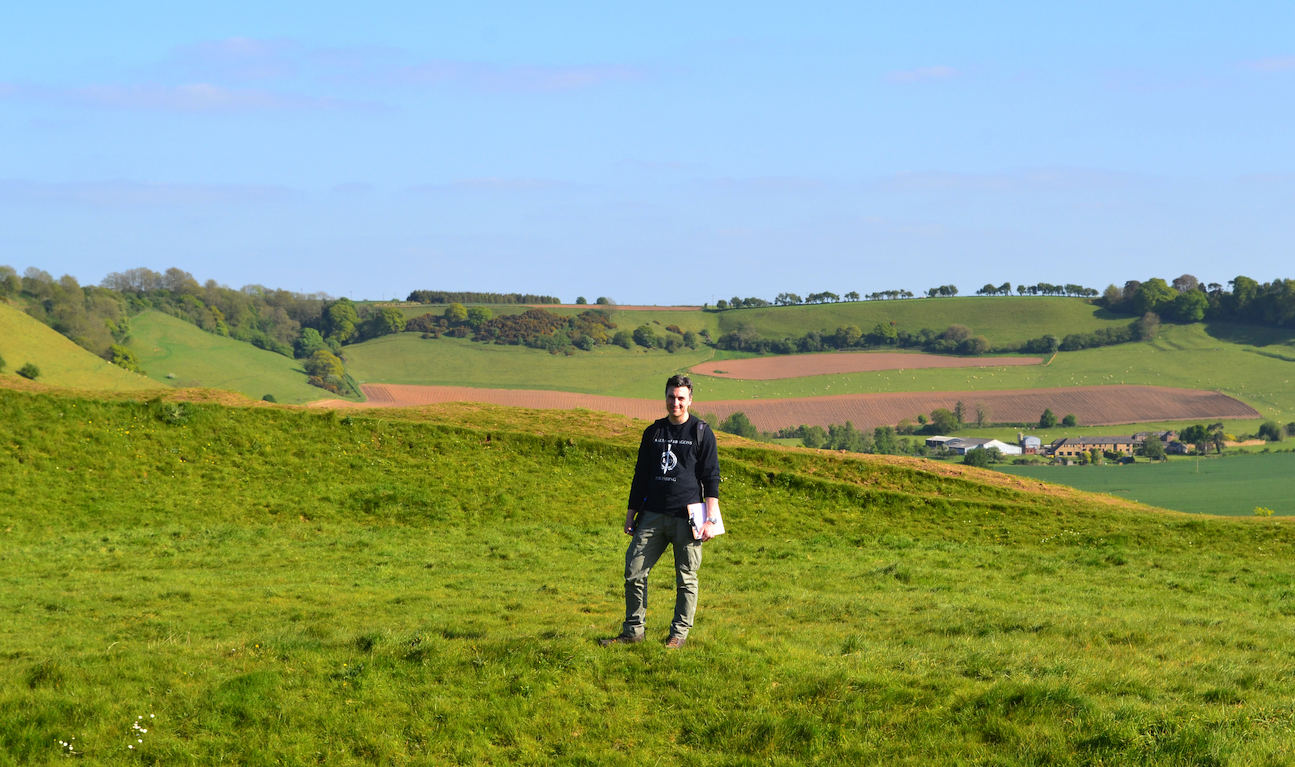
Adam Alexander Haviaras filming on top of South Cadbury Castle
I know this site pretty well – as I studied it and wrote about it as part of my Master’s dissertation entitled “Camelot: A look at the historical, archaeological, and toponymic evidence for King Arthur’s Capital”. As part of this, I looked at three of the main candidates for Camelot that had been put forward at the time – Wroxeter (Roman Viroconium), Roxburgh Castle (in the Scottish Borders), and South Cadbury. There is a copy of the dissertation hidden somewhere in the stacks at the St. Andrews University library in Scotland.
South Cadbury Castle is also where I cut my teeth as an archaeologist as part of the South Cadbury Environs Project team for a couple of seasons under the leadership of Richard Tabor. This was a wonderful experience that helped me to get up close and personal with the site I had studied for so long – I dug test pits, got into bigger trenches in which curious cows came to watch what I was doing, carried out geophysical surveys with a magnetometer, and found some curious objects such as a bronze dolphin that formed the handle of a Roman drinking cup.
Most of all, I was given the chance to spend more time on this amazing, and yes, magical, landscape.
And a couple years ago, when doing research for Isle of the Blessed, I returned to South Cadbury where I also filmed a mini-documentary on the site (coming out later this year!).
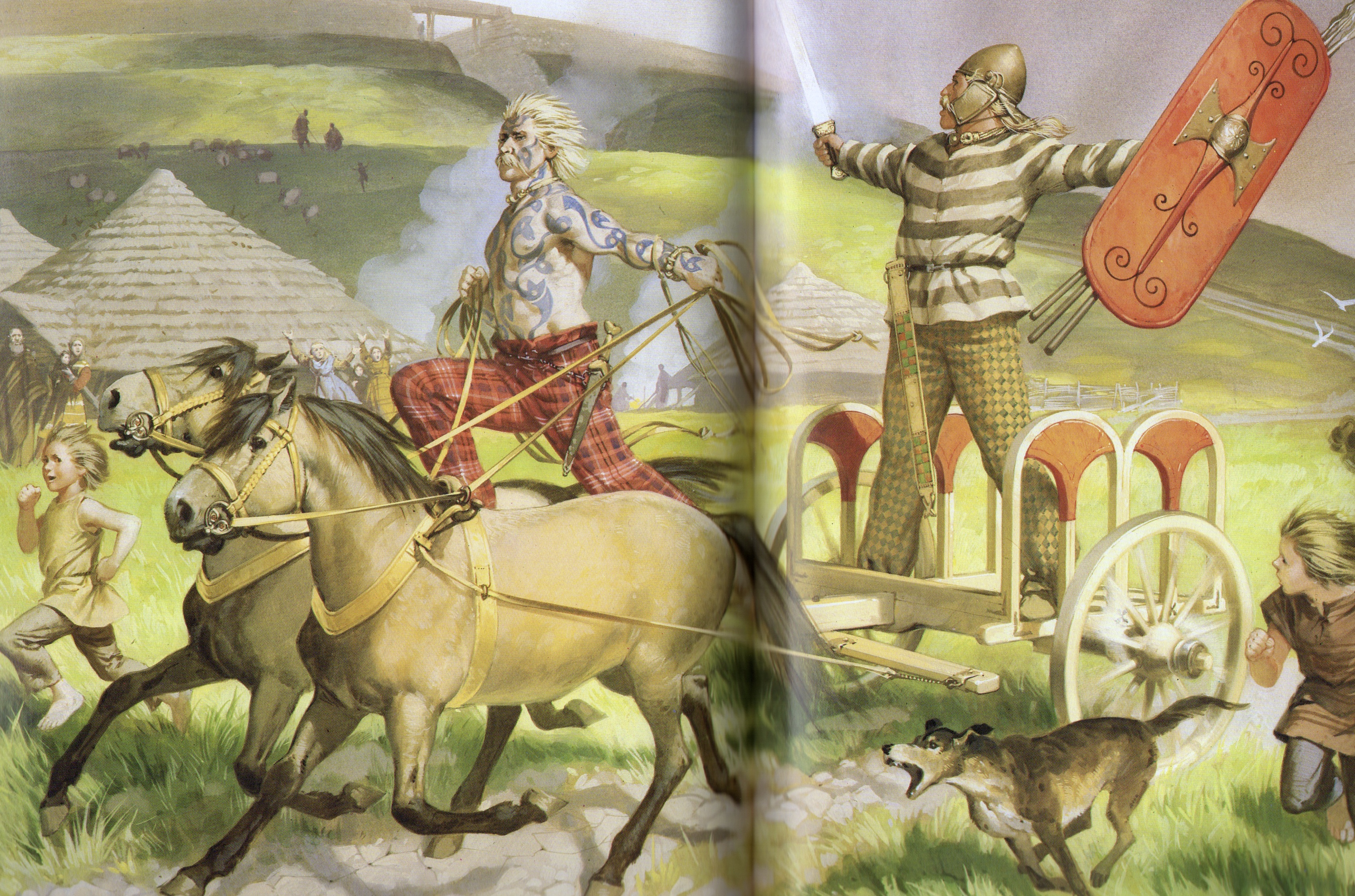
British Belgic Warriors of the Iron Age – Illustrated by Angus McBride (source – Rome’s Enemies 2 – Gallic and British Celts)
Before I give my thoughts on wandering the slopes of South Cadbury Castle, we should have a look at what it actually is.
South Cadbury Castle is not the late medieval castle with banners flying from tall towers that make up our usual image of Camelot. It is a 500 foot high Iron Age hillfort located in the pre-Roman era lands of the Durotriges. Occupation of the site began in the Neolithic period and it went through various stages of occupation from the 5th century B.C. onward.
By the time of the Roman invasion of Britain, it had four massive defensive ramparts with an inner area of about 18 acres. Access to the top was by two entrances, one to the north-east and the other, larger one, to the south-west. The Iron Age occupation of the site came to a violent end around A.D. 43 when Vespasian stormed the southern hillforts of Britannia.
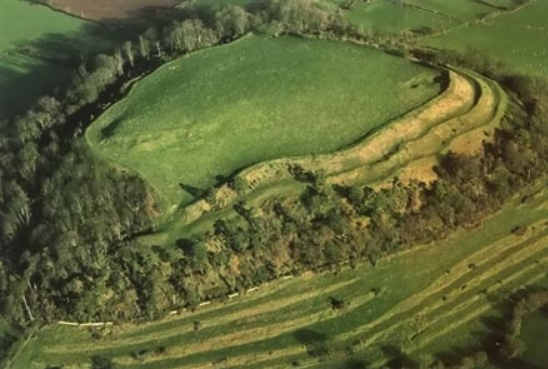
Aerial view of South Cadbury Castle
The Romans made little use of the site, though there have been some theories that it was used as a Roman supply station. This theory is explored in Isle of the Blessed and the Eagles and Dragons series. In the 3rd and 4th centuries, there was renewed activity with visits being made to a Romano-Celtic temple that was built on the site.
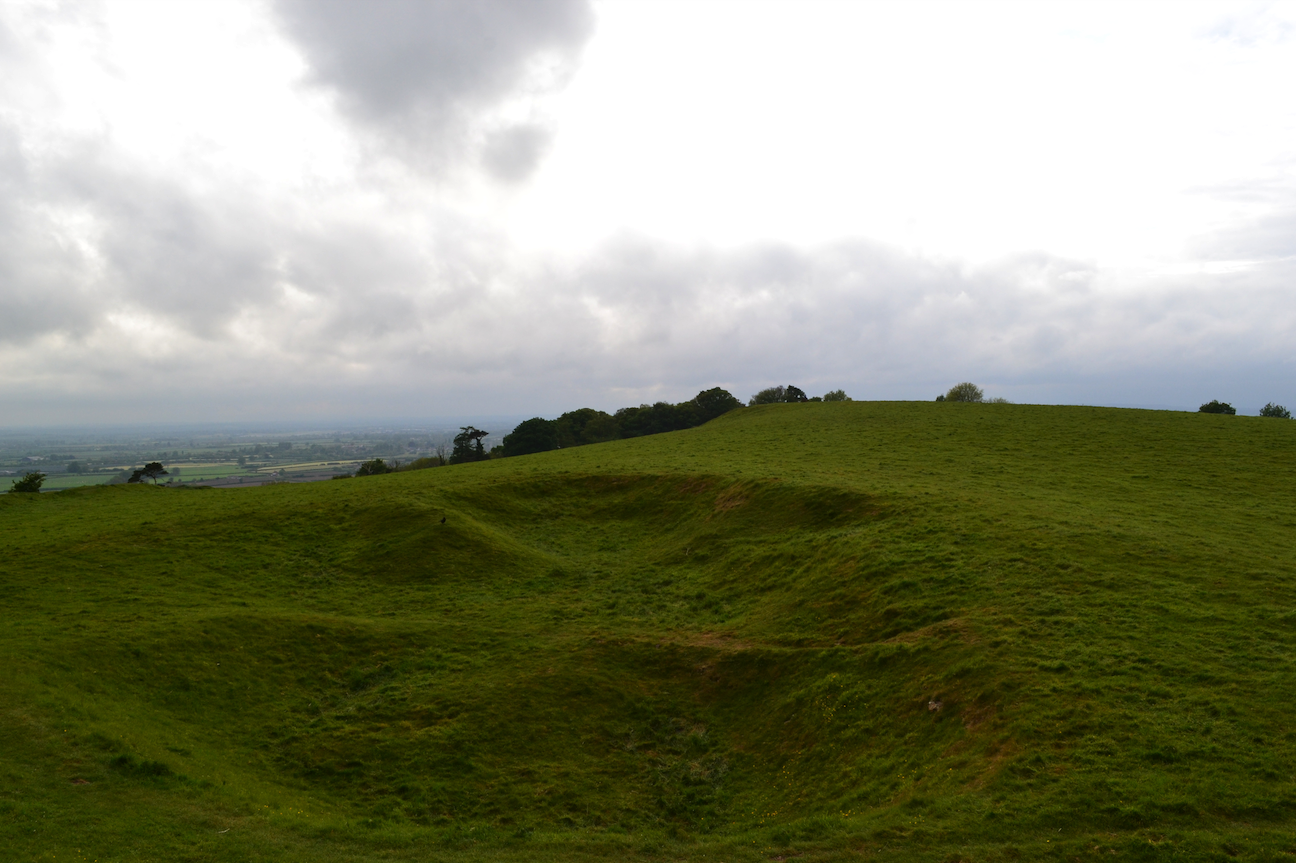
Location of the Romano-British temple in the south-east sector of the hillfort of South Cadbury Castle
During excavations, a bronze letter ‘A’ was found that some believe belonged to this temple, which was perhaps dedicated to Mars, or some other deity.
However, when it comes to South Cadbury Castle, the periods that have always drawn me to it are the 5th and 6th centuries A.D. This period of the site is known as the ‘Arthurian’ period, and it is at this time, after Rome’s legions had left the island, that the archaeology shows a massive refortification of the hillfort.
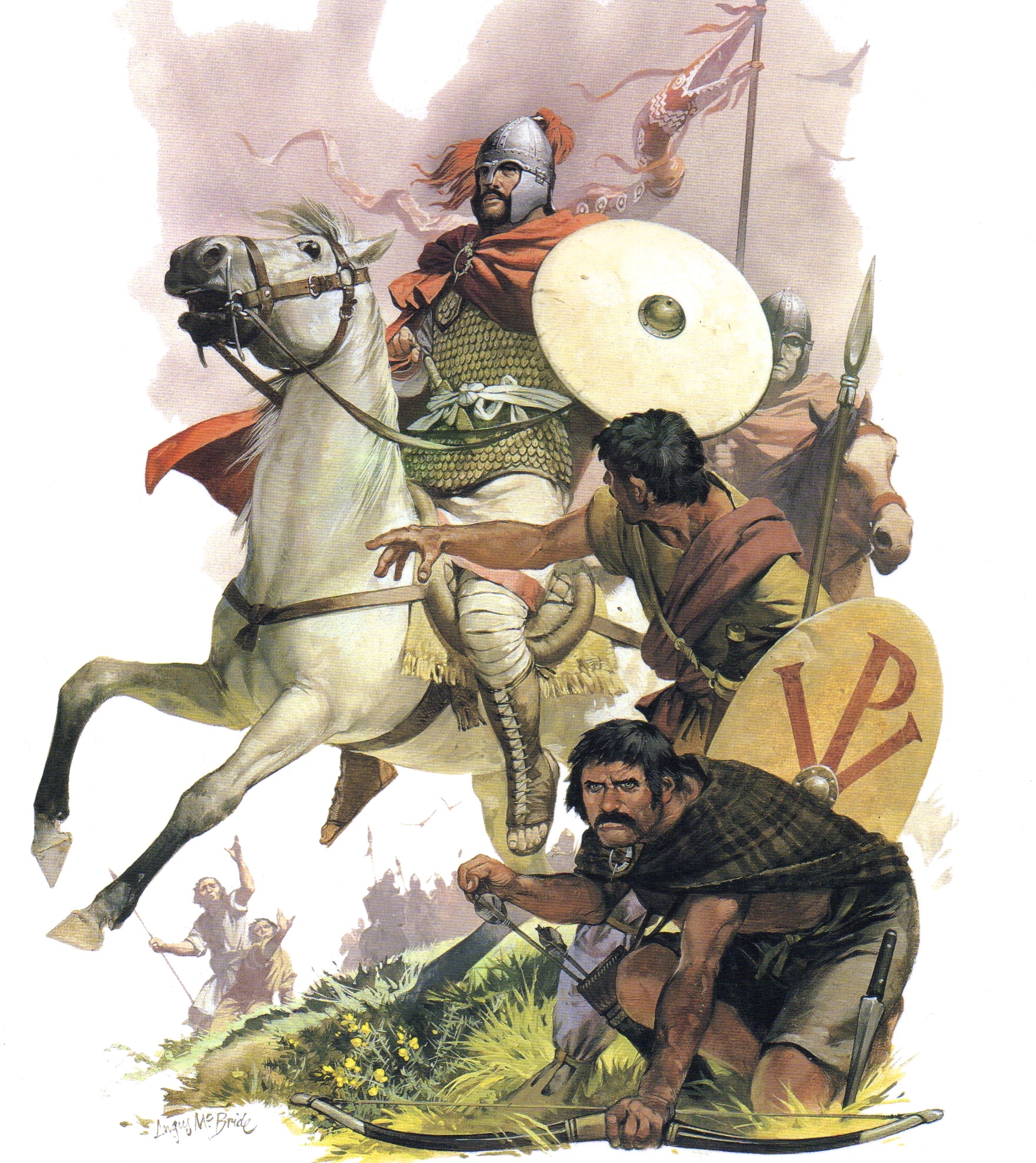
6th Century British Warriors – Illustrated by Agnus McBride (source – Arthur and the Anglo-Saxon Wars)
Though it is much debated, South Cadbury’s association with the Arthurian period stems not just from hearsay and folklore. It has the archaeological evidence to back it up.
There have been a few big excavations of the hillfort over the years, but the biggest of all took place in the late 1960s and was headed by Professor Leslie Alcock. Professor Alcock and his team discovered evidence for a large scale occupation and refortification of the hillfort, during the Arthurian period, which showed repaired defences, including a strong gatehouse at the south-west entrance, and most importantly, several buildings, including a kitchen and a large timber hall on the fort’s high plateau.
The discovery of post holes reveals a finely-built timber hall that was on a large scale, measuring about 63×34 feet. This hall would not have been the great castle hall of late medieval romance, but rather something like the timber drinking halls of the period, more like to the Golden Hall of Meduseld, the seat of King Theoden in Lord of the Rings.
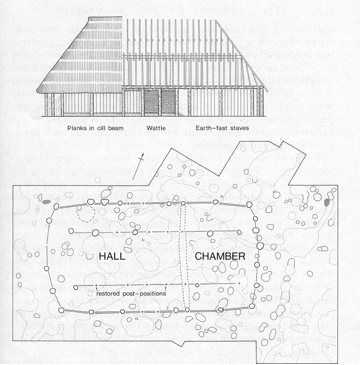
South Cadbury Timber Hall (Leslie Alcock)
Another very telling discovery at Cadbury Castle was the large quantity of Mediterranean pottery that dates to the Arthurian period of activity. This is the same pottery type that was discovered at Tintagel Castle in Cornwall, a site that also has strong Arthurian associations. One might think that shards of pottery from wine, olives and olive oil might be pretty mundane, but they anchor the sites strongly in the period, and also show that someone of importance was associated with the site. Not everyone could afford to import such things through trade.
The refortification of the hillfort during the Arthurian period was on a massive scale, and would have required many resources and men to hold it. South Cadbury castle was, in a way, on the front lines of the British struggle against the invading Saxons, and would have been well-placed to meet the Saxons as they advanced westward.
Based on the refortification, and evidence of the gatehouse that linked the ramparts running over the cobbled road at the south-west corner, this place was likely the base for an army that was large by the standards of the period. It may have been the site of the court of the dux bellorum, or the historical Arthur.
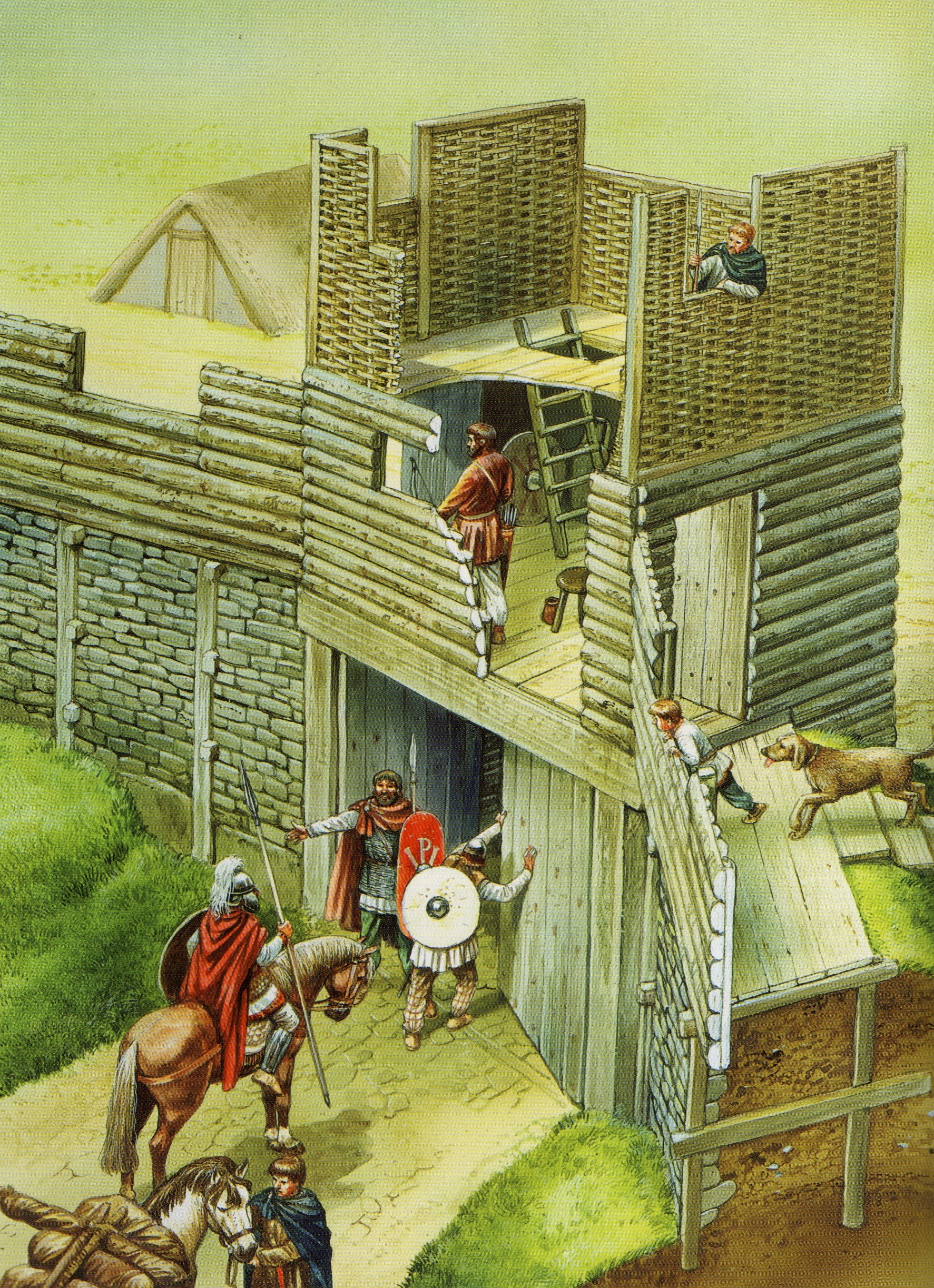
Artist Reconstruction of the South-west gate – Illustrated by Peter Dennis (Source – British Forts in the Age of Arthur)
I am only scratching the surface here, as far as the archaeological finds. For a more academic look at South Cadbury Castle, you will want to read the upcoming Historia series release Camelot: The Historical, Archaeological and Toponymic Considerations for South Cadbury Castle as King Arthur’s Capital. (Make sure you are signed-up to the mailing list be notified of that release)
South Cadbury Castle was finally abandoned in the early 11th century when it was being used as a royal mint during the reign of the Saxon king, Aethelred.
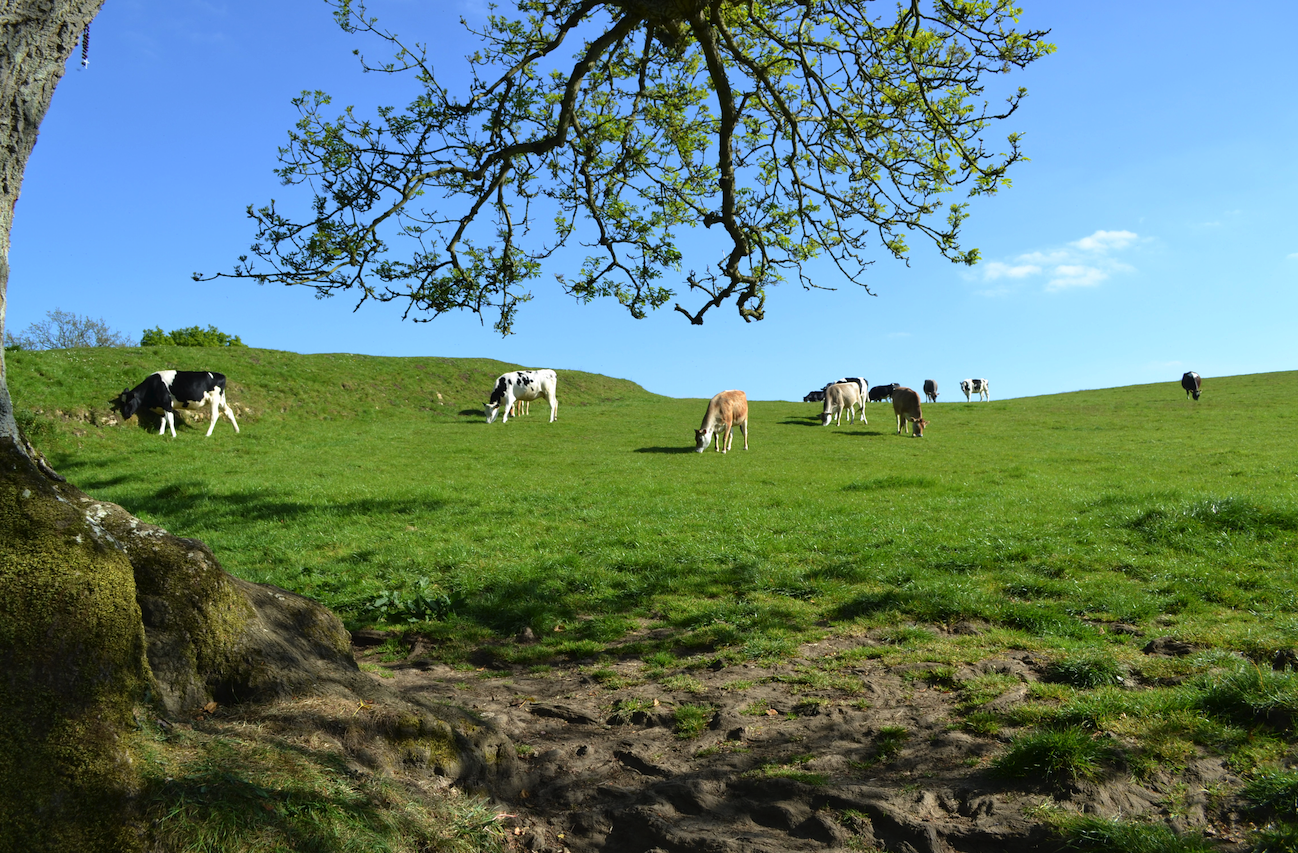
Current residents of South Cadbury Castle
Today, South Cadbury Castle is a quiet hill in the midst of the Somerset countryside where it lies just south of the A303 motorway. The levels of its steep ring fortifications are now overgrown with trees and scrub, and cows roam the fields surrounding it.
When you visit, you pull your car into the small car park at the south end of the village of South Cadbury, just east of the hillfort. From the lane, you can’t really tell what you’re looking at. It seems like a steep, forested hill with a path leading up.
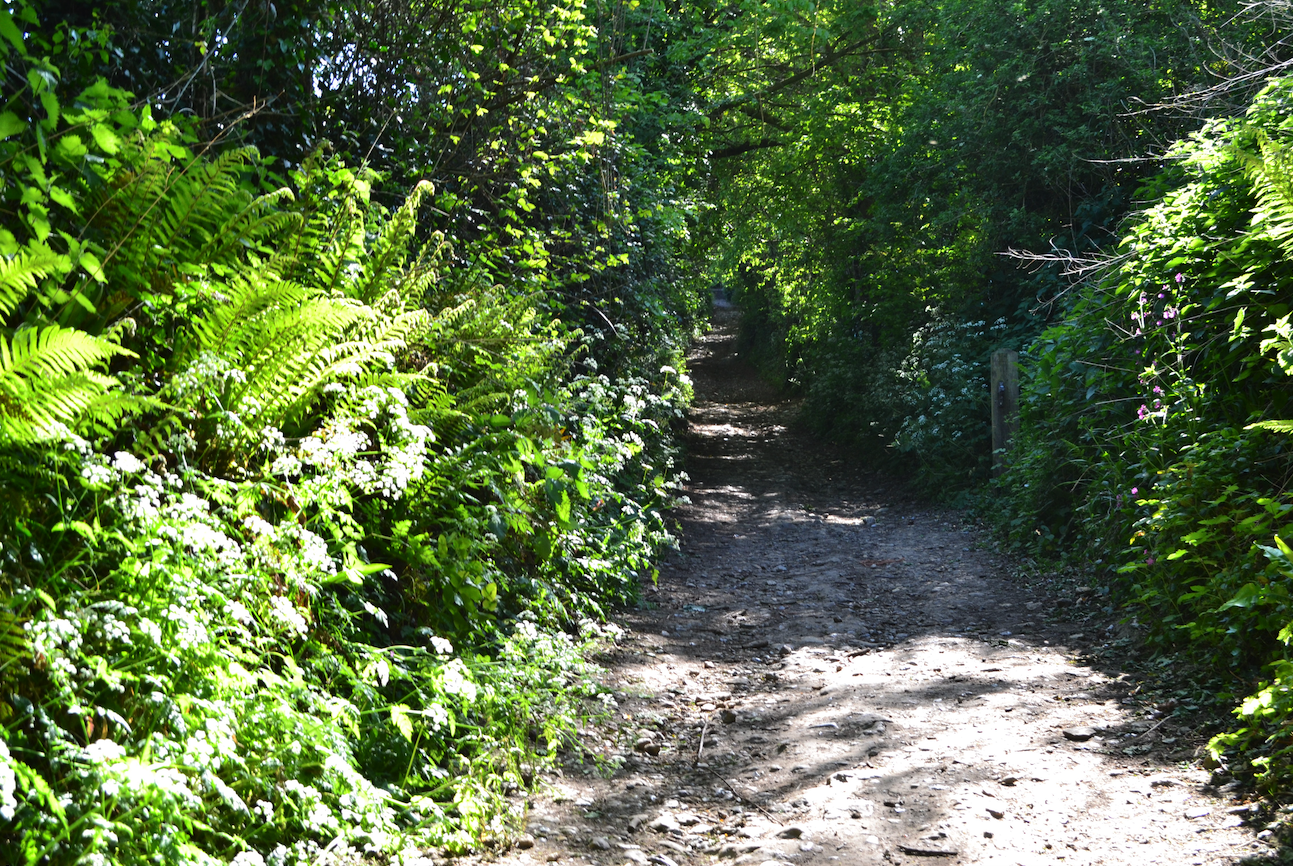
Path leading up to the north-east gate of South Cadbury Castle
This path leads up to the north-east gate of the hillfort, and for me, it was always the gateway to another time, another realm.
It’s difficult to approach this site and reconcile the archaeologist/historian side of me with the romantic. Arthurian lore runs deep in my veins, and has had a hold on my psyche since I was very young. The first time I visited the site, I could almost hear the call of clear trumpets and the thumping of horses’ hooves upon the ground as knights returned home from their adventures, their horses brightly caparisoned, their armour shining brightly in the light of the Summer Country.
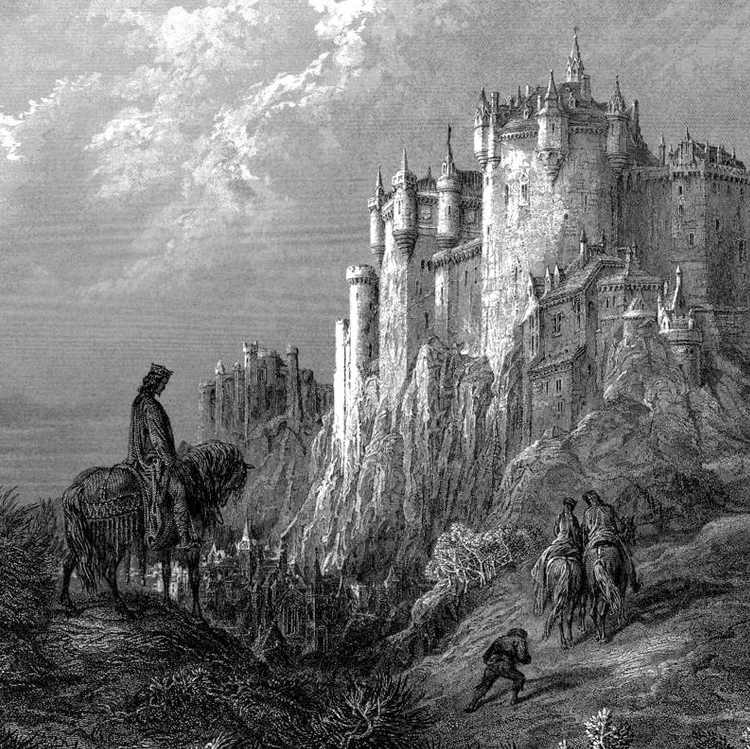
Camelot by Gustave Dore
Of course, I know that is not how it was during the Arthurian period, but this is a place and story that fires the imagination. Cadbury Castle’s associations with Arthur include a hollow hill where he sleeps until he is needed again, the site of ‘Arthur’s Well’, a place on the slopes where his horse drank when he led the Wild Hunt, and of course the location of Camelot.
To me, however, the idea of South Cadbury as the main fortress of a Romano-British warlord leading a group of skilled cavalry in a last stand against the invading Saxons is no less romantic.
During my subsequent visits, I would ascend the dirt and rock path leading up to the northeast gate and pause with reverence for the history of the place. I would imagine looking ahead, up the slope to the central plateau of the hillfort to the great wooden hall where smoke from the hearth of Arthur’s hall wafted into the sky as he and his warriors discussed the fight for their lives and their Romano-British heritage.
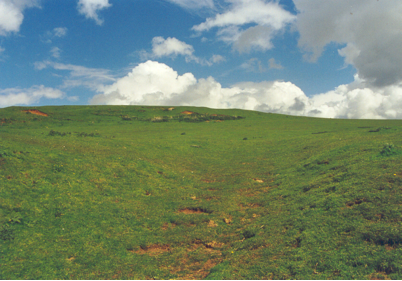
Plateau of South Cadbury where the timber hall was located
The warriors that manned the ramparts of South Cadbury, who dined in the hall, and who rode out to meet the Saxons, have been wrapped in the fabric of myth, as much as the Isle of Avalon not ten miles distant, in Glastonbury. But they certainly left a mark on the place, on history and folklore.
As I walk the grass-covered ramparts of South Cadbury, watching the crows dive in the winds above the steep slopes, I can’t help but wonder if Arthur, Gawain, Bors, Tristan, Bedwyr, Cai and others walked that same path, a wary eye out for a sign of the enemy that would shatter the peace they had fought so hard for at the famed battle of Mons Badonicus.
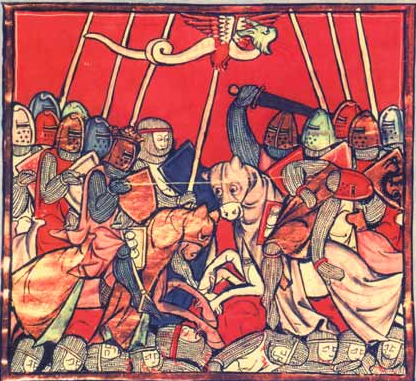
Arthur in battle beneath the Dragon banner
Rarely have I felt so at peace and nostalgic as I have when walking around this hillfort. I can still smell the damp grass and feel the sun on my face. In my mind, I still watch the puffs of white cloud blowing over the Somerset landscape as I pause to gaze to the north-west and see Glastonbury Tor rising out of the earth.
In ages past, when the levels flooded, the distance between Cadbury Castle and Glastonbury might have been crossed by boat if you knew the way and which rivers to take. Indeed, one of the discoveries found around the hillfort was a boat.
South Cadbury Castle is, in some ways, closely tied to Avalon, and you can feel that as you look from the top of one to the other. This too is explored in Isle of the Blessed.
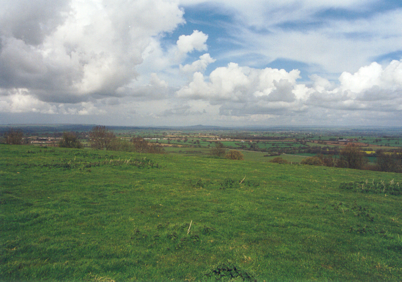
Glastonbury Tor from South Cadbury
After making a round of the ramparts, and standing on the roadway of the south-west gate, I would always spend a good amount of time on the plateau, watching the sky and letting my imagination take hold.
The beauty of visiting a site, rather than looking at in a book or online, is that direct connection with the past, with the history of the place.
Yes, many of the stories we know and love about Arthur and the Knights of the Round Table are medieval fabrications. But I do believe that every legend has its base in fact, and so it’s a comfort to know that the layers of myth and legend are veined with elements of possible truth and history.
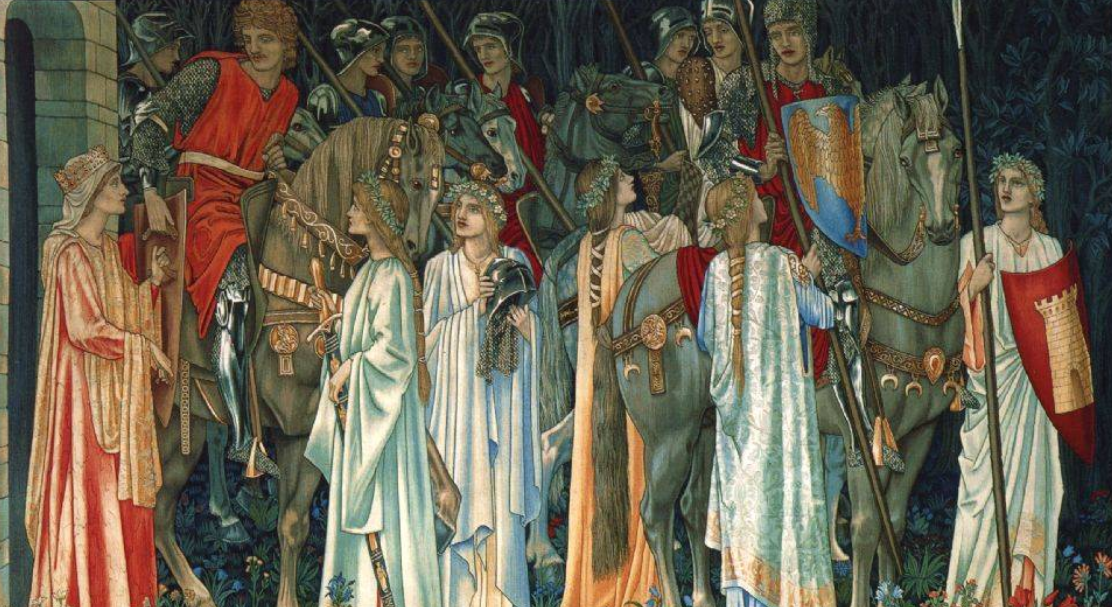
The Knights of the Round Table (Edward Burne Jones)
Many people will disagree, and that’s ok. When it comes to Arthur we will never reach a consensus.
However, considering the archaeological evidence at South Cadbury Castle, along with its location and the apparent activity during the Arthurian period, it seems quite possible that if there was an historical Arthur, he would undoubtedly have been familiar with this magnificent hillfort.
Was this just another strong point in the British defensive network? Or was it the Arthurian power centre that has come to be known as Camelot?
Whatever the answer is, it is surely fascinating, and perhaps unattainable. But then, that is what makes these historical mysteries so intriguing.
If you ever manage to roam the lands In Insula Avalonia, just be sure to make your way to South Cadbury Castle. Walk up the steep slopes, and through the gate, and know that you may just be walking in the footsteps of Arthur.
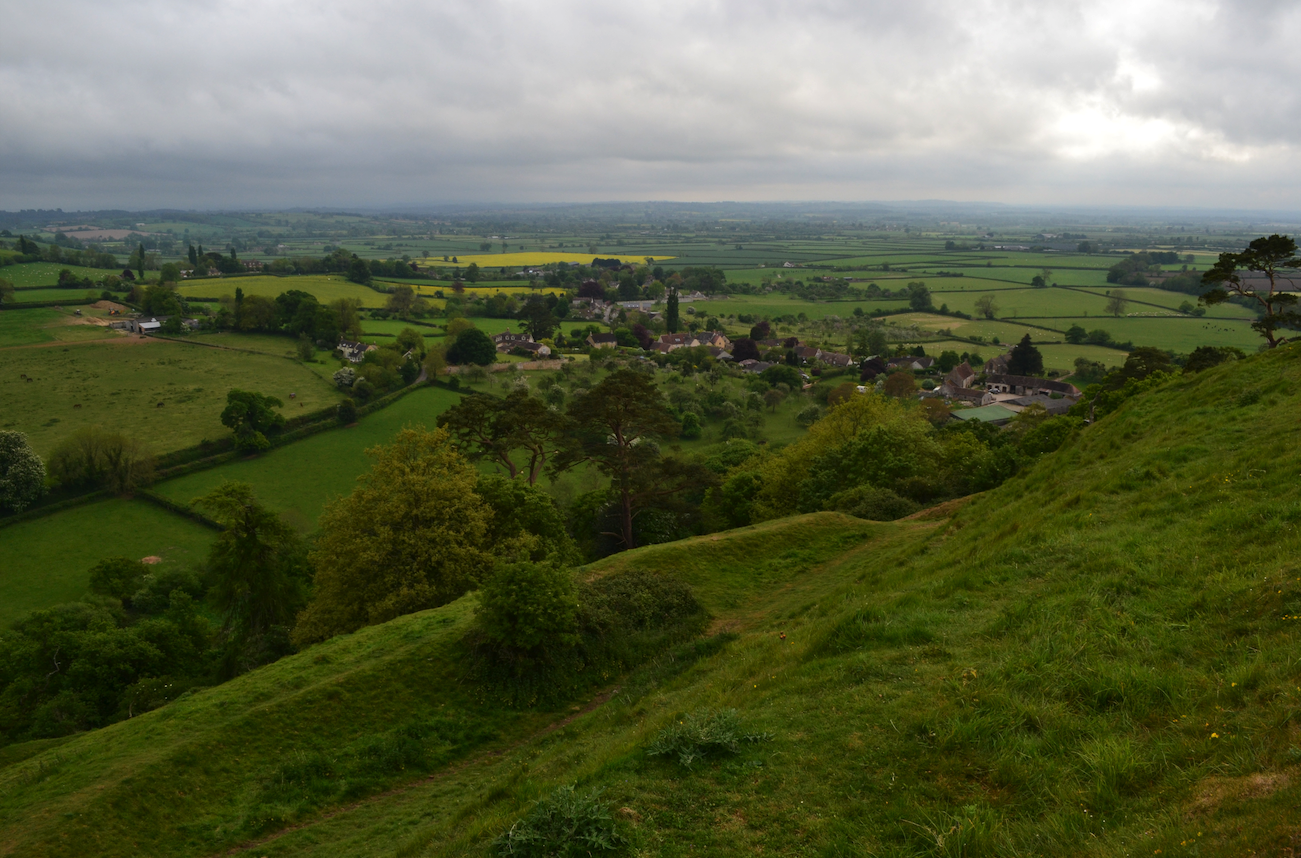
The steep, southern ramparts of South Cadbury Castle
I hope you’ve enjoyed this first part of The World of Isle of the Blessed.
Be sure to tune in for Part II in which we will look the history of another setting in Isle of the Blessed: the village of Ilchester, Roman Lindinis.
Thank you for reading.
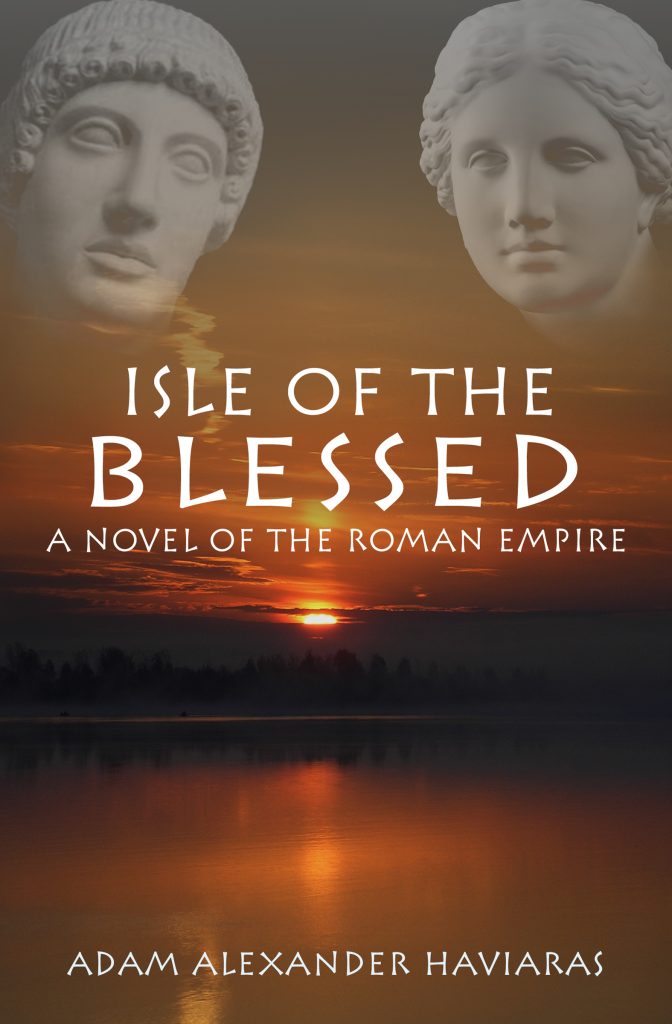
Isle of the Blessed is now available in e-book and paperback from all major on-line retailers. If you haven’t read any books in the Eagles and Dragons series yet, you can start with the #1 bestselling A Dragon among the Eagles for just 0.99! Or get the first prequel novel, The Dragon: Genesis, for free by signing-up for the newsletter HERE.