
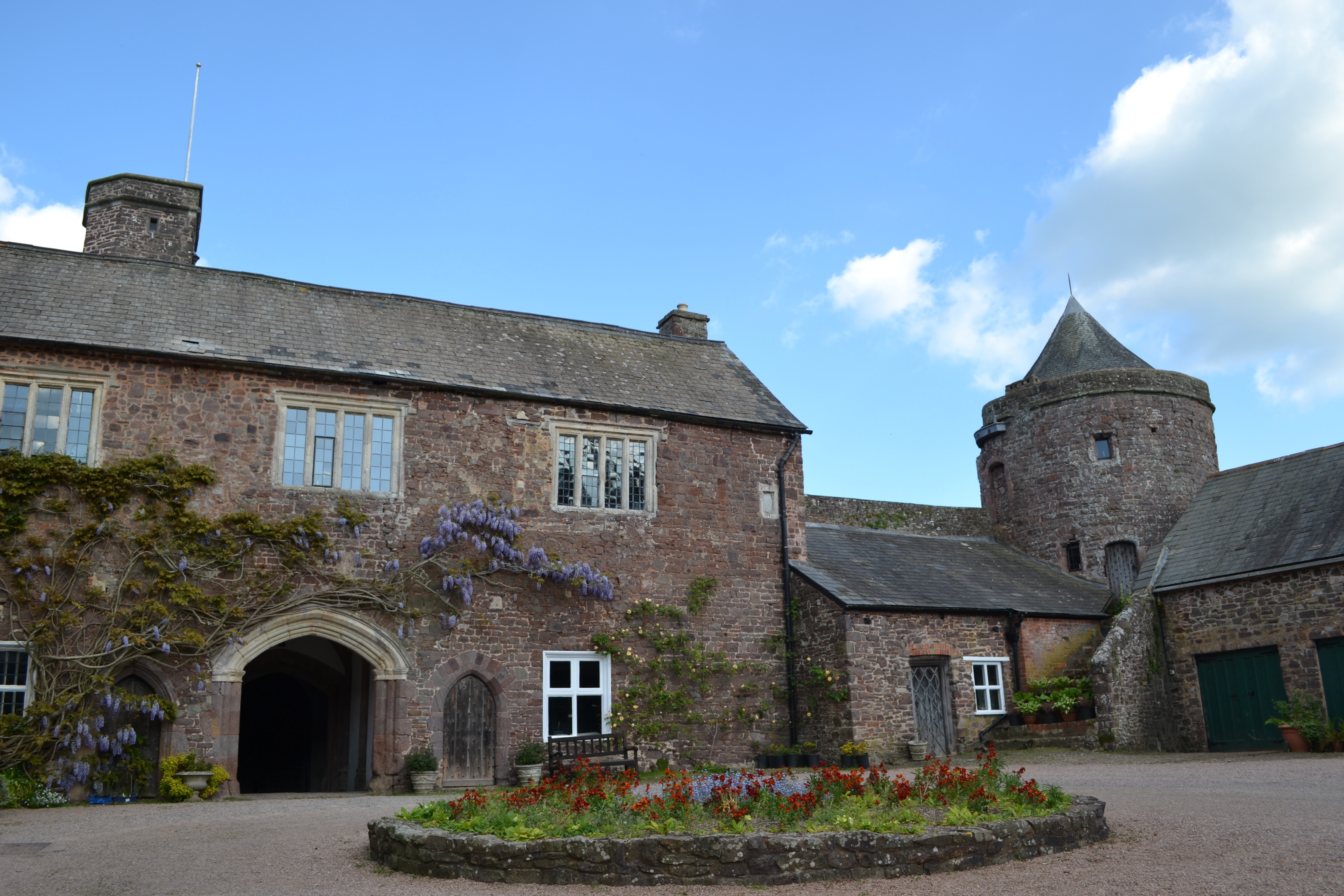
As many of you will know, I recently returned from a weeklong vacation in Devon and Somerset. This was a combined family adventure and research trip for some upcoming books.
Needless to say, I had a wonderful time and have returned to the big city relaxed, inspired, and ready to hunker down and write the next book. I also want to share some of my lovely experiences with you, to introduce you to some of the places that came alive for me.
The first destination was Tiverton Castle in Tiverton, Devon.
This castle holds a special place in my heart, but before two weeks ago I had not been back for 15 years.
For a long time, I’ve been daydreaming about a return visit to this lovely castle tucked away in Devon, between Exmoor and Dartmoor.
When our car pulled up, it was like being welcomed by an old friend after too long an absence.
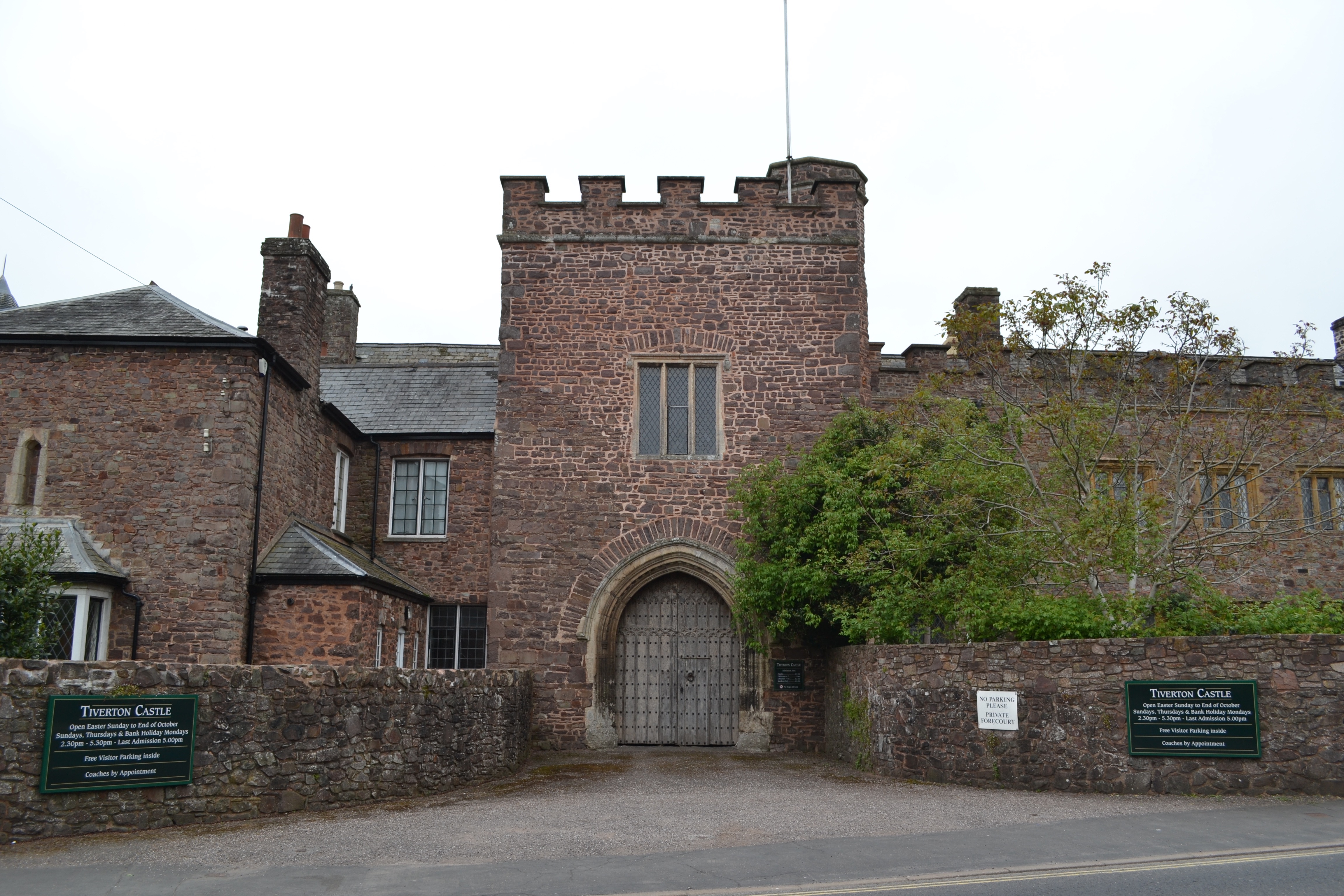
The gate house of Tiverton Castle
Before I talk about my experience revisiting this castle, we should discuss the history of this place. After all, that’s what this blog is all about!
Tiverton Castle may not be one of the titans of tourism in Britain, but it is no less deserving of a visit, and if you are up for it, a stay within its walls.
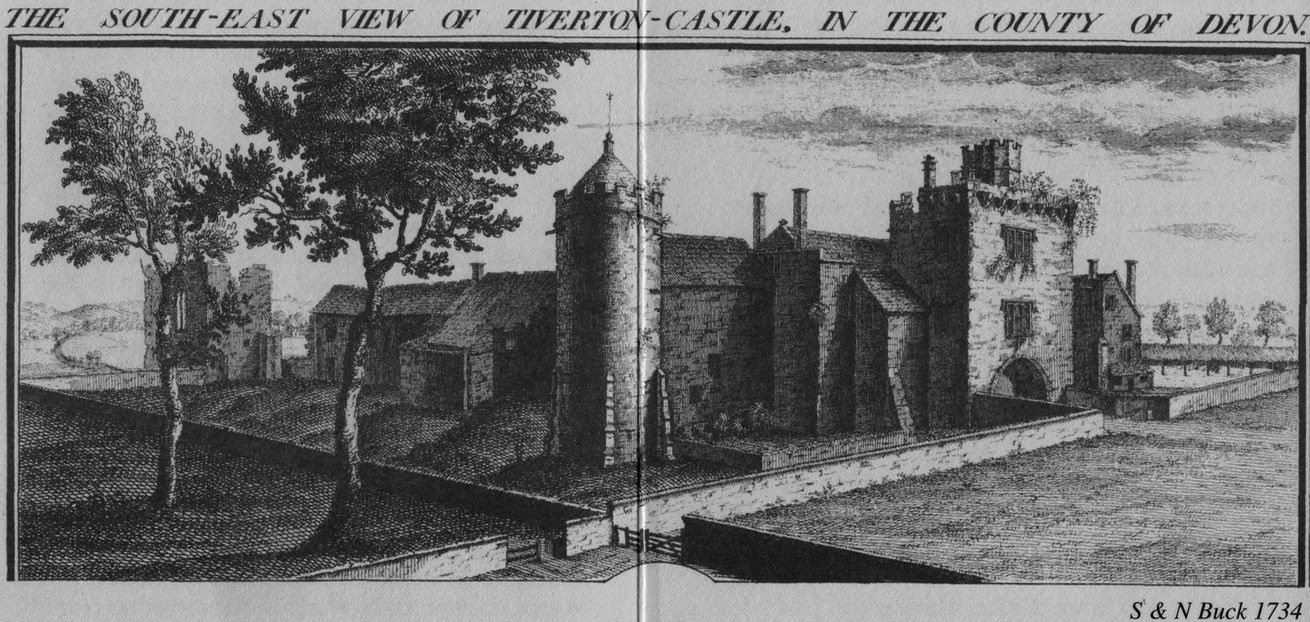
The earliest known drawing of Tiverton Castle
There has been human habitation around Tiverton since the Stone Age, but the town itself really peaked financially with its thriving wool trade in the 16th and 17th centuries.
However, I want to focus on the castle itself, for it has a long and varied history that is both fascinating and tragic.
Prior to the Norman Conquest of 1066, the land upon which Tiverton castle would later be built formed part of the estates of the Saxon Princess, Gytha, the sister-in-law of King Canute, and the Mother of King Harold. After the Conquest, the lands came into the possession of William the Conqueror (King William I) and his heirs.
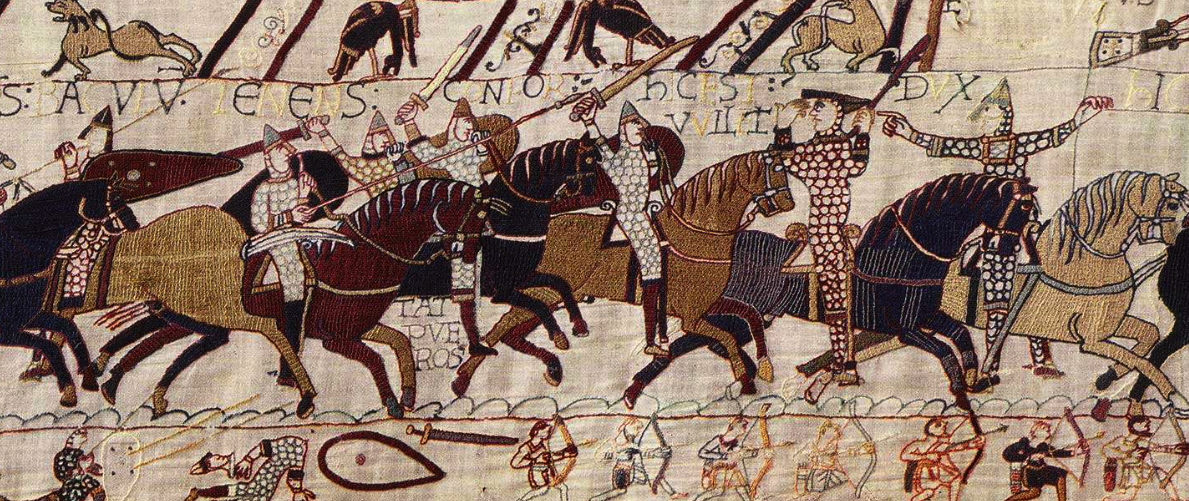
The Battle of Hastings (1066) as depicted in the Bayeux Tapestry
In 1100, when Henry I came to the throne, he began granting land to some of his followers for the purpose of building castles. It was at Tiverton that Henry I commanded Richard de Redvers to build a castle overlooking the important crossing point of the River Exe. This early fortress was probably completed around 1106.

Henry I
Richard de Redvers’ son, Baldwin, became the 1st Earl of Devon and the manor of Tiverton continued to be held by six successive earls until 1262 when the male line died out. The last earl was succeeded by his sister Isabella, a widow, who assumed the title of Countess of Devon and was one of the richest heiresses in the land. When Isabella died, Tiverton went to her cousin, Hugh de Courtenay.
The Courtenays are thought to be largely responsible for the bulk of the building at Tiverton Castle, the medieval remains of what we see today.
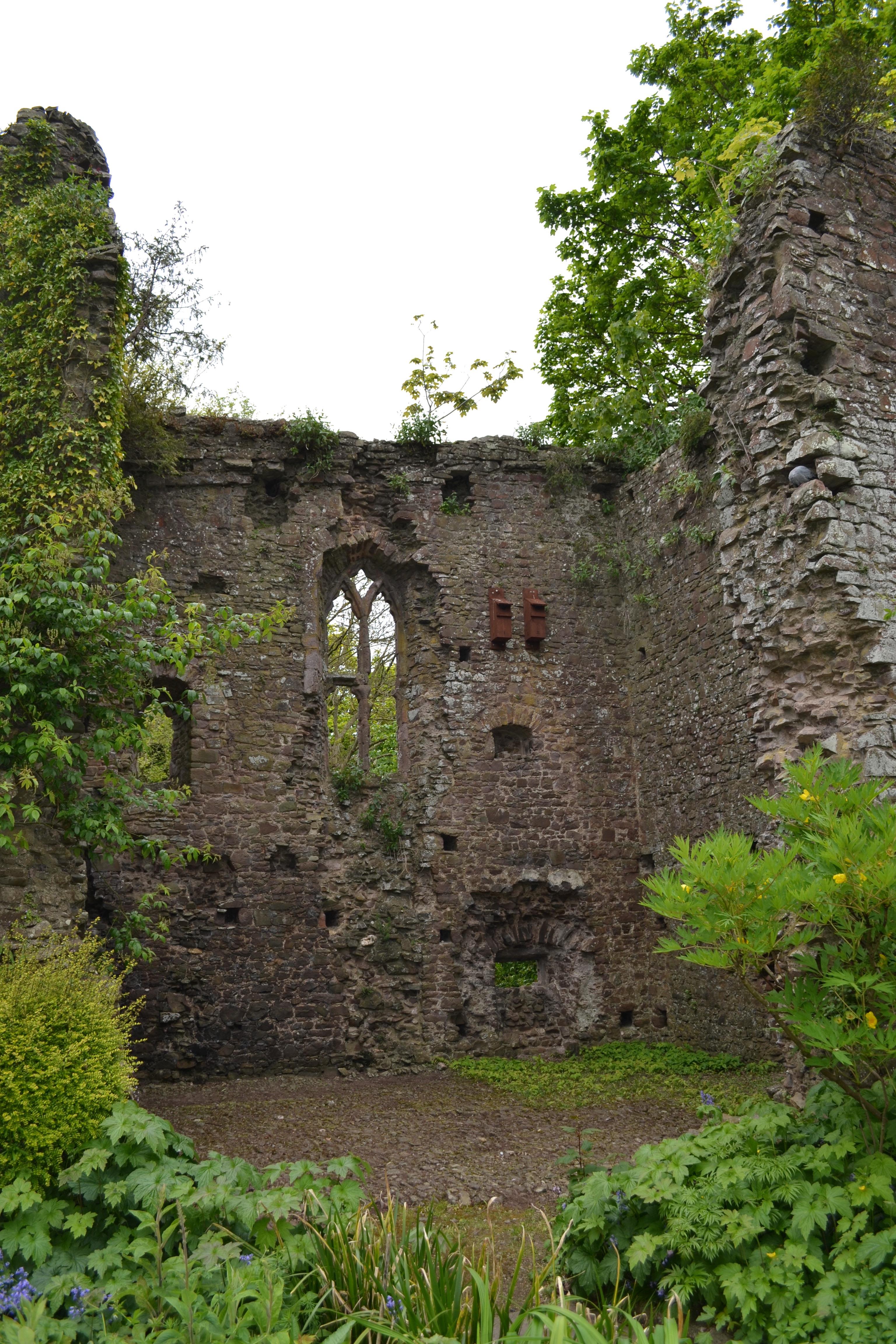
Medieval ruins in the castle gardens
It’s believed that the family originally came to England in the entourage of Eleanor of Aquitaine.
In 1335, it was King Edward III who made Hugh de Courtenay Earl of Devon at Tiverton Castle, and it is believed that Hugh was responsible for building the curtain walls with towers at the corners, and the living quarters on the west side by the river.
The Courtenays held Tiverton Castle for about 260 years until, during the Wars of the Roses, the castle and title were lost to the family as some of them were staunch Lancastrian supporters.
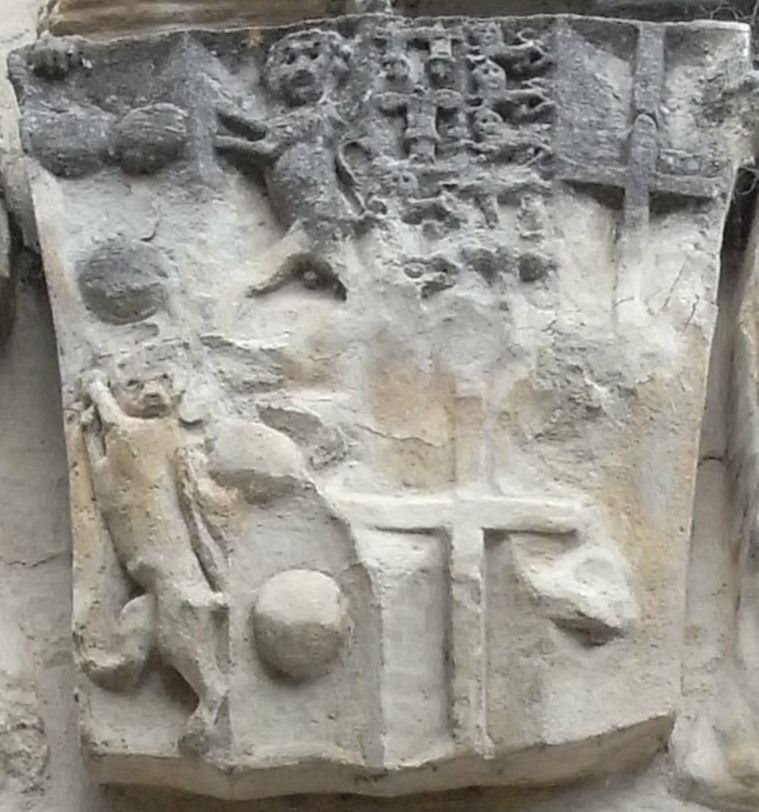
Arms of William Courtenay on porch of St. Peter’s Church beside Tiverton Castle
With the death of Richard III at the Battle of Bosworth in 1485, however, it was Henry VII who reinstated Sir Edward Courtenay as Earl of Devon at Tiverton Castle. In about 1485, his son, William Courtenay married Princess Katherine Plantagenet, the daughter of Edward IV, and sister of Henry VII’s queen, Elizabeth.
Katherine had something of a sad life – she was also the sister of Edward V of England and Richard of Shrewsbury, Duke of York, both of whom are rumoured to have been killed in the Tower of London by their uncle, Richard III. If you’ve read Shakespeare’s play, you’ll know all about this.

The daughters of King Edward IV and Elizabeth Woodville with Princess Catherine Plantagenet second from the right
Princess Katherine was the most famous resident of Tiverton Castle. She lived there for many years, after outliving her own children, and when she died in 1527, she was buried (at her request) in St. Peter’s Church next door.
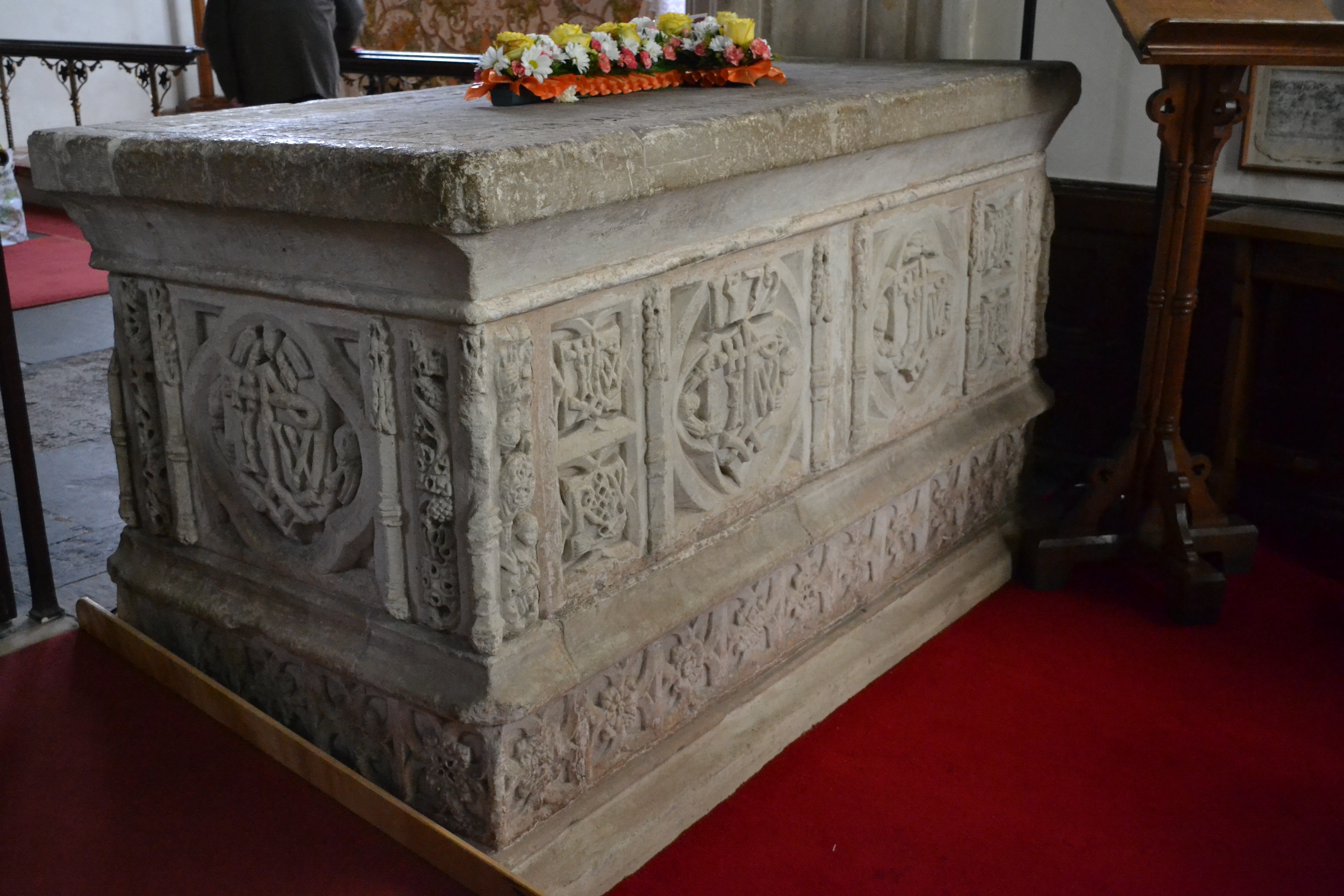
Princess Catherine’s tomb is believed to lie beneath the tomb of this merchant in St. Peter’s Church. The very bottom is said to be part of her burial.
During the years of the English Civil War, more building was done at Tiverton Castle, which was held for King Charles I.
It was widely acknowledged that Tiverton held great strategic importance at this time, and so this led to the only occasion in which the castle faced an enemy attack. The Parliamentary army, under the command of Sir Thomas Fairfax, commenced bombarding the castle with cannon and gun.
It was a lucky cannon shot that hit the drawbridge chain, allowing the Parliamentarians to rush into the castle and church to plunder. Few lives were lost in the siege, but for one woman who was hit by a cannon ball in the round tower while holding her child. The child survived.
I’ve glossed over the rich history of Tiverton Castle, opting to give you some of the highlights. There is much more to it, but I feel that a visit to the castle itself is the only way to do it justice.
After the Civil War siege, Tiverton Castle was under the ownership of various families over time. Today, it is owned and lovingly cared for by Angus and Alison Gordon who give a warm welcome to any visitors to the castle.
Over time, the Gordons have become family friends, and Tiverton Castle a place that we will return to when we are in need of an escape.
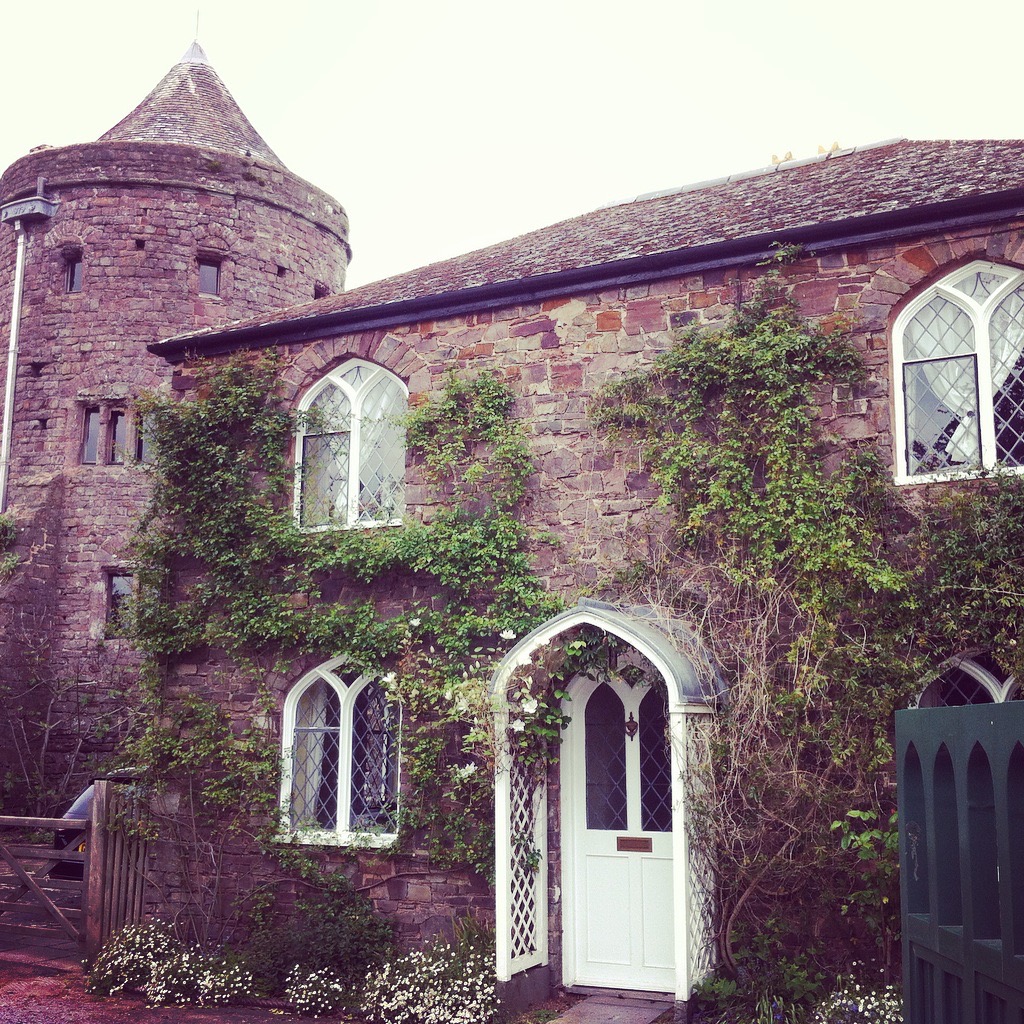
The Castle Lodge, our wonderful self-catering accommodation at Tiverton Castle. This is just one of many beautiful accommodations!
The atmosphere at Tiverton Castle is peaceful and welcoming. There is no sense of ‘preciousness’ there, but rather of admiration and appreciation of the history of the place.
Among the colourful, richly-scented gardens, the ruins of the castle built by the Courtenays rise like silent sentries from the past, each with a story to tell. As I wandered about, it was as if I could hear fires crackling in hearths, laughter in the great hall, the tears of a princess, or the pounding of cannon balls against thick walls.
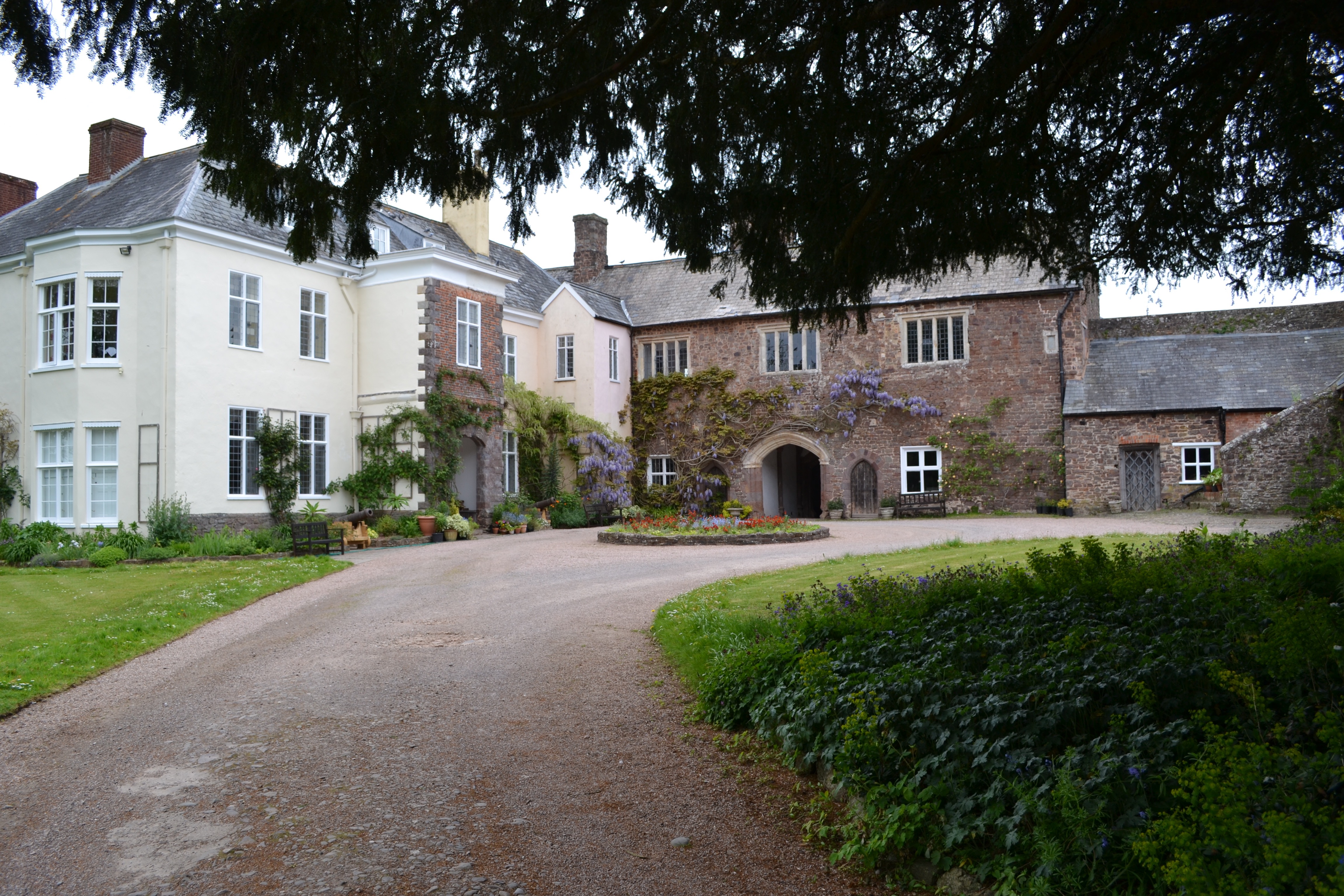
The lush gardens of Tiverton Castle are the perfect place to relax and take photos
This little castle has a rich story to tell.
Solo visitors, historical societies, school groups and anyone else with an interest in history will be well-rewarded with a visit to Tiverton Castle which also has a brilliant collection of Civil War era arms and armour, as well as a well-preserved tower complete with medieval garderobe (toilet). You can even try on a replica of a Civil War helmet. I found it to be quite comfortable!
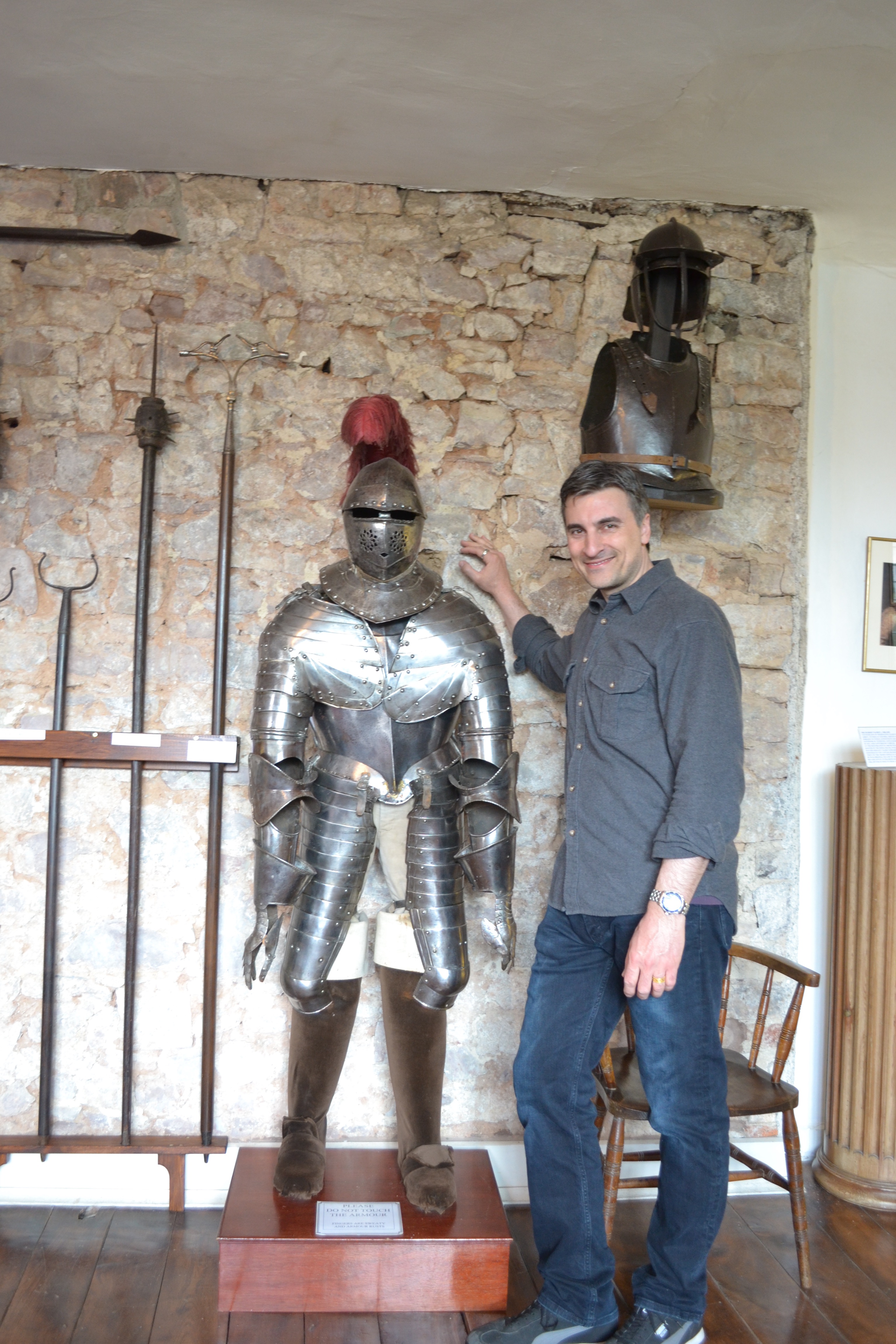
Catching up with an old friend in the hall of Tiverton Castle
If you do get to Tiverton, also be sure to step inside the Church of St. Peter’s next door which has a dazzling array of ‘kneelers’, a 500 or so year old organ, and a wonderful set of bells that chime throughout the day. If you get to the church, be sure to ask the warden, Bill, where the tomb of Princess Katherine Plantagenet is thought to be. Tell him I sent you.
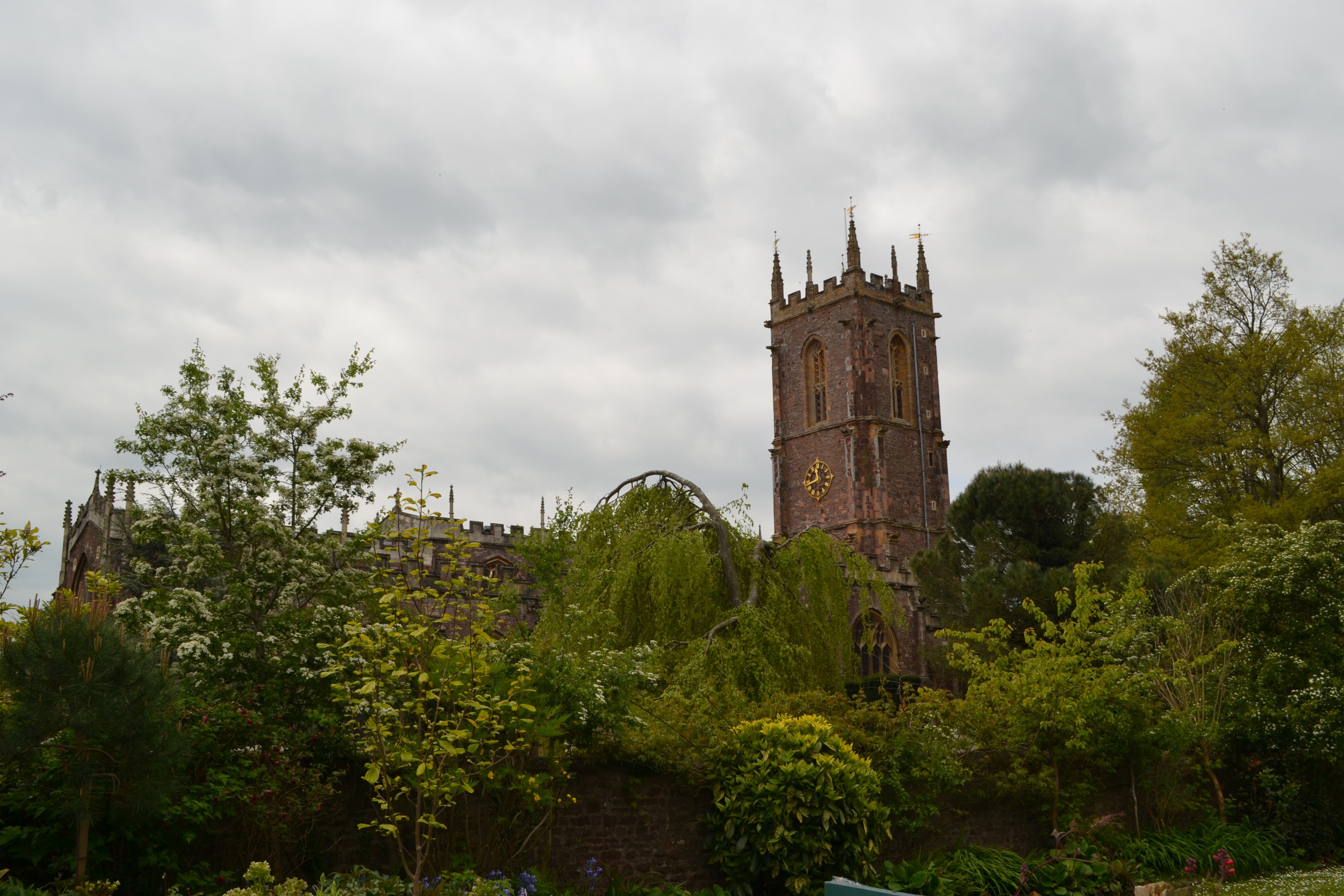
St. Peter’s Church, just beside Tiverton Castle.
We spent three nights in the self-catering accommodation at Tiverton Castle, and I have to say that it was probably the best part of our vacation. Not only are the accommodations well-appointed and clean, they are beautiful and add to the magic of actually staying in a castle.
I can’t say how wondrous it felt waking up to the sound of bells and birdsong at Tiverton Castle, rather than the usual rumbling of an underground and the sirens of the city.
For two days we roamed the castle gardens, sat beneath the ruins, and admired the collections of artifacts within (which also include one of Napoleon’s deaths masks!). We also used Tiverton as a base to strike out and explore Exmoor a few miles to the North. There is also Dartmoor to the South.
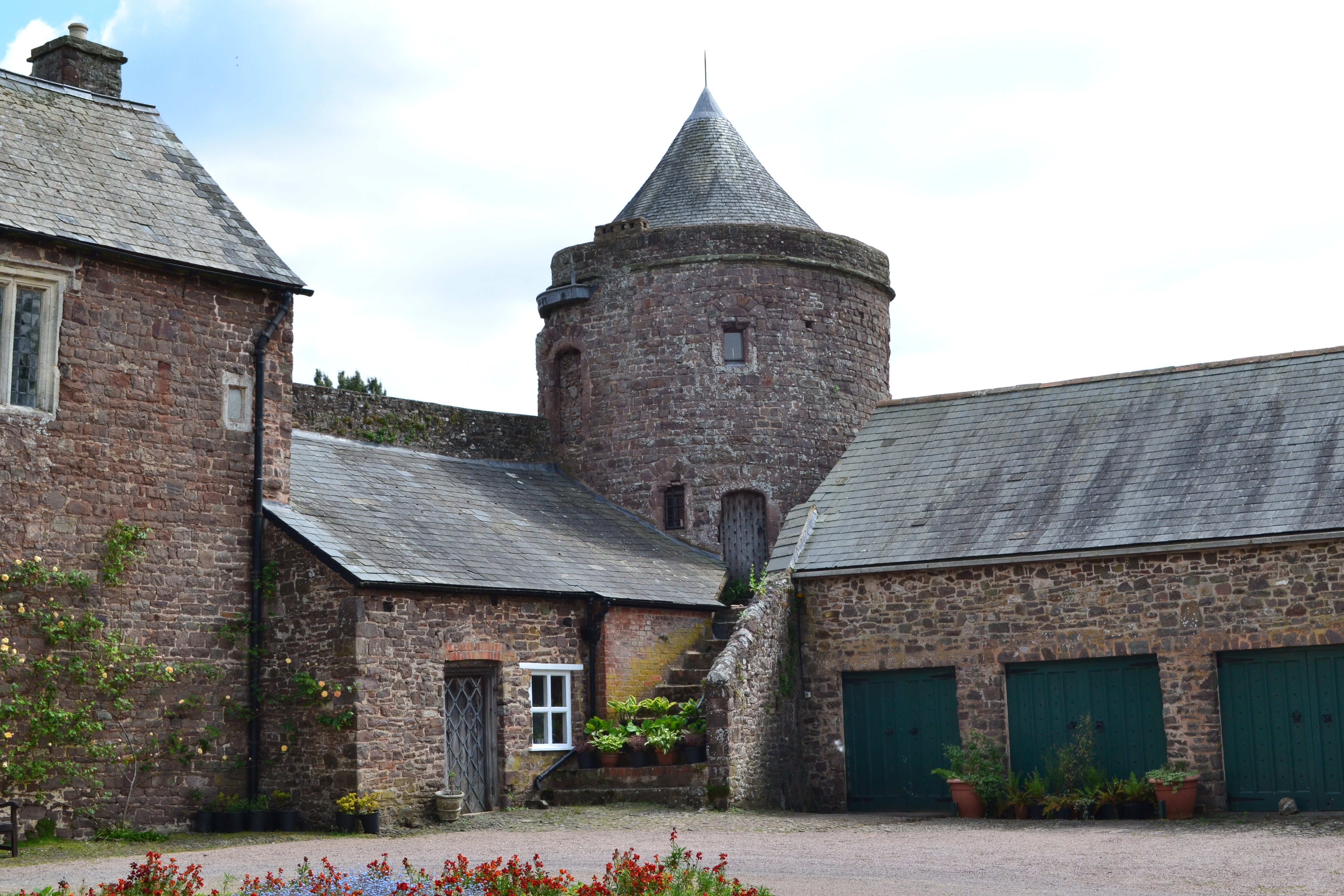
Visitors can climb up the restored tower at Tiverton Castle. Inside is a medieval garderobe!
The time at Tiverton Castle went all too quickly for my liking, and now that I’m back in my office cubicle far away, I find myself daydreaming about those lovely ruins and the way the evening sunlight warmed them and set the garden colours ablaze. When I look out my dirty window now, I remember the clear, open leaded glass of the Castle Lodge window, the heady scent of wisteria, and the sound of birdsong flowing into my senses as I sipped on a glass of Chianti.
If only we could remain on vacation indefinitely…
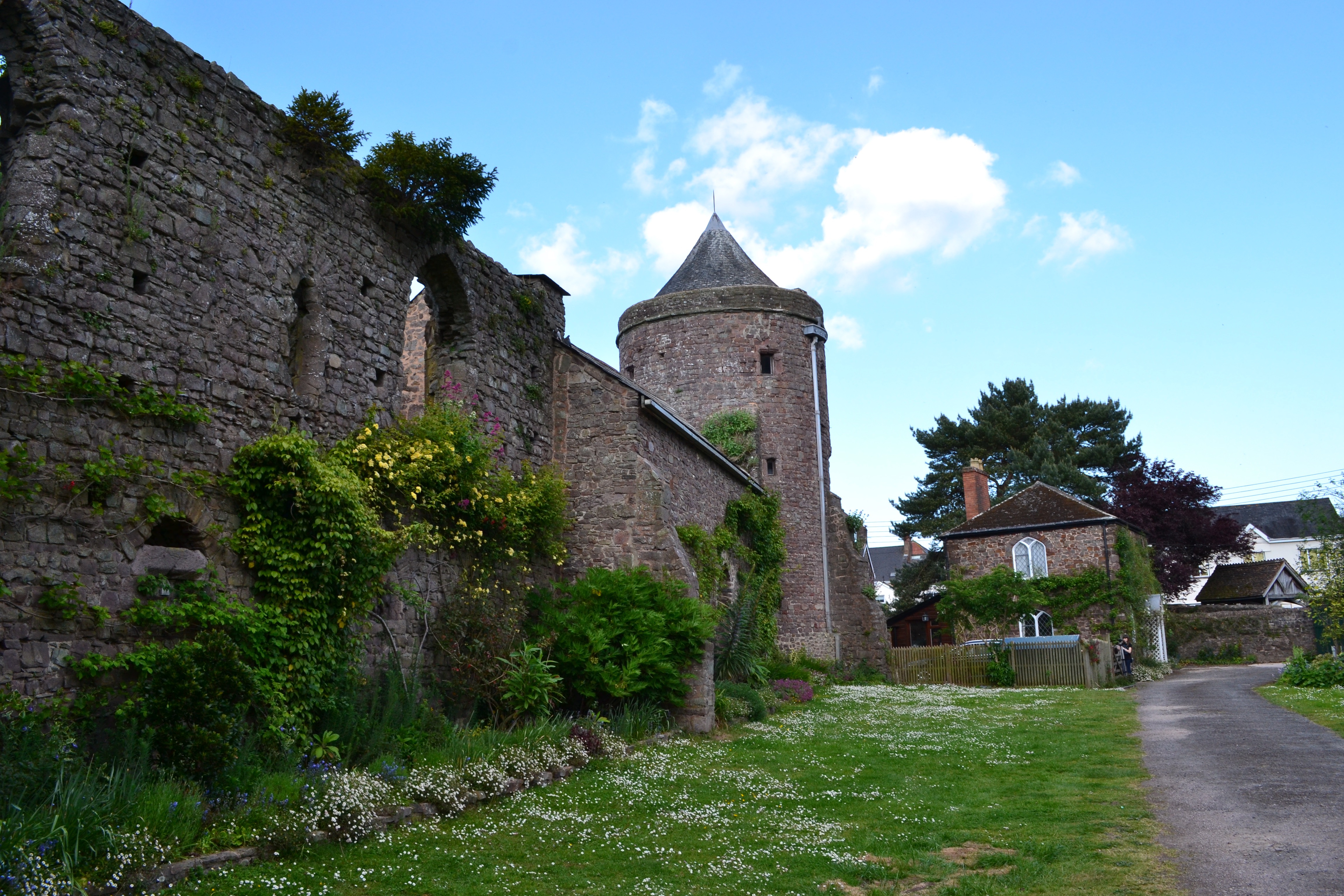
So many castles and manor homes tend to be cold in their welcome, sometimes institutional in their display and the way visitors are ushered through their ancient halls.
But Tiverton Castle is in a class all its own, as far as I’m concerned. The gates are open here, and once you pass beneath the grand arch and into the grounds, you can leave the outside world behind and lose yourself in the past with ease.
I know I look forward to doing so again…very soon.

As the Summer holidays are upon us, this is the perfect time to arrange a visit or stay at Tiverton Castle. I can’t recommend it enough!
Go to the website here: http://www.tivertoncastle.com/
If you’re looking for a nice getaway, or a base from which to explore the southwest, be sure to look at the list of self-catering properties on the website too. They are all lovely and, well, you get to stay in a castle!
Be sure to tell Mr. and Mrs. Gordon that Adam Haviaras sent you. I swear, you won’t regret it.
If you’re looking for something to read while there, you might also be interested to know that historical fiction author, Michael Jecks, has set his Templar series novel The Traitor of St. Giles at Tiverton Castle. You can check out Michael’s books here: http://www.michaeljecks.co.uk/
Cheers, and thank you for reading!