Greetings Readers and History-Lovers, and Happy New Year!
We’re back for another post in The World of The Hearts of Heroes blog series in which we look at the history, people and places that are featured in the latest Eagles and Dragons historical fantasy novel.
If you missed the previous post on the seasonal celebrations of the ancient Celts, you can read that by CLICKING HERE.
In Part IV, we’re going to be taking a brief look at a very special and mysterious place that captivated my imagination from the first moment I saw a picture of it many years ago. In fact, this remote and, some would say, ‘magical’ place, has at last ended up in one of my novels, The Hearts of Heroes.
I’m referring to the Fairy Gully near Betws-y-Coed in northern Wales, also known as ‘Ffos Anoddun’.
Be sure to read all the way to the end for a special peek at a piece from my very early days as a writer, inspired by this amazing place.
I hope you enjoy!
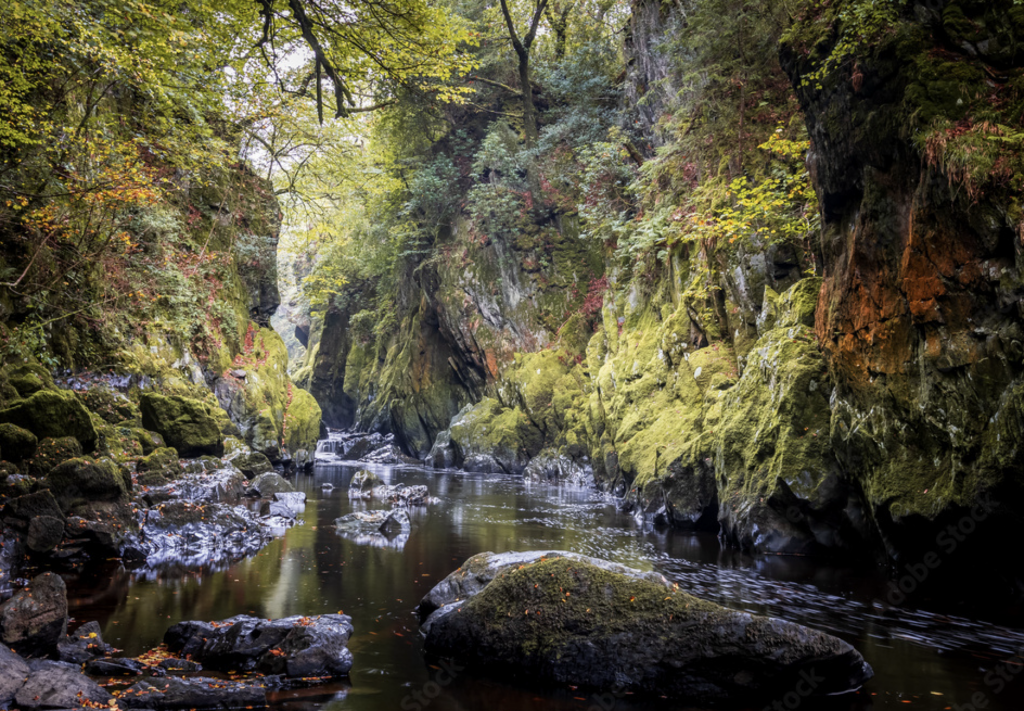
The Fairy Glen, Wales
The Fairy Glen near Betws-y-Coed may well be one of the most beautiful places I have ever seen. In Welsh, it is known as ‘Ffos Anoddun’, which means ‘a difficult ditch’. Of course, the literal translation does not do the place justice.
What is it exactly, and where is it located?
The Fairy Glen (we’ll refer to it as such from now on) is a natural gorge formed by the waters of the River Conwy at the eastern edge of the magnificent and rugged Snowdonia National Park, or ‘Eryri’, in northern Wales. It lies just two miles south of the village of Betws-y-Coed, which was the site of an early Celtic Christian monastery founded in the 6th century A.D., as well as a later lead mining industry.
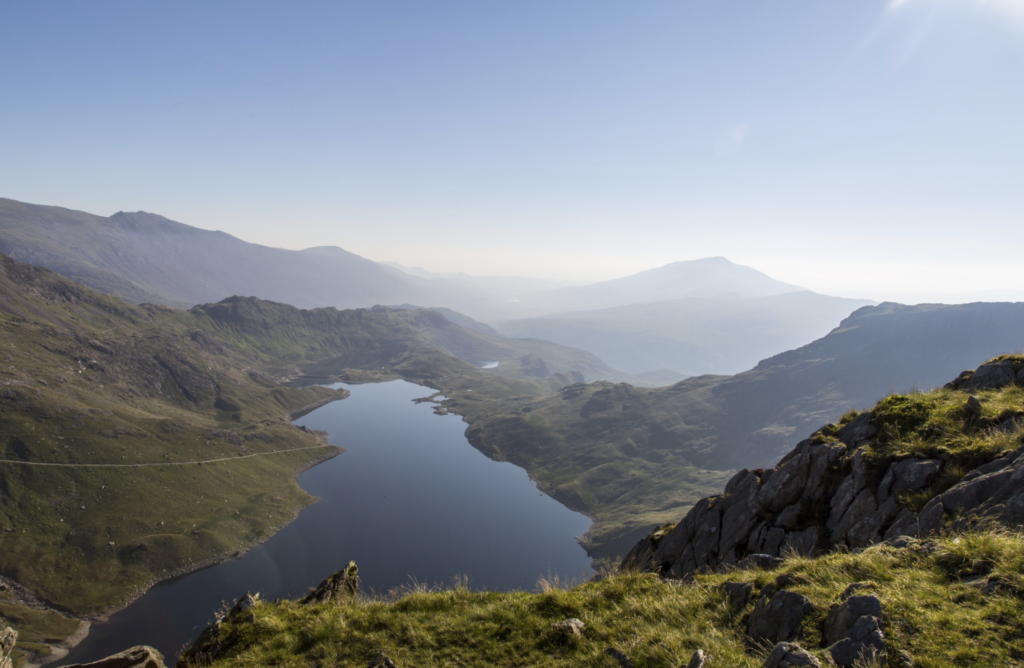
Snowdonia (Eryri) National Park, Wales
The Fairy Glen is a beautiful, almost ethereal gully of moss-covered rocks and waterfalls along the river that is serene and atmospheric. And, as the name suggests it has long been associated with, you guessed it, fairies.
When we refer to ‘fairies’ however, at least in this context, we are not talking about the cute, minuscule, Tinkerbellesque creatures put on us by Walt Disney. As J.R.R. Tolkien insisted – and he was not a fan of Disney – there was much more to fairies that what popular films or cartoons show us:
“The realm of fairy-story is wide and deep and high and filled with many things… Faërie contains many things besides elves and fays, and besides dwarfs, witches, trolls, giants, or dragons…”
– J.R.R. Tolkien, On Fairy-Stories (1947)
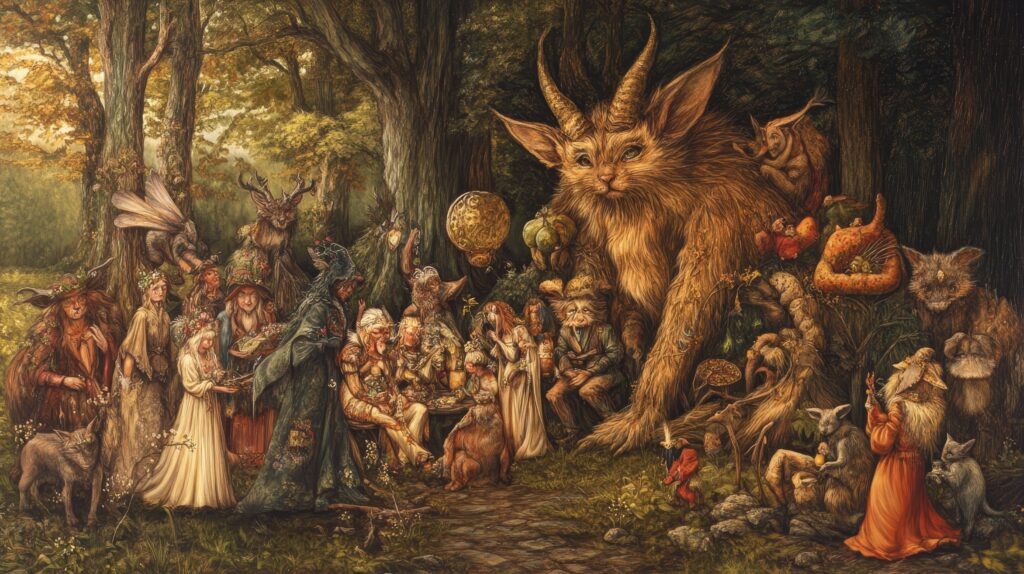
Artist impression of the Tywyth Teg, the ‘Fair Folk’
British and Irish folklore and mythology are replete with traditions around fairies, ‘the good people’ as they were often called by humans. They figure largely in Welsh folklore, and the Fairy Gully near Betws-y-Coed has strong associations with fairies and sprites. These are the ‘Tywyth Teg’, or ‘Fair Folk’ of Welsh tradition.
Geoffrey Ashe, one of the great experts on the mythology of the British Isles wrote about the dangers that also surrounded the fairies and their world:
“One human name for them, ‘the good people’, was a propitiatory compliment inspired by the uneasy knowledge that they were not good, or not reliably so. They could be mischievous, and far worse than mischievous. They were apt to steal away children for breeding purposes, and leave substitutes or changelings who were stunted, strange, disturbing. When angry, they might use magical powers to inflict disease…
…Yet they could be benevolent. They might live unseen in a fireplace and help with housework, so long as the fireplace was kept clean for them. They could lend farmers wonderful cattle that yielded unending milk. If they took a liking to a child, they could bestow beauty, talent, good luck. Fairy women were known to marry mortal men and to bring them happiness. But most of the benefactions were subject to some taboo, and if this was broken, however trivially, with whatever absence of intent, all was lost.”
– Geoffrey Ashe, Mythology of the British Isles
Many of the archetypes described by Ashe above are prevalent in the collection of Welsh, mythological tales known as the Mabinogi, especially in my favourite of these, the tale of Pwyll, Prince of Dyfed.
Fairies also had kings and queens. The oldest among these was, of course, Gwyn ap Nudd, the Lord of Annwn, the Celtic otherworld, and leader of the Wild Hunt, who has sometimes made an appearance in the Eagles and Dragons series.
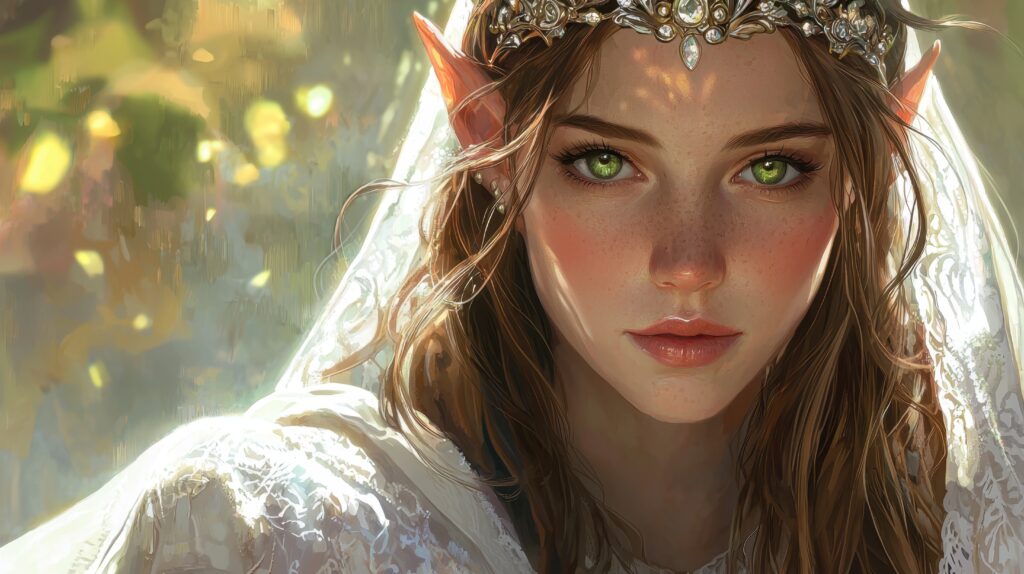
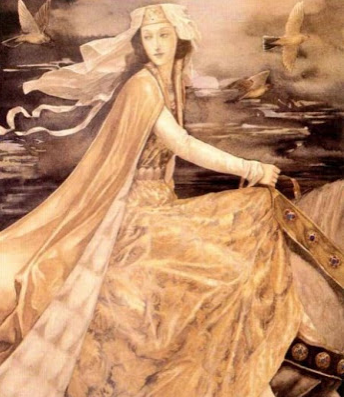
Artist impression of an Elven maiden from the Faery world
In Welsh folklore, the ‘Fair Folk’, the ‘Tywyth Teg’, refers to different beings, including the Ellyllon (elves), Bwbachod (house spirits), Coblynaw (mine spirits), Gwrageddannwn (lake maidens), and the Gwyllion (mountain spirits).
It is said that they have all been associated with the Fairy Glen at Betws-y-Coed where they were believed to gather at the moonlit pools, as indeed was the case at similar places across the British Isles. In fact, to this day, people still leave coins for the ‘Fair Folk’ at the Fairy Glen.
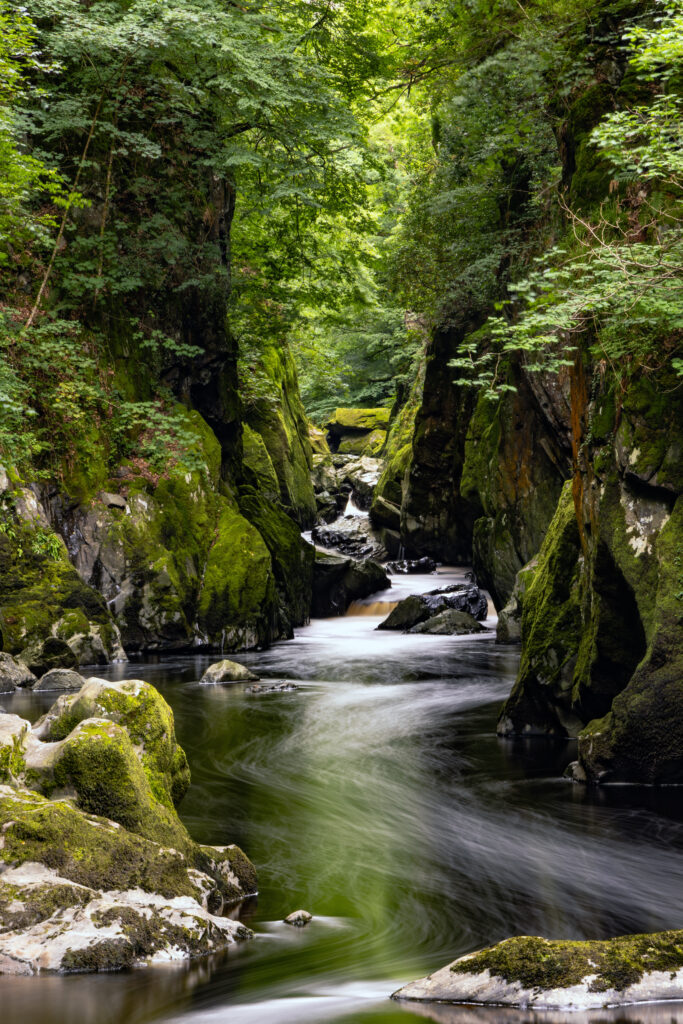
Ffos Anoddun, the Fairy Glen, near Betws-y-Coed in northern Wales
As someone who has studied Arthurian lore for many years, my favourite legend surrounding the Fairy Glen revolves around Merlin.
One more modern, local tradition tells of how Merlin sought refuge at the Fairy Glen. He is supposed to have done so in order to recover after the strain of using so much of his power to help Uther come to Ygerna at Tintagel Castle. This was, of course, the act that brought about the birth of Arthur.
Though this may be a fabricated association, what it does do is reinforce the perception of the Fairy Glen as a place of great mystery. If one thing is certain, however, it is that the Fairy Glen near Betws-y-Coed is a place that has inspired deep belief in the world beyond the veil and those who dwell there.
And who are we to say it is wrong? In studying mythology and Arthurian traditions, I’ve found that much of the time there is some basis in fact and that, to me at least, is indeed magical.
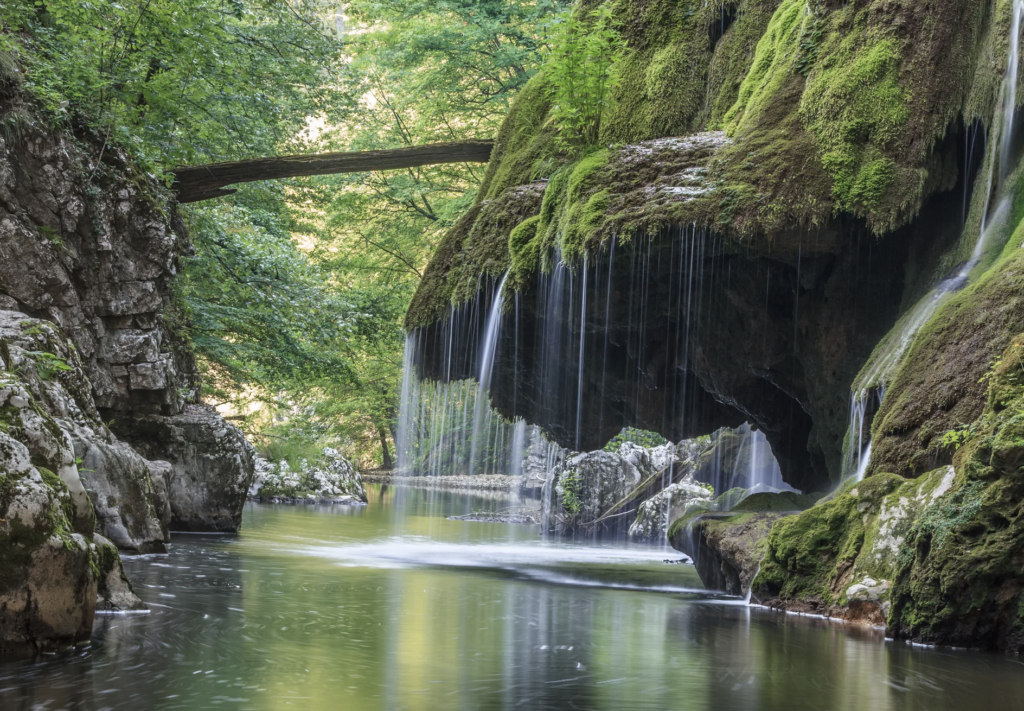
Waterfall at Ffos Anoddun, The Fairy Glen, Wales
Now for the special peek at a piece from my very early days as a writer which I mentioned at the outset.
I had my first glimpse of the Fairy Glen one Christmas back in 1993 when I received a copy of Geoffrey Ashe’s wonderful book Mythology of the British Isles from my parents. I flipped through it immediately and came upon the picture you see below. I was inspired by this amazing place, even in black and white, and so in my mid-teens I wrote the following poem which was later published in my high-school paper.
I wrote this without any knowledge of form at the time as I was new to poetry. The following was just my younger self deeply inspired by this single image.
I hope you enjoy.
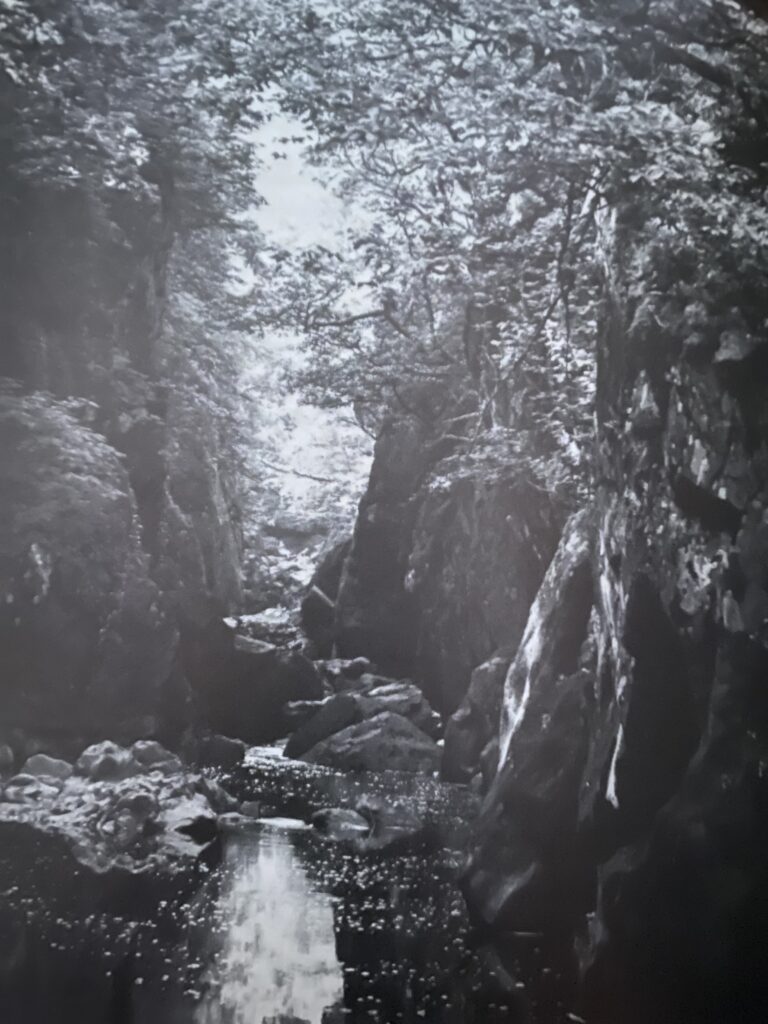
The Fairy Glen – from Geoffrey Ashe’s Mythology of the British Isles
Queen of the Fairy Gully
by: Adam Haviaras
There is a place
That man has not sullied,
Peace is always present
In the Fairy Gully.
A soft stream flows
Like sweet music to the ears,
The trees are emerald green
Their leaves shed dewy tears.
The moss-covered rocks
Protrude from the edge.
There the Fairy Queen sits,
The soft moss for her bed.
The fairy kingdom wakes
To see something afloat.
It is two young lovers
Asleep in a boat.
The young man and young woman
Had lately been wed.
The still fresh garlands
Under their tranquil heads.
Both are entwined
As pure as can be,
Love next to love
Ever so softly.
“Look,” said a fairy.
“The boat has hit ground.
We must send it down stream
Without making a sound.”
“Wait,” said the Queen.
“They pose us no threat.
I shall go see
What they dream in their heads.”
So down she went
To the lovers afloat.
Still laying asleep
In their small bridal boat.
The fairies watched
Their queen from up high,
As she placed her wee hands
On the lovers’ closed eyes.
“My dear Queen,” uttered one.
“Is something very wrong?”
“Yes sweet fairy.
They dream a sad song.”
“Their families spoke
And forbid them to wed.
Rather than obey
They picked up and then fled.”
“What do they wish for,” asked another,
“Within these sad dreams?”
“They wish for happiness, peace and love,
For the whole of eternity.”
“Help we will give
To this young couple,
By fulfilling their dreams
And freeing them of troubles.”
“Upon the morn,” declared the Queen,
“Take we them to the place,
To be alone under the Oak.
Untouched by all hate.”
The fairy Cordelia
Came forward to say,
“Dream dust shall I give them
To make sure they will stay.”
So the lovers dreamt dreams
And the fairies did too,
In this lush green world,
Glimmering moonlight and dew.
The early morning sun
Did thread its way down.
That orb shed its light
On the young lovers’ crowns.
The mist was thick
And the water calm,
As the fairies moved the boat
With their otherworld song.
“This deed shall we do,”
The Fairy Queen said.
“This couple will lie
In a warm bridal bed.”
The boat drifted up
To a white sandy shore,
Where a path led away
Through the Fairy world’s door.
Cordelia then spoke
With worry and haste,
“My Queen, how will we take them
To the ever-peaceful place?”
“Fear not, precious fairy.
I know what to do.
Behind that bush
There the stream flows through.”
“Spirits of the wood
Conduct this small boat,
Wherein lie these lovers
Who yet have some hope.”
The bush moved aside
And the boat moved along,
As the fairies sang again
Their ancient forest song.
Closer they came,
And the world all turned bright.
Water, rocks, moss and dew,
The gully flooded with light.
At long last there it was,
The life of this small folk.
Branching out to the sun
Was the old sacred Oak.
Its body was huge
And its limbs full of grace.
The leaves tell a story
Of countless lived days.
Down at the bottom
On the soft ground,
Grows a bed of bluebells
For the couple to sleep sound.
“Now,” said the Queen,
We must do what is best.
On bluebells lay we them
Before they wake from their rest.”
Once more the song came
With ever sweet delight.
The couple was lain
On flowers for that night.
“Fairies return to the wood.
We must not disturb,
These two that I wake.
We must be unheard.”
The fairies obeyed
The words of their Queen,
Who woke the fair couple
Upon the coming of eve.
The moon rose up
And the sun went down.
The couple awoke
To look all around.
“What beautiful place is this?”
Asked the young maid.
“I know not where we be,
But we must always stay.”
“Truly this is,” said the boy,
“A very peaceful place.
Never again shall we bear
Any anger or hate.”
Up above in the leaves
Sat the caring Queen.
A smile on her face,
A tear on her cheek.
“Live as one,” said the Queen.
“Be happy and free.
You will always be safe
In our green Fairy Gully.”
The maid and young man
Do dwell there all along.
At night, as they embrace,
They hear a comforting song.
And so the young lovers
Fulfill their life’s dream.
Due to the precious help
Of the loving Fairy Queen.
Here is the end
Of this ancient story.
New love and old song
In the green Fairy Gully.
END
Thank you for reading.
We hope you’ve enjoyed this article about the Fairy Glen near Betws-y-Coed in Wales.
If you are interested in getting a copy of Geoffrey Ashe’s magnificent book, Mythology of the British Isles, you can do so by CLICKING HERE.
Tune in for Part V in The World of The Hearts of Heroes when we will be looking at the place the Romans referred to as Mona, that is, the Isle of Anglesey.
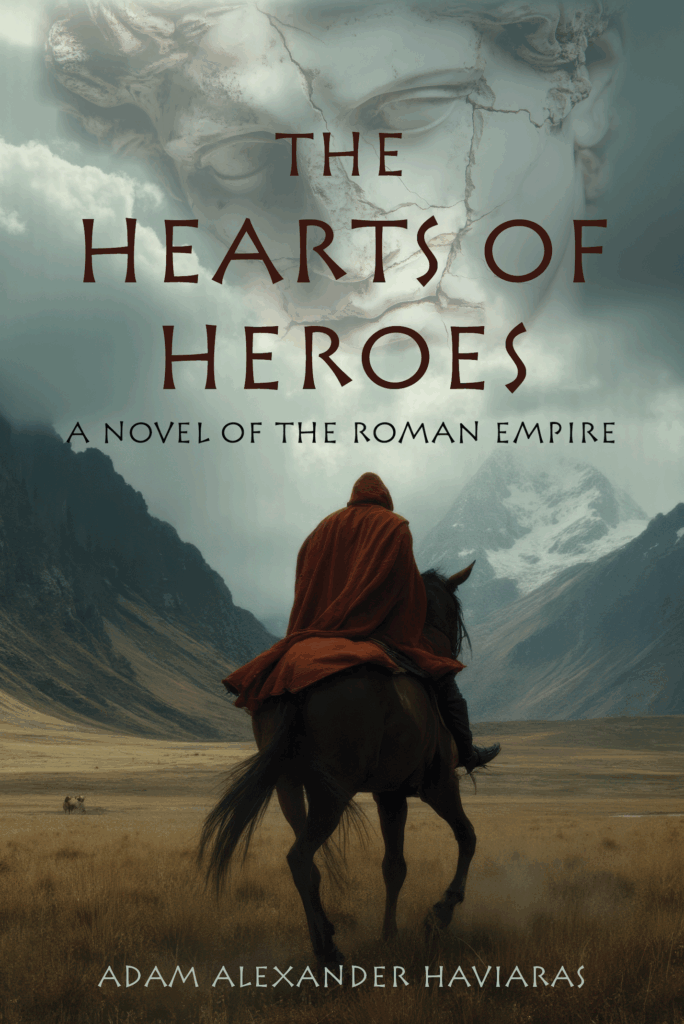
The Hearts of Heroes: A Novel of the Roman Empire is available ebook, paperback and deluxe hardcover editions from all major online retailers, independent bookstores, brick and mortar chains, and your local public library.
CLICK HERE to buy a copy and get ISBN#s for the edition of your choice.
If you are new to the Eagles and Dragons historical fantasy series, you can start your epic adventure with the award-winning, #1 bestselling prequel, A Dragon among the Eagles.