Author: AdamAH
Historia II – Arthurian Romance and the Knightly Ideal
Welcome back, history-lovers!
Last week on the blog we announced the launch of Eagles and Dragons Publishing’s new non-fiction series, HISTORIA. We also introduced you to the first book in the series about Celtic archetypes in the Welsh Mabinogion. If you missed that post, you can check it out by CLICKING HERE.
This week, we’re happy to introduce you to the second volume in the HISTORIA series:
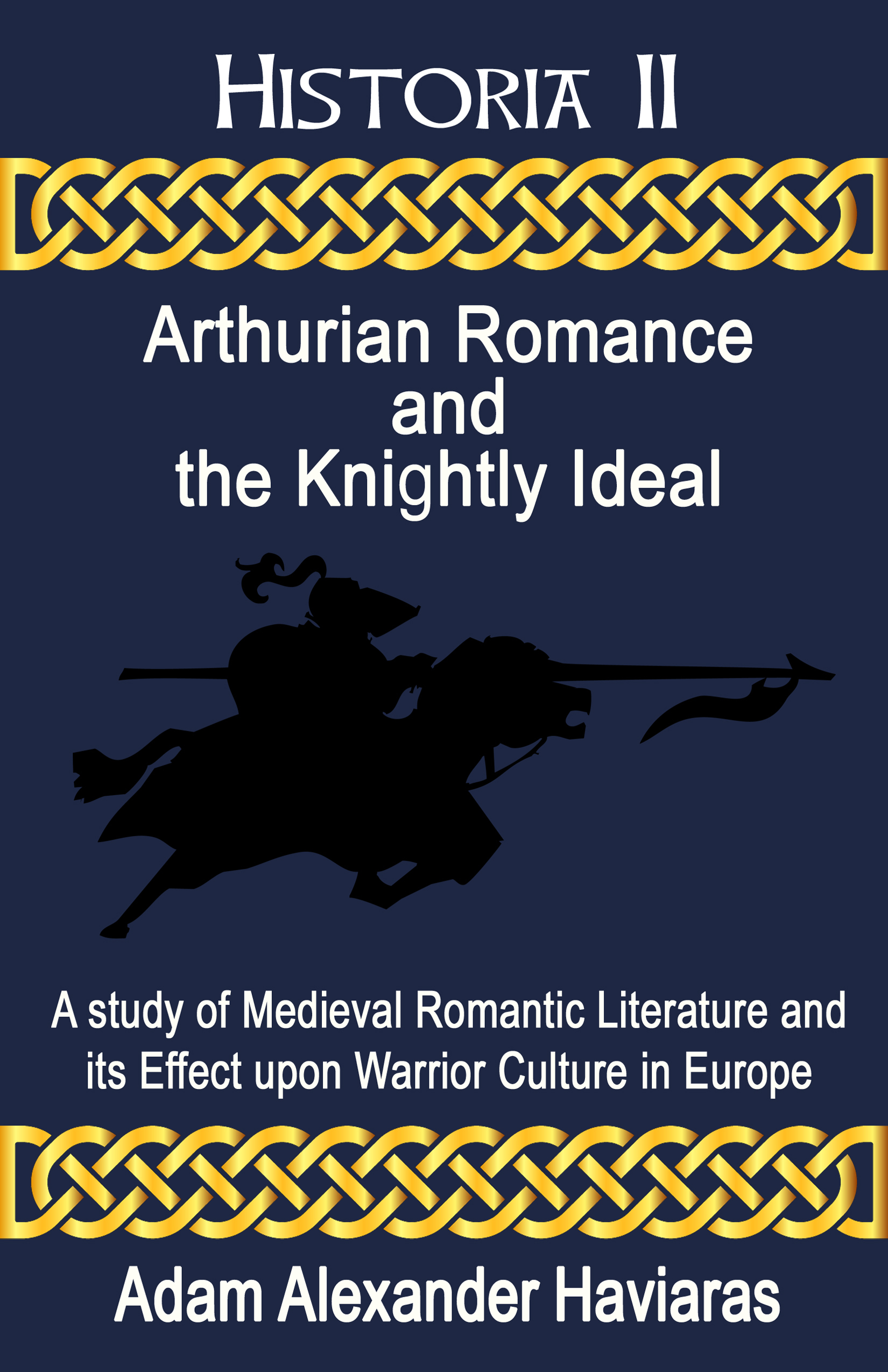
Arthurian Romance and the Knightly Ideal: A study of Medieval Romantic Literature and its Effect upon the Warrior Culture in Europe
This book explores the history and effects of one of the great literary movements in medieval Europe: Arthurian Romance.
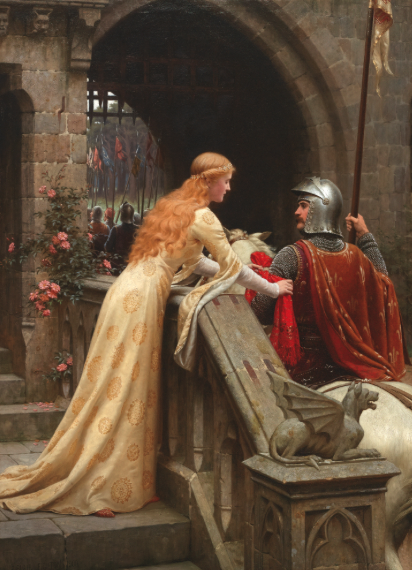
This is not just a study of the Arthurian romances and the authors of the genre. It is a study of the true nature of chivalry and courtly love. It is also a look at a revolutionary and inspiring movement and cultural shift among the nobles of medieval Europe, one that altered perceptions of violence and the roles of men and women, influenced social change, and molded the image of the ideal knight.
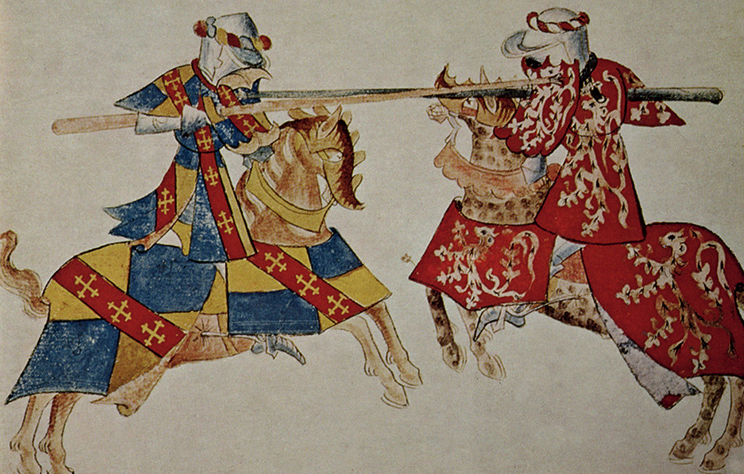
In this book, the reader will learn about the origins and history of Arthurian Romance, the emergence of courtly culture, the greatest authors of Arthurian Romance, and the evolution of tournaments during the Middle Ages.
Explore the relationship between violence and the knightly ideal, and discover how medieval Arthurian Romance and its ideals may have played a role in civilizing the warrior classes of Europe and creating a new order of chivalry.
If you have an interest in medieval history and literature, Arthurian studies, or if you simply have fond memories of tales of knights and ladies, then you will enjoy this in-depth study of one of the great literary achievements of the Middle Ages.
This might come as a surprise to some of you, but my main field of study over the years has been Arthurian studies, not just the history and archaeology related to the Dark Ages and the search for an understanding of the historical ‘Arthur’, but also the romantic literature that attracted me to the Arthurian legends in the first place.
Of course, the main author that stands out is Chrétien de Troyes who really perfected and popularized the genre of Arthurian Romance.
The writings of Chrétien de Troyes not only influenced my study and perception of history, but they also influenced my own writing a great deal. Perhaps it was because I was first introduced to them at an early age, a time when I was really trying to find myself and my purpose in life, a time when I was filled to the brim with idealism.
In some ways, Arthurian Romance helped to save me from becoming too jaded with the world. It has been my sword and shield during darker times.
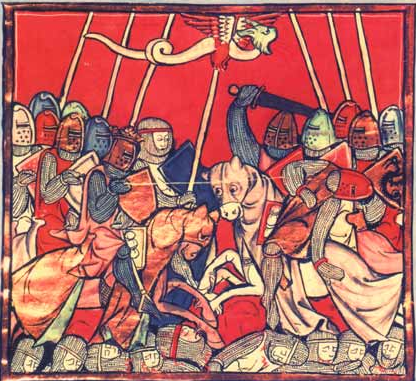
What is fascinating is that Arthurian Romance did indeed spark a sort of revolution during the Middle Ages, and enticed the violent knightly class to aspire to something greater than themselves.
Arthurian Romance really did create a new order of chivalry.
I’ve done a lot of research over the years, and this book summarizes much of that work in what I hope is a very accessible way.
If you are interested in getting a copy of this second book in the HISTORIA non-fiction series, you can check it out on Amazon, iTunes and Kobo by CLICKING HERE.
You can also purchase a copy directly from Eagles and Dragons Publishing on the ‘Buy Direct from Eagles and Dragons’tab of the website, or by CLICKING HERE.
Next week, we’ll introduce you to Book III in the HISTORIA series, so stay tuned for that.
Cheers, and thank you for reading!
HISTORIA – Announcing a new Non-Fiction series from Eagles and Dragons Publishing!
Greetings history-lovers!
This week on the blog, we’ve got an exciting announcement…
Eagles and Dragons Publishing has launched HISTORIA, a new line of non-fiction books that make the study of ancient and medieval history and archaeology accessible for everyone.
Books in the HISTORIA series will introduce readers to a variety of subjects in the form of short, easy-to-understand papers and books.
The first few books, which are now available, focus on my love of Arthurian and Celtic Studies and introduce readers to his academic research over the years.
More books will be added to the HISTORIA series over time, and they will cover history and archaeology from ancient Greece and Rome right through to the Middle Ages. There will be something for everyone!
HISTORIA: A Gateway to Ancient and Medieval History and Archaeology!
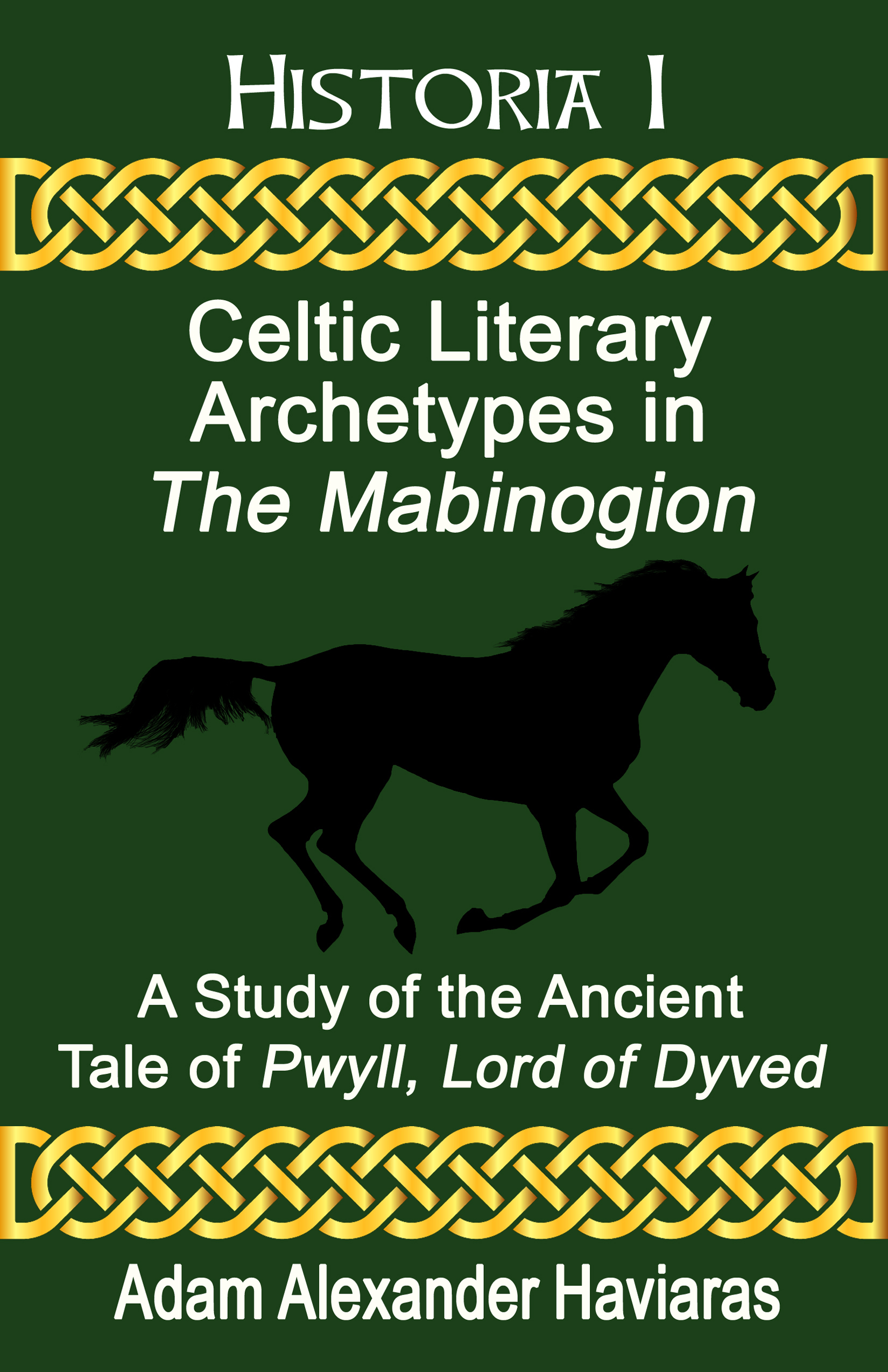
This week, we wanted to introduce you the very first title in the HISTORIA series. The full title is ‘Celtic Literary Archetypes in The Mabinogion: A Study of the Ancient Tale of Pwyll, Lord of Dyved’.
This book introduces the reader to some of the literary traditions of the ancient Celts through the study of the first branch of The Mabinogion: Pwyll, Lord of Dyved. This ancient text is both a record of British mythology and a teaching text for ancient princes. It also illustrates the values of Celtic, Iron Age society that carried on into the Middle Ages to shape Arthurian Romance and ideals of chivalry and kingship.
In this book, the reader will learn about the most prominent archetypes in ancient Celtic literature such as occurrences in threes, the importance of contact with the Otherworld, what it meant to be an effective ruler, and more.
Pwyll, Lord of Dyved is a tale of magic and wonder, as well as human trial and experience, and the archetypes it employs are as relevant today as they were over fifteen-hundred years ago.
If you are studying The Mabinogion, or have an interest in Celtic and Arthurian studies, the Arthurian legends and British mythology, then you will enjoy this short, engaging study of one of the great literary achievements of the ancient Celts.
Some people might be surprised that when it comes to historical periods, my interests are, first and foremost, deeply entrenched in what is commonly called the ‘Dark Ages’. To me, that is the Arthurian period, and tales in The Mabinogion are a wonderful source from that time and the traditions that arose out of it.
Why the Dark Ages? Well, to me, the period is a sort of bridge between the classical and medieval worlds. It may have been a time of darkness and despair, with the fall of the Western Roman Empire and the effects that had, but it was also a time of hope, of new beginnings. It was perhaps not so much a ‘Dark Age’ as an Heroic Age.
When I first read The Mabinogion, and especially the tale of Pwyll, I was drawn in by the magic of it. After studying it in an academic setting, my eyes were opened to the tale’s importance, and in this new book I endeavour to share some of my research on it with all of you.
If you are interested in getting a copy of this first book in the HISTORIA non-fiction series, you can check it out on Amazon, iTunes and Kobo by CLICKING HERE.
You can also purchase a copy directly from Eagles and Dragons Publishing on the ‘Buy Direct from Eagles and Dragons’ tab of the website, or by CLICKING HERE.
Next week, we’ll introduce you to Book II in the HISTORIA series, so stay tuned for that.
Cheers, thank you for reading, and thank you for joining us on this new adventure for Eagles and Dragons Publishing!
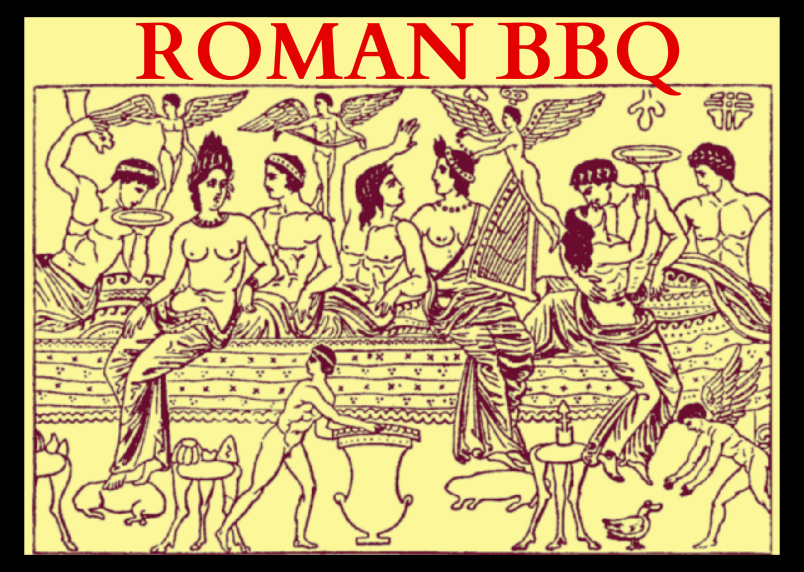
Roman BBQ
Salvete readers and history-lovers!
Well, Summer has finally arrived in the northern hemisphere, and that means dining al fresco with friends and family, sunny days (one hopes!), and time spent beside bodies of water.
It also means people will be firing up their barbecues! And so, with the upcoming North American holidays of Canada Day (July 1st) and Independence Day in the USA (July 4th), I thought it would be fun to talk briefly about food!
This isn’t just a history post about food in ancient Rome. It’s a practical post, because at the end I’m going to share a recipe with you that is easily done. But first…
We can’t really have a discussion about food in ancient Rome without talking about one man in particular.
He was the gastronome du jour during the reigns of Augustus and Tiberius, and his recipes were used for hundreds of years after his passing.
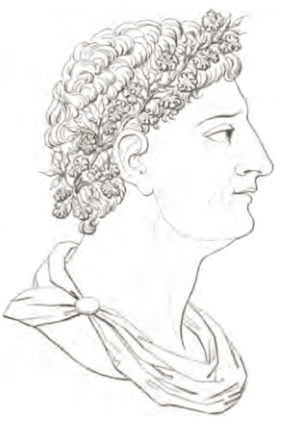
I’m speaking, of course, about Apicius, or, more formally Marcus Gavius Apicius (25 B.C. – A.D.37).
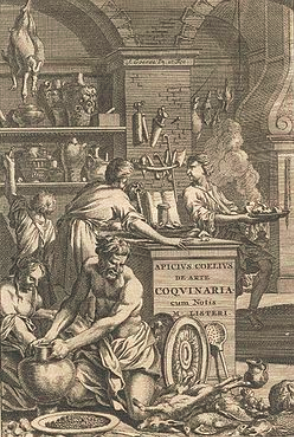
Apicius was a man who was largely concerned with fine living and fine food in ancient Rome and his work ‘On Cookery’, also known as ‘Cookery and Dining in Imperial Rome’, which has come down to us, is chock-full of recipes from wines and oils, to desserts, sauces, broths, a lovely array of vegetables, and spices.
There is also a lot about different meats and sea foods, and their preparation and uses, and several of them are quite disturbing if not entertaining.
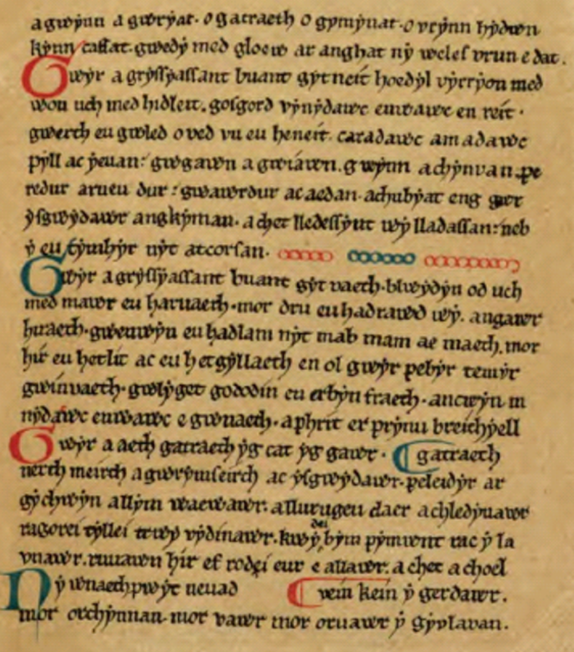
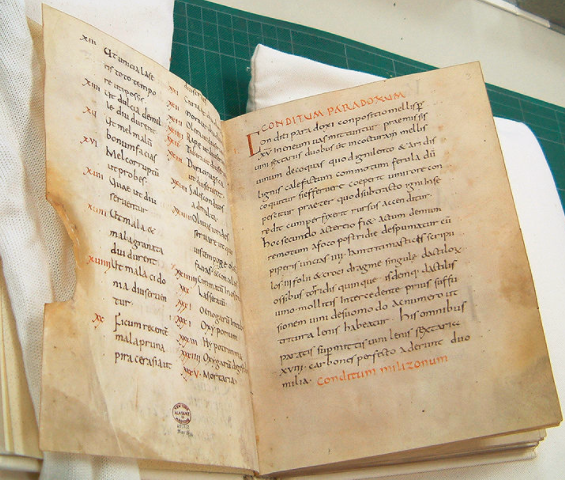
Apicius’ ‘book’ might have been a sort of Julia Child cookery book of the ancient world, widely used in the kitchens of well-to-do Romans. Here is a picture of a manuscript copy from the A.D. 900:
When I think of Roman cooking, the first things that I imagine are outlandish dishes and meats that I would never consider eating myself. And if you peruse Apicius, you will indeed read about some things abhorrent to your modern tastes.
Book II of Apicius, dealing with ‘Minces’ includes recipes for Isicia de cerebellis (bain sausage),and Vulvulae Botelli (a dish of sow’s matrix). Or how about Book IV which deals with ‘Miscellanea’ such as Patina Frisilis (vegetable and brain pudding)?
Book VII on ‘Sumptuous Dishes’ has recipes for Vulvae Steriles (spayed sow’s womb), andAliter in Pulmonibus (another way to cook lung). Because I guess, one needs choices when cooking lung!
And then there is everyone’s favourite in Book VIII on ‘Quadrupeds’ which goes into detail about Glires (stuffed dormice).
If you read through the text of Apicius, however, you will see that most of the dishes are quite appealing. There are a lot of wonderful vegetable dishes, and some recipes for meats that would make your mouth water.
With that – and BBQ season – in mind, I thought I would share one of Apicius’ more well-known recipes with you.
What is it?
Hamburgers.
Yes. You heard that correctly. Hamburgers, or, to be more precise, Isicia Omentata.
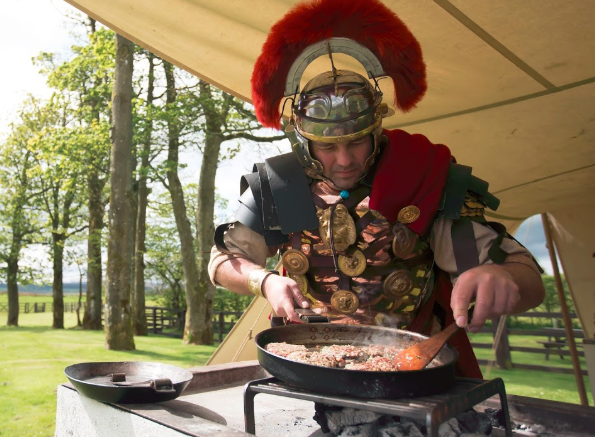
So, how do you make hamburgers from a 2000 year-old recipe? Let’s see what Apicius says in Book II (chapter 1, 47) on ‘Minces’:
Finely cut pulp of pork is ground with the hearts of winter wheat [fine wheat flour or cream of wheat] and diluted with wine. Flavor lightly with pepper and broth and if you like add a moderate quantity of myrtle berries also crushed, and after you have added crushed nuts and pepper [pepper corns or allspice] shape the forcemeat into small rolls, wrap these in caul, fry, and serve with wine gravy. (Apicius on Cookery)
That’s it. Not much to go on, but the basic ingredients are there. Beef was not as commonly eaten, so it is not surprising that pork was the meat of choice, though you could make this with just about any kind of mince, including a modern veggie mince option.
Another translation of the text reveals some different ingredients too. Here is a simplified version:
500g minced meat (or a vegan mince substitute)
60g pine kernels
3 tsp. Garum (Roman fish sauce – you can use a fish sauce from the grocery store, or just regular sea salt)
Ground pepper
Handful of coriander
Juniper berries (optional) – this is a coniferous berry that is used in cooking, but be sure to buy the edible kind, for some species, like Juniperus sabina, are toxic!
Caul fat (optional) – this is the thin membrane which surrounds the internal organs of some animals
I admit that I had to look up what ‘Caul fat’ is and, well, I think I would leave that part out. The meat will hold together without it if you use bread or wheat in the mixture. As with many Roman dishes in Apicius, the spices are exotic and interesting, so whether you opt for a meaty or meat-free version of this recipe, it should be a tasty treat hot off the grill!
If you try this out, let us know how it goes in the comments, and whether or not you made any adjustments to the recipe.
To read the full text of Apicius, you can do so for free on the Project Gutenberg website here: http://www.gutenberg.org/ebooks/29728
Have a look at the dishes throughout. You never know! You might just have the makings of a Roman BBQ fit for an emperor!
Thank you for reading!
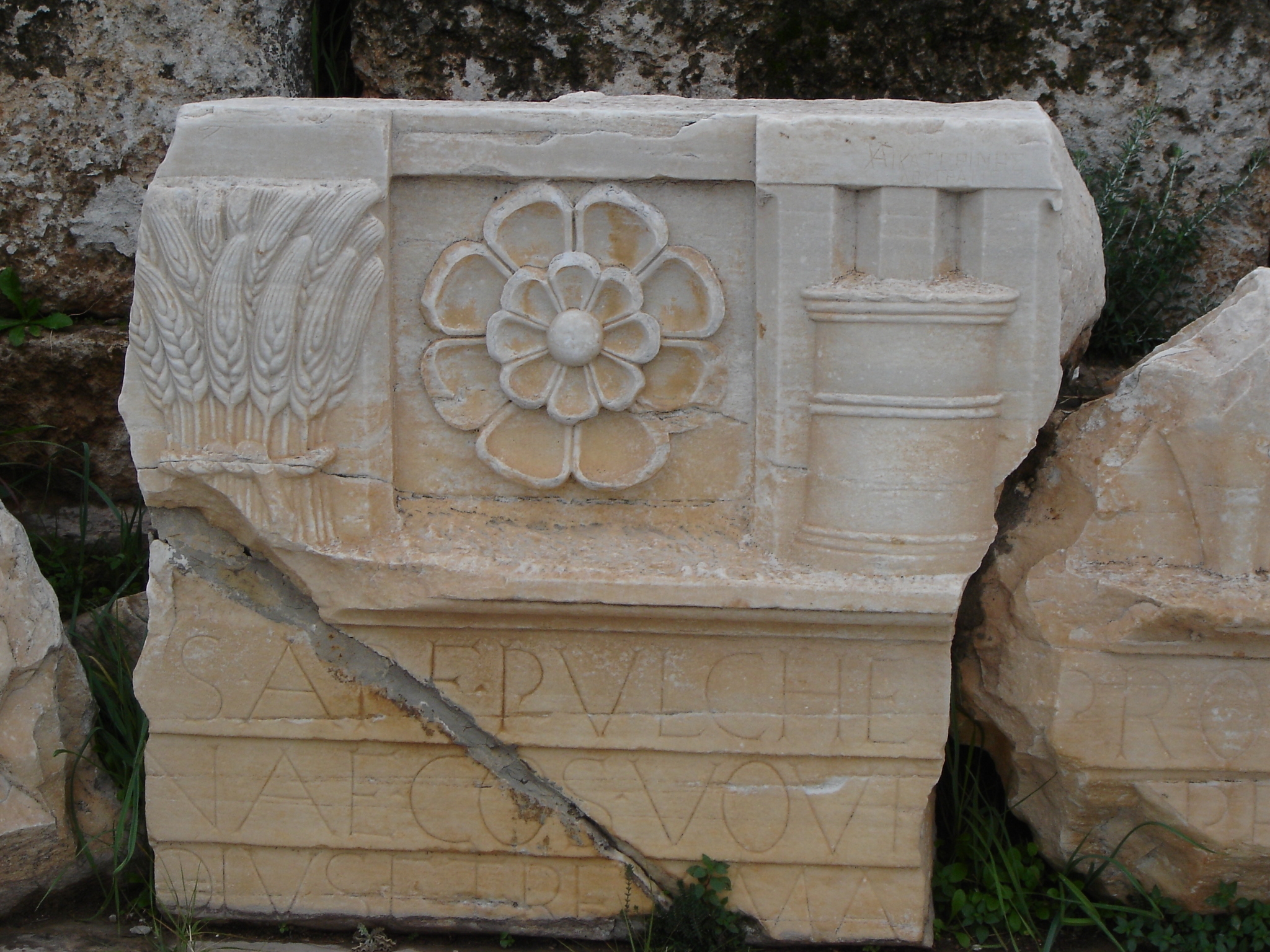
Ancient Eleusis and the Mysteries
I begin to sing of rich-haired Demeter, awful goddess — of her and her trim-ankled daughter whom Aidoneus rapt away, given to him by all-seeing Zeus the loud-thunderer.(The Hymn to Demeter)
Greetings history-lovers.
We’re going on a journey today to one of the most sacred sites of ancient Greece. It’s been a while since I took you on a site visit – we’ve already been to Olympia, Delphi, Nemea, Bassae, Brauron, Epidaurus, Delos and more – and so, the time has come for another.
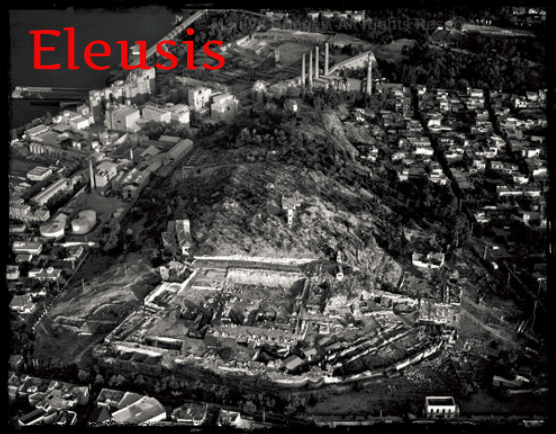
Today we are going to briefly discuss the site, the history and mythology of ancient Eleusis (pronounced ‘Elefsis’), a site that was sacred for thousands of years right through the period of the Roman Empire, and which was where the Eleusinian Mysteries took place.
Eleusis is not just an ancient religious site and sanctuary. It’s much more than that. It’s a story of abduction, of a mother’s grief and her revenge, of overcoming the fear of death, and of hope for the future. Visiting this site is unlike any other. I hope you enjoy the journey…
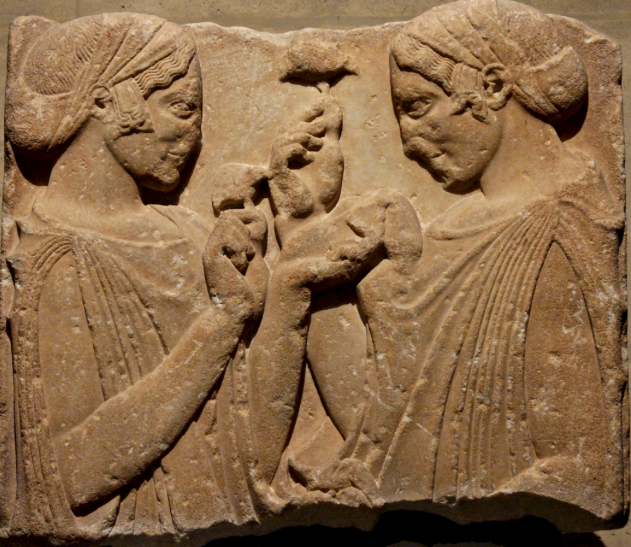
Apart from Demeter, lady of the golden sword and glorious fruits, she [Persephone] was playing with the deep-bosomed daughters of Oceanus and gathering flowers over a soft meadow, roses and crocuses and beautiful violets, irises also and hyacinths and the narcissus, which Earth made to grow at the will of Zeus and to please the Host of Many, to be a snare for the bloom-like girl — a marvellous, radiant flower. It was a thing of awe whether for deathless gods or mortal men to see: from its root grew a hundred blooms and is smelled most sweetly, so that all wide heaven above and the whole earth and the sea’s salt swell laughed for joy. And the girl was amazed and reached out with both hands to take the lovely toy; but the wide-pathed earth yawned there in the plain of Nysa, and the lord, Host of Many, with his immortal horses sprang out upon her — the Son of Cronos, He who has many names… He caught her up reluctant on his golden car and bare her away lamenting. Then she cried out shrilly with her voice, calling upon her father, the Son of Cronos, who is most high and excellent. But no one, either of the deathless gods or of mortal men, heard her voice, nor yet the olive-trees bearing rich fruit… (The Hymn to Demeter)
Rarely have I been to an ancient site as moving as Eleusis, modern Elefsina to the northwest of Athens. The memory of it haunts me still.
I left our home in the UK to visit family in Athens for the Christmas holidays. The celebrations were finished, Christmas and New Year having passed in a flurry of food and drink, and we were looking for sites to visit.
We decided on Eleusis.
Admittedly, I did not know a lot about the site at the time, but I had read about its importance, heard whispers of the Mysteries in some of the books I had read.
It was a cold and rainy day in January when we set out on the drive from Athens. I expected to get out into the countryside at some point, as we so often do when visiting sites, but the entirety of the drive, we were surrounded by the urban world, the sea occasionally coming into view.
Before I knew it, we were there, tightly parked on a dirty side street in front of low apartment buildings and homes. I got out of the car and looked around. Across the way there was a fence that surrounded a vast archaeological site, but first my eyes were drawn to the signs of industry not far off – cranes and shipyards, and shipping containers stacked to the sky. I also noted that average private homes looked directly onto the archaeological site.
This can’t be the site of the Eleusinian Mysteries, can it? I thought. But it was.
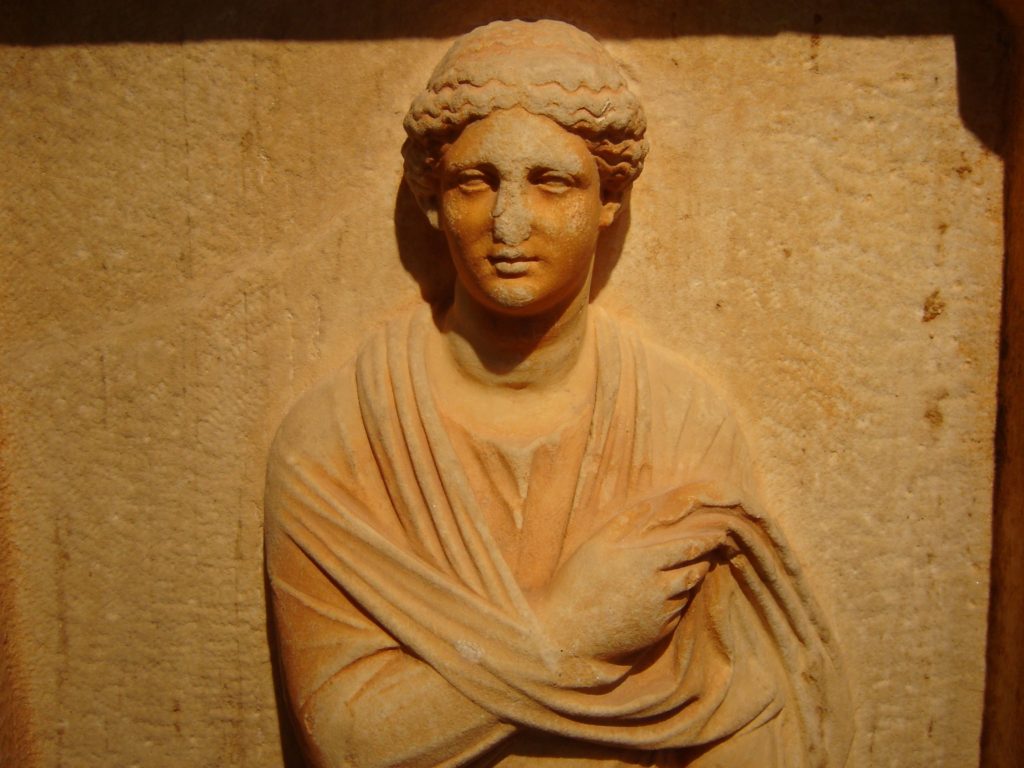
It is truly jarring to come to such an ancient site, revered throughout the ancient world, to see the dirty, modern world laying siege to it, crushing its edges like a polluted sea around an island paradise.
We made our way to the entrance, purchased our tickets and a guide book, and entered the site.
When I visit a site, more often than not, I don’t think first of the physical remains I’m about to see. I think of the story behind the place, the events that occurred there. And so, first, we should look briefly at the story of Eleusis…
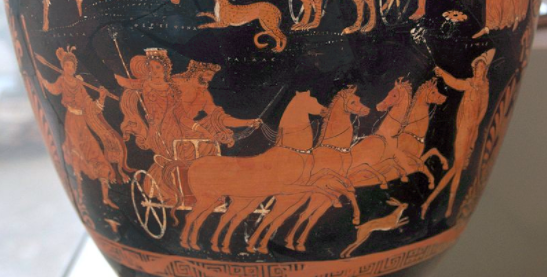
Demeter, Goddess of the harvest and agriculture, and sister of Zeus, lost her daughter, Persephone (also known as ‘Kore’). Hades (Pluto), god of the Underworld, had fallen in love with the young girl and abducted her, taking her back to his kingdom beneath the earth.
Demeter, despairing for the loss of her daughter, wandered the earth until she came to Eleusis. She was found weeping at a well there, near a doorway to the Underworld. The local king built her a temple at Eleusis and the goddess, angry at both gods and men for the loss of her daughter, locked herself away in the temple.
Drought and famine ravaged the land and mortals began to die in large numbers. And so, Zeus intervened with Hades on Demeter’s behalf and it was agreed that Persephone would be permitted to leave the Underworld for a part of the year while dwelling there for the four months of winter when the land is dead and cold.
Once the bargain was struck, Demeter emerged from her temple to teach the Eleusinians special rites for their morals as well as ways to cultivate the land.
Bitter pain seized her heart, and she rent the covering upon her divine hair with her dear hands: her dark cloak she cast down from both her shoulders and sped, like a wild-bird, over the firm land and yielding sea, seeking her child. But no one would tell her the truth, neither god nor mortal men; and of the birds of omen none came with true news for her. Then for nine days queenly Deo[Demeter]wandered over the earth with flaming torches in her hands, so grieved that she never tasted ambrosia and the sweet draught of nectar, nor sprinkled her body with water.(The Hymn to Demeter)
It’s a tragic tale, in true Greek fashion. But, before we go any further, we should discuss a little about the history of this site.
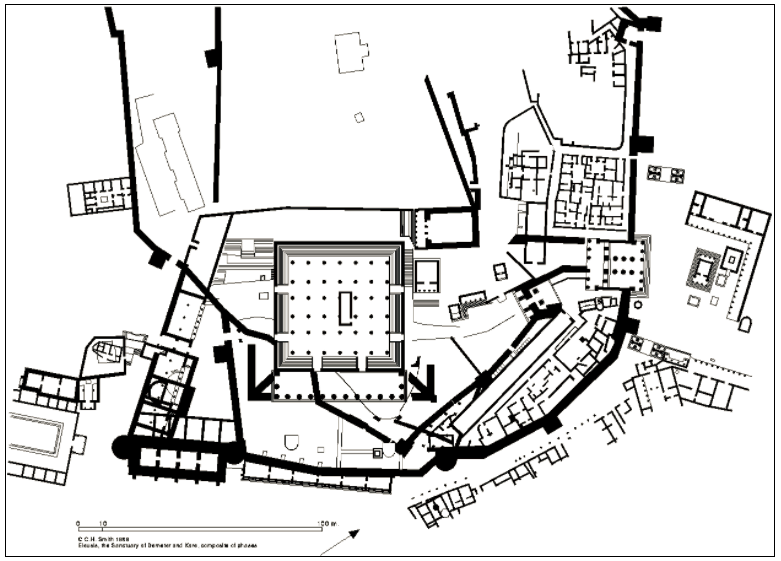
Eleusis, where it stands in the southwest corner of the Thriasian Plain, has been inhabited since the Middle Helladic period (1900 – 1600 B.C.). It was during the later Mycenaean period that the first temple of Demeter was built, during the reign of the legendary king, Celeus.
Eleusis was an important strategic site on the route from Athens to the Peloponnese, Boeotia, and northern Greece. Over time, there were a series of conflicts between the Eleusinians and Athens until the time of King Theseus (yes, that Theseus) when it was subjugated and became the demeof the tribe of Hippothontis, the latter remaining the official keepers of the Mysteries there.
During the Geometric period (1100-700 B.C.), which came after the Trojan War, the cult of Demeter grew in popularity. It was in 760 B.C., the year of the fifth Olympiad, that there was a famine in Greece, and at the behest of the Oracle of Delphi, a sacrifice and festival to Demeter were begun at Eleusis. At this time a large wall was built around the sanctuary, enclosing the Plutoneion and the Telesterion. We’ll discuss these two structures shortly.
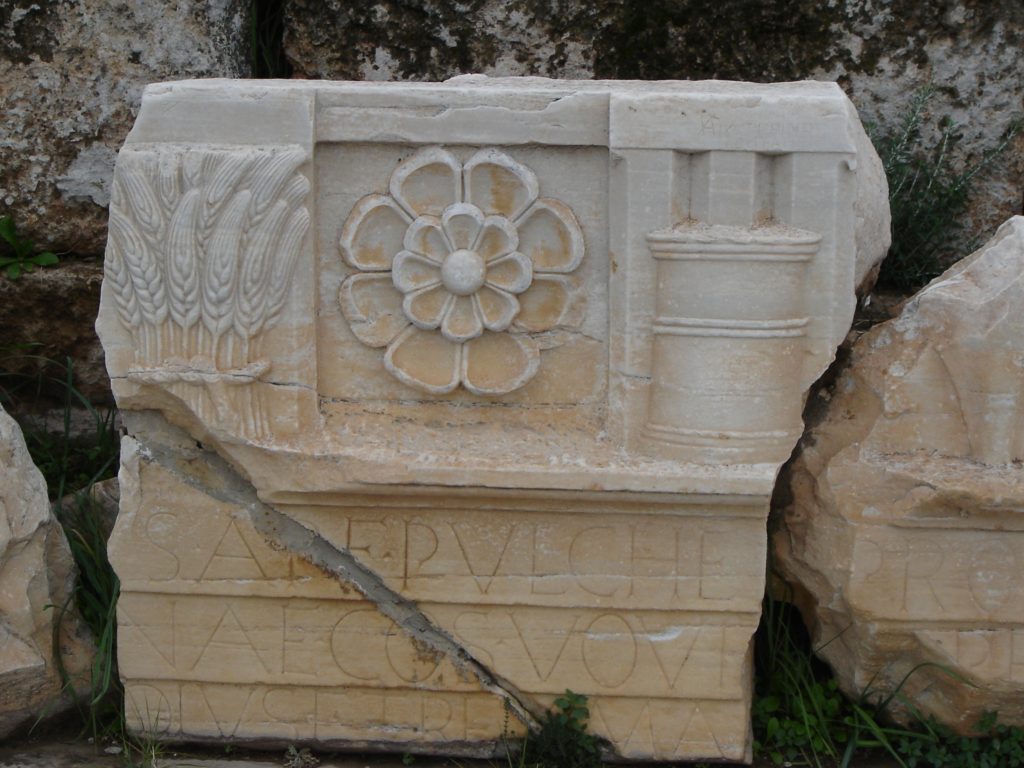
Some believe that it was this period which may have been the beginning of the Pan-Hellenic Eleusinian cult. Subsequently, during the time of Solon (c. 600 B.C.) the Eleusinian Mysteries were made one of the sacred Athenian festivals and a new, larger Telesterion and open courts were built for ceremonies to hide the rituals from the eyes of the uninitiated.
The Telesterion (which means ‘where ceremony takes place’) itself was a large structure with six entrances (two on three sides) where the rituals and ceremonies of initiates took place. During the rule of Pisistratus and his family (c. 550-510 B.C.), the Telesterion was enlarged even more and made on a square plan, the walls also being improved upon to make the sanctuary a sort of stronghold.
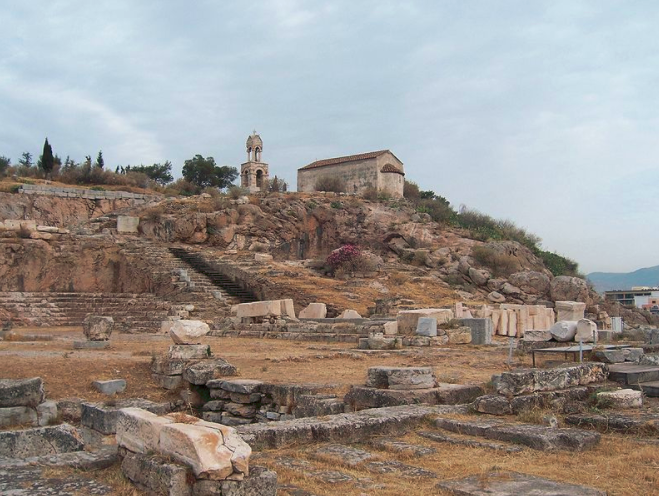
Sadly, during the Persian wars, the sanctuary of Eleusis was destroyed by the troops of Xerxes and Mardonius around 479 B.C. It was rebuilt by Cimon after the battle of Plataea when the Persians were defeated.
In the second half of the fifth century, Eleusis was included in the building programs of Pericles and, once more, the Telesterion, the focal point of the sanctuary and Mysteries, was enlarged to be bigger than ever before. Fortunately, all sides during the Peloponnesian War respected the sanctity of Eleusis, and so it escaped harm during that bloody conflict.
Over time, the sanctuary of Eleusis came to be controlled by others than the Athenians – the Macedonians during the Hellenistic age, and the Romans during the Roman Empire when, during the reigns of Hadrian (A.D.117-138) and Marcus Aurelius (A.D. 161-180), there was a final flurry of activity. The sanctuary achieved its greatest extent with the addition of triumphal arches, large and small propylaea, and a Roman court.
Also, Roman citizens were then permitted to be initiated into the Mysteries.
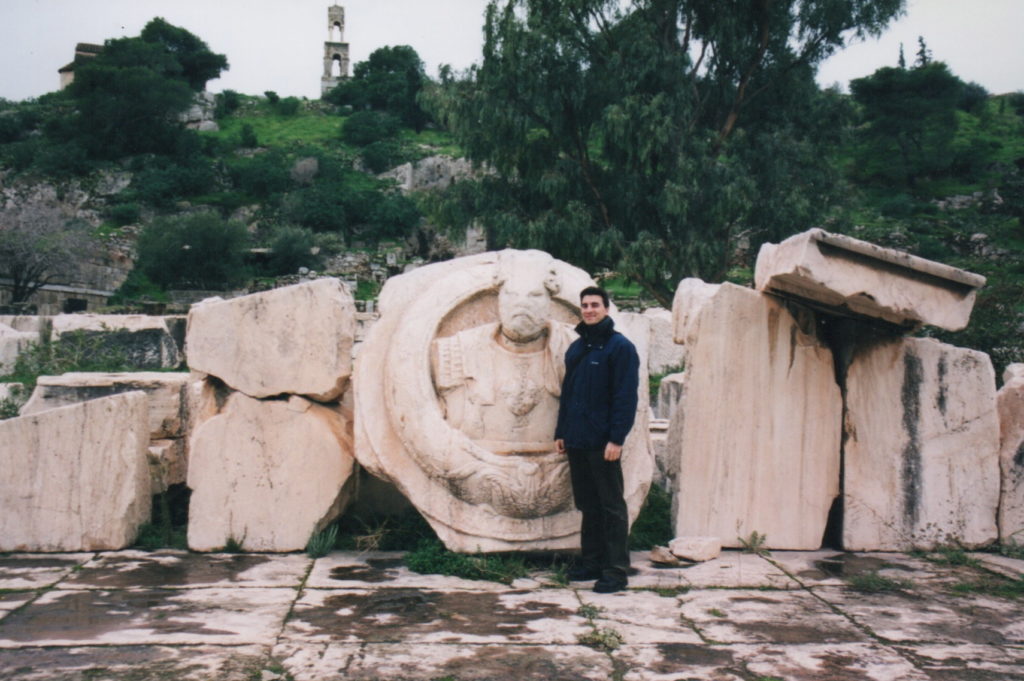
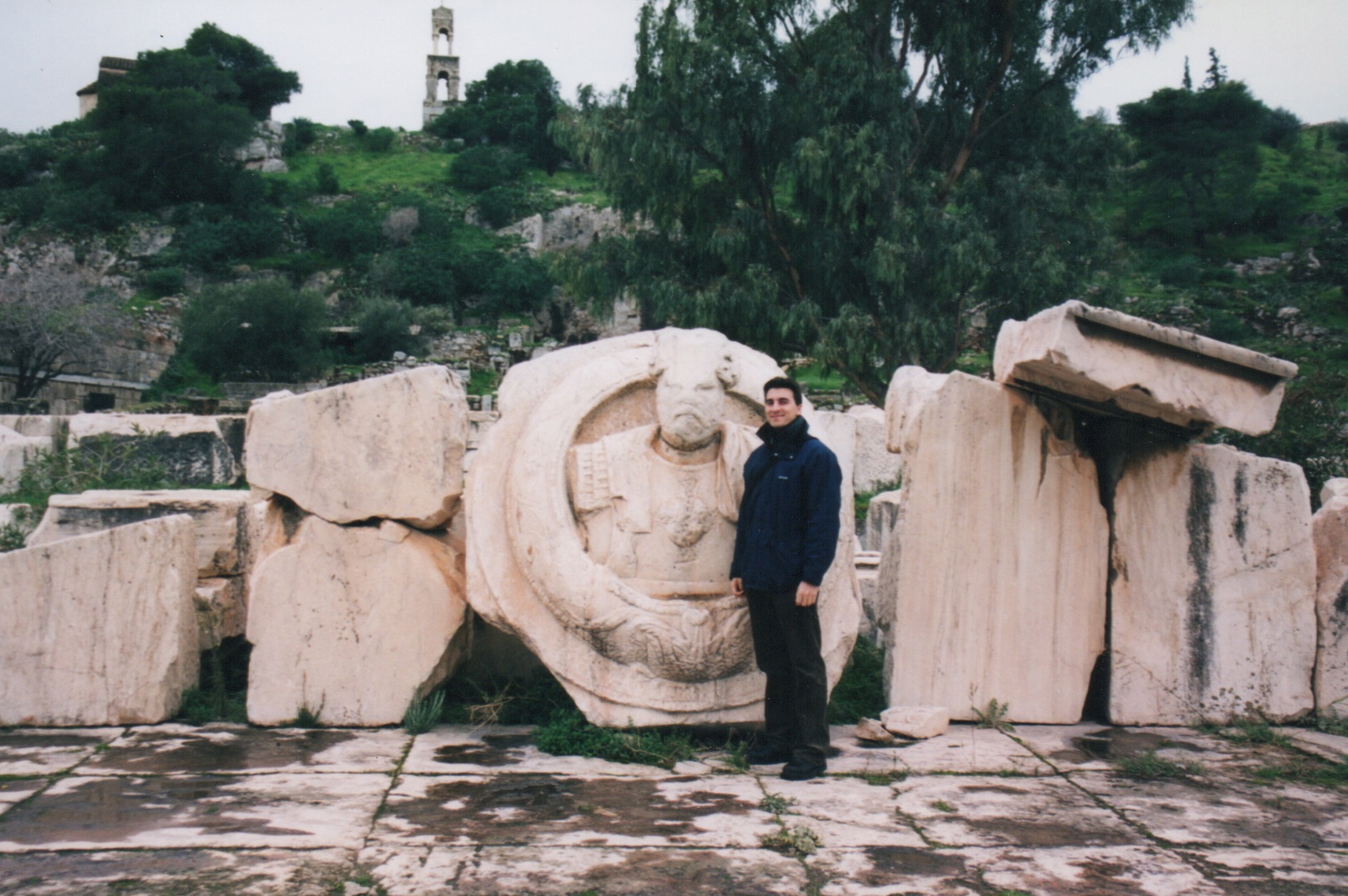
Adam standing in front of one of the Roman pediments portraying Marcus Aurelius or Hadrian in the Roman Court of Eleusis.
The end of the Eleusinian Mysteries began with the Theodosian decrees in around A.D. 350 when the ancient cults were forbidden in favour of Christianity, and then in A.D. 395 Alaric and his Visigoths destroyed the sanctuary once and for all.
The cult of Demeter faded away…
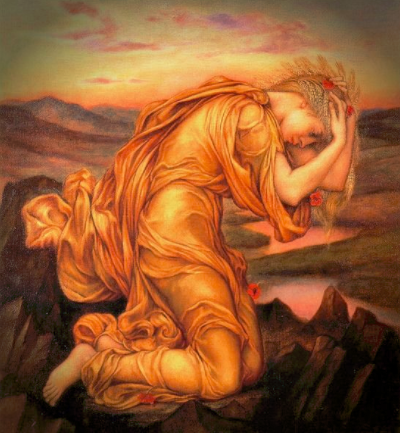
Now when all-seeing Zeus the loud-thunderer heard this, he sent the Slayer of Argus whose wand is of gold to Erebus, so that having won over Hades with soft words, he might lead forth chaste Persephone to the light from the misty gloom to join the gods, and that her mother might see her with her eyes and cease from her anger. And Hermes obeyed, and leaving the house of Olympus, straightway sprang down with speed to the hidden places of the earth. And he found the lord Hades in his house seated upon a couch, and his shy mate with him, much reluctant, because she yearned for her mother. But she was afar off, brooding on her fell design because of the deeds of the blessed gods. And the strong Slayer of Argus drew near and said:
“Dark-haired Hades, ruler over the departed, father Zeus bids me bring noble Persephone forth from Erebus unto the gods, that her mother may see her with her eyes and cease from her dread anger with the immortals; for now she plans an awful deed, to destroy the weakly tribes of earthborn men by keeping seed hidden beneath the earth, and so she makes an end of the honours of the undying gods. For she keeps fearful anger and does not consort with the gods, but sits aloof in her fragrant temple, dwelling in the rocky hold of Eleusis.”
So he said. And Aidoneus, ruler over the dead, smiled grimly and obeyed the behest of Zeus the king. For he straightway urged wise Persephone, saying: “Go now, Persephone, to your dark-robed mother, go, and feel kindly in your heart towards me: be not so exceedingly cast down; for I shall be no unfitting husband for you among the deathless gods, that am own brother to father Zeus. And while you are here, you shall rule all that lives and moves and shall have the greatest rights among the deathless gods: those who defraud you and do not appease your power with offerings, reverently performing rites and paying fit gifts, shall be punished for evermore. (The Hymn to Demeter)
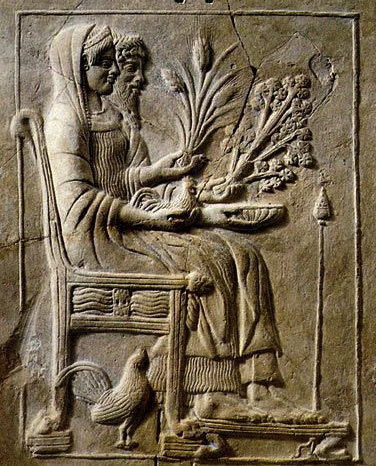
If I remember correctly, we entered the sanctuary from the area known as the Roman Court, there to be greeted by the face of a Roman emperor on a pediment, possibly Marcus Aurelius or Hadrian.
Upon entering, the sight that meets you is one of ruin, especially if it is a cloudy, cold day. I know that when I stepped onto the site of the sanctuary, I felt a great sadness. And it’s no wonder, considering the story behind it all, and why Eleusis was such a sacred place to the ancient Greeks and Romans.
Persephone was filled with joy and hastily sprang up for gladness. But he on his part secretly gave her sweet pomegranate seed to eat, taking care for himself that she might not remain continually with grave, dark-robed Demeter. Then Aidoneus the Ruler of Many openly got ready his deathless horses beneath the golden chariot. And she mounted on the chariot, and the strong Slayer of Argos took reins and whip in his dear hands and drove forth from the hall, the horses speeding readily. Swiftly they traversed their long course, and neither the sea nor river-waters nor grassy glens nor mountain-peaks checked the career of the immortal horses, but they clave the deep air above them as they went. And Hermes brought them to the place where rich-crowned Demeter was staying and checked them before her fragrant temple.(The Hymn to Demeter)
It is indeed a strange thing to come to a place where the myths come alive, where the air still rings with weeping and the chants of thousands of initiates whose thoughts were bent upon that same sad story across the ages.
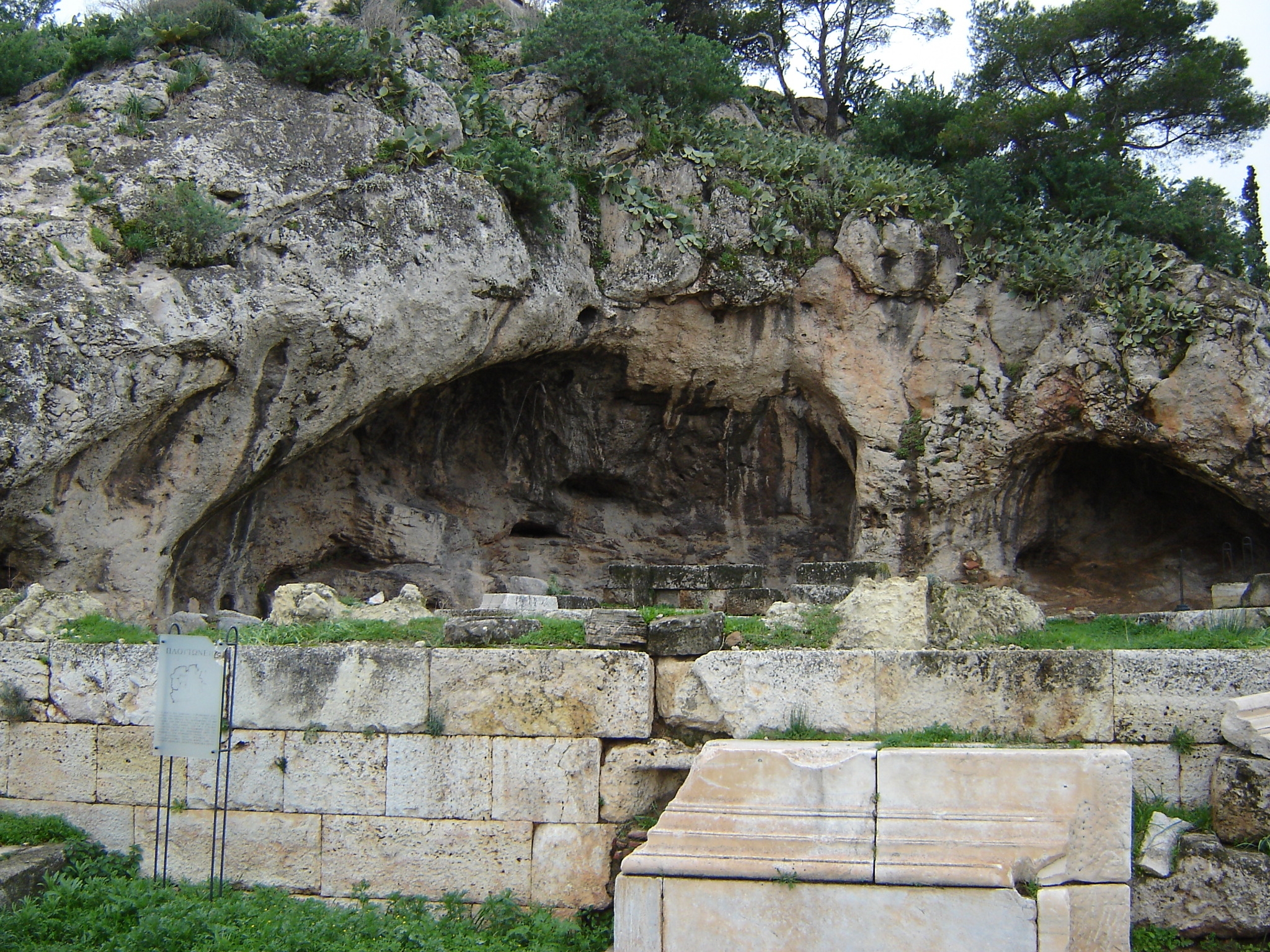
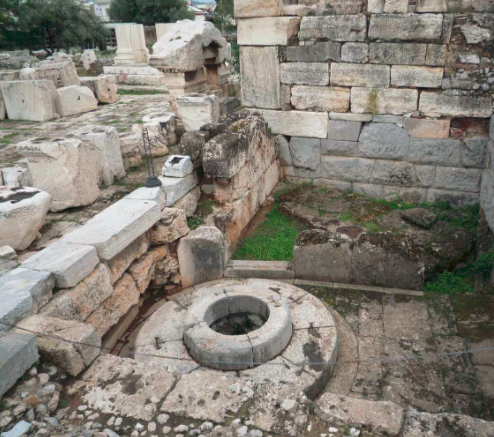
As I walked through the greater and lesser propylaeafarther into the sanctuary, on my right there appeared a dark, hollowed out rock face.
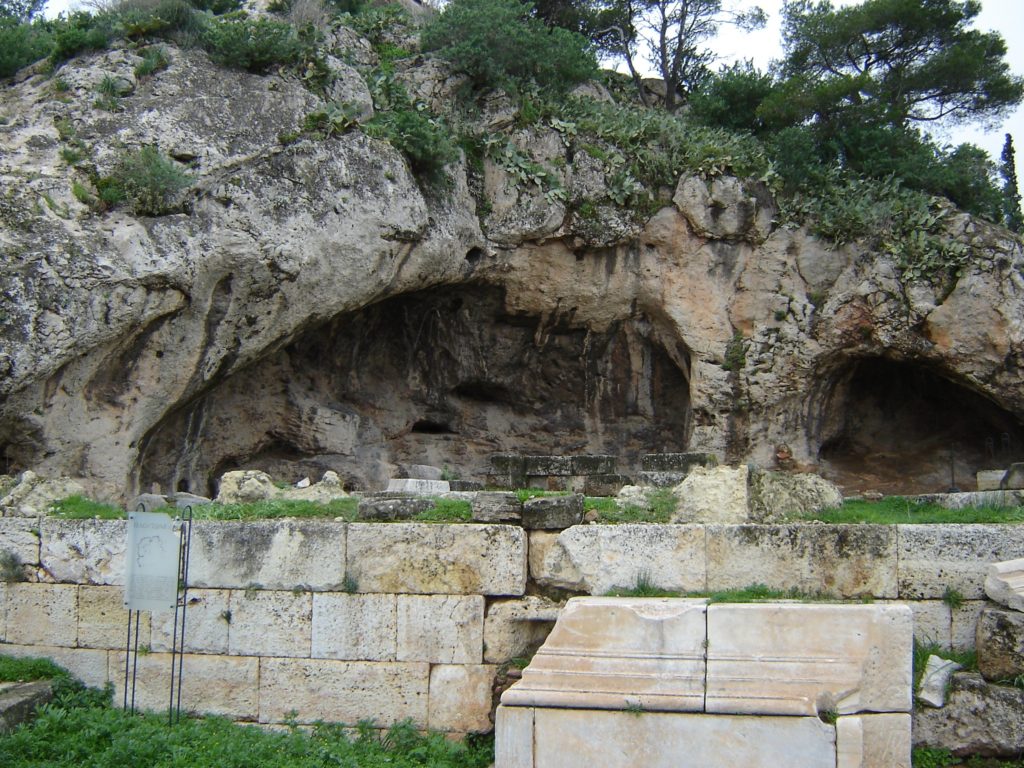
This was the area of the Ploutoneion, and there, at the base of the rock, the gateway to Hades itself.
But the sad thing was the small round well before it where Demeter is said to have knelt down and wept for her daughter.
To me, this was the most moving part of the sanctuary of Eleusis. It is a place of mourning and regret, a sort of ancient crime scene.
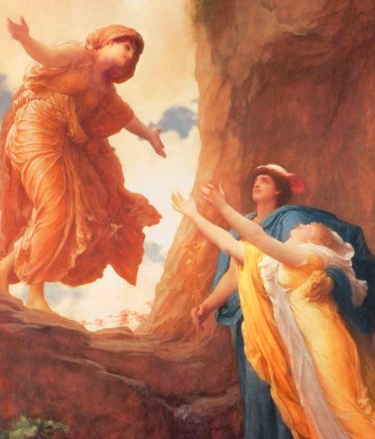
And when Demeter saw them, she rushed forth as does a Maenad down some thick-wooded mountain, while Persephone on the other side, when she saw her mother’s sweet eyes, left the chariot and horses, and leaped down to run to her, and falling upon her neck, embraced her. But while Demeter was still holding her dear child in her arms, her heart suddenly misgave her for some snare, so that she feared greatly and ceased fondling her daughter and asked of her at once: “My child, tell me, surely you have not tasted any food while you were below? Speak out and hide nothing, but let us both know. For if you have not, you shall come back from loathly Hades and live with me and your father, the dark-clouded Son of Cronos and be honoured by all the deathless gods; but if you have tasted food, you must go back again beneath the secret places of the earth, there to dwell a third part of the seasons every year: yet for the two parts you shall be with me and the other deathless gods. But when the earth shall bloom with the fragrant flowers of spring in every kind, then from the realm of darkness and gloom thou shalt come up once more to be a wonder for gods and mortal men.(The Hymn to Demeter)
What were the Eleusinian Mysteries all about? What was involved?
The truth is, we don’t actually know much at all. That is the nature of ancient mystery religions. The initiates had to be chosen and then they underwent instruction, but they were sworn to absolute secrecy about what occurred inside the sanctuary and the rites that took place in the Telesterion, the focal point of the Mysteries themselves.
What we do know today is solely based on the public rituals of the festival.
We know that the Mysteries were celebrated twice a year, in the Spring and in the Autumn. The ‘Lesser Mysteries’ were celebrated near Athens in the Spring in the month of Anthesterion (March), and the ‘Greater Mysteries’ were celebrated in the Autumn in the month of Boedromion (September).
Here is what we know was involved…
The Greater Mysteries, over several days, involved making sacrifices, and a procession with the priestess of Demeter carrying the sacred cymbals all the way from Eleusis to Athens.
An official proclamation, or prorrhesis, of the opening of the festivities followed the procession. Anyone who was guilty of murder, desecration, or who spoke no Greek was excluded from the festivities.
Initiates of the Eleusinian Mysteries went through a ceremony of purification in the sea at Phaleron (modern Faliro in Athens), and sacrificed piglets. More sacrifices followed and then there was the great procession of initiates from Athens to Eleusis along the Sacred Way with stops at altars and shrines along the journey, more sacrifices and the chanting of hymns.
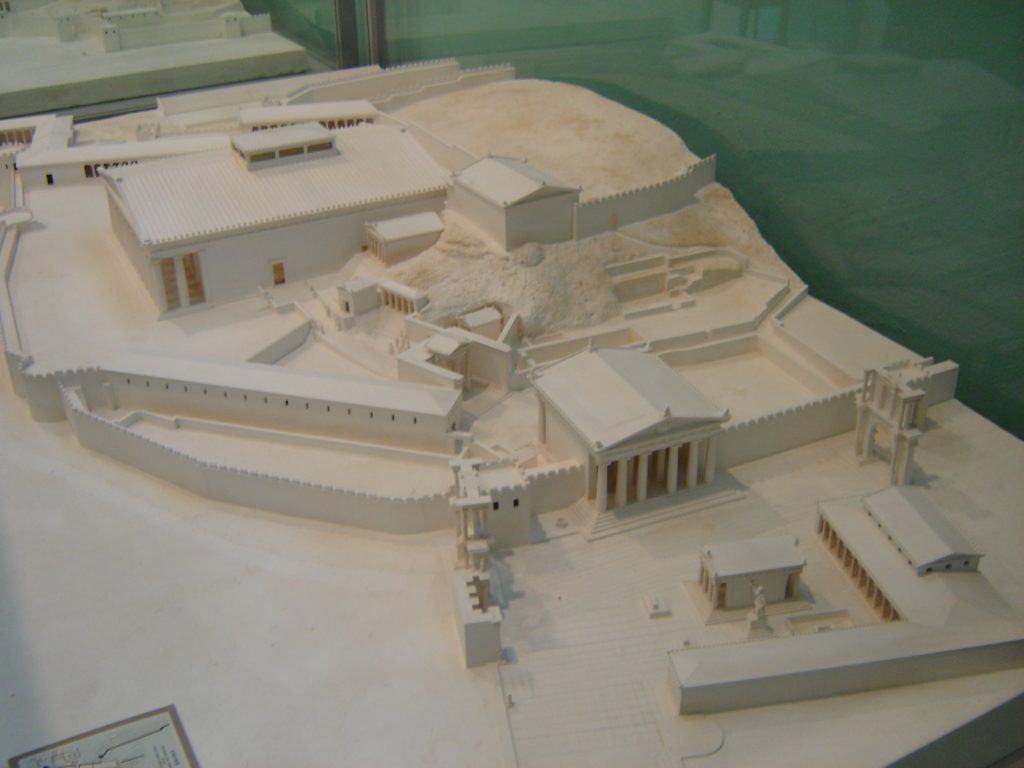
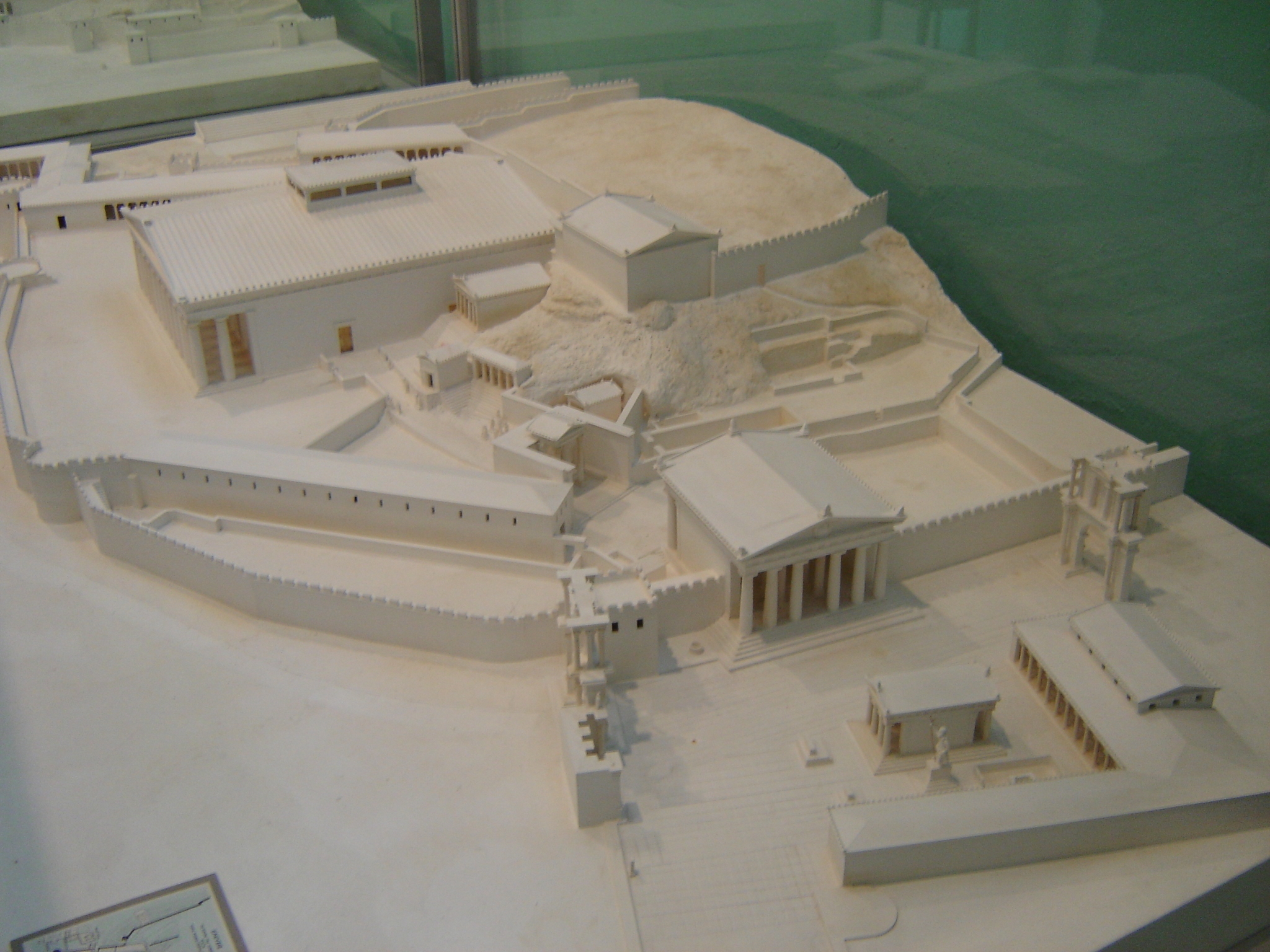
Model of the Sanctuary of Eleusis with the Ploutoneion in the centre and the large Telesterion top left
The procession ended in the large outer court of the Eleusinian sanctuary where initiates were met by the priests. There were ritual dances and after that we don’t know much more.
Initiates moved inside the Telesterion where the secret part of the ceremonies took place.
It is suspected that the Mysteries may have involved a re-enactment of the abduction of Persephone (Kore), a ceremony only for initiates of previous years, and perhaps the honouring of the dead with libations.
People were supposed to return home after taking part in the Mysteries feeling less fearful of Death, and carrying with them hopes of a better life.
And all-seeing Zeus sent a messenger to them, rich-haired Rhea, to bring dark-cloaked Demeter to join the families of the gods: and he promised to give her what right she should choose among the deathless gods and agreed that her daughter should go down for the third part of the circling year to darkness and gloom, but for the two parts should live with her mother and the other deathless gods. Thus he commanded. And the goddess did not disobey the message of Zeus; swiftly she rushed down from the peaks of Olympus and came to the plain of Rharus, rich, fertile corn-land once, but then in nowise fruitful, for it lay idle and utterly leafless, because the white grain was hidden by design of trim-ankled Demeter. But afterwards, as springtime waxed, it was soon to be waving with long ears of corn, and its rich furrows to be loaded with grain upon the ground, while others would already be bound in sheaves. There first she landed from the fruitless upper air: and glad were the goddesses to see each other and cheered in heart.
Then bright-coiffed Rhea said to Demeter: “Come, my daughter; for far-seeing Zeus the loud-thunderer calls you to join the families of the gods, and has promised to give you what rights you please among the deathless gods, and has agreed that for a third part of the circling year your daughter shall go down to darkness and gloom, but for the two parts shall be with you and the other deathless gods: so has he declared it shall be and has bowed his head in token. But come, my child, obey, and be not too angry unrelentingly with the dark-clouded Son of Cronos; but rather increase forthwith for men the fruit that gives them life.” (The Hymn to Demeter)
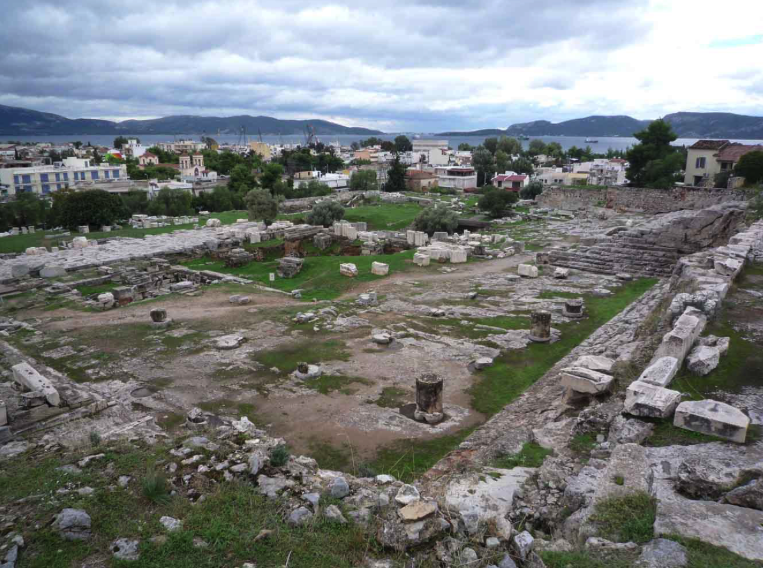
I tore myself away from the well where Demeter was said to have shed her tears, and the dread doorway to the Underworld. It was as if the air were filled with Demeter’s sobbing and the distant echo of Persephone’s cries from deep down in the rock.
The sky darkened as I walked farther into the sanctuary, up a long path until I found myself looking down onto a massive square area below. It was the Telesterion.
As mentioned, this was the place where the secret rituals of the Eleusinian Mysteries took place, around the spot where the original temple was built. The temple foundations are still visible within the broad expanse of the large, square Telesterion.
I stared down at this and wondered what could have gone on inside that cavernous structure.
I also thought about how amazing it was that the initiates of the Eleusinian Mysteries took their oath of secrecy so very seriously. Was it fear of the gods that kept them from revealing what went on, or was it the supreme respect they had for the Mysteries, and the gratitude they felt for being allowed to be a part of it?
We can only guess from what scant references there are in ancient writings, but really, some things are better left secret, their names shrouded in mystery and myth.
I stood there in the rain staring at the Telesterion for some time. I felt indeed like an outsider, an intruder of sorts. After all, I was not an initiate. If I was, perhaps I would have felt something other than sadness visiting the Eleusinian sanctuary. Perhaps initiates, having faced ceremonial death and sadness, were actually even more open to hope and life itself. Was that the gift of Demeter and the Mysteries?
I wondered about that then, even as I do now.
So spake Rhea. And rich-crowned Demeter did not refuse but straightway made fruit to spring up from the rich lands, so that the whole wide earth was laden with leaves and flowers. Then she went, and to the kings who deal justice, Triptolemus and Diocles, the horse-driver, and to doughty Eumolpus and Celeus, leader of the people, she showed the conduct of her rites and taught them all her mysteries, to Triptolemus and Polyxeinus and Diocles also, — awful mysteries which no one may in any way transgress or pry into or utter, for deep awe of the gods checks the voice. Happy is he among men upon earth who has seen these mysteries; but he who is uninitiate and who has no part in them, never has lot of like good things once he is dead, down in the darkness and gloom.
But when the bright goddess had taught them all, they went to Olympus to the gathering of the other gods. And there they dwell beside Zeus who delights in thunder, awful and reverend goddesses. Right blessed is he among men on earth whom they freely love: soon they do send Plutus as guest to his great house, Plutus who gives wealth to mortal men.
And now, queen of the land of sweet Eleusis and sea-girt Paros and rocky Antron, lady, giver of good gifts, bringer of seasons, queen Deo, be gracious, you and your daughter all beauteous Persephone, and for my song grant me heart-cheering substance.(The Hymn to Demeter)
Of course we each have our own experiences when visiting an ancient site. I hope you have found this interesting, and that it compels you to visit Eleusis and the museum yourself if you ever have the chance.
For the fiction-readers among you, I would recommend the book Mysteries of Eleusis by Margaret Doody, which is part of her Aristotle Detective series. In the book she does go through a lot of what we do know about the Mysteries, including the ritual bathing and procession from Athens to Eleusis. A fun read for summer!
If you would like to read the full Hymn to Demeter, you can also do so HERE.
Thank you for reading.

Roman Ghosts – Sentries of the Saxon Shore
Salvete, Readers!
Today we have our second post in the Roman Ghosts series, and this one is guaranteed to give you shivers.
If you missed the first post about Shades in Eburacum, you can check it out by CLICKING HERE.
Many of you have written to us about Roman ghost sightings in the UK, and we are keen to research them and share with everyone. Rest assured, they’re all on the list! Today’s post comes by way of a tip from Eagles and Dragons reader, Michael Dennis.
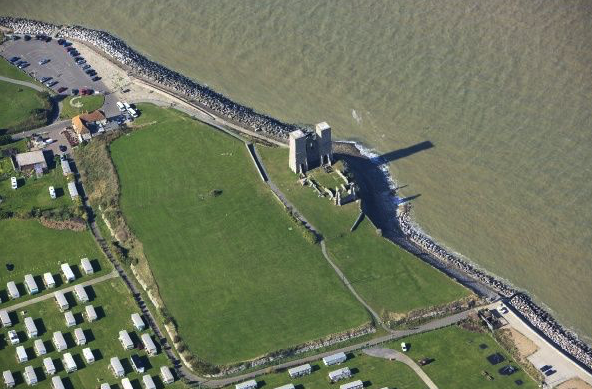
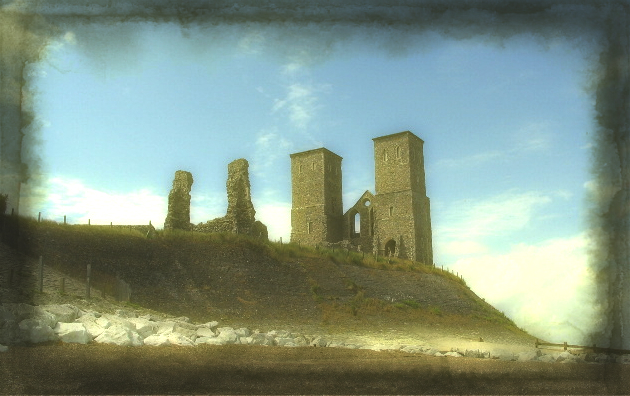
This particular look at Roman ghosts takes us to Reculver on the Kentish coast in England, in particular a site on the promontory at the mouth of the Watsum Channel, facing the Isle of Thanet.
Before we get into the spectral sightings associated with this remote location, we should, of course, look briefly at the history of the place.
Reculver was the site of Roman Regulbium which comes from the Celtic name meaning ‘at the promontory’.
It was on this site during the Claudian invasion of Britain in A.D. 43 that a Roman fortlet was first built. Tense times in the land, of course. Eventually, the fort was connected by road to the settlement of Durovernum, modern Canterbury.
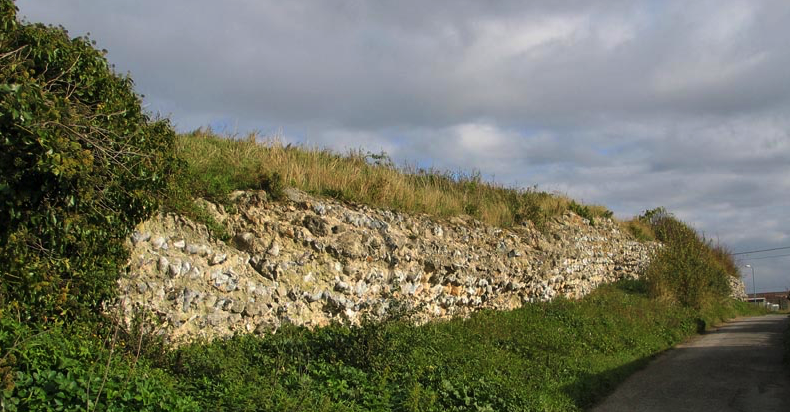
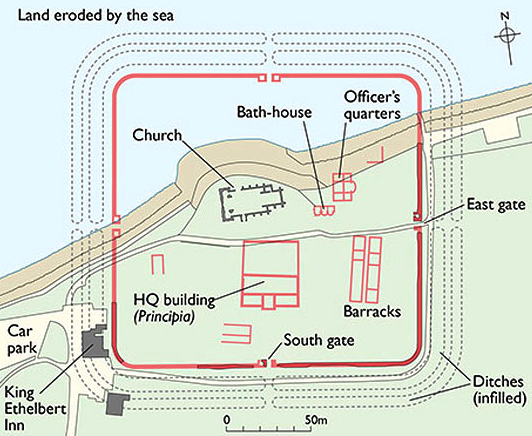
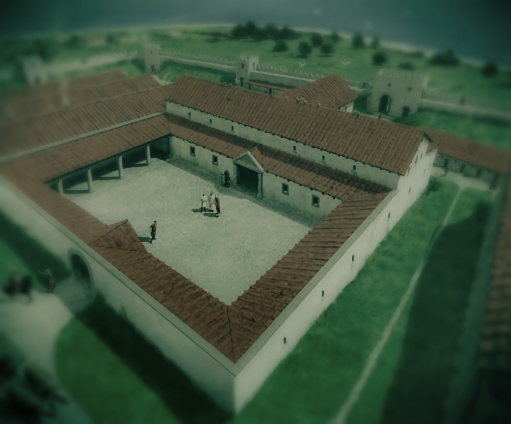
Eventually, in the late second century, a larger Roman castrum was built on the site, and this included a basilica as part of the principia (headquarters building), barracks, a bathhouse, and even a nearby oven which was located outside the walls. The walls themselves were almost fifteen feet high and ten feet thick. Sadly, much of the fort has been lost to the sea and erosion.
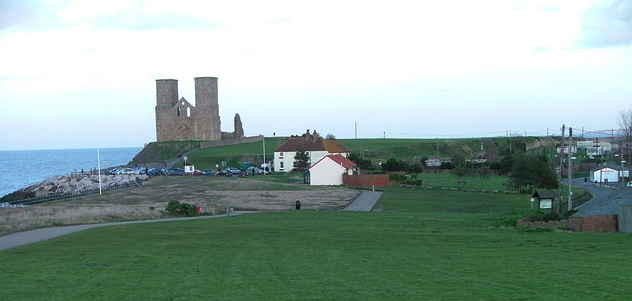
What does remain are two of the Roman towers which were incorporated into the early medieval Saxon church of St. Mary’s. More on these towers later…
The Notitia Dignitatum, the great Roman administrative document of the early fifth century, indicates that the Cohors I Baetasiorum was stationed at Regulbium. These troops of the Baetasii tribe inhabiting the lands between the Rhine and the Meuse, in Germania Inferior, were a good distance from their homes.
Regulbium was apparently abandoned after A.D. 360, but from what we have been reading, it may well be that some of the troops never went home.
Try and imagine a soldier, or a cohort of soldiers, based in a specific location for an extended period of time. Routine and disciplina, as the Romans called it, were central to a soldier’s life. Sometimes they lived and died in a specific place, had families, lost loved ones, took life and shed blood.
Well, in Regulbium to this day, it seems that some of the Roman soldiers are determined to keep to their schedules and their posts.
There have been many reports of Roman soldiers seen on patrol at Reculver fort (Regulbium) or keeping ghostly sentry duty there, so much so that visitors, even in summer, claim that there is something very ‘wrong’ about the place.
Apparently, the site of the Roman fort is so haunted that it has become a destination for amateur ghost hunters!
But it isn’t just the ghosts of groups of Roman soldiers on patrol that people have reported seeing. There have also been chilling reports of a lone Roman soldier standing stolidly at his sentry post somewhere between the two remaining towers that stand there to this day.
What might the shade of that Roman be looking out for? A returning patrol? Raiding Saxon ships coming into the isle between the fort and Thanet?
Who knows? One thing is for sure, there are more than just the shades of Roman soldiers lurking around the fort.
There have also been numerous reports of phantom babies crying on the wind when people have visited the fort!
One might think that this is just the gusting wind playing tricks on visitors to the fort. Then again, perhaps not.
When excavations were carried out at the fort, the burials of ten infants were found within the fort itself, and six of these were associated with specifically Roman buildings.
There are some theories that the infants were part of a ritual sacrifice there, but it is not known if they were dead already (stillborn), or if they were killed as part of the ritual.
Seeing as Romans more or less frowned on human sacrifice (apart from in the arena), the slaying of babies does seem to be a bit of a stretch, but one never knows. Perhaps the Baetasii tribe from the Rhine region did that sort of thing, perhaps not.
Either way, the remains of infants have been found, and whatever the circumstances of their deaths, it seems likely that the wailing of their little shades at the fort would be enough to turn the legs of the toughest legionary to mush.
Have you been to the ruins of Regulbium? Would you go after reading this?
I’m not sure I would.
We hope you’ve enjoyed this second post in the Roman Ghosts series. For more information on the haunted site you can check out the book Haunted Kent, by Janet Cameron.
For information about the archaeology and ruins of Roman Regulbium, you can check out the Historic England page by CLICKING HERE.
Remember, if you know of any Roman ghost stories in any part of the former Roman Empire that you would like to share, just send us an email through the Contact Uspage of the website and we’ll look into it.
Thank you for reading!
Ancient Everyday – Pets in Ancient Rome
Salvete Romanophiles!
We’re back for a new Ancient Everyday post. If you missed the last one on coinage in the Roman world, you can check it out HERE.
This week, we’re looking at pets in the Roman world, and let me tell you, this turned out to be a much bigger, more complex topic than I had imagined! So, this will be something of an introduction to a topic that could well take up an entire book.
A quick shout-out to Jenny Villar who suggested this topic.
The first thing most of us picture when we think of animals in ancient Rome is no doubt the display bloody entertainment in amphitheatres like the Colosseum. But that is only part of the picture.
Before we discuss household pets, we should first take a look at the relationship ancient Romans actually had with animals.
Romans, it seems, were absolutely fascinated with animals!
They also had a strange, contradictory relationship with animals. They admired and were in awe of wildlife, and yet they used them to death, quite literally.
Animals served many purposes in the Roman world.
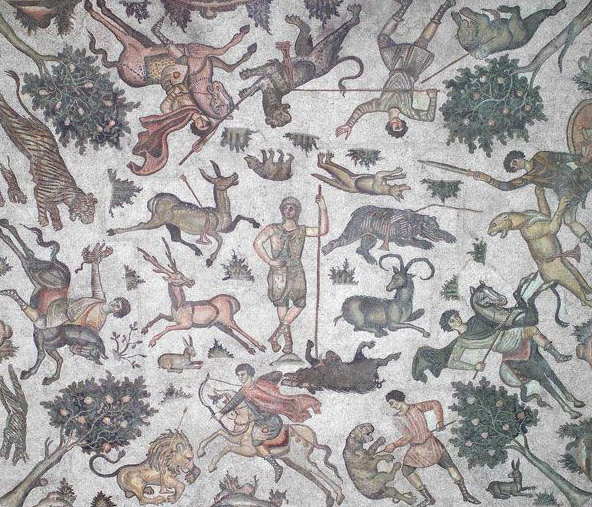
We have already alluded to entertainments in the amphitheatres and circuses of the Empire where any number of grisly pairings of beasts took place. But this category would also have included using animals for hunting (as both hunter and prey), in the wild or in the arena. Romans loved to watch animals be hunted, fight, and be killed, whether in the amphitheatre, or a private cock-fighting pit.
Animals were also labourers in the city, the countryside, and in the ranks of Rome’s legions across the Empire as beasts of burden and more.
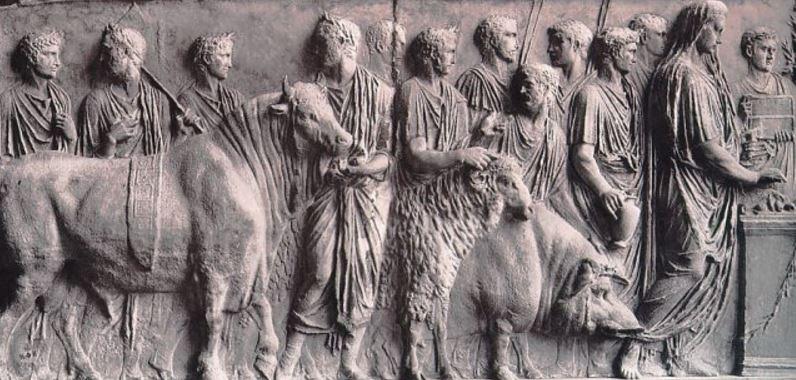
One area that is sometimes overlooked is the use of animals for religious purposes. Animals were sacrificed to the gods on a daily basis for a variety of reasons, and were often specifically bred for this purpose. As examples, only the whitest of doves might have been offered to Venus, Goddess of Love, or the blackest of sheep to chthonic gods such as Dis.
Animals were also used as ornaments in the Roman world, especially in the homes and villas of the rich and powerful. The emperors Domitian and Caracalla are both said to have had pet lions that followed them around, and some wealthy Romans even had elephants, the most exotic symbol of Roman power, to transport them to dinner parties.
What the valet slave would do with that, I don’t know!
What seems apparent is that exotic animals were as much a show of Roman wealth and power as the most expensive jewels, and some rich Romans had gardens filled with various exotic animals – a sort of ancient equivalent to a nineteenth-century menagerie.
Included in the long list of animals that appeared in the amphitheatres or homes of the Roman world were parrots, ostriches, monkeys, lions, leopards, lynxes, tigers, elephants, rhinos from Asia and Africa, and more.
But we’re here to discuss animals as pets, specifically. In doing so, we might expect the usual array of animals we’re familiar with today, but, as ever, the Romans have put a twist on things for us. For instance, some children were said to have had pet goats or deer who were sometimes hooked up to little wagons or carts to pull them around.
We’ll go through a few of the animals that were said to have been kept as pets in ancient Rome.
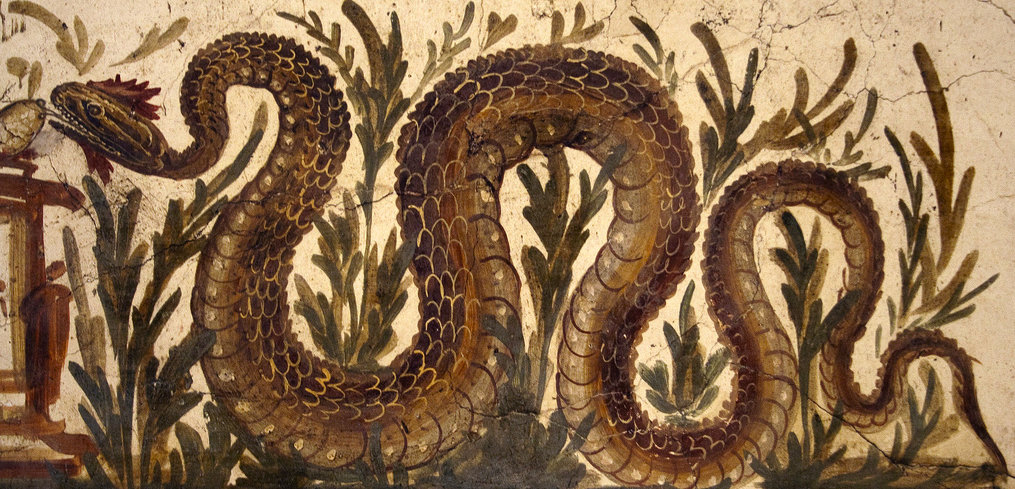
Snakes. Let’s just get this one out of the way now. Yes. The Romans had pet snakes. In fact, the idea of a household with a resident snake is quite ancient.
In the ancient world, snakes were not only useful in destroying vermin such as mice and rats. They were also sacred, and strongly associated with healing. Think of the god Asclepius who is often pictured with a snake around a staff, that symbol which has been adopted by the medical profession.
In ancient Greece, many households had a snake which acted as a sort of household guardian. In fact, in certain parts of the Mediterranean to this day, it is considered bad luck to kill a snake.
In ancient Rome, emperors had sent to Epidaurus and the Sanctuary of Asclepius there for some of the sacred snakes used in healing, and these were kept on Tiber Island. The emperors Tiberius, Nero, and Elagabalus all kept snakes.
Now, whether or not the residents of Suburan tenement blocks kept snakes, I’m not sure. One hears of people with pet snakes today, so I imagine the idea is not so far-fetched.
Fish were also kept as pets, but these appear to have been something relegated to the upper classes who had the space and land for large fish ponds. One wonders how attached some became to these fish, for surely they would have ended up on the tricliniumtable at some point.
Sparrow! my pet’s delicious joy,
Wherewith in bosom nurst to toy
She loves, and gives her finger-tip
For sharp-nib’d greeding neb to nip,
Were she who my desire withstood
To seek some pet of merry mood,
As crumb o’ comfort for her grief,
Methinks her burning lowe’s relief:
Could I, as plays she, play with thee,
That mind might win from misery free!
…
To me t’were grateful (as they say),
Gold codling was to fleet-foot May,
Whose long-bound zone it loosed for aye.
(Catullus, Lesbia’s Sparrow)
Birds appear to have been much more popular a pet in ancient Rome than they are today. In the quote above, we hear from Catullus about Lesbia’s sparrow, or ‘passer’, which she adores.
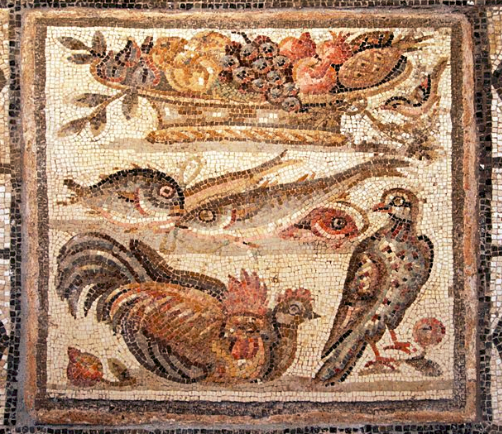
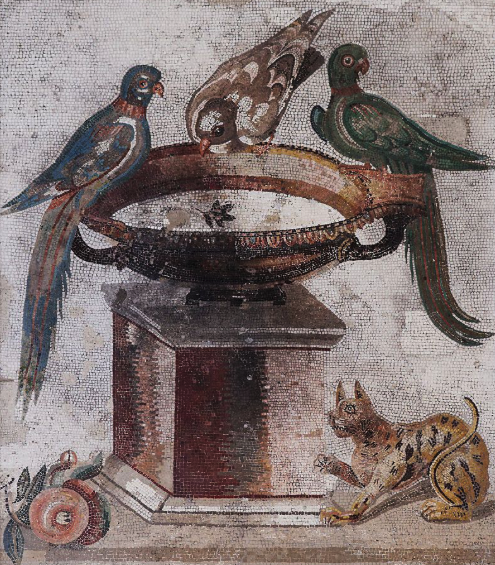
When it comes to birds, with the length and breadth of the Empire, there was opportunity for an impressive array of species from ducks and geese to ostriches, peacocks, budgies and parrots. In the case of the latter, things get a bit odd when one considers the fact that parrot tongues were something of a delicacy. Again, the contradictory relationship Romans had with their animals.
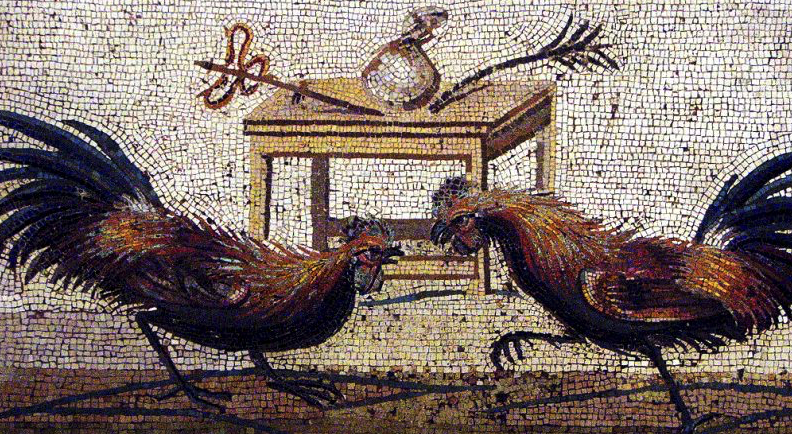
One popular pastime was, of course, cock fighting. This still goes on in certain parts of the world today, but in ancient Rome, it was also a sport for the upper classes. Plutarch describes how Octavianus always beat Mark Antony at cock fighting:
…we are told that whenever, by way of diversion, lots were cast or dice thrown to decide matters in which they were engaged, Antony came off worsted. They would often match cocks, and often fighting quails, and Caesar’s would always be victorious. (Plutarch, Life of Antony)
I suppose Octavian had to be better at something than Mark Antony, and I imagine that it rankled Marcus Antonius to have Octavianus’ cock beat his own.
Anyway…moving on…
Now we come to the felines of the Empire.
Certainly, exotic big cats were prized in the arenas and menageries, and we have already mentioned Domitian and Caracalla’s pet lions.
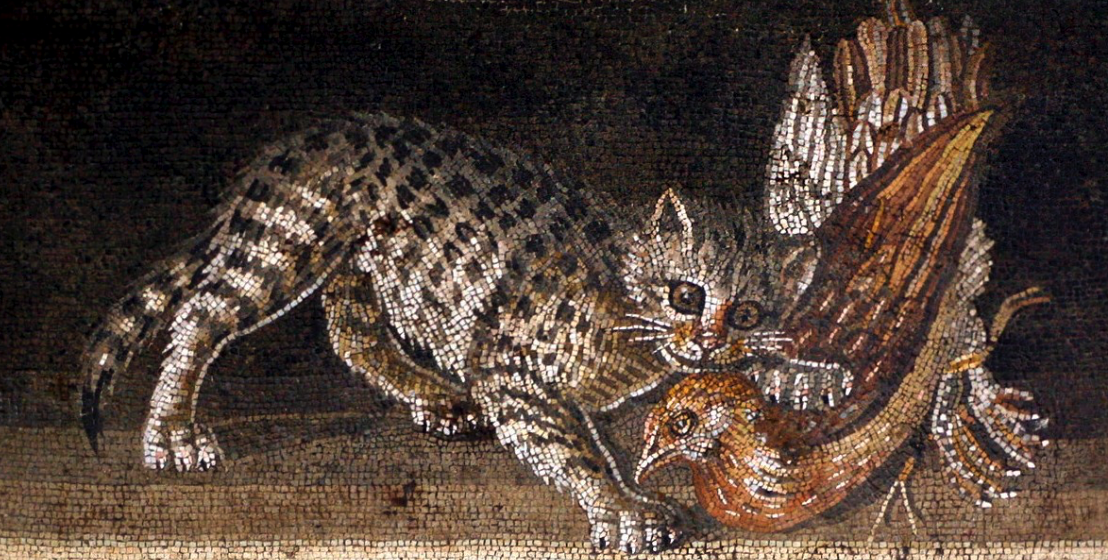
But let’s talk about cats as we know them. Today, cats are a very popular pet, but in the world of ancient Rome, they were not so adored as you might expect. Birds and dogs were more popular than cats, though if you walk the streets of Rome or Athens today, you’d think cats had taken over the world.
In ancient Rome, cats served a more utilitarian purpose. They were kept as pets, but it was more for the purpose of catching vermin. There were plenty of mice and rats to go around in Rome, of that we can be sure, though there is mention of another use. The ancient writer Palladius points out that the cattus (Palladius was apparently the first to use the word ‘cattus’) was very good for catching moles in artichoke beds!
I didn’t even know moles liked artichokes.
There was of course one part of the Empire where cats were revered above all other animals, and that was Egypt. Cats were sacred there, and in my research I even read that when cats were smuggled out of Egypt, a ransom was paid to get them back! I wonder if some entrepreneurial Romans ever created a cat-ransom racket to take advantage of the Egyptians’ love of felines?
Of course we cannot discuss animals in the Roman Empire without touching on what was considered a most noble animal – the horse.
Horses were extremely important in the ancient world. Not only were they used as beasts of burden and farm animals, but they were also essential on military campaign as pack animals or in the ranks as auxiliary cavalry.
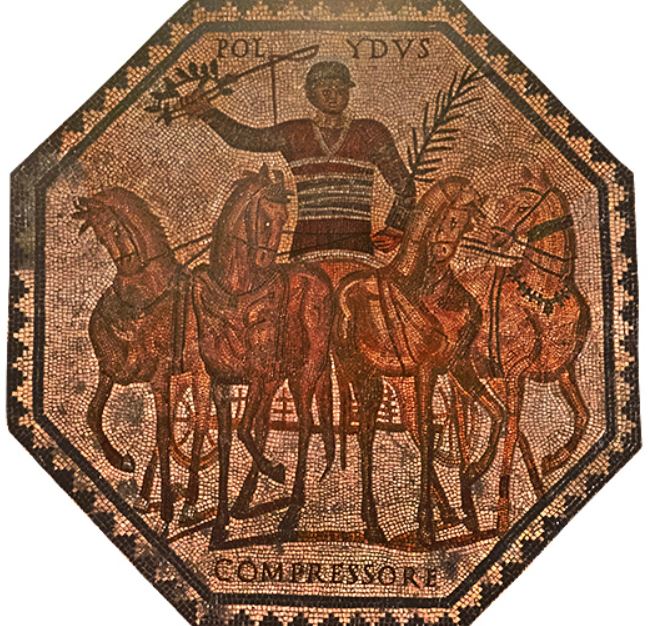
They were also central to entertainment in the Roman world as chariot racing in the hippodromes of the Empire, like the Circus Maximus in Rome, was the most popular sport around. You can read more about chariot racing HERE. Champion horses were well-treated and even received a pension and luxurious retirement at the end of their careers.
Horses were pets too, and one of the main activities for those in the countryside, rich and poor, was riding for leisure.
Probably one of the most famous instances of a pet horse from the Roman world is Caligula’s horse Incitatus. Suetonius goes into some detail:
He used to send his soldiers on the day before the games and order silence in the neighbourhood, to prevent the horse Incitatusfrom being disturbed. Besides a stall of marble, a manger of ivory, purple blankets and a collar of precious stones, he even gave this horse a house, a troop of slaves and furniture, for the more elegant entertainment of the guests invited in his name; and it is also said that he planned to make him consul. (Suetonius, Life of Caligula)
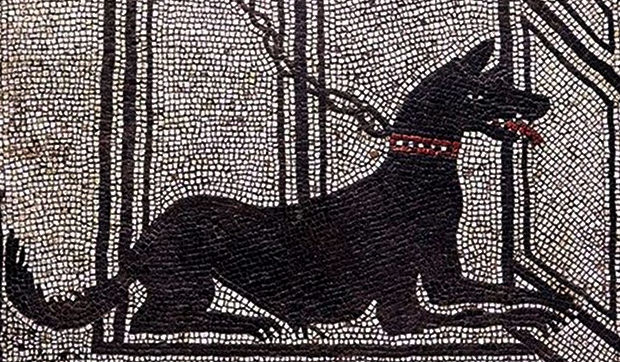
We’ve looked at a few species of animal that were popular among ancient Romans as pets, but none of those mentioned above were more popular as pets in the ancient world than dogs.
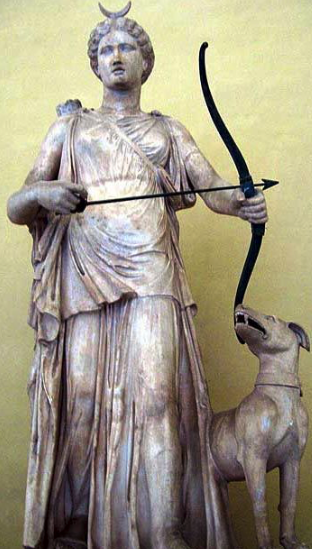
As far as pets, dogs were the favourite, and they had an age-old relationship with humans. They were friends, workers, and family members. Dogs were even worthy of serving the gods – think of Diana and her hunting hounds.
The oldest mention of a dog by name is in the Odyssey when there is reference to Odysseus’ dog, Argus.
‘This dog,’ answered Eumaios, ‘belonged to him who has died in a far country. If he were what he was when Odysseus left for Troy, he would soon show you what he could do. There was not a wild beast in the forest that could get away from him when he was once on its tracks. But now he has fallen on evil times, for his master is dead and gone, and the women take no care of him. Servants never do their work when their master’s hand is no longer over them, for Zeus takes half the goodness out of a man when he makes a slave of him.’
So saying he entered the well-built mansion, and made straight for the riotous pretenders in the hall. But Argos passed into the darkness of death, now that he had fulfilled his destiny of faith and seen his master once more after twenty years. (Homer, The Odyssey, Book 17)
There were different breeds for different purposes in ancient Rome. There were dogs for entertainment, fighting in the arena. These dogs were known as canes pugnaces. There were dogs in the Roman army, usually a breed of mastiff, and also for use as guard dogs.
The Roman agriculture writer, Grattius, goes into some detail about various breeds of dogs:
Dogs belong to a thousand lands and they each have characteristics derived from their origin. The Median dog, though undisciplined, is a great fighter, and great glory exalts the far-distant Celtic dogs. Those of the Geloni, on the other hand, shirk a combat and dislike fighting, but they have wise instincts: the Persian is quick in both respects. Some rear Chinese dogs, a breed of unmanageable ferocity; but the Lycaonians, on the other hand, are easy-tempered and big in limb. The Hyrcanian dog, however, is not content with all the energy belonging to his stock: the females of their own will seek unions with wild beasts in the woods: Venus grants them meetings and joins them in the alliance of love. Then the savage paramour wanders safely amid the pens of tame cattle, and the bitch, freely daring to approach the formidable tiger, produces offspring of nobler blood. The whelp, however, has headlong courage: you will find him a‑hunting in the very yard and growing at the expense of much of the cattle’s blood. Still you should rear him: whatever enormities he has placed to his charge at home, he will obliterate them as a mighty combatant on gaining the forest. But that same Umbrian dog which has tracked wild beasts flees from facing them. Would that with his fidelity and shrewdness in scent he could have corresponding courage and corresponding will-power in the conflict! What if you visit the straits of the Morini, tide-swept by a wayward sea, and choose to penetrate even among the Britons? O how great your reward, how great your gain beyond any outlays! If you are not bent on looks and deceptive graces (this is the one defect of the British whelps), at any rate when serious work has come, when bravery must be shown, and the impetuous War-god calls in the utmost hazard, then you could not admire the renowned Molossians so much. (Grattius, Cynegeticon)
Wolfhounds and greyhounds were used for hunting by Romans, and there were even dogs used for religious sacrifice.
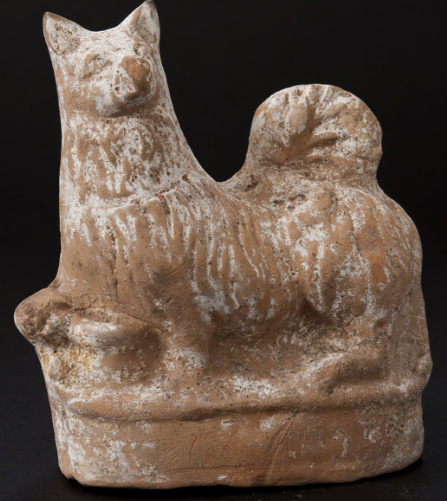
Apart from the larger breeds used for the purposes mentioned above, smaller lapdogs were very popular house pets in the Roman world. These were most likely similar to today’s maltese breed of dog.
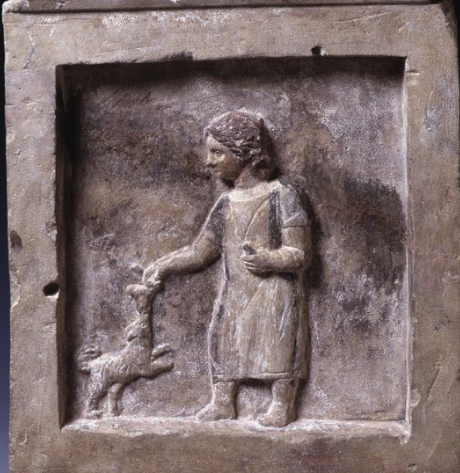
There are several examples of beloved dogs on grave monuments for family or children that survive. The fact that Romans even did this is testament to the importance placed upon them.
We have but scratched the surface of this vast topic on pets and animals in the Roman world. I hope you’ve found it interesting.
At the end of the day, the wide array of animals that served as pets, workers, food, religious sacrifice and more was as vast and varied a reflection of the world as the Roman Empire itself.
Thank you for reading.
Pompeii – A Brief Introduction with Archaeologist, Raven Todd DaSilva
Hello again, ancient history-lovers!
Way back in the dark days of February, archaeologist Raven Todd DaSilva came to speak to us about gladiators and the famous thumbs-up gesture that we associate with that ancient blood sport. If you missed that, you can check it out HERE.
I’m thrilled to say that Raven is back on the blog with us this week for a brief introduction to one of the great disasters of the Roman world: the destruction of Pompeii.
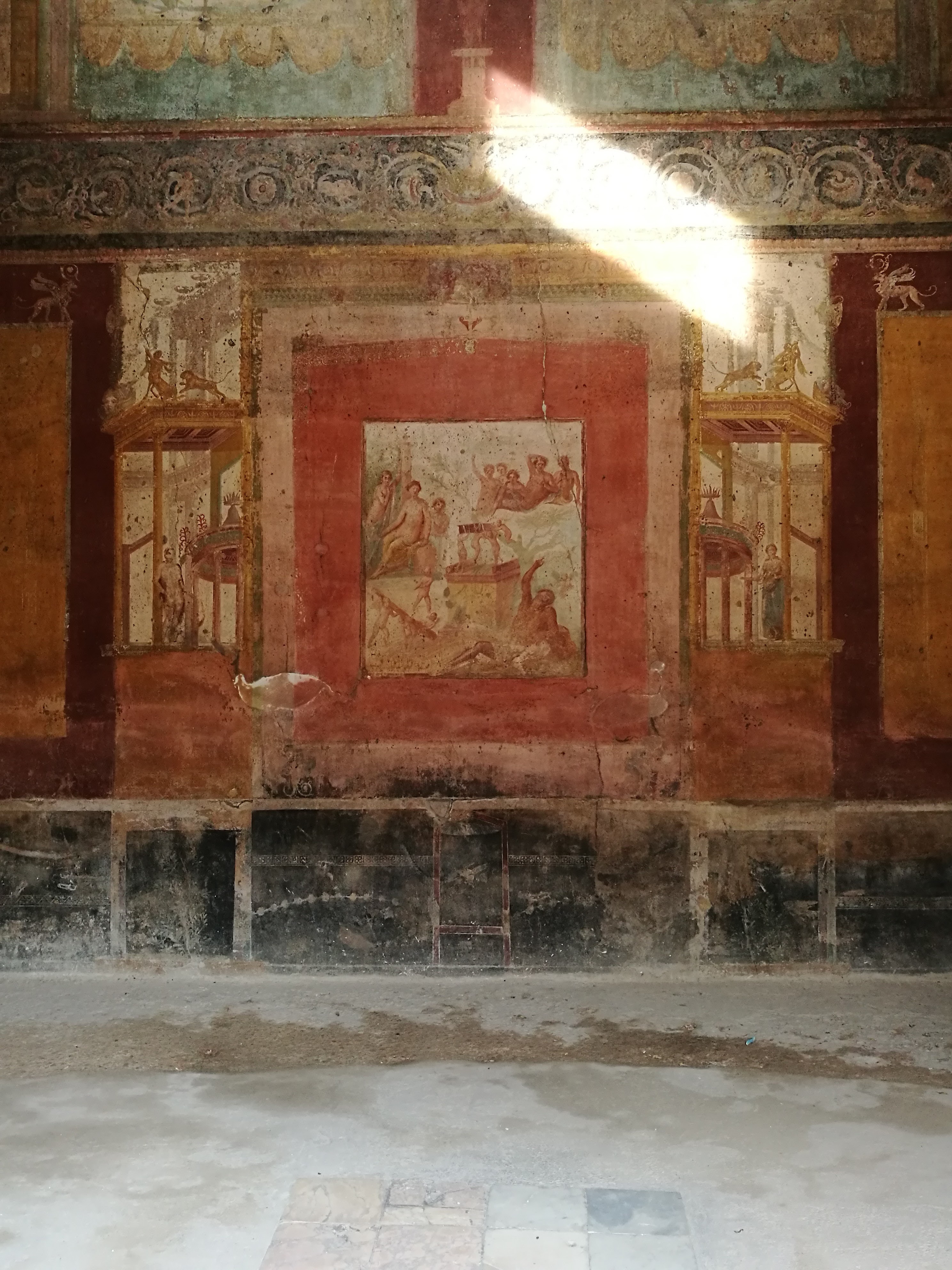
Raven visited the archaeological site of Pompeii recently and is here to share a bit of the history with us, as well as some new theories around dating, as well as one of her brilliant videos!
So, ready as ever to get digging and get dirty, here’s Raven Todd DaSilva…
Pompeii, a Brief Introduction
By: Raven Todd DaSilva
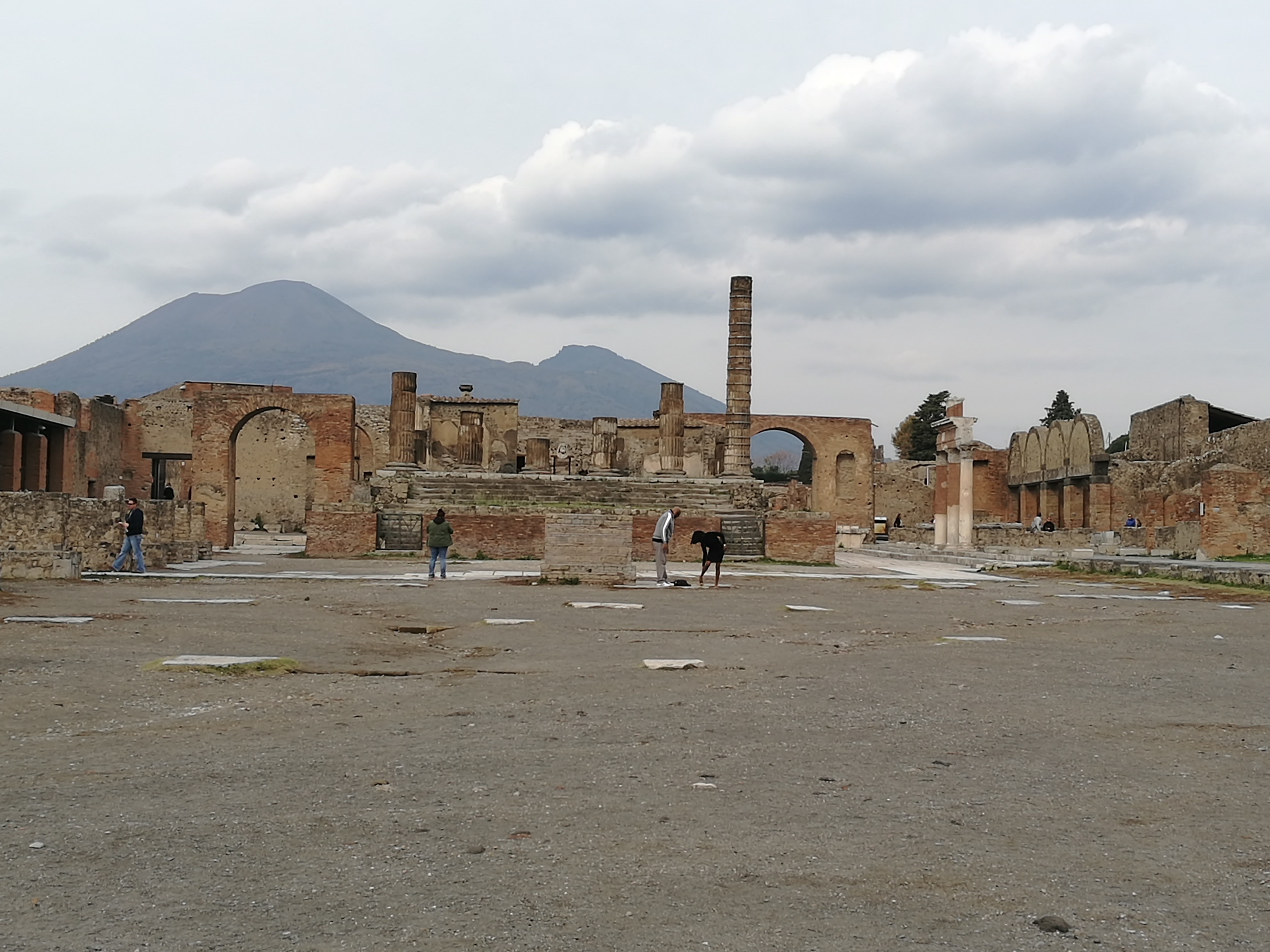
On an unassuming day in 79 CE, the long-dormant Mount Vesuvius erupted. For three days, volcanic ash and rock rained down on the surrounding area, completely devastating the settlements around it. Most famously- the city of Pompeii.
Founded in the 6th century BCE along the Sarno river, Pompeii originated as a local settlement in Campania. The rich volcanic soil made it favourable for agricultural activity. In the 5th century BCE, the Samnites entered the area, while the 4th century BCE saw the beginning of Roman influence on the region. Pompeii began to flourish under this regime with massive building projects. It became a major port on the Bay of Naples, leading to its “golden age” in the 2nd century BCE. Pompeii was later turned into a seaside resort in 81 BCE. An earthquake damaged many of the buildings in 62 CE, which led to significant economic decline. By the time of the eruption, many of the grand villas built in the 2nd century BCE were converted for public use, leaving the city frozen in time during a period when its glory days were behind it.
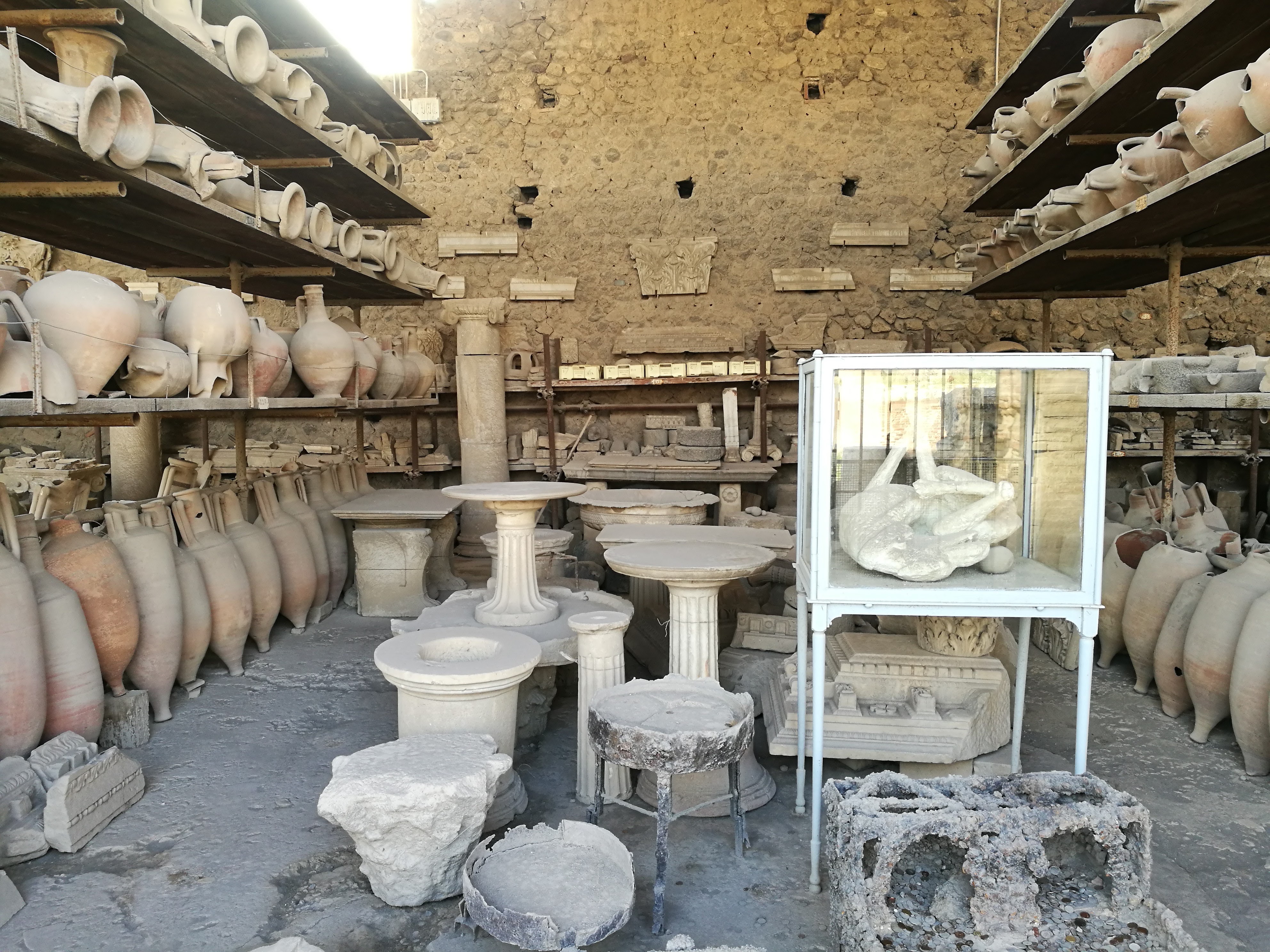
Of course, Pompeii gets its fame from the devastating catastrophe because of the rare view it gives us regarding daily life at that time. As the eruption took the city’s inhabitants by surprise, they were not able to properly pack up and evacuate the area, leaving archaeologists with invaluable evidence as to how people really lived in the first century CE.
Not only are we fortunate enough to have the physical site of Pompeii, we also have a primary document describing the eruption of Vesuvius and the immediate aftermath. Pliny the Younger described the events that happened to his uncle, Pliny the Elder, who died assisting refugees onto the warships he was overseeing. This account is also where the infamous quote “Fortune favours the brave” originated. We also have Pliny’s own personal account from Misenum (about 30km away).
The eruption has been described by Pliny the Younger as:
…a pine tree, for it shot up to a great height in the form of a very tall trunk, which spread itself out at the top into a sort of branches; occasioned, I imagine, either by a sudden gust of air that impelled it, the force of which decreased as it advanced upwards, or the cloud itself being pressed back again by its own weight, expanded in the manner I have mentioned; it appeared sometimes bright and sometimes dark and spotted, according as it was either more or less impregnated with earth and cinders.(Letter LXV – To Cornelius Tacitus)
Once the danger of this eruption was realised, people began to evacuate hurriedly, with many people successfully fleeing. Pliny described those escaping as having “pillows tied upon their heads with napkins; and this was their whole defence against the storm of stones that fell around them” (Letter LXV). The stones thrust from the volcano were deadly, crashing through roofs, collapsing buildings and crushing those trying to take refuge under stairs and in cellars. Others, like Pliny the Elder, choked to death on the air as it filled with ash and noxious sulfurous gas. It is believed that 30,000 people died from the eruption.
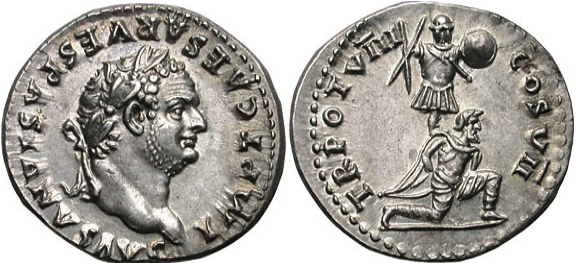
The traditional date of the eruption is August 24th, as reported by Pliny the Younger, but it has come under scrutiny as further scientific evidence has come to light. Even as early as 1797, the archaeologist Carlo Maria Rosini questioned the date. Rosini reasoned that, as fruits found preserved at the site, such as chestnuts, pomegranates, figs, raisins and pinecones, become ripe in the fall months, they would not have been ripe so early in August. Another study of the distribution of the wind-blown ash at Pompeii supports this theory further. Probably one of the most telling artefacts is a silver coin found that was struck after September 8th, AD 79. As we don’t have an original copy of Pliny’s manuscript, we can assume a typo had been made along the way.
After compiling all this new data, a new eruption date of October 24th, 79 AD has been suggested.
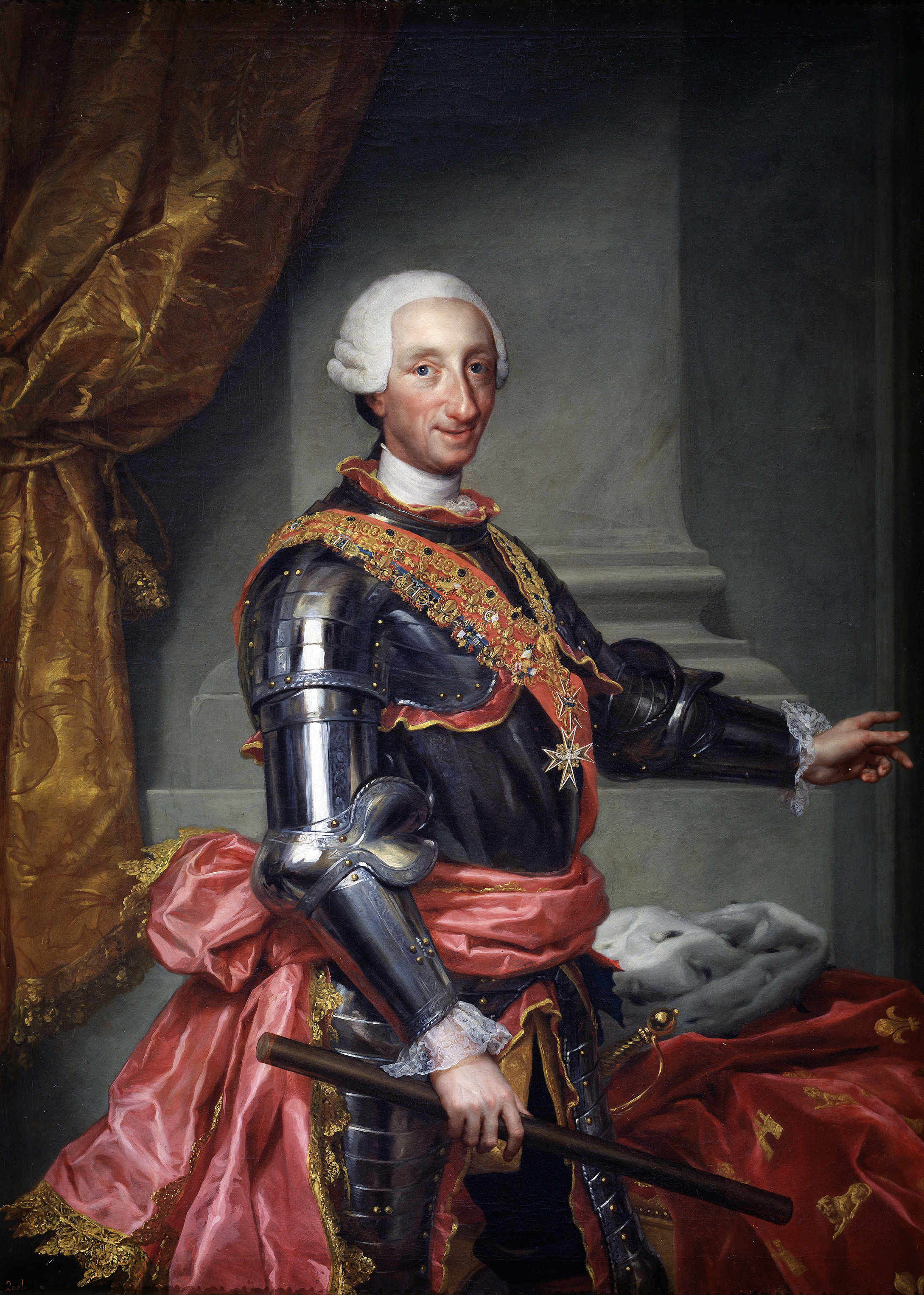
After the eruption, the city remained largely undisturbed until 1738 when Charles of Bourbon, the King of Naples dispatched a team of labourers to hunt for treasures to give to his queen, Maria Amalia Christine, who was enamoured by previously excavated Roman sculptures in the area of Mount Vesuvius. The city of Herculaneum was found first, with Pompeii excavations following it about ten years later.
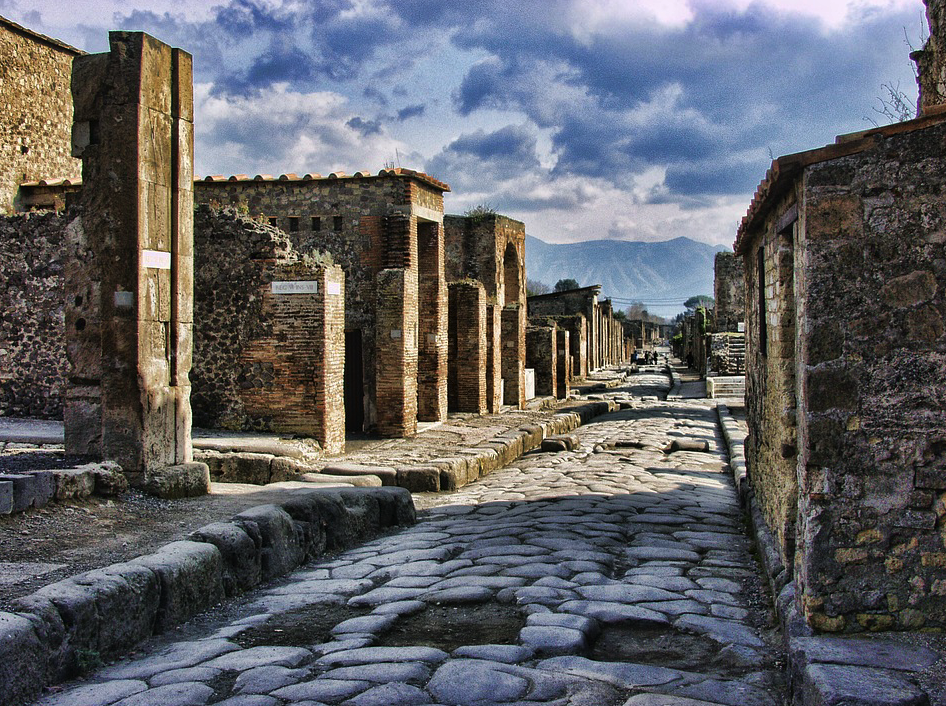
Today, Pompeii is one of the most popular and well-known archaeological sites, with the longest continual excavation period in the world. With respect to the study of daily life of Rome, it is undeniably important due to the sheer amount of data available. Each year, thousands of visitors flock to Pompeii to walk along the large stone slabs of its roads, visit its iconic brothels, and marvel at the mosaics, wall paintings and body casts preserved by the volcanic ash.
Raven Todd DaSilva is working on her Master’s in art conservation at the University of Amsterdam. Having studied archaeology and ancient history, she started Dig It With Raven to make archaeology, history and conservation exciting and freely accessible to everyone. You can follow all her adventures on Facebook and Instagram @digitwithraven
Resources
Online Articles:
Kris Hirst, What 250 Years of Excavation Have Taught Us About Pompeii https://www.thoughtco.com/pompeii-archaeology-famous-roman-tragedy-167411
Mark Cartwright, Pompeii https://www.ancient.eu/pompeii/
Joshua Hammer, The Fall and Rise and Fall of Pompeii https://www.smithsonianmag.com/history/fall-rise-fall-pompeii-180955732/
Andrew Wallace-Hadrill, Pompeii: Portents of Disaster http://www.bbc.co.uk/history/ancient/romans/pompeii_portents_01.shtml
James Owens, Pompeii https://www.nationalgeographic.com/archaeology-and-history/archaeology/pompeii/
Wilhelmina Feemster Jashemski, Pompeii https://www.britannica.com/place/Pompeii
The Two Letters Written by Pliny the Younger about the Eruption of Vesuvius in 70 A.D. – http://www.pompeii.org.uk/s.php/tour-the-two-letters-written-by-pliny-the-elder-about-the-eruption-of-vesuvius-in-79-a-d-history-of-pompeii-en-238-s.htm
Books:
Beard, Mary (2008). Pompeii: The Life of a Roman Town. Profile Books. ISBN 978-1-86197-596-6
Butterworth, Alex; Laurence, Ray (2005). Pompeii: The Living City. St. Martin’s Press. ISBN 978-0-312-35585-2
Kraus, Theodor (1975). Pompeii and Herculaneum: The Living Cities of the Dead. H. N. Abrams. ISBN 9780810904187
As ever, I’d like to thank Raven for another fascinating post and video.
Pompeii is one of those topics that I never tire of, and the exciting thing is that more is being revealed all the time. It’s also one site that I have not yet had the chance to visit, so I really enjoyed learning a bit more.
And I’m definitely looking forward to that next collaboration and video, Raven!
If you haven’t already done so, be sure to check the Dig It with Raven website and subscribe to Raven’s YouTube channel so you can stay up-to-date on all the latest videos about archaeology, history and art conservation.
Cheers, and before you leave, here’s a fantastic time lapse video of Raven’s visit to Pompeii!