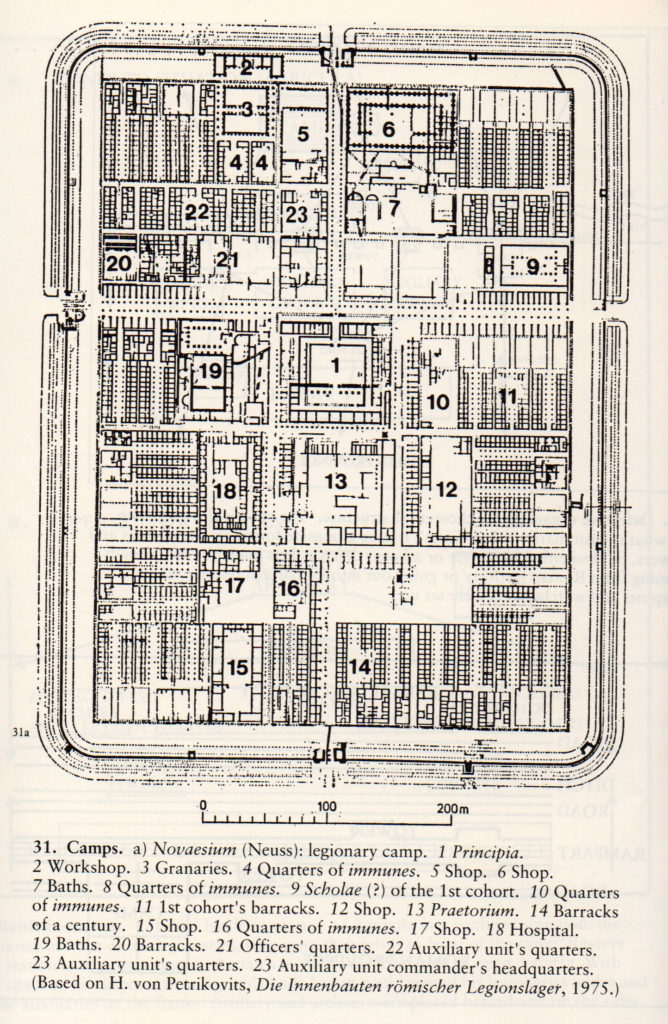
The World of Isle of the Blessed – Part VII – The Severan Invasion of Caledonia: Victory or Failure?

In the midst of the emperor’s distress at the kind of life his sons were leading and their disgraceful obsession with shows, the governor of Britain informed Severus by dispatches that the barbarians there were in revolt and overrunning the country, looting and destroying virtually everything on the island. He told Severus that he needed either a stronger army for the defence of the province or the presence of the emperor himself. Severus was delighted with this news: glory-loving by nature, he wished to win victories over the Britons to add to the victories and titles of honour he had won in the East and the West. Be he wished even more to take his sons away from Rome so that they might settle down in the soldier’s life under military discipline, far from the luxuries and pleasures of Rome. And so, although he was now well advanced in years and crippled with arthritis, Severus announced his expedition to Britain, and in his heart he was more enthusiastic than any youth. During the greater part of the journey he was carried in a little, but he never remained very long in one place and never stopped to rest. He arrived with his sons at the coast sooner than anyone anticipated, outstripping the news of his approach. he crossed the channel and landed in Britain; levying soldiers from all the areas, he raise a powerful army and made preparations for the campaign.

(Herodian, History of the Empire, XIV,1-3)

Welcome to the seventh and final part in The World of Isle of the Blessed.

In Part VI, we looked at the mystery of decapitated Roman bodies found in York, and how they may relate to Caracalla’s rampage upon taking the imperial throne after the death of his father, Emperor Septimius Severus. If you missed that post, you can check it out HERE.

In Part VII, we are going to be looking at Severus’ Caledonian campaign that is the focus of Warriors of Epona (Eagles and Dragons – Book III) and the newest release in the series, Isle of the Blessed.
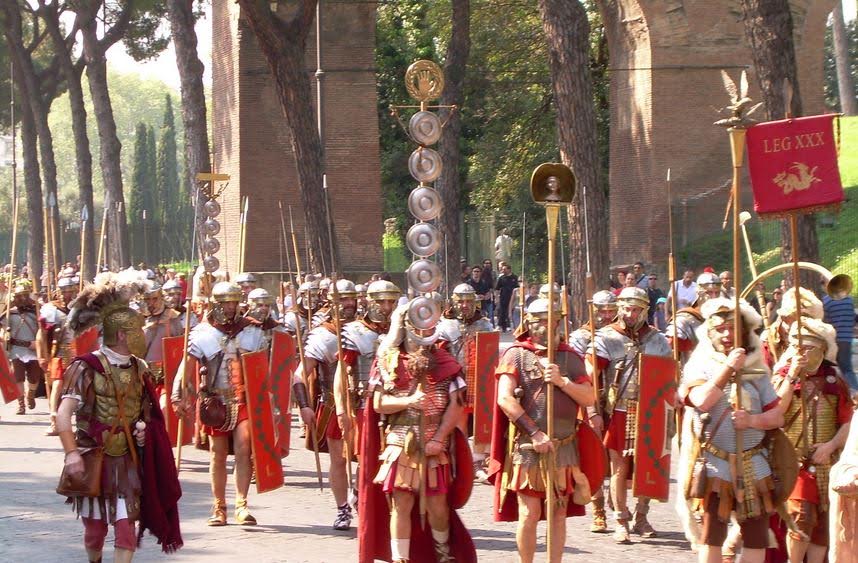
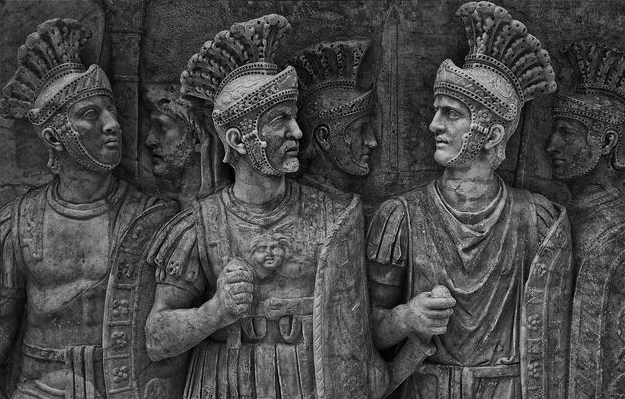
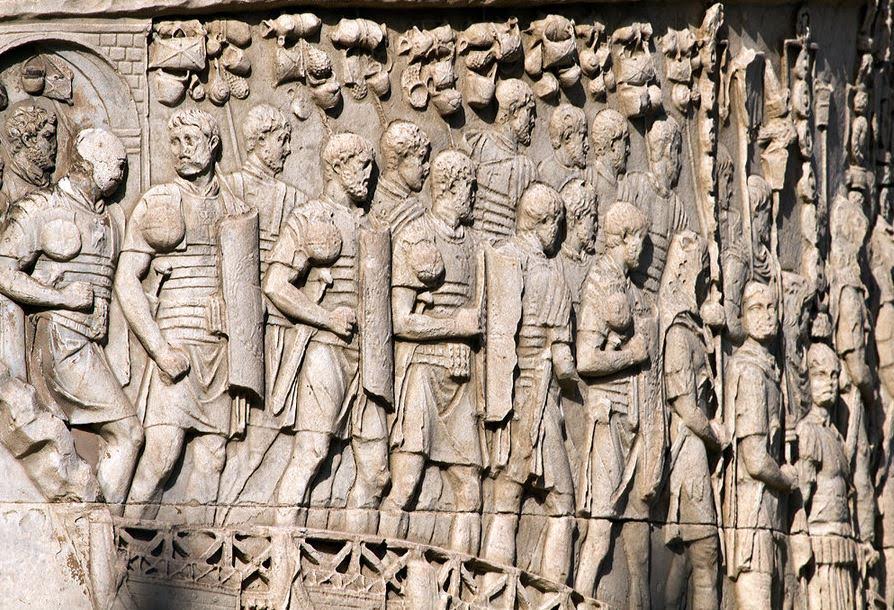
Marching Legions (Wikimedia Commons)

First of all, why did Septimius Severus march on Caledonia? The main reason most often given by the sources is that it was something he thought would give his unruly sons, Caracalla and Geta, focus. It was something to train them for the role of emperor. Severus was a big believer in the importance of nurturing the loyalty of the legions, and so perhaps he also hoped his sons would prove themselves and, in the process, earn that loyalty.

But there had to be more to it than a training exercise for his delinquent boys.

Severus’ Caledonian campaign was enormous. He moved on Caledonia with at least three full legions (the II Augusta, the VI Victrix, and the XX Valeria Victrix) as well as greater numbers of detachments and auxiliary units. When Septimius Severus took the imperial throne, he was immediately engaged in consolidating the Empire after the civil war, and then taking on the Parthian Empire. He was a military emperor, and he knew how to keep his troops busy, and how to reward them.

The Caledonians had been a thorn in Rome’s side for a long while at that time, but it was not until A.D. 208 that Severus was finally able to deal with them. And so, the imperial army moved to northern Britannia, poised to take on the Caledonians once again.

We’ve already touched on Severus’ campaign in The World of Warriors of Epona blog series. However, it’s important to note that this is believed to be the last real attempt by Rome to take a full army into the heart of barbarian territory.

Severus moved on the Caledonians with the greatest land force in the history of Roman Britain, making use of his predecessors’ fortifications (such as the Gask Ridge frontier) and roads, and penetrating almost as far as Agricola’s legions over a hundred years before.

The war may have been an opportunity to train and discipline Severus’ sons, but it seems evident that the true intention of the Caledonian campaign was to put a stop to the rebellious behaviour of the Caledonii, Maeatae and other Caledonian tribes.

Severus’ ultimate goal was the complete and permanent conquest of Caledonia.
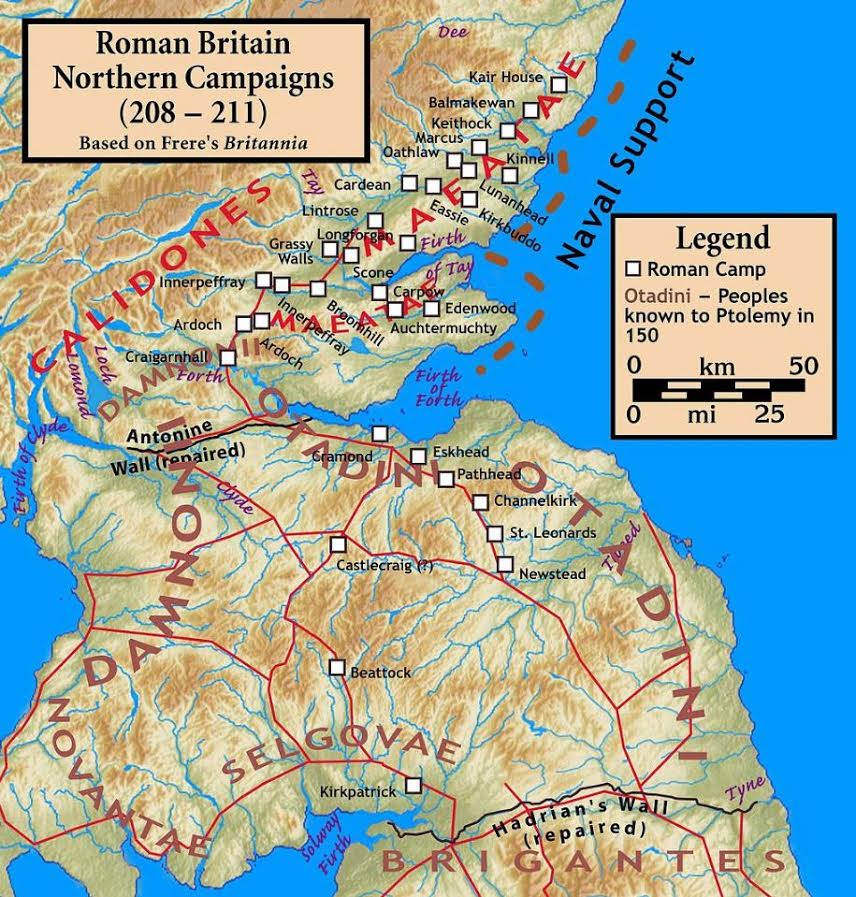
Severan Campaigns in Caledonia (Wikimedia Commons)

There are two principal races of the Britons, the Caledonians and the Maeatae, and the names of others have been merged in these two. The Maeatae live next to the cross-wall which cuts the island in half, and the Caledonians are beyond them. Both tribes inhabit wild and waterless mountains and desolate and swampy plains, and possess neither walls, cities, nor tilled fields, but live on their flocks, wild game, and certain fruits; for they do not touch the fish which are there found in immense and inexhaustible quantities. They dwell in tents, naked and unshod, possess their women in common, and in common rear all the offspring. Their form of rule is democratic for the most part, and they are very fond of plundering; consequently they choose their boldest men as rulers. The go into battle in chariots, and have small, swift horses; there are also foot-soldiers, very swift running and very firm in standing their ground. For arms they have a shield and a short spear, with a bronze apple attached to the end of the spear-shaft, so that when it is shaken it may clash and terrify the enemy; and they also have daggers. They can endure hunger and cold and any kind of hardship; for they plunge into the swamps and exist there for many days with only their heads above water, and in the forests they support themselves upon bark and root…

(Cassius Dio, The Roman History 12,1)

It seems that Severus knew the Caledonian campaign would not be easy, for this was a huge offensive with a lot of military might behind it. However, one has to wonder if they knew what to expect. The Caledonii and the Maeatae were smart fighters. They knew their terrain, and their strengths. But they also knew Rome’s strengths, and so refused meet the legions in a pitched battle.

The result? A brutal guerrilla war.

…as he [Severus] advanced through the country he experienced countless hardships in cutting down forests, levelling the heights, filling up swamps, and bridging rivers; but he fought no battle and beheld no enemy in battle array. The enemy purposely put sheep and cattle in front of the soldiers for them to seize in order that they might be lured on still further until they were worn out; for in fact the water caused great suffering to the Romans, and when they became scattered, they would be attacked. Then, unable to walk, they would be slain by their own men, in order to avoid capture, so that a full fifty thousand died.

(Cassius Dio, The Roman History 14,1)
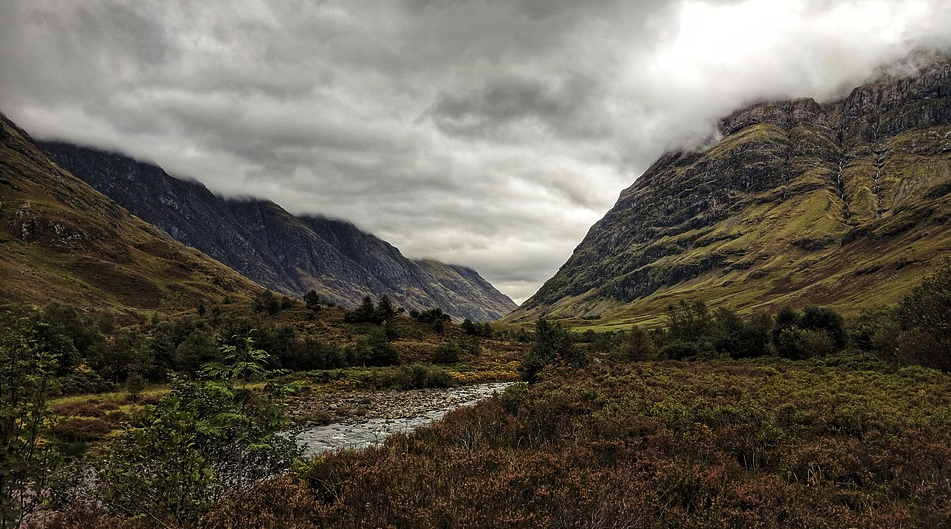
The Highlands of Caledonia

Severus’ Caledonian campaign was actually carried out in two phases. The first, explored in the novel Warriors of Epona, actually ended in a peace treaty in which Dio tells us that Severus “forced the Britons to come to terms, on the condition that they should abandon a large part of their territory.”

If Dio’s horrific number of fifty-thousand Roman casualties is to be believed (remember, ancient sources are often prone to exaggeration), then the Caledonii must have suffered even greater losses if they agreed to the terms.

It is here that one of the strangest episodes of the campaign occurred, though it had nothing to do with actual fighting, or the Caledonians.

On another occasion, when both [Severus and Caracalla] were riding forward to meet the Caledonians, in order to receive their arms and discuss the details of the truce, Antoninus [Caracalla] attempted to kill his father outright with his own hand. They were proceeding on horseback, Severus also being mounted, in spite of the fact that he had somewhat strained his feet as a result of his infirmity, and the rest of the army was following; the enemy’s force were likewise spectators. At this juncture, while all were proceeding in silence and in order, Antoninus reined in his horse and drew his sword, as if he were going to strike his other in the back. But the others who were riding with them, upon seeing this, cried out, and so Antoninus, in alarm, desisted from his attempt. Severus turned at their shout and saw the sword, yet he did not utter a word, but ascended the tribunal, finished what he had to do, and returned to headquarters.

(Cassius Dio, The Roman History, 14,3)

When they had returned to base, Severus apparently chided his son before Castor, his freedman, and Papinianus, the Praetorian Prefect, both men whom Caracalla hated and who would later feel his wrath.
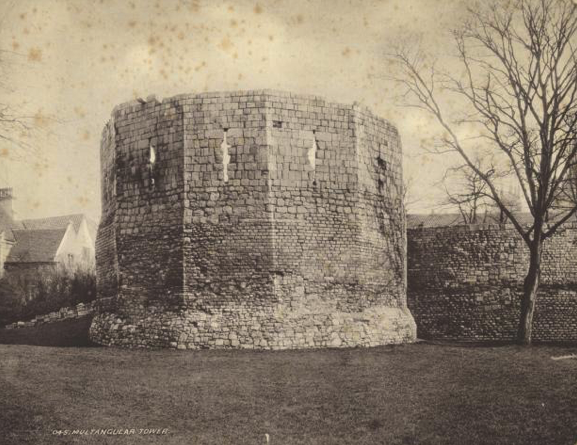
Ruins of Roman York – historic photo of the multiangular tower

It would seem that Septimius Severus, during the Caledonian campaign, was fighting a war on two fronts in a way – one in the glens and forests of Scotland, and the other at home. If the emperor was hoping that the campaign would bring his two sons closer together, he was wrong in that assessment. With Geta running the imperial administration in Eburacum (York) and Caracalla leading the troops in Caledonia, it seemed the rift between them was growing wider and wider.

After the treaty with the Caledonians was settled, Septimius Severus, growing more and more ill and infirm, returned to Eburacum. It was during this time that Caracalla is supposed to have tried to get his father’s doctors to speed  his demise, an act they refused to do at their own peril.

It was not long, however, before the Caledonians and Maeatae broke the treaty and the drums of war began to thrum once again. It is the second, bloody portion of the Caledonian campaign that takes place in Isle of the Blessed.

Cassius Dio quotes the ailing emperor’s words when he discovered that the Caledonians and Maeatae had broken the truce:

When the inhabitants of the island again revolted, he summoned the soldiers and ordered them to invade the rebels’ country, killing everybody they met; and he quoted these words:

“Let no one escape sheer destruction,

No one our hands, not even the babe in the womb of the mother,

If it be male; let it nevertheless not escape sheer destruction.”

When this had been done, and the Caledonians had joined the revolt of the Maeatae, he began to make war upon them in person. While he was thus engaged, his sickness carried him off on the fourth of February, not without some help, they say, from Antoninus.

(Cassius Dio, The Roman History, 15,1)
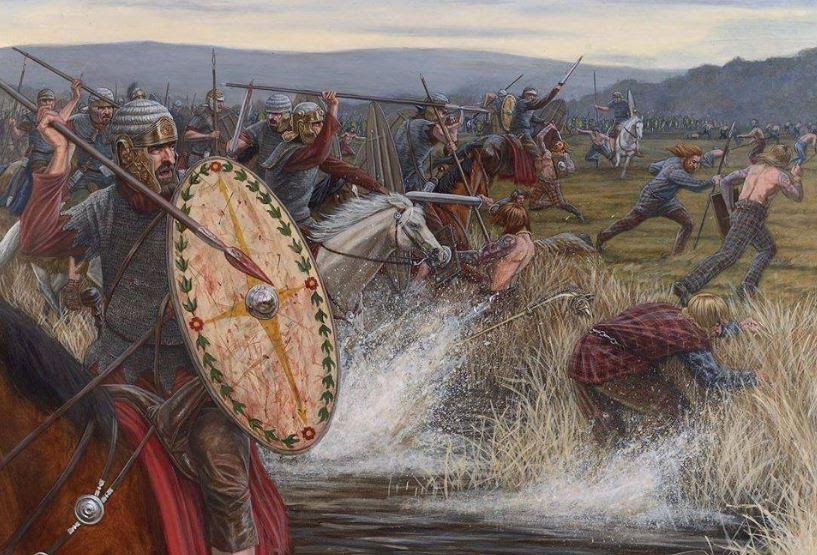
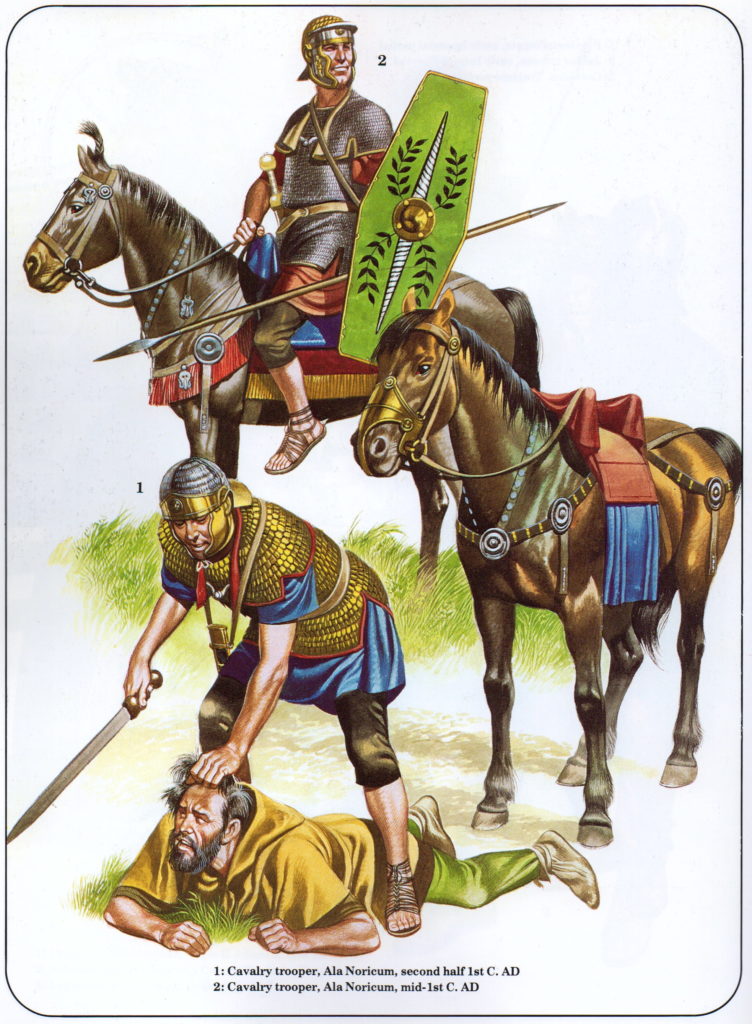
Artist impression of Roman cavalry ala engaging Caledonians (illustration by Sean O’ Brogain)

The Romans began visiting brutal retaliation upon the enemy then, but all ground to a halt with the death of Emperor Septimius Severus at York.

It is at this point that Caracalla and Geta became co-rulers. However, Their primary objective now was to return to Rome and garner support.

The brothers, despite the hope of their parents, tutor, and others, were anything but harmonious.

Caracalla began gathering support and power unto himself, and it is at this time that he carried out the bloody killings hinted at by the discoveries at York we heard about in Part VI of this blog series.
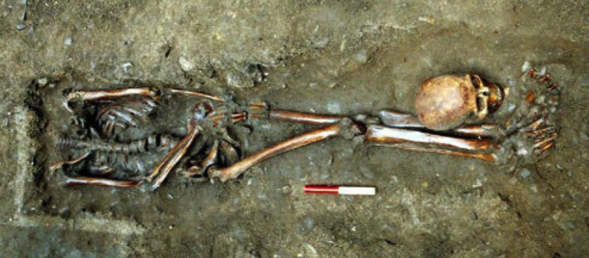
One of the beheaded York Romans (Photo: York Archaeological Trust)

After the death of Septimius Severus, the Caledonian campaign came to an abrupt end:

Antoninus [Caracalla] assumed the entire power; nominally, it is true, he shared it with his brother, but in reality he ruled alone from the very outset. With the enemy he came to terms, withdrew from their territory, and abandoned the forts; as for his own people, he dismissed some…and killed others…

(Cassius Dio, The Roman History, 11,1)

The Severan invasion of Scotland was a massive campaign, involving hundreds of thousands of men. It was not nearly as large as his successful Parthian campaign in which he led thirty-three legions east, but it was one of the largest Roman operations on British soil.

50,000 Roman dead.

And how many more Caledonian and Maeatae casualties?

If Cassius Dio is correct, the numbers are staggering.

But was the campaign a victory or a failure for Rome? Was it worth it?

Severus had not only wished for the complete and permanent conquest of Caledonia, but also for the war to give his sons discipline, for it to bring them close together.

Perhaps Severus also wanted to add one more battle honour to his name – ‘Britannicus’?

If we are to believe Cassius Dio and Herodian, our primary sources for this period, we must conclude that Severus’ Caledonian campaign was more of a failure, not because Rome lost on the field of battle – indeed, despite the loss of life, they brought the tribes to their knees temporarily – but because the finalizing of the campaign was left in the hands of incapable heirs whose only concern was to return to Rome and gather power, heirs who continued to hate each other.

How many possible victories in history have been wasted in a greedy aftermath?
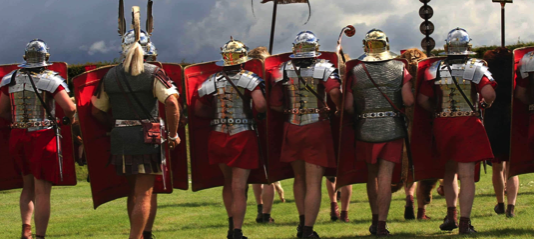
Roman re-enactors (Historic Scotland)

Caracalla and Geta abandoned Caledonia and returned to Rome with destruction and bitter enemies in their wake.

The forts of the Gask Ridge, the would-be northern capital of Horea Classis, and the Antonine wall, Trimontium and other forts were abandoned and silent once more. Rome’s allies in the fight, mainly the Votadini, were left to their own defences yet again.

The Caledonians and Maeatae had been paid off, and may have been quiet for a time, but they would rebel again…and again.

And so the cycle of powerful men wasting the lives of loyal troops in foreign wars echoes through history without end. And the same goes for the pain and suffering on both sides of any conflict.

The Severan invasion of Caledonia was just another such conflict.

And for the characters in Isle of the Blessed, the scars of that conflict will be long-lasting indeed.

Thank you for reading.
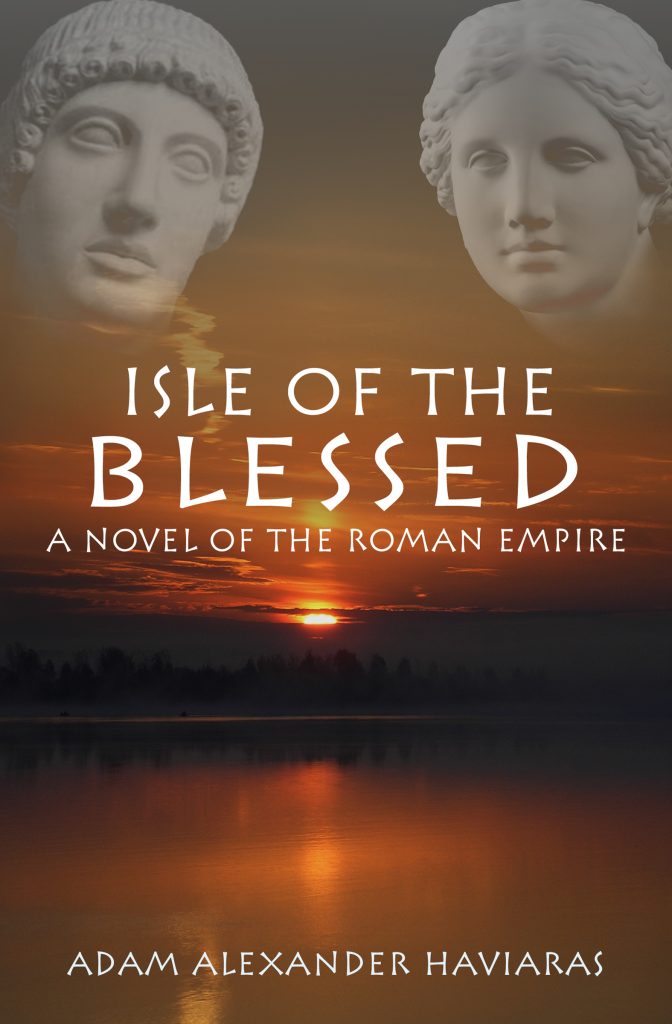
We hope you have enjoyed this blog series on The World of Isle of the Blessed. If you missed any of the posts, or would like to read them again, you can read the entire blog series by CLICKING HERE.

 Isle of the Blessed (Eagles and Dragons – Book IV) is available in e-book and paperback in most major on-line retailers HERE.

If you haven’t read any books in the Eagles and Dragons series yet, you can start with the #1 bestselling A Dragon among the Eagles for just 0.99! Or get the first prequel novel, The Dragon: Genesis, for FREE by signing-up for the newsletter HERE.

Stay tuned for our next blog series about Book V in the Eagles and Dragons series, The Stolen Throne (available now).

The history, archaeology and mythology continue, and we’re thrilled to have you along for the ride.

Facebooktwitterpinterest

The World of Isle of the Blessed – Part VI – Mass Murder in Roman York

After his father’s death, Caracalla seized control and immediately began to murder everyone in the court; he killed the physicians who had refused to obey his orders to hasten the old man’s death and also murdered those men who had reared his brother and himself because they persisted in urging him to live at peace with Geta. He did not spare any of the men who had attended his father or were held in esteem by him.

(Herodian, History of the Empire, XV-4)

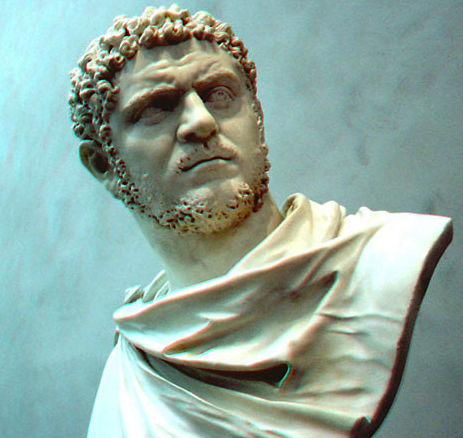
Thus began the reign of Marcus Aurelius Severus Antoninus Augustus, the emperor more commonly known as Caracalla.

Welcome back to The World of Isle of the Blessed, the blog series in which we look at the research that went into the creation of the latest Eagles and Dragons historical fantasy novel.

In Part V, we looked at the death of Emperor Septimius Severus in York. If you missed that post, you can read it HERE.

In Part VI we are going to explore the immediate aftermath of Severus’ death, and how a mysterious archaeological discovery gives some interesting clues about the bloody beginning of Caracalla’s reign.

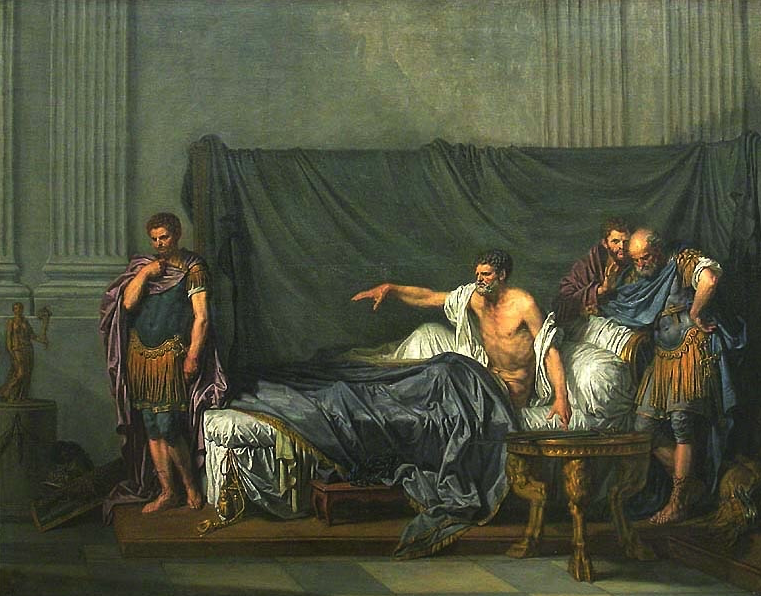
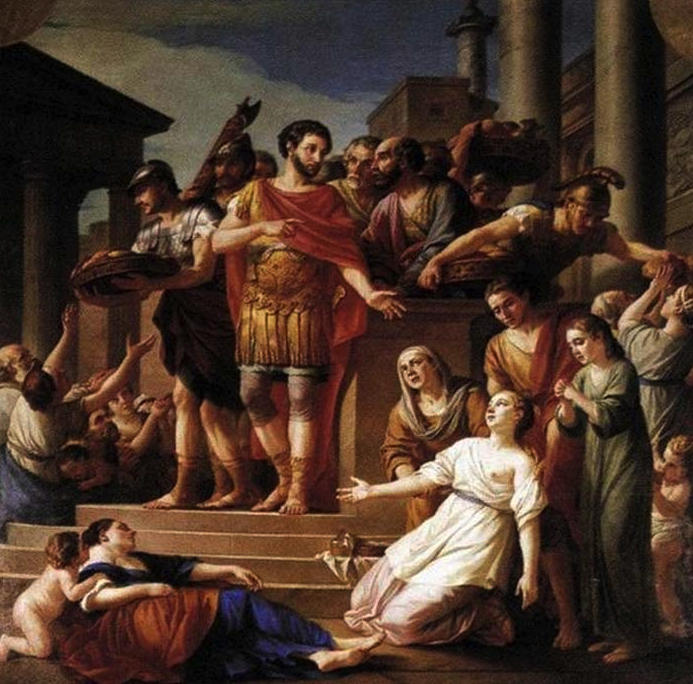
Septimius Severus and Caracalla (painting by Jean-Baptiste Greuze; Department of Paintings of the Louvre)

It could be argued that the death of Septimius Severus in York (Roman Eburacum) in A.D. 211 was one of the most pivotal moments in Rome’s history, that it was perhaps the beginning of the end for the Empire.

Severus had always been a strong leader who had decisively won out over his opponents in the civil war, who had conquered the Parthian Empire, and perhaps most importantly, had nurtured the loyalty of the legions.

As Cassius Dio tells us, one of the final pieces of advice to both of his sons was to “be harmonious, enrich the soldiers, and scorn all other men.”

But harmony between his sons and heirs, Caracalla and Geta, was something that would never come to be. As explored in Killing the Hydra (Eagles and Dragons Book II), after the death of Plautianus, Severus’ previous, traitorous Praetorian prefect, the two brothers were constantly at odds, running amok in Rome.

That was one of the reasons the sources give for the Caledonian campaign, that it was to give his sons a sense of purpose.

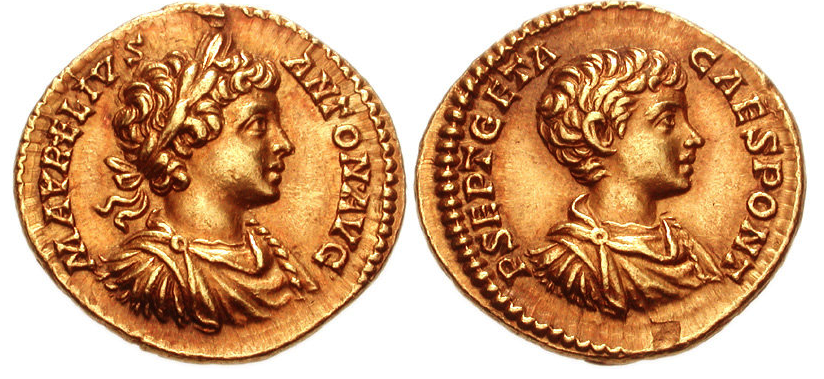
Gold aureus portraying Caracalla (as ‘Augustus’) and Geta (as ‘Caesar’)

His belief in his sons, especially in Caracalla, might have been Severus’ fatal flaw when it came to the health of the Empire. Dio tells us “he had often blamed Marcus [Aurelius] for not putting Commodus quietly out of the way and that he had himself often threatened to act thus toward his son [Caracalla]”.

But Severus erred and made the same mistake as Marcus Aurelius, and set his son upon the imperial throne. Only this time, there were two heirs, and if one thing is certain, imperial power was never easily shared.

Caracalla was obsessed with securing power…

When Septimius Severus finally passed away in Eburacum, (Roman York) on February, A.D. 211, Caracalla made his bid to secure power immediately.

As have other rulers in Rome’s history, he began by eliminating his perceived enemies, those who posed an immediate threat.

This did not include his brother Geta at first, for Geta was also well-loved by the men of the legions as Severus’ son, and Caracalla needed the legions’ loyalty.

Others were not so fortunate.

As Herodian tells us in the quote above, Caracalla began to “murder everyone in the court”.

But how and where did he do this?

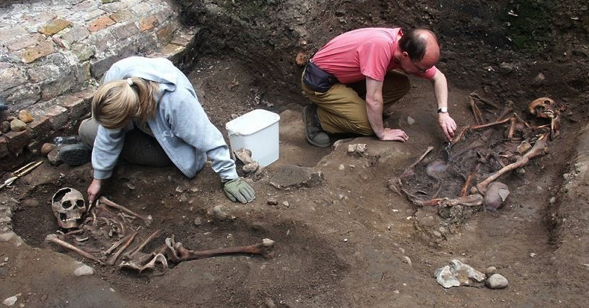
In the early 2000s, a gruesome discovery beneath a patio in York hints at what might have happened. 

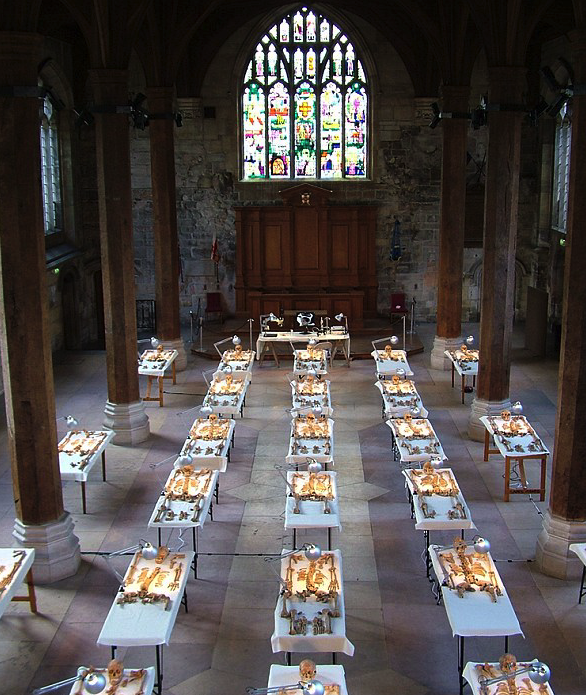
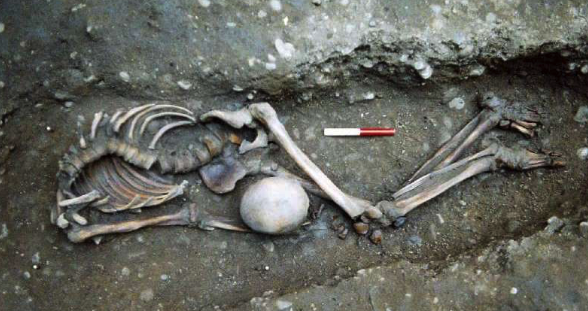
Headless bodies discovered in York (photo by York Archaeological Trust)

What this archaeological discover entailed aligns well with what we are told of Caracalla’s bloody start to his reign, and hints at the madness or paranoia that already had a hold on the young emperor.

As it turns out, the discovery in York entailed the burials of over 30 male skeletons, all of them between the ages of twenty and forty.

The strange thing about these skeletons was that they were all decapitated…executed. And they date to the beginning of Caracalla’s reign.

The heads of the bodies were places in strange positions – some by the feet or between the legs and some face down. There are even two skeletons in which the heads were exchanged, the one put with the other.

Archaeologists at work in York (photo: York Archaeological Trust)

Ancient Romans took death and burial seriously, but in this instance there is little respect shown to the skeletons.

From the forensic evidence, experts believe that these men were executed by beheading.

Some of the bones display horrific injuries too. A few show a single, clean cut through the vertebrae of the neck, but others show a brutal end with one skeleton displaying eleven separate cuts to the neck on all sides, plus a massive head trauma.

Praetorian officers

So, who were these men that Caracalla would strike so brutally at them?

The theories vary, but it seems likely that most of them were Praetorians who had been loyal, not only to his father, but to Papinianus, the Praetorian Prefect. These were men Caracalla felt he did not have their loyalty. But there were possibly others among the slain.

It is quite possible that among the dead are the remains of the doctors who refused to help speed the emperor’s passing when requested by Caracalla. Also, Severus’ loyal freedman, Castor, is a possible victim, for he was often at odds with the young Caesar and had Severus’ confidence. Another who had helped to rear Caracalla and Geta, and who is said to have often annoyed the former, was their tutor, Euodus. Was he also among the decapitated dead?

One of the decapitated bodies found as if thrown unceremoniously into the ‘grave’ (photo: York Archaeological Trust)

Whoever the victims of this massacre in Roman York were, they had incurred Caracalla’s anger in some way, and he made them pay for it before dumping their mangled corpses in a cemetery outside the walls of the city.

In Isle of the Blessed, this horrific event is one of the more grisly episodes in a history that, quite frankly, you just can’t make up.

Often, history is unbelievable, and when turning it into fiction, the stakes have to be raised.

So, what happens to the protagonist, Lucius Metellus Anguis, during Caracalla’s rampage in Isle of the Blessed?

You have to read the story to experience it for yourself.

Thank you for reading.

To learn more about the Severan invasion of Scotland as well as the archaeological discovery of the decapitated bodies at York, be sure to watch the Timewatch documentary below.

Tune in next week for the sixth post in The World of Isle of the Blessed when we will take a brief look at the Caledonian campaign and wether it was indeed a victory or not.

Isle of the Blessed is now available in e-book and paperback formats on major retailers. CLICK HERE to learn more.

Facebooktwitterpinterest

The World of Isle of the Blessed – Part V – The Death of an Emperor

We are past the midway point in this blog series on The World of Isle of the Blessed in which I share the research that went into the creation of the latest Eagles and Dragons release.

I hope you’ve enjoyed it so far!

Last week in Part IV, we looked at the imperial court of Severus and the main players who would have been present in Eburacum during the Caledonian campaign. If you missed it, you can check it out HERE.

In Part V, we’re going to be taking a brief look at one of the pivotal moments in Rome’s history: the death of Emperor Septimius Severus.

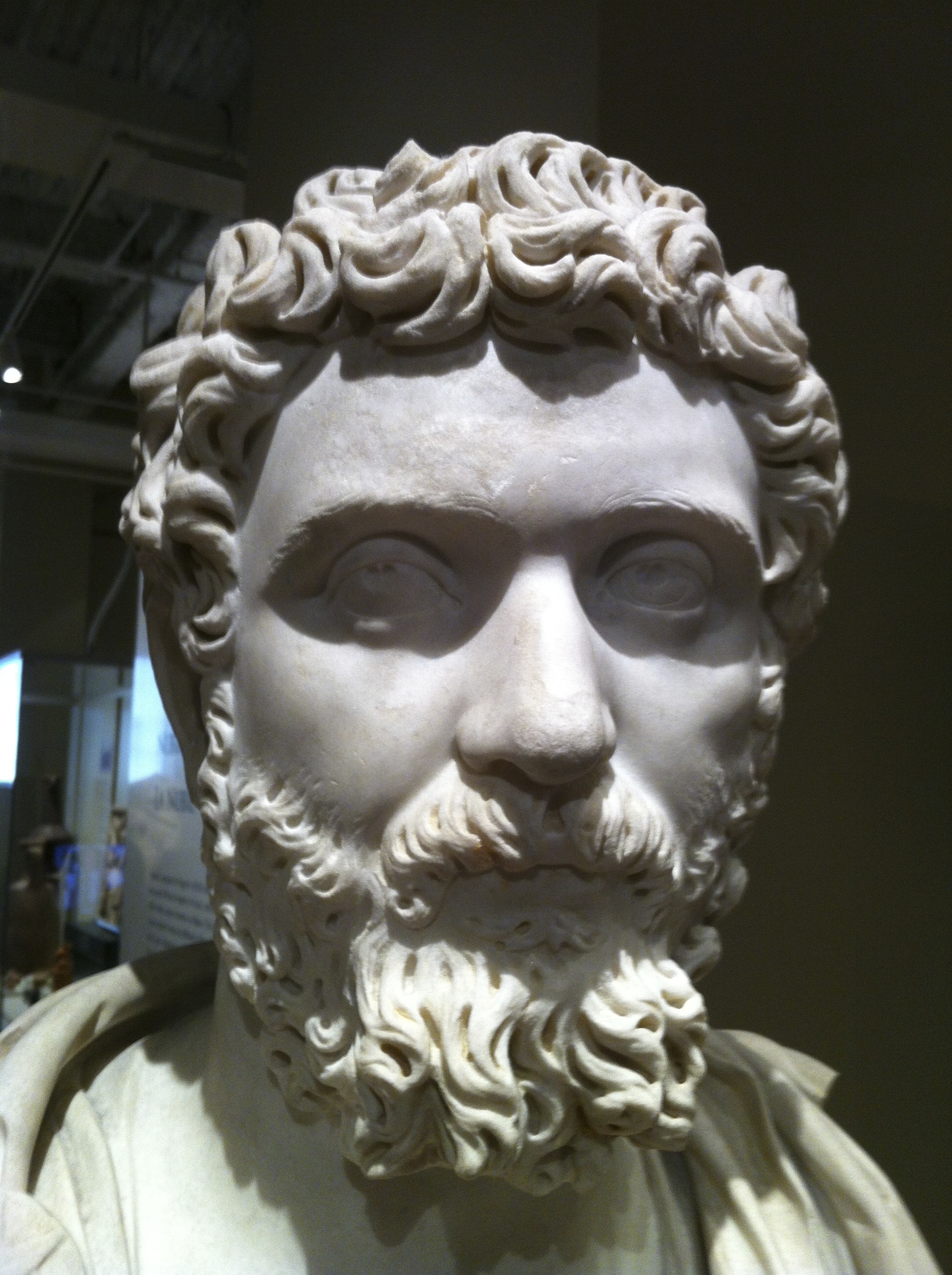
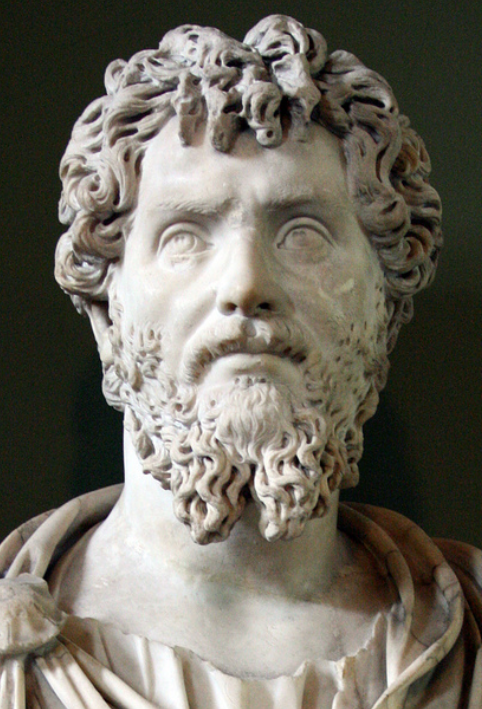
Septimius Severus

Severus, seeing that his sons were changing their mode of life and that the legions were becoming enervated by idleness, made a campaign against Britain [Caledonia], though he knew that he should not return…

(Cassius Dio, The Roman History, 11-1)

In Warriors of Epona (Eagles and Dragons, Book III), Septimius Severus and his sons, Caracalla and Geta, arrive in Britannia for the invasion of Caledonia, and the sources tell us that this was partially to occupy the two sons who were running rampant in Rome after the execution of the Praetorian Prefect, Gaius Fulvius Plautianus. You can read more about the invasion of Caledonia HERE.

However, Severus had been ill for many years, mainly from gout, and perhaps arthritis. But he was a tough specimen, a man who had come out the victor in the previous civil war against Pescennius Niger and Clodius Albinus, and then as emperor had been victorious against the Parthian Empire. After the civil war, Severus brought a period of strength and stability to the Empire that saw its borders at their greatest extent and his power almost absolute, due to the strength and loyalty of the army.

Severus constantly looked to the stars…

One interesting fact about Septimius Severus and his supremely intelligent empress, Julia Domna, was that they were great believers in astrology and the messages the gods inscribed on the stars regarding their fates. Their astrologer was consulted in all things and went wherever they went.

It is for this reason, it is believed, that when the emperor set out for Caledonia, he knew that he would not see Rome or Leptis Magna, his north African home, again.

He knew this chiefly from the stars under which he had been born, for he had caused them to be painted on the ceilings of the rooms in the place where he was won’t to hold court, so that they were visible to all… He knew his fate also by what he had heard from the seers; for a thunderbolt had struck a statue of his which stood near the gates through which he was intending to march out and looked toward the road leading to his destination, and it had erased three letters from his name. For this reason, as the seers made clear, he did not return, but died in the third year. He took along with him an immense amount of money.

(Cassius Dio, The Roman History, 11-1)

The Caledonian campaign began in A.D. 208. About three years later, Emperor Septimius Severus did indeed die at Eburacum (modern York) on February 4th, A.D. 211.

It seems the seers and astrologers had been correct.

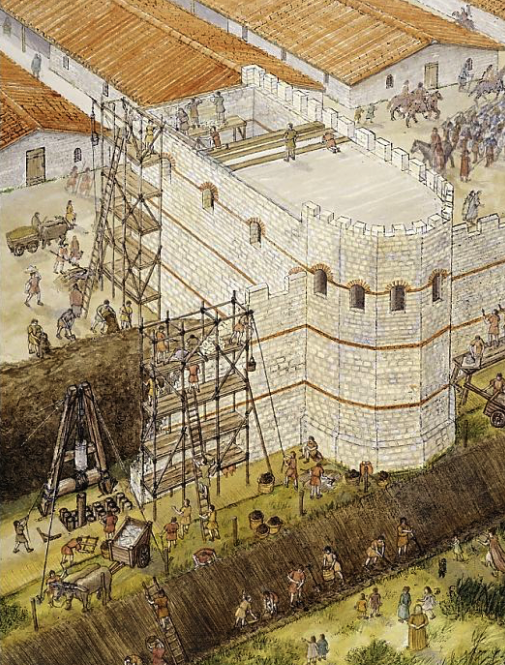
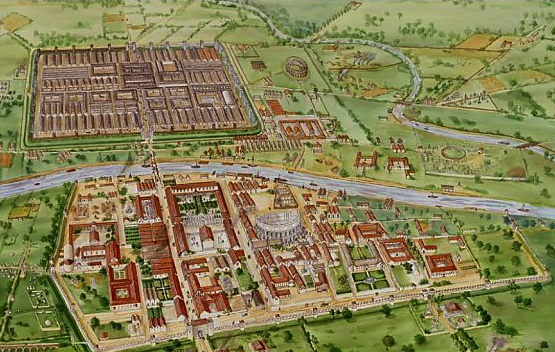
Roman York around A.D. 210. Construction of the interval tower by Tracey Croft. (Historic England)

During the Caledonian campaign, Eburacum had been the administrative capital for the imperial court. Severus’ son, Geta took care of administration, while Caracalla and his father carried on with military actions against the Caledonians and Maeatae in the North.

However, due to Severus’ ill health, he was forced to return to Eburacum to await the arrival of those stars under which he knew he was to expire.

Herodian, the other historian for the period, gives us his account:

Now a more serious illness attacked the aged emperor and forced him to remain in his quarters; he undertook, however, to send his son out to direct the campaign. Caracalla, however, paid little attention to the war, but rather attempted to gain control of the army. Trying to persuade the soldiers to look to him alone for orders, he courted sole rule in every possible way, including slanderous attacks upon his brother. Considering his father, who had been ill for a long time and slow to die, a burdensome nuisance, he tried to persuade the physicians to harm the old man in their treatments so that he could be rid of him more quickly. After a short time, however, Severus died, succumbing chiefly to grief, after having achieved greater glory in military affairs than any of the emperors who had preceded him. No emperor before Severus had won such outstanding victories either in civil wars against political rivals or in foreign wars against barbarians. Thus Severus died after ruling for eighteen years, and was succeeded by his young sons, to whom he left an invincible army and more money than any emperor had ever left his successors.

(Herodian, History of the Empire, XV 1)

Imperial Family – The Severans

The death of Septimius Severus is a crucial moment in Isle of the Blessed, and indeed in the entire Eagles and Dragons series.

I have been writing about this fascinating emperor for a long time, since Parthia, and then, as the stars loomed above him, as his day of death appeared on the horizon, it was time to explore his thinking toward the end.

How difficult it must have been for such a strong individual to face his end? After winning, creating, and ruling a vast, thriving empire, how could he deal with saying goodbye to it all?

It was a privilege to write about it in Isle of the Blessed.

The research into Severus’ death was also fascinating. Cassius Dio gives some details:

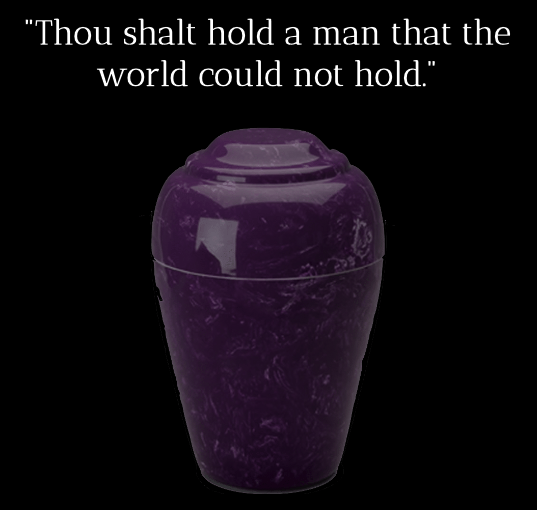
…his body, arrayed in military garb, was placed upon a pyre, and as a mark of honour the soldiers and his sons ran about it; and as for the soldiers’ gifts, those who had things at hand to offer as gifts threw them upon it, and his sons applied the fire. Afterwards his bones were put in an urn of purple stone, carried to Rome, and deposited in the tomb of the Antonines. It is said that Severus sent for the urn shortly before his death, and after feeling of it, remarked: “Thou shalt hold a man that the world could not hold.”

(Cassius Dio, The Roman History, 15, 2)

One can imagine Severus, staring at the stars he had had painted everywhere, and at the stone urn that would hold his remains, but my research into the death of this great emperor of Rome led me to something even more fascinating.

The funeral pyre of Septimius Severus was said to have been the largest pyre ever to be seen in Britannia.

But what did such a thing look like? Where in Eburacum could it have been located?

Numismatology, the study of coinage, has been extremely useful to me in my research into the Severans over the course of this series of novels, and once again, it proved extremely useful.

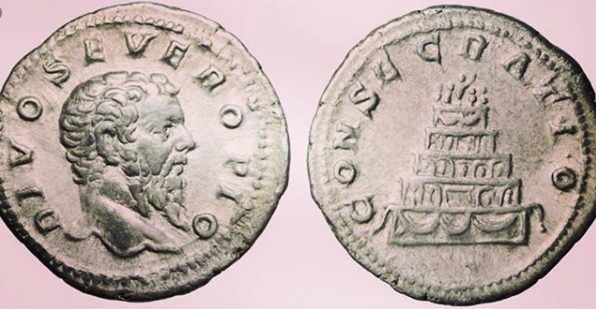
When looking for any information I could find on the death of Severus, I came across an image of a coin minted by Caracalla after the death of his father. It was perfect, for this coin depicted exactly what I was looking for…

Silver denarius showing the funeral pyre of Septimius Severus

On this coin is depicted the funeral pyre of Septimius Severus himself. It provided me with the information I needed to accurately describe this event.

Serendipity does indeed happen in research too!

The other question was the location of the pyre. Where could it have been located? Of course, the pyre would have had to be outside the city walls of Eburacum. But the ustrinum, the burning place, for such a large pyre would have to be far removed from the city.

Here too, the stars aligned for my research.

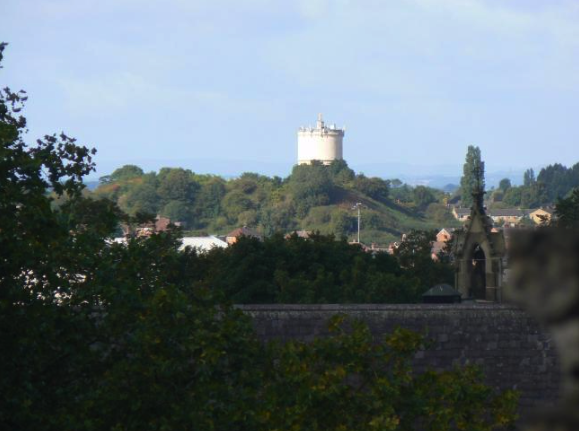
In modern York (ancient Eburacum) there is a place called ‘Severus Hill’ which is a large hill (now topped by a water tower) in an otherwise flat landscape that some historians believe was created by glacial shiftings millions of years ago.

However, I discovered that there is another theory about Severus Hill that the feature was not created by glaciers, but rather that it is the overgrown remains of Septimius Severus’ giant funeral pyre.

Severus Hill, and its water tower. (photo: yorkpress.co.uk)

I thought about this, about the distance from the ancient city walls (about 2 miles) and the toponymics of the place (place name). Whether the theory is absolutely true or not, it fit well with the story I was trying to tell.

It is wonderful when a plan, erm…plot, comes together!

Thus, my time with Septimius Severus, one of Rome’s great emperors, has come to an end. I will miss him.

He was not perfect, to be sure, but his life and actions have been fascinating to explore. He had great successes, but he also had failures, and perhaps his greatest failure was to entrust the empire he had built to his two sons, Caracalla and Geta.

Severus had, at one point, criticized Marcus Aurelius for making Commodus his heir, but he in turn had made the same mistake.

And the Empire would pay for it.

Still, Septimius Severus was an emperor until the very end, when his stars flickered and faded. His final words, as Cassius Dio tells us, were: “Come, give it here, if we have anything to do.”

I hope you have enjoyed this part in The World of Isle of the Blessed. There is more to come!

Tune in next week for Part VI when we will be looking at a particular archaeological discovery that sheds a gruesome light on the immediate aftermath of Severus’ death.

Thank you for reading.

Facebooktwitterpinterest

The World of Isle of the Blessed – Part IV – The Court of Severus in Eburacum

Welcome back to The World of Isle of the Blessed. We are at the midway point in this blog series about the history, archaeology and research that are related to Isle of the Blessed, the latest novel in the Eagles and Dragons historical fantasy series.

Last week in Part III, we took a tour of Glastonbury, Somerset and some of the sites that are featured in the novel. If you missed it, you can check it out HERE.

This week, in Part IV, we will be meeting some of the main players in the story, the members of Septimius Severus’ imperial court in Eburacum (modern York) when he spent three years there during the Caledonian campaign. Fans of the series will already be familiar with some, but others will be new, but no less interesting or important to this part of the story.

What was it like to be a part of the imperial court?

During the Caledonian campaign, Septimius Severus moved much of his government to Eburacum, the provincial capital of Britannia Inferior, the northern half of the province.

His entourage would have included not only his wife, sons, and other family members, but also an army of slaves, civil servants and more.

With the court moving to Eburacum for over three years, the city would have been bustling with activity. The markets would have been full with merchants and suppliers coming from around the Empire to provide for the great influx of civilians as well as the many thousands of auxiliary troops who came to Caledonia in addition to the legions that were already posted there.

Like any imperial court, however, there were camps with different intentions and interests working in the background. The glens of Scotland were not the only battlefields, and the period of Severus’ rule, perhaps especially during the Caledonian campaign, was a crucial time for the Empire.

So who were the main players at the imperial court, and where did their loyalties lie?

Severus had been ‘dying’ for years, but now, it seemed, the end was near, and the vultures were circling.

First, let us look at the family of Severus himself.

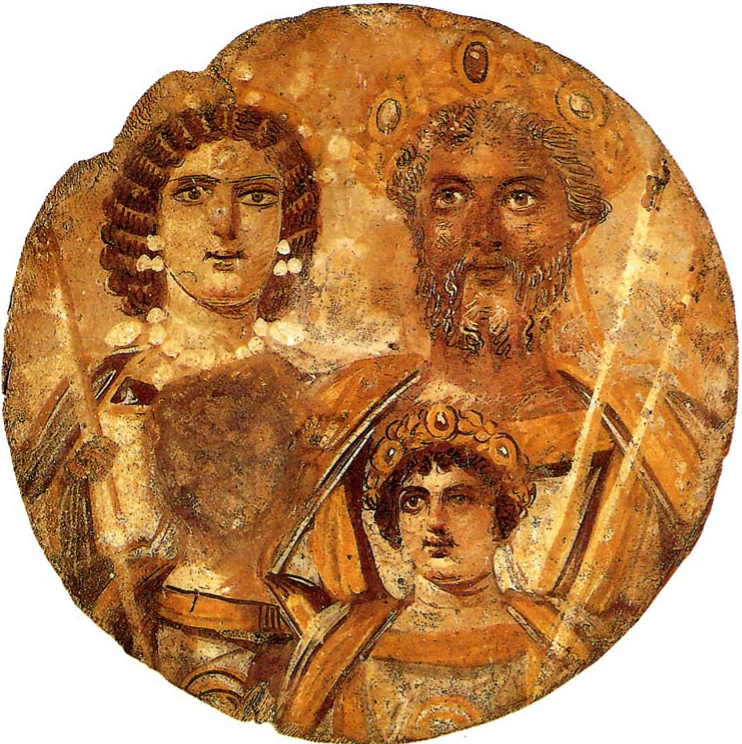
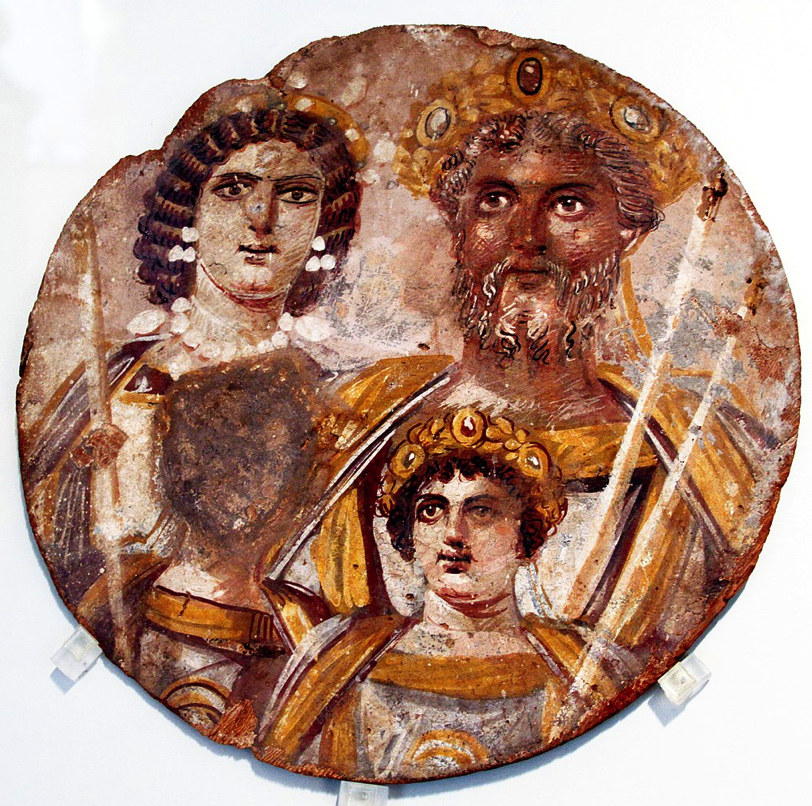
Septimius Severus and his family, Julia Domna, Caracalla and Geta (with face missing)

The Severans were a very interesting family and not without their tales of violence and greed and uniqueness of character. The period is not marked by something so brutal (not yet!) as the psychotic reign of Caligula, but there are certainly many more dimensions. It is a time of militarism, of a weakened Senate, a time of spymasters in various camps. It is a time marked by the rise of lower classes, the presence of powerful women and, over it all, a blanket of religious superstition at the highest levels. Many believe that it is this period in Rome’s history that marks the true beginning of the end of the Roman Empire.

In writing the Eagles and Dragons series, it has become obvious that Septimius Severus (A.D. 193-211) was, perhaps, one of the better emperors in Rome’s history. Sure, he was not Antoninus Pius (few were), but he was far better than say, Tiberius.

He was the son of an Equestrian from Leptis Magna in North Africa. When Commodus was killed in A.D. 192, Severus was governor of Pannonia. When the Praetorians decided to auction the imperial seat a short time later, Severus’ legions declared him Emperor. He subsequently defeated his two opponents who had also declared themselves Emperor: Clodius Albinus and Pescennius Niger. A purge of his opponents’ followers in the Senate and Rome made Severus sole ruler of the largest empire in the world.

Septimius Severus was a martial emperor, the army was his power and he knew how to use it, how to keep the legions loyal and happy. During his reign, he increased troops’ pay and in a radical move, allowed soldiers to get married. Severus was good to his troops, his Pannonian Legions and victorious Parthian veterans, some of whom fought for him in Caledonia. He promoted equestrians to ranks previously reserved for aristocrats and lower ranks to equestrian status. There was a lot of mobility within the rank system at the time due to Severus ‘democratization’ of the army. Remember, this was an emperor who favoured his troops, especially those who distinguished themselves. However, as Lucius Metellus Anguis discovers in Isle of the Blessed, there are prices to be paid. No favour is free, and being close to the imperial court can be perilous.

Emperor Septimius Severus

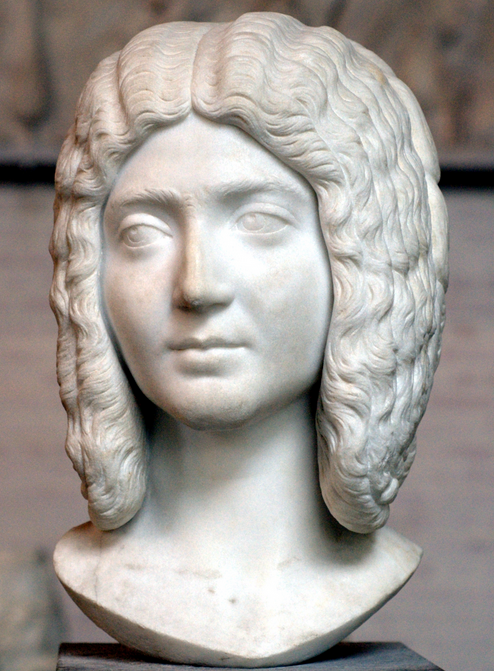
One of the most interesting characters of the period is Empress Julia Domna. She appears as one of the strongest women in Rome’s history, an equal partner in power with her husband who heeded her advice but also respected her. Julia Domna was the first of the so-called ‘Syrian women’, hailing from Antioch where her father had been the respected high priest of Baal at Emesa (Homs in modern Syria).

Julia Domna was also highly intelligent, known as a philosopher, and had a group of leading scholars and rhetoricians about her. They came from around the Empire to be a part of her circle, to win commissions from her. Her strength also bought her a great many enemies, including the previous Praetorian Prefect and kinsman to Severus, Gaius Fulvius Plautianus. In Caledonia however, years after the death of Plautianus, with her husband’s health deteriorating rapidly, she must have worried a great deal about the dual succession of their sons, Caracalla and Geta, both of whom brought a tenseness to the court.

Julia Domna

By all accounts Caracalla and Geta, Severus’ heirs, were both at odds much of the time. The two brothers seem to have tolerated each other’s presence and competed fiercely back in Rome, even in the hippodrome where at one point they raced each other so aggressively on their chariots that they ended up with several broken bones, almost leaving their father without a successor.

Caracalla seems to have been the favourite of the empress, though in later years Julia Domna does come to Geta’s defence, however much in vain.

One of the main reasons the sources give for the Caledonian campaign was that Septimius Severus believed it would be good for his sons, a way to teach them, give them focus, and prepare them to succeed him together. If anything, however, the angry chasm between the brothers grew worse the more their father’s light faded.

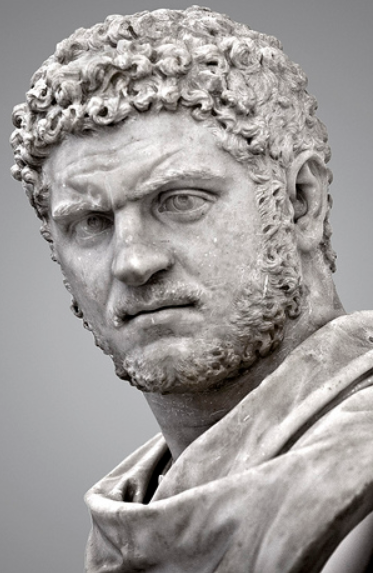
Caracalla

Caracalla, the older of the two brothers and about twenty-two at the time of the campaign, was the more martial of the pair. While Geta was appointed to administer the province from Eburacum, Caracalla went north to fight alongside the troops.

Did resentment build in the young Caesar as he fought, away from the court? Suspicion? Paranoia? Perhaps it was all of that and more? During the first phase of the Caledonian campaign, when Severus was about to agree to peace with Argentocoxus, the Caledonian leader, it is said that Caracalla nearly murdered his father in front of everyone, an episode that plays out in the previous novel, Warriors of Epona.

Caracalla was eager for the imperial throne, so much so that, as Herodian tell us, “he tried to persuade the physicians to harm the old man in their treatments so that he would be rid of him more quickly.”

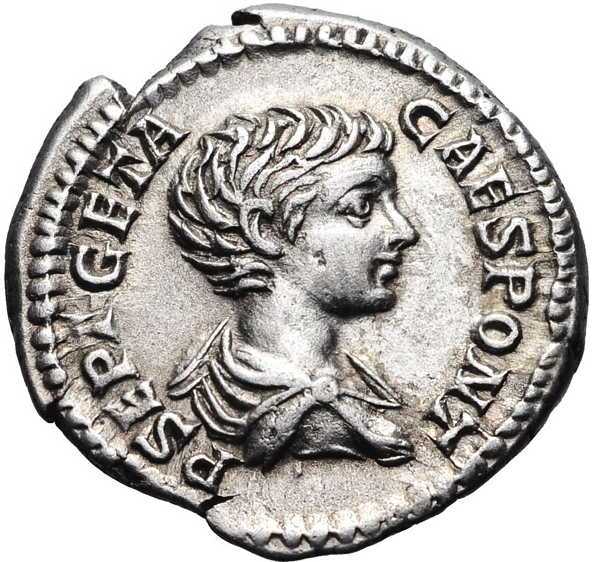
Denarius of Publius Septimius Geta

And what of Geta, Severus’ younger son and heir?

He seems to have been entrusted with much as far as the administration of Britannia during the Caledonian campaign, so he must have been skilled to some extent. However, from what little we know of him, he was not the survivor that his brother was, and most likely lacked the ambition that was needed in the imperial court.

He was respected by people at court and by the army, but this was perhaps due more to his parentage and position than his actions over the course of his short life.

Whatever impact Geta had over the years, perhaps the most prominent was his ability to anger his brother by way of his mere existence.

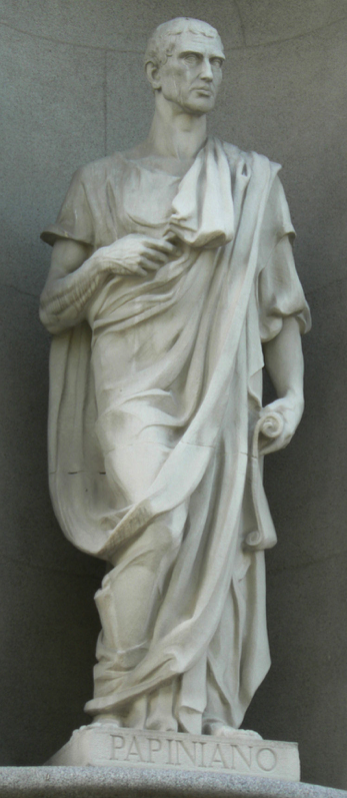
Aemilius Papinianus

One of the main players at the imperial court was Aemilius Papinianus, or ‘Papinian’ (A.D. 150-212), Prefect of the Praetorian Guard.

Papinianus is a fascinating man, a man of intelligence who was thrust, perhaps unwillingly, into one of the most powerful and perilous positions in the Roman Empire.

After the death of Gaius Fulvius Plautianus in A.D. 205, as told in Killing the Hydra, Severus appointed Papinianus as prefect of the guard. Before that, he had been a brilliant jurist (lawyer), legal expert, and had served as Severus’ main secretary. He was Syrian, and it seems likely that he was a cousin of the empress, Julia Domna. Perhaps that is why he was so trusted.

Papinianus, in his day, wrote many legal texts and was a great believer in the equity of the law. But what must he have thought to see the risk of all that Severus built over the years – with his advice – turning to ash after the succession of Caracalla and Geta?

It must have been dark days for the reluctant Praetorian Prefect.

Domitius Ulpianus

Lurking in the shadows of Papinianus was his long-time apprentice and fellow jurist, Domitius Ulpianus, or ‘Ulpian’ (A.D. 170-223).

It seems that Ulpianus was also a brilliant lawyer who served as a secretary under Severus (beneath Papinianus), and then became Papinianus’ right hand when the latter was made Praetorian Prefect.

Interestingly, Ulpianus’ writings were very influential on Roman law and later, on the laws of Medieval Europe.

But what must he have thought constantly playing second to Papinianus? Did the apprentice ever feel jealous of the master, or try to outdo him? We don’t know for certain, but what we do know is that he survived the tough years ahead, and so he must have been close to Caracalla. In fact, Ulpianus went on to become sole Praetorian Prefect in A.D. 223 under Emperor Severus Alexander. He must have been a survivor.

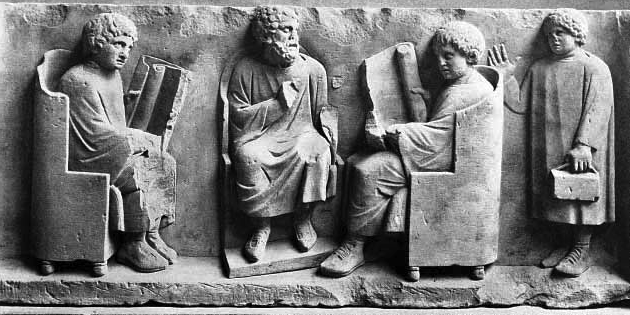
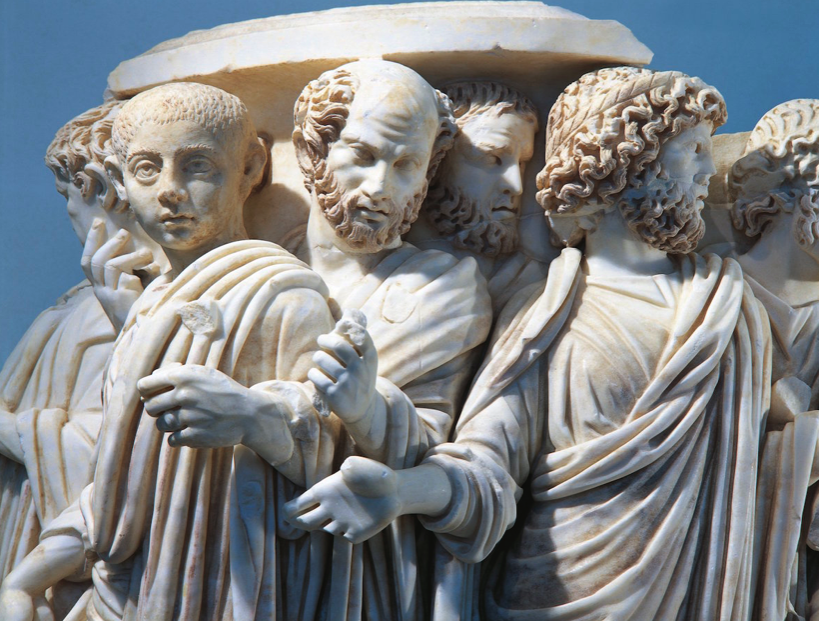
A Roman tutor and his students

There are two other men who played a very prominent role at the imperial court, who had the emperor and empress’ utmost trust, but who had also incurred the wrath of Caracalla.

Euodus, was the long-time tutor of Caracalla and Geta, and was still with the family when they went north during the Caledonian campaign. It seems that life was easier when the young caesars were smaller, but as the years went by and the animosity between them grew worse, Euodus’ job was more to try and nurture harmony between the brothers, something he evidently failed at.

This man may have felt he had much influence at court, and perhaps he did. But his constant attentions, his preachings perhaps, would prove to be more of an aggravation to Caracalla. Euodus would pay for it.

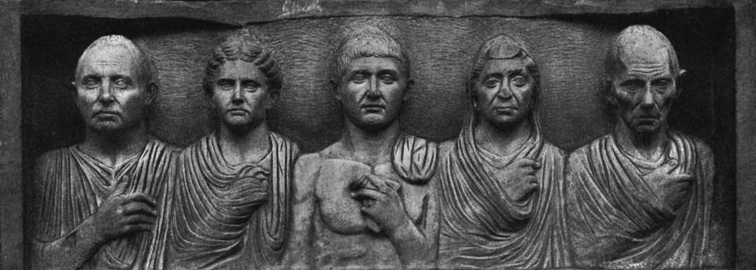
Roman freedmen

Likewise, Castor, who was Septimius Severus’ most trusted chamberlain, had a prominent role at court. He was a freedman of Severus’, elevated from a lowly rank to having the emperor’s ear, and his confidence, on a daily basis.

It is said that Castor was one of the imperial court members who most annoyed Caracalla. He was there at every turn, even when Severus reprimanded his son for attempting to kill him in front of the Caledonii at the end of the first campaign.

As Cassius Dio tell us, both Castor and Euodus did not fare well when Severus finally passed.

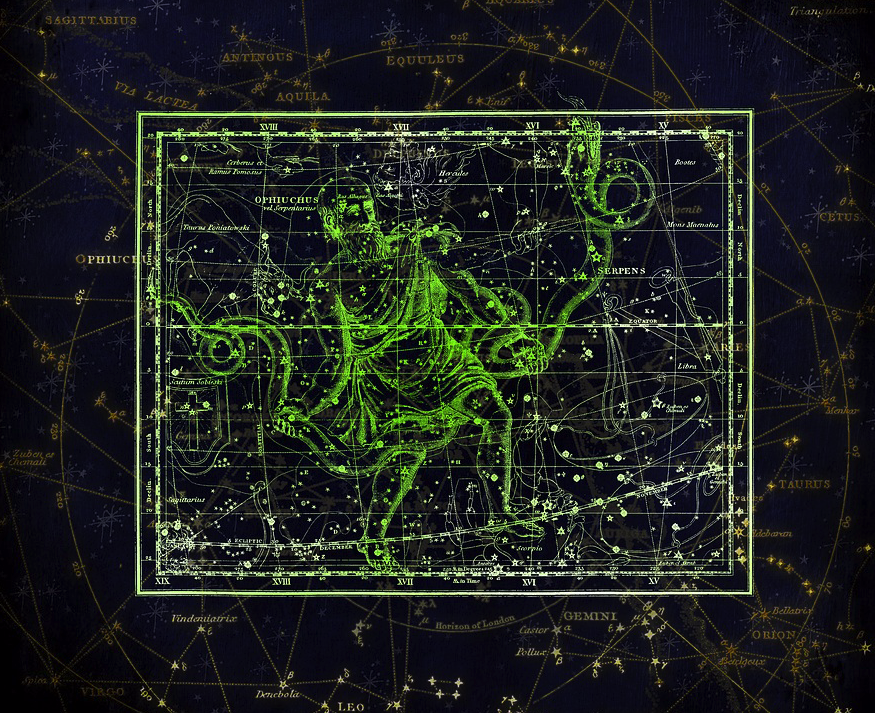
Astrology played an enormous role in the life and decisions of Septimius Severus

There were others who played a crucial role in the imperial court and would have been present at Eburacum during Severus’ time there.

As almost fanatical believers in astrology, Septimius Severus and Julia Domna would have had their primary astrologer, possibly named Artemidoros, with them at all times. He would have done daily readings for them, advised on any action, civic, personal, or military, and was probably the one who determined the date of Severus’ death before they even left Rome.

The sources say little to nothing about him, but his role would have been an important one, his influence upon the emperor and empress great.

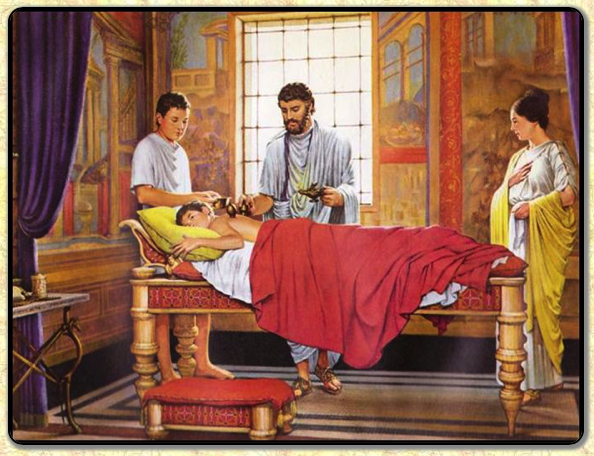
Artist impression of a Roman doctor at work

As someone who would have been ill for many years, Septimius Severus would have required medical attention on a daily basis, especially at the end. His physicians would have been there, at the heart of imperial politics, hearing and seeing much, including Caracalla’s aforementioned request to speed his father’s passing.

These doctors, who had refused Caracalla’s request (threat?), likely grew extremely wary as their patient’s health deteriorated more by the day in the British climate.

Roman York (Eburacum), c. A.D. 210. Aerial reconstruction by Tracy Croft, English Heritage

To this point, we’ve discussed the people whom we know to have been present at the imperial court. In truth, however, there would have been many hundreds (thousands?) who were a part of the imperial machine and civil service who were present in Eburacum. After all, the Empire was being administered from there during that time.

There are also some other key players who may have been present.

It is quite possible that Julia Domna’s sister, Julia Maesa, may have been present. After her sister, Julia Maesa was perhaps one of the most influential of the ‘Syrian Woman’. She and her daughters, Julia Soaemias Bassiana and Julia Avita Mamaea (mother of later Emperor Severus Alexander) would be extremely influential in the years to come.

It would not be surprising if Julia Maesa were present at court, close to the heart of things. She was apparently close to Caracalla too, and this would have protected her and her daughters. She survived until A.D. 226.

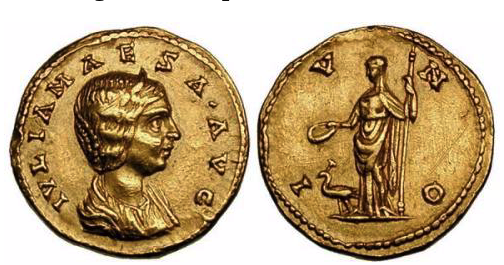
Gold ‘aureus’ of Julia Maesa

With much of the government following the emperor, one has to wonder if there were not also a certain number of senators present in Eburacum as well.

If so, it is possible that Cassius Dio was there. As the primary, contemporary source for the reign of Septimius Severus, it would not be surprising if he were present in Britannia for at least a portion of the campaign.

How many Roman senators might have been present in Eburacum? Was Cassius Dio among them?

Then there is Caracalla’s wife, Plautilla, and her brother Plautius. Were they present? Or did Caracalla want to keep her as far from him as possible, as it was said that she was ever an annoyance to him in previous years.

If the names of Plautilla and Plautius are somewhat familiar to you, it may be that that is because they are the children of Gaius Fulvius Plautianus, the traitorous Praetorian Prefect who was dispatched by Caracalla and others in a plot in A.D. 205, with Julia Domna no doubt working toward that end in the background.

As for his wife and brother-in-law, Cassius Dio said that Caracalla had them killed when to took power, but whether it was immediately, or upon his return to Rome is not stated.

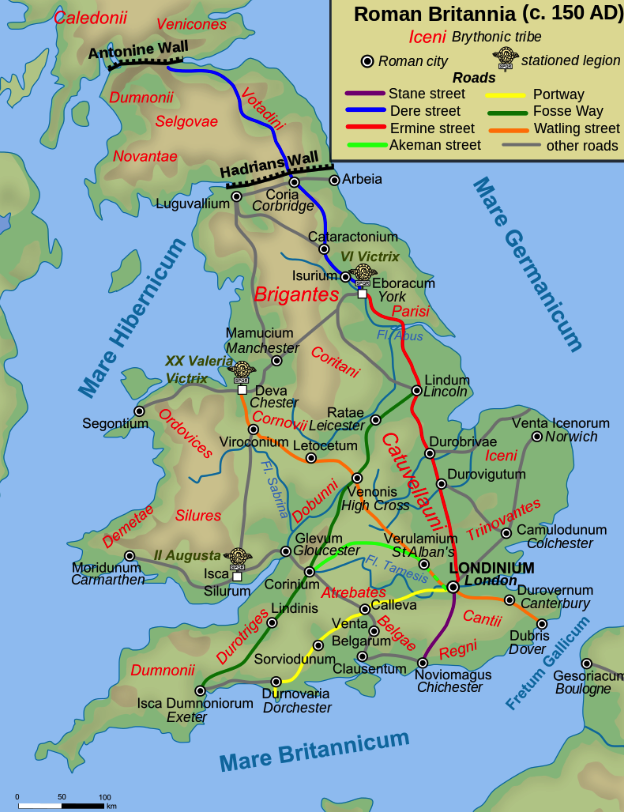
Map of Roman Britain prior to reign of Severus (Wikimedia Commons)

Another person who may have been in Eburacum for much of the time, and who may have found his work partially hi-jacked by the presence of the imperial family and the administrations of Geta, was Gaius Junius Faustinus Postumianus. He was the provincial governor of Britannia Superior, based in Londinium.

Faustinus was an officer in the army previously, before being appointed governor. What did he think about the presence of the imperial court in Britannia, or the waging of war at the borders of his province? No doubt the situation brought him many benefits, but also many headaches, especially when Severus passed from the world.

Of one thing we can be certain, and that is that an imperial court was not a place for the faint of heart.

Who survived, and who fell? Did being close to Severus’ sun mean you would get burned, or thrive?

For a writer of historical fiction, these are interesting questions to be explored with different answers for each player in the drama.

If anything, life at the court of Severus in Eburacum would have been anything but dull, despite the fact that they were on the virtual edge of the Empire.

Thank you for reading.

Isle of the Blessed is now available in e-book and paperback from all major on-line retailers. If you haven’t read any books in the Eagles and Dragons series yet, you can start with the #1 bestselling A Dragon among the Eagles for just 0.99! Or get the first prequel novel, The Dragon: Genesis, for free by signing-up for the newsletter HERE.

Facebooktwitterpinterest

Another New Eagles and Dragons Series Release – The Stolen Throne is out now!

Last month, we announced the release of Isle of the Blessed, the fourth book in our #1 bestselling Eagles and Dragons historical fantasy series. You can check that out by CLICKING HERE.

This month, we’re thrilled to announce the release of Book V of the Eagles and Dragons series: The Stolen Throne.

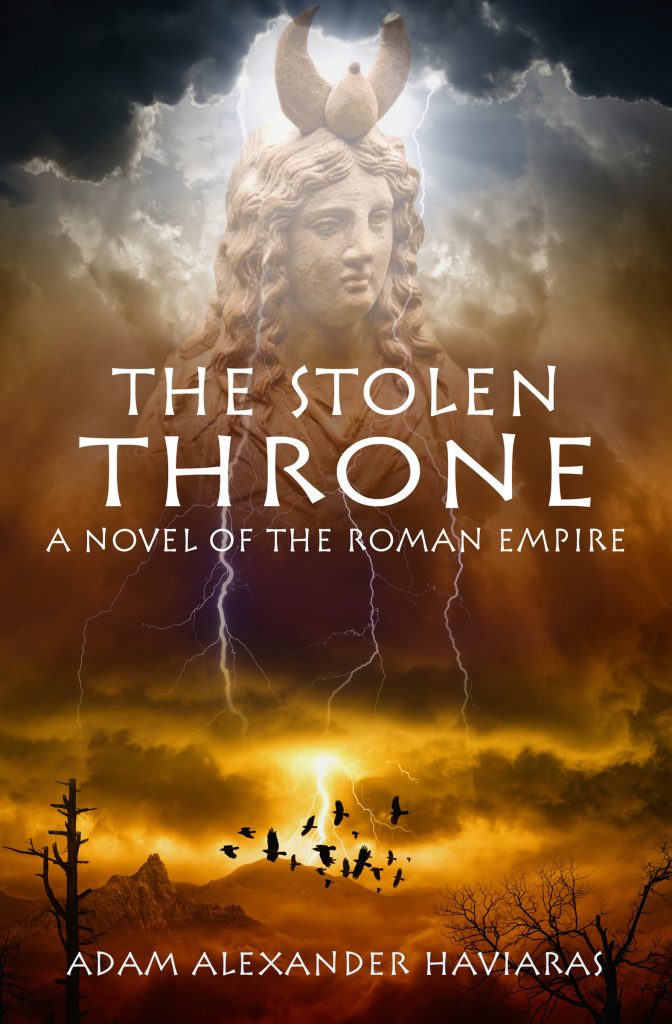
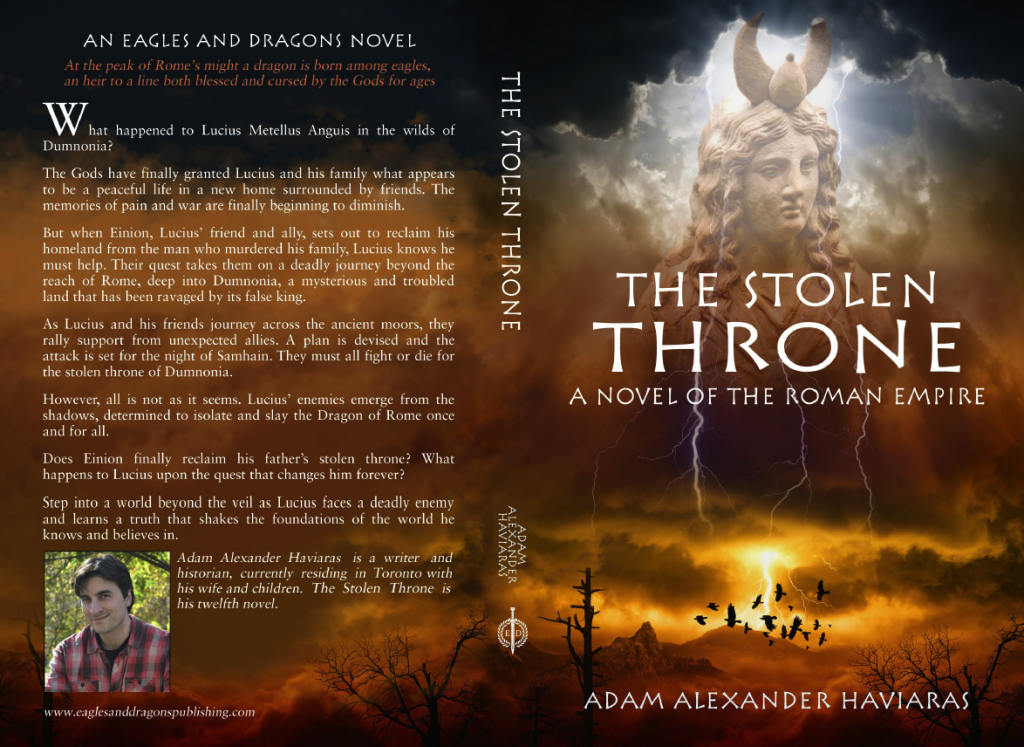
Here is the cover and synopsis of this exciting new addition to the Eagles and Dragons series:

At the peak of Rome’s might, a dragon is born among eagles, an heir to a line both blessed and cursed by the Gods for ages.

What happened to Lucius Metellus Anguis in the wilds of Dumnonia?

The Gods have finally granted Lucius and his family what appears to be a peaceful life in a new home surrounded by friends. The memories of pain and war are finally beginning to diminish.

But when Einion, Lucius’ friend and ally, sets out to reclaim his homeland from the man who murdered his family, Lucius knows he must help. Their quest takes them on a deadly journey beyond the reach of Rome, deep into Dumnonia, a mysterious and troubled land that has been ravaged by its false king.

As Lucius and his friends journey across the ancient moors, they rally support from unexpected allies. A plan is devised and the attack is set for the night of Samhain. They must all fight or die for the stolen throne of Dumnonia.

However, all is not as it seems. Lucius’ enemies emerge from the shadows, determined to isolate and slay the Dragon of Rome once and for all.

Does Einion finally reclaim his father’s stolen throne? What happens to Lucius upon the quest that changes him forever?

Step into a world beyond the veil as Lucius faces a deadly enemy and learns a truth that shakes the foundations of the world he knows and believes in.

This story will take you to a place beyond the reach of Rome’s Empire, a place full of mystery and emotion where all is not as it seems, a place from which few heroes return.

You haven’t read anything like this before!

You can learn more about The Stolen Throne (Eagles and Dragons – Book V) and find all the links to get your copy right here:

https://eaglesanddragonspublishing.com/books/the-stolen-throne-eagles-and-dragons-book-v/

The Stolen Throne is available in e-book format at all major on-line retailers, and currently in paperback from Amazon.

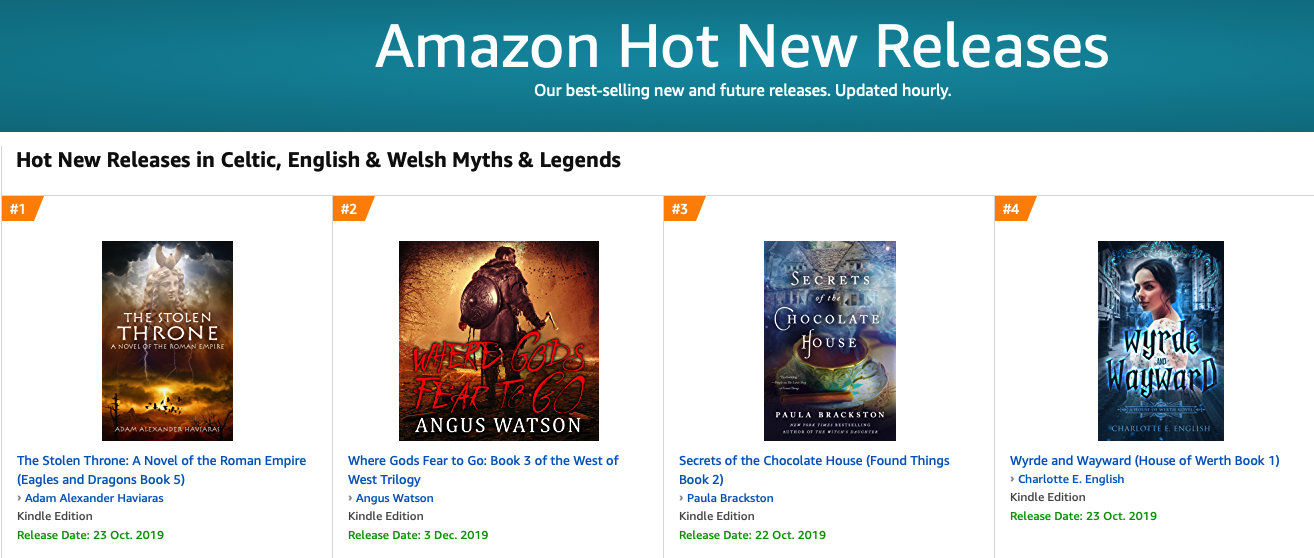
The Stolen Throne has already hit #1 during its pre-order period. See what all the fuss is about!

If you haven’t read any books in the Eagles and Dragons series, you can start the series for FREE with the full-length novel, The Dragon: Genesis, which you can download by CLICKING HERE.

Here’s to a new adventure in the Roman Empire!

Happy Reading!

Facebooktwitterpinterest

The World of Isle of the Blessed – Part II – Roman Lindinis: The Small Town with Big Ambitions

Welcome back to The World of Isle of the Blessed, the blog series in which we take a look at the research, history and archaeology that went into the latest novel in the Eagles and Dragons historical fantasy series.

In Part I, we looked at the hillfort of South Cadbury Castle which is one of the major settings of the book. If you missed that post, you can read it HERE.

In Part II, we’re going to be taking a look at another place that plays an important role in Isle of the Blessed: Roman Lindinis.

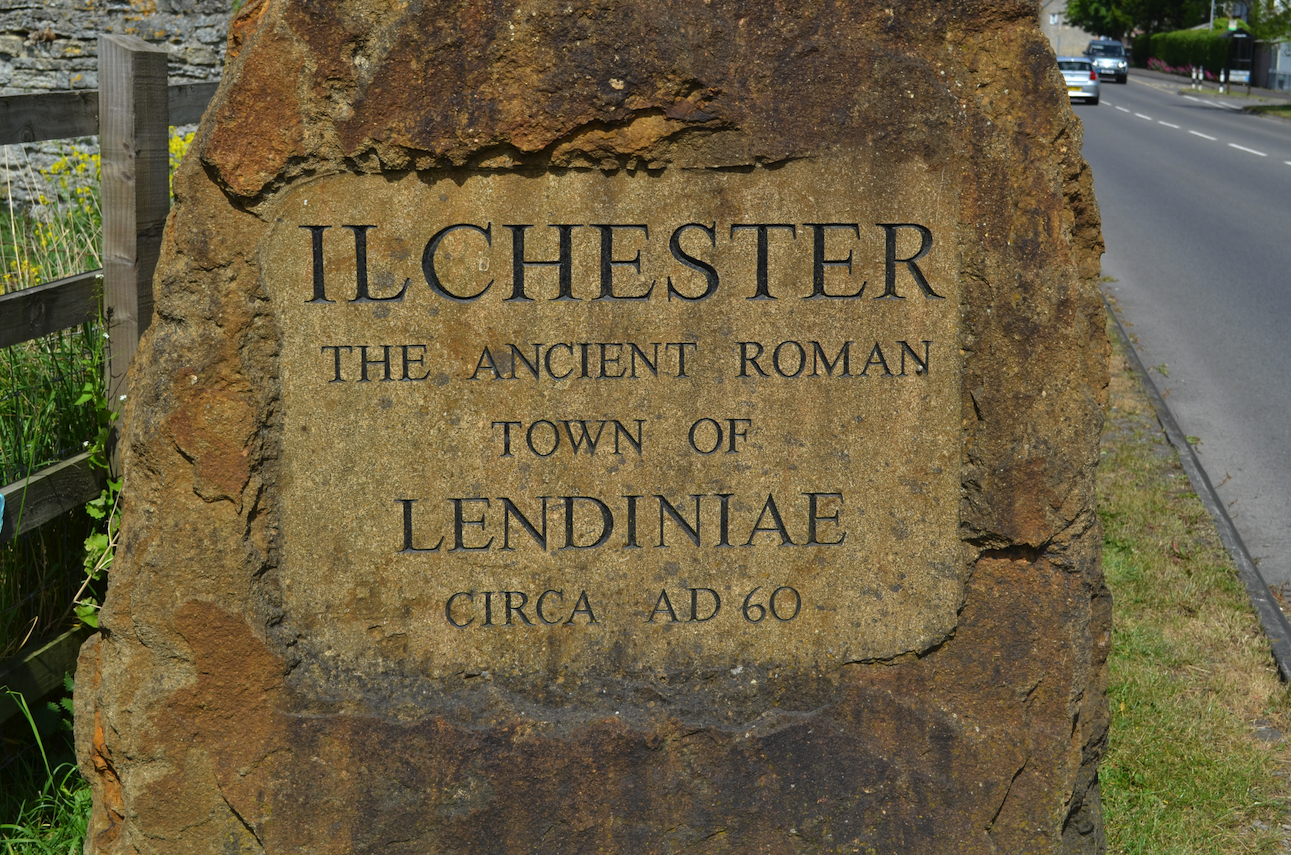
The settlement of Lindinis (also known as ‘Lendiniae’), as it is known in the seventh century Ravenna Cosmography (a list of place names from India to Ireland) is actually modern Ilchester, in Somerset, England.

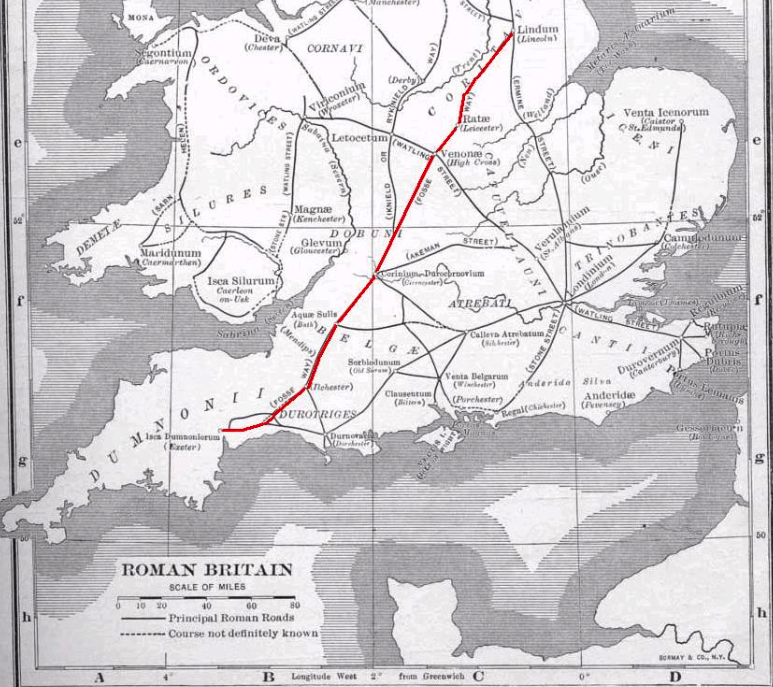
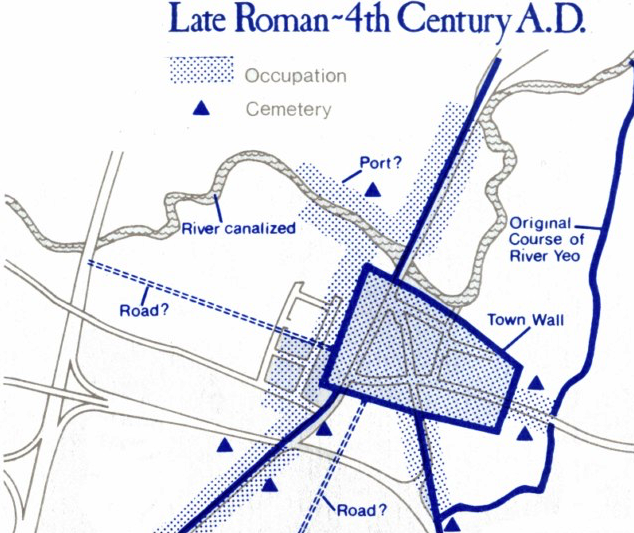
Lindinis, as it was known during the Roman period, was located just a few miles from South Cadbury Castle, and Glastonbury, Somerset. This fifty acre settlement lies where the Dorchester road interests with the Fosse Way, one of the major roads of Roman Britain.

Map showing the route of the Fosse Way from Exeter to Lincoln, and running through Ilchester

During the Roman period, Somerset was an agriculturally rich area of the Empire, with many villa estates, such as that of Pitney (which also features in the story). These estates’ primary business was in crops such as spelt wheat, oats, barley and rye. The also raised livestock, mainly cattle, but also sheep, horses, goats, and pigs.

These Roman villa owners were wealthy, and Lindinis was one of the main markets where they brought their crops and livestock.

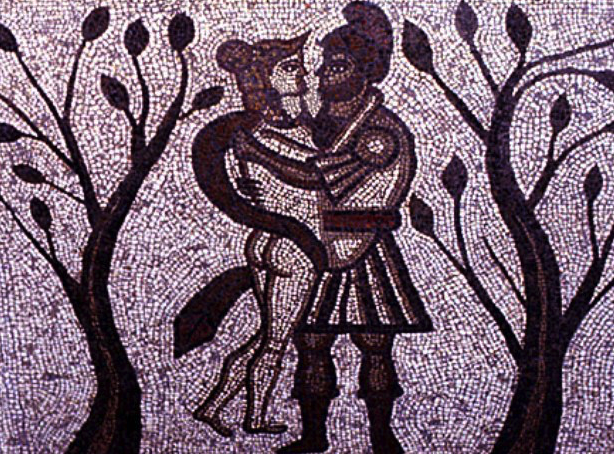
Aeneas and Dido mosaic from Low Ham Roman Villa near Ilchester

Lindinis was not always a Roman settlement, however.

It was originally a Celtic oppidum, a native center that consisted of a large enclosure with homes, food stores and livestock. One imagines Celtic Somerset as a place of peace and vitality.

But, in A.D. 43 the Romans arrived with the advent of the Claudian invasion of Britain. Forty-five thousand troops marched over the land, including four legions, and the native Britons fought, and lost. Vespasian, the future emperor, stormed the southern hillforts of Britain, including South Cadbury Castle, ushering in an age of Roman domination.

Possible remains of one of Lindinis’ Roman forts

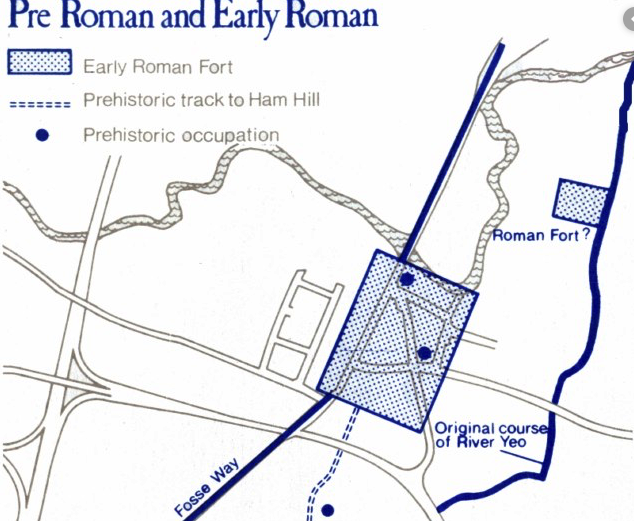
Eventually, at Lindinis, two successive forts were built on the site to the south of the river: one from Nero’s reign, and another during the Flavian period. There is also evidence for a third fort to the northeast of the river crossing where a double ditch enclosure has been discovered.

Plan of Pre-Roman and Early Roman Ilchester (image from the Ilchester Parish Council)

The Roman invasion of Britain was a violent time, and that violence carried on through the Boudiccan revolt of A.D. 59. But when the blood stopped flowing, an age of Pax Romana settled on the southwest of Britannia, and Lindinis was at the heart of it.

Lindinis, however, was not the main settlement of Roman Somerset. To maintain peace and order, and keep the economy running, the Romans instituted various civitates, centres of local government in which tribal groups of the region participated.

The centre of town, what might later have been market

The council of a civitas was known as an ordo, and the members of the ordo were decurions, overseen by an executive, elected curia of two men. The ordo of a civitas usually included Romans, tribal aristocrats or local chieftains, and it was their job to administer local justice, put on public shows, see to religious taxation, the census, and represent the civitas in Londinium. Supreme authority, however, belonged to the Provincial Governor who was aided by a procurator, the ‘tax man’.

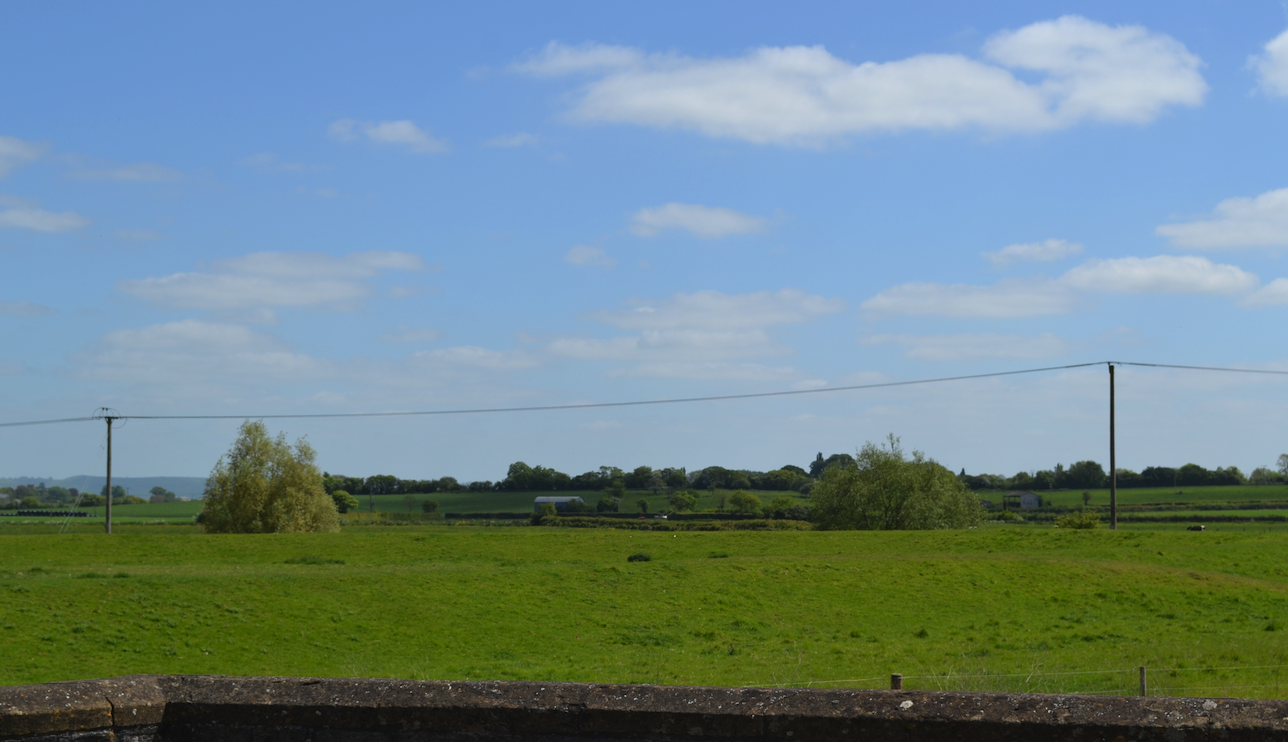
Ilchester crossing of the River Yeo. Remains of the Roman fort to the left.

There were three major civitates during the Roman period in southwestern Britannia: Durnovaria (modern Dorchester) the civitas of the Durotriges tribe, Isca Dumnoniorum (modern Exeter) the civitas of the Dumnonii, and to the north Corinium Dobunnorum (modern Cirencester) the tribal centre of the Dobunni.

Despite its large market and location at a crossroads along the artery of the Fosse Way over the river Yoe – in the southwest, the Fosse Way ran from Isca Dumnoniorum (modern Exeter) to Aquae Sulis (modern Bath) – Lindinis was not one of the major civitates of the region, though it did rival nearby Durnovaria.

Ilchester’s bridge over the river Yeo

In addition to a thriving market where wine, oil, clothing, ornaments, jewellery, tools, pottery and glass were sold, Lindinis also had gravel and stone streets, and stone walls (later). People also came to Lindinis to pay their taxes.

Where the road diverges in Ilchester – the left to Exeter, the right to Dorchester. See the bridge over the river directly ahead.

There was also a small garrison.

Lindinis may have seen itself as the civitas Durotrigum Lendiniensium, but it could not be an official civitas as one of the requirements for civitas status was a basilica or forum. Lindinis did not have either of those.

Plan of late Roman Ilchester (map from the Ilchester Parish Council)

Roman Lindinis had a large role to play in the economy of Roman Somerset, but perhaps not as large as its ordo would have liked. It also found itself in difficult situations during its time, for during the civil war (A.D. 193) between Septimius Severus, Pescennius Niger, and Clodius Albinus, Lindinis was forced to declare for Clodius Albinus who was in Britannia when he made his claim. At this time, new defences were built around Lindinis, as if in anticipation of the trouble to come.

Ah…politics.

In the book, Isle of the Blessed, Lucius Metellus Anguis, the main protagonist in the Eagles and Dragons series, has several run-ins with the ordo members of Lindinis’ ruling council who see him as a person of influence at the imperial court, a man who could help their small town to become much more.

Historically, despite its lack of a proper forum or basilica, it seems that Lindinis did succeed in attaining a measure of civitas status, for along Hadrian’s Wall, two inscriptions have been found bearing the name of a detachment from the ‘Civitas Durotragum Lendiniensis’, or the ‘Lindinis tribe of the Durotriges’.

This, despite the presence of the other three, official civitas settlements Durnovaria, Isca, and Corinium.

Who knows? Perhaps the persuasiveness of the ordo members of Lindinis, the settlement’s important location, and the size of its market helped to sway the Roman authorities to grant civitas status.

In Isle of the Blessed, we see how far the local politicians are willing to go.

I hope you’ve enjoyed part two of The World of Isle of the Blessed.

Next week, in Part III, we will look at the history, myth and legend surrounding what is known in Isle of the Blessed as Ynis Wytrin, that is, Glastonbury, England.

Thank you for reading.

Isle of the Blessed is now available in e-book and paperback from all major on-line retailers. If you haven’t read any books in the Eagles and Dragons series yet, you can start with the #1 bestselling A Dragon among the Eagles for just 0.99! Or get the first prequel novel, The Dragon: Genesis, for FREE by clicking HERE.

Facebooktwitterpinterest

The World of Isle of the Blessed – Part I – The Dragon’s Domus

Salvete, readers and history-lovers!

Welcome to The World of Isle of the Blessed!

In this seven-part blog series, we’re going to be taking a look at the research that went into my latest historical fantasy release, Isle of the Blessed, Book IV in the #1 bestselling Eagles and Dragons series.

Over the next few weeks, I’ll take you on a journey through the world of early third-century Roman Britain in which we will look at the history, archaeology, and historical events that took place during this pivotal time in the Roman Empire in which the book is set.

In this first post, we’re taking a closer look at a site that is well-known to Arthurian enthusiasts: the hillfort of South Cadbury Castle.

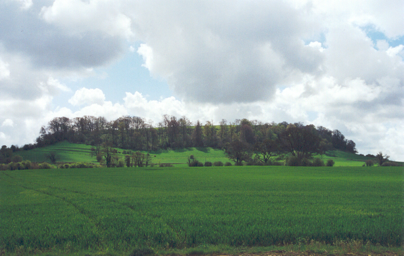
South Cadbury from the North

At the very south ende of the chirche of South-Cadbyri standith Camallate, sumtyme a famose toun or castelle… The people can tell nothing ther but that they have hard say that Arture much resorted to Camallate. (John Leland, Royal Antiquary, 1532)

The hillfort of South Cadbury Castle in Somerset, England, is one of the major locations in Isle of the Blessed. However, most people are familiar with it as a site with strong Arthurian associations. As such, its importance and role is hotly debated.

Though Isle of the Blessed is not a story of King Arthur and the Knights of the Round Table, it is difficult not to speak of this important Iron Age site without discussing the Arthurian connection.

Was South Cadbury Castle the power centre of the historical Romano-British warlord, or dux bellorum, we know as ‘King Arthur’? Was this the actual site of what has come to be known in the popular imagination as ‘Camelot’?

I’ve always been a strong proponent of the theory that there was in fact, an historical ‘Arthur’ who formed the factual basis for all the legends we love and cherish. So, when I look at sites such as South Cadbury, I do so with that in mind. However, that doesn’t mean that I accept a site’s association with Arthur on faith alone. 

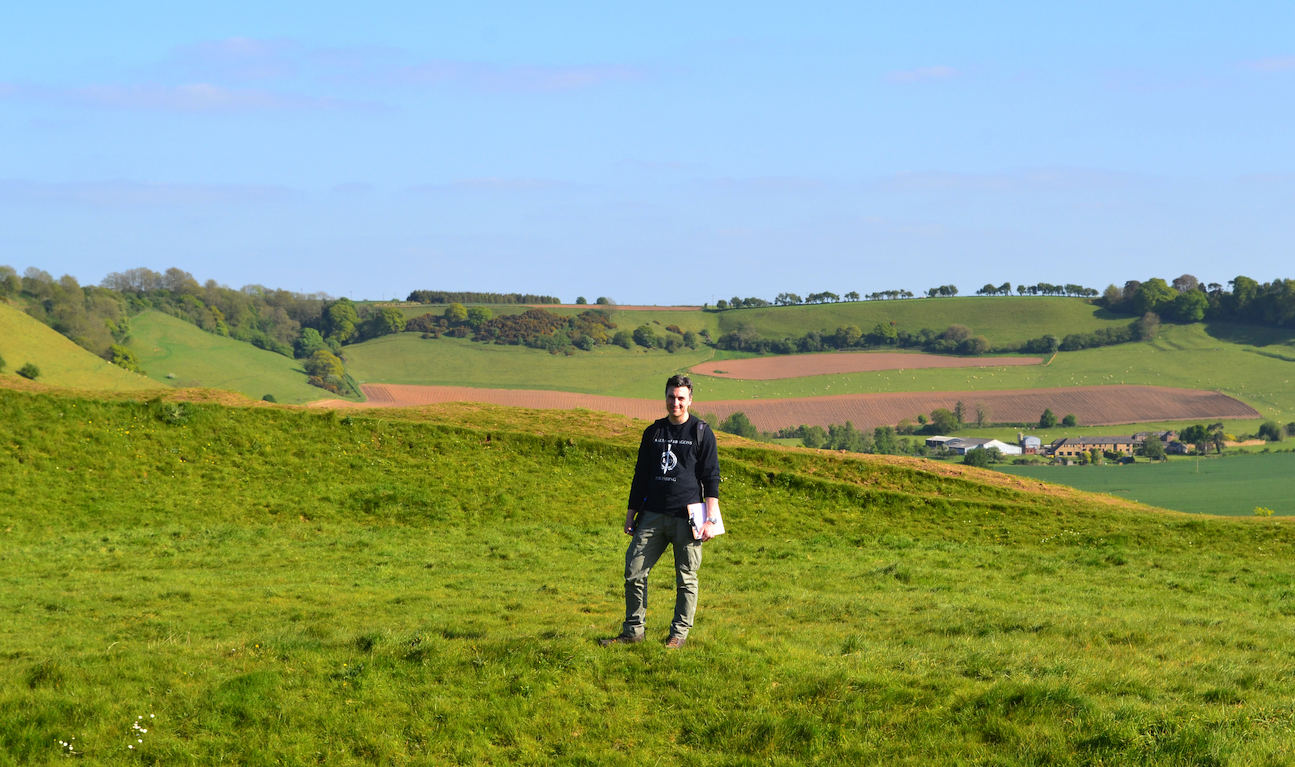
Adam Alexander Haviaras filming on top of South Cadbury Castle

I know this site pretty well – as I studied it and wrote about it as part of my Master’s dissertation entitled “Camelot: A look at the historical, archaeological, and toponymic evidence for King Arthur’s Capital”. As part of this, I looked at three of the main candidates for Camelot that had been put forward at the time – Wroxeter (Roman Viroconium), Roxburgh Castle (in the Scottish Borders), and South Cadbury. There is a copy of the dissertation hidden somewhere in the stacks at the St. Andrews University library in Scotland.

South Cadbury Castle is also where I cut my teeth as an archaeologist as part of the South Cadbury Environs Project team for a couple of seasons under the leadership of Richard Tabor. This was a wonderful experience that helped me to get up close and personal with the site I had studied for so long – I dug test pits, got into bigger trenches in which curious cows came to watch what I was doing, carried out geophysical surveys with a magnetometer, and found some curious objects such as a bronze dolphin that formed the handle of a Roman drinking cup. 

Most of all, I was given the chance to spend more time on this amazing, and yes, magical, landscape.

And a couple years ago, when doing research for Isle of the Blessed, I returned to South Cadbury where I also filmed a mini-documentary on the site (coming out later this year!).

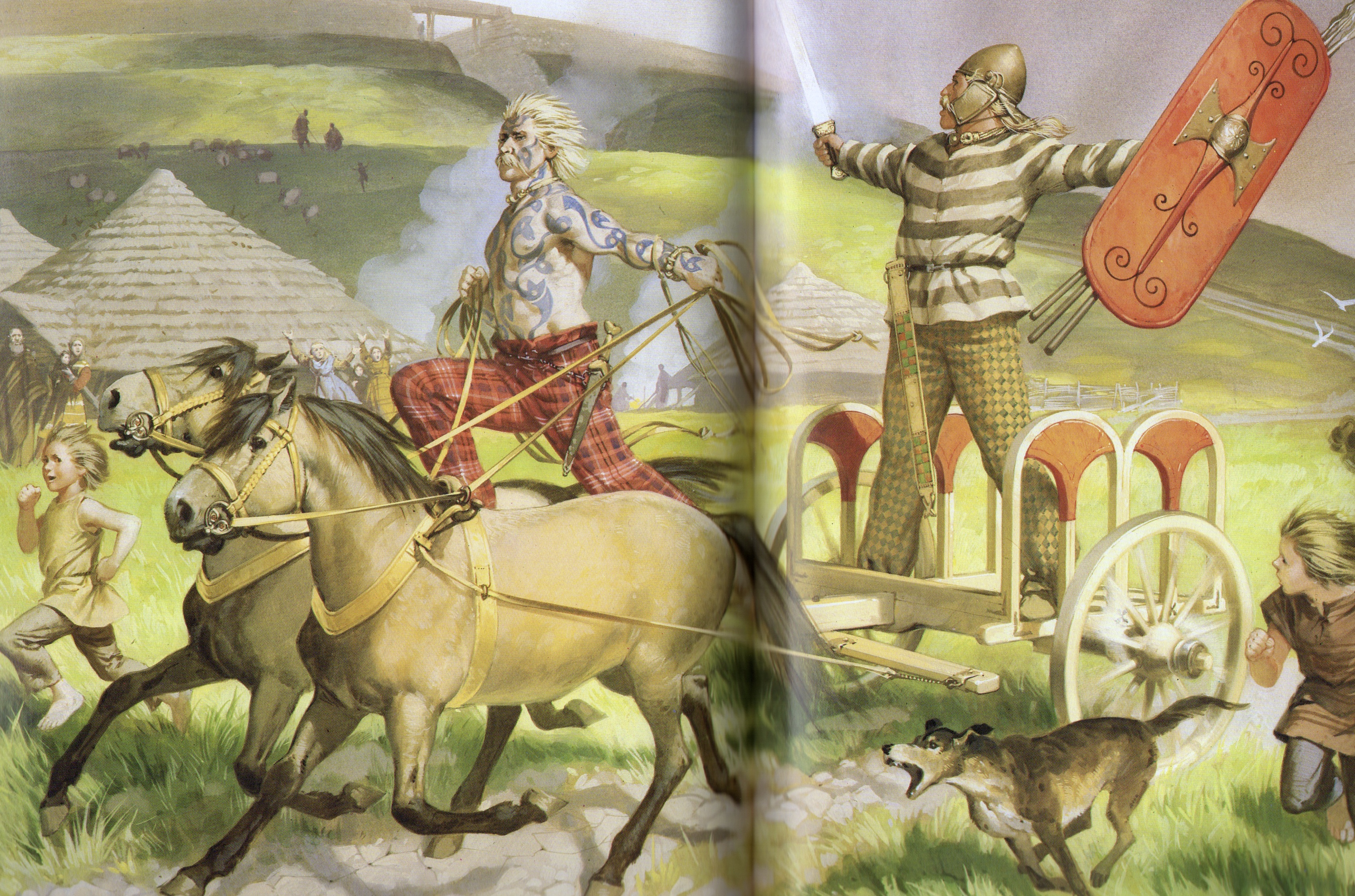
British Belgic Warriors of the Iron Age – Illustrated by Angus McBride (source – Rome’s Enemies 2 – Gallic and British Celts)

Before I give my thoughts on wandering the slopes of South Cadbury Castle, we should have a look at what it actually is. 

South Cadbury Castle is not the late medieval castle with banners flying from tall towers that make up our usual image of Camelot. It is a 500 foot high Iron Age hillfort located in the pre-Roman era lands of the Durotriges. Occupation of the site began in the Neolithic period and it went through various stages of occupation from the 5th century B.C. onward.

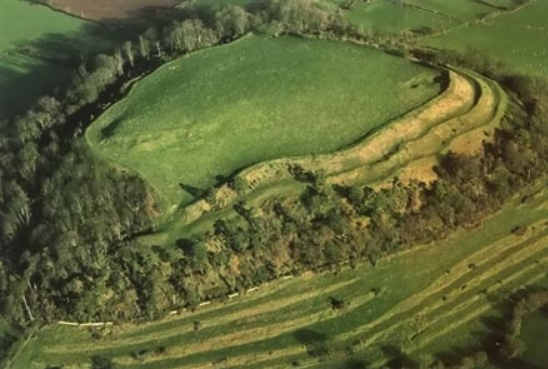
By the time of the Roman invasion of Britain, it had four massive defensive ramparts with an inner area of about 18 acres. Access to the top was by two entrances, one to the north-east and the other, larger one, to the south-west. The Iron Age occupation of the site came to a violent end around A.D. 43 when Vespasian stormed the southern hillforts of Britannia. 

Aerial view of South Cadbury Castle

The Romans made little use of the site, though there have been some theories that it was used as a Roman supply station. This theory is explored in Isle of the Blessed and the Eagles and Dragons series. In the 3rd and 4th centuries, there was renewed activity with visits being made to a Romano-Celtic temple that was built on the site.

Location of the Romano-British temple in the south-east sector of the hillfort of South Cadbury Castle

During excavations, a bronze letter ‘A’ was found that some believe belonged to this temple, which was perhaps dedicated to Mars, or some other deity.

However, when it comes to South Cadbury Castle, the periods that have always drawn me to it are the 5th and 6th centuries A.D. This period of the site is known as the ‘Arthurian’ period, and it is at this time, after Rome’s legions had left the island, that the archaeology shows a massive refortification of the hillfort. 

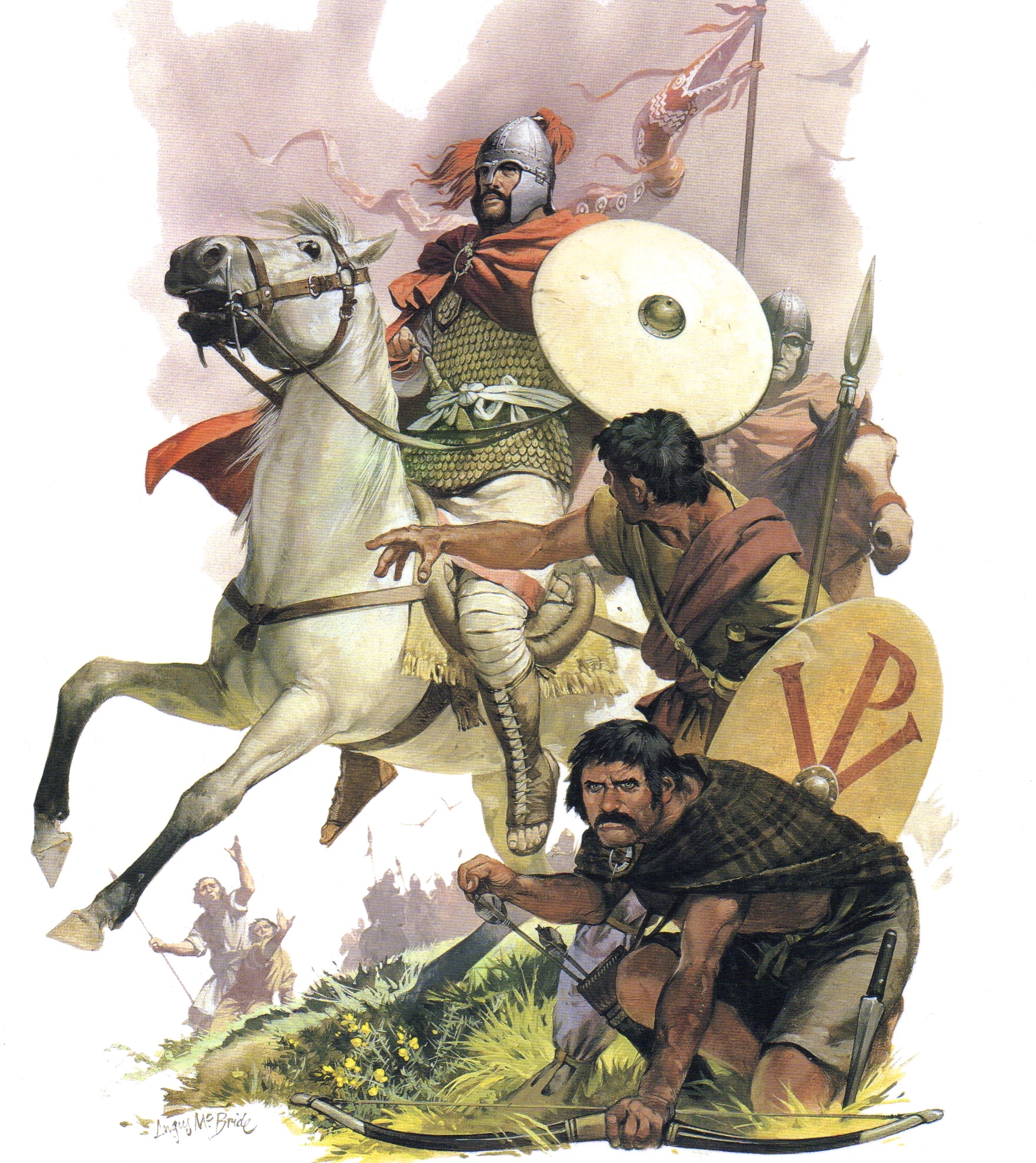
6th Century British Warriors – Illustrated by Agnus McBride (source – Arthur and the Anglo-Saxon Wars)

Though it is much debated, South Cadbury’s association with the Arthurian period stems not just from hearsay and folklore. It has the archaeological evidence to back it up. 

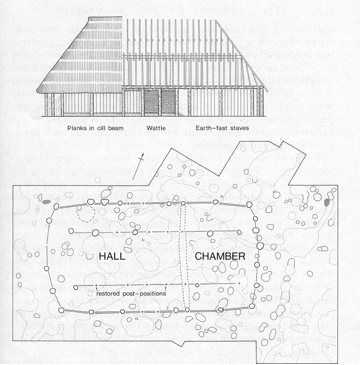
There have been a few big excavations of the hillfort over the years, but the biggest of all took place in the late 1960s and was headed by Professor Leslie Alcock. Professor Alcock and his team discovered evidence for a large scale occupation and refortification of the hillfort, during the Arthurian period, which showed repaired defences, including a strong gatehouse at the south-west entrance, and most importantly, several buildings, including a kitchen and a large timber hall on the fort’s high plateau. 

The discovery of post holes reveals a finely-built timber hall that was on a large scale, measuring about 63×34 feet. This hall would not have been the great castle hall of late medieval romance, but rather something like the timber drinking halls of the period, more like to the Golden Hall of Meduseld, the seat of King Theoden in Lord of the Rings. 

South Cadbury Timber Hall (Leslie Alcock)

Another very telling discovery at Cadbury Castle was the large quantity of Mediterranean pottery that dates to the Arthurian period of activity. This is the same pottery type that was discovered at Tintagel Castle in Cornwall, a site that also has strong Arthurian associations. One might think that shards of pottery from wine, olives and olive oil might be pretty mundane, but they anchor the sites strongly in the period, and also show that someone of importance was associated with the site. Not everyone could afford to import such things through trade. 
The refortification of the hillfort during the Arthurian period was on a massive scale, and would have required many resources and men to hold it. South Cadbury castle was, in a way, on the front lines of the British struggle against the invading Saxons, and would have been well-placed to meet the Saxons as they advanced westward. 

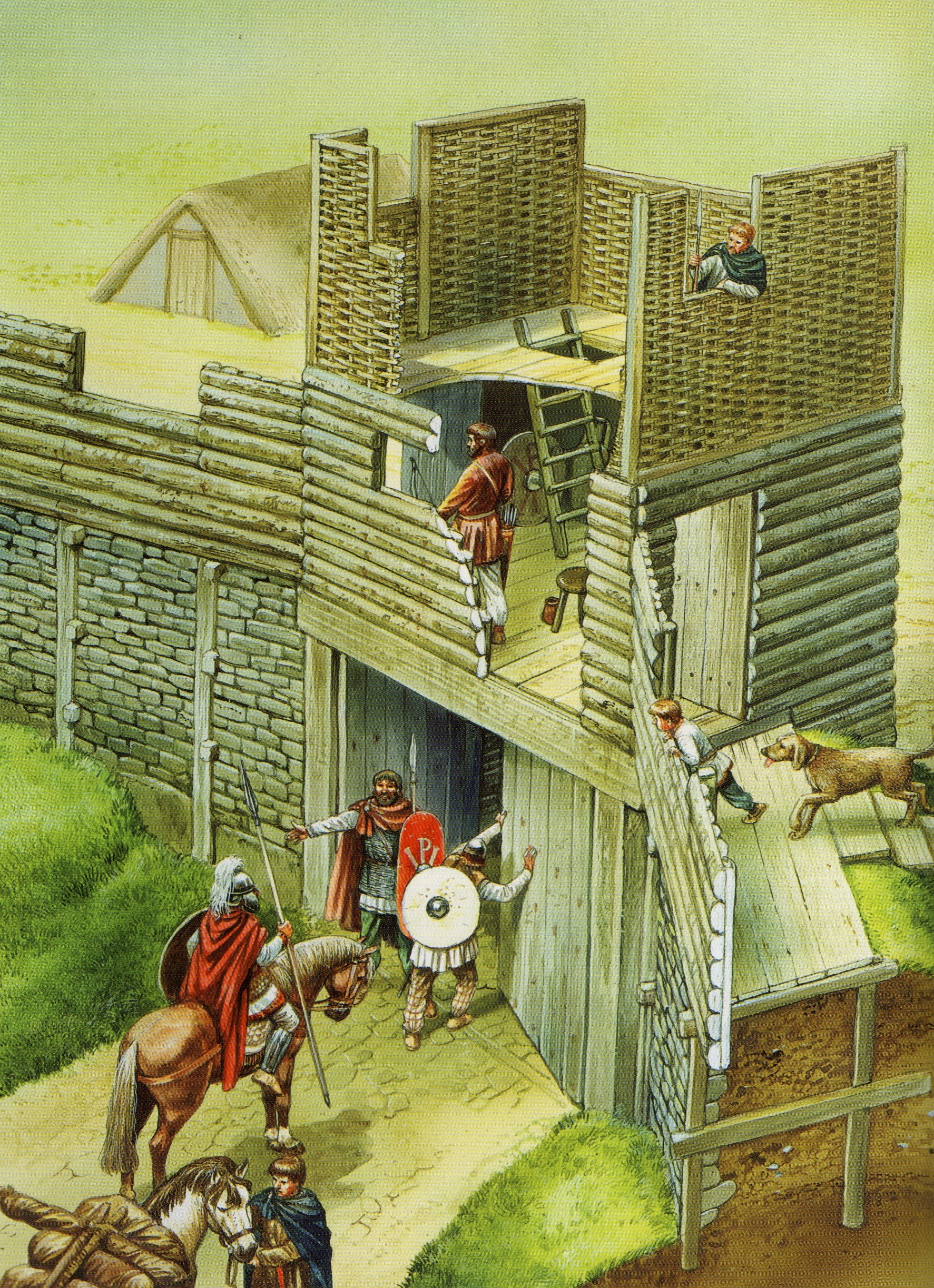
Based on the refortification, and evidence of the gatehouse that linked the ramparts running over the cobbled road at the south-west corner, this place was likely the base for an army that was large by the standards of the period. It may have been the site of the court of the dux bellorum, or the historical Arthur. 

Artist Reconstruction of the South-west gate – Illustrated by Peter Dennis (Source – British Forts in the Age of Arthur)

I am only scratching the surface here, as far as the archaeological finds. For a more academic look at South Cadbury Castle, you will want to read the upcoming Historia series release Camelot: The Historical, Archaeological and Toponymic Considerations for South Cadbury Castle as King Arthur’s Capital. (Make sure you are signed-up to the mailing list be notified of that release)

South Cadbury Castle was finally abandoned in the early 11th century when it was being used as a royal mint during the reign of the Saxon king, Aethelred.

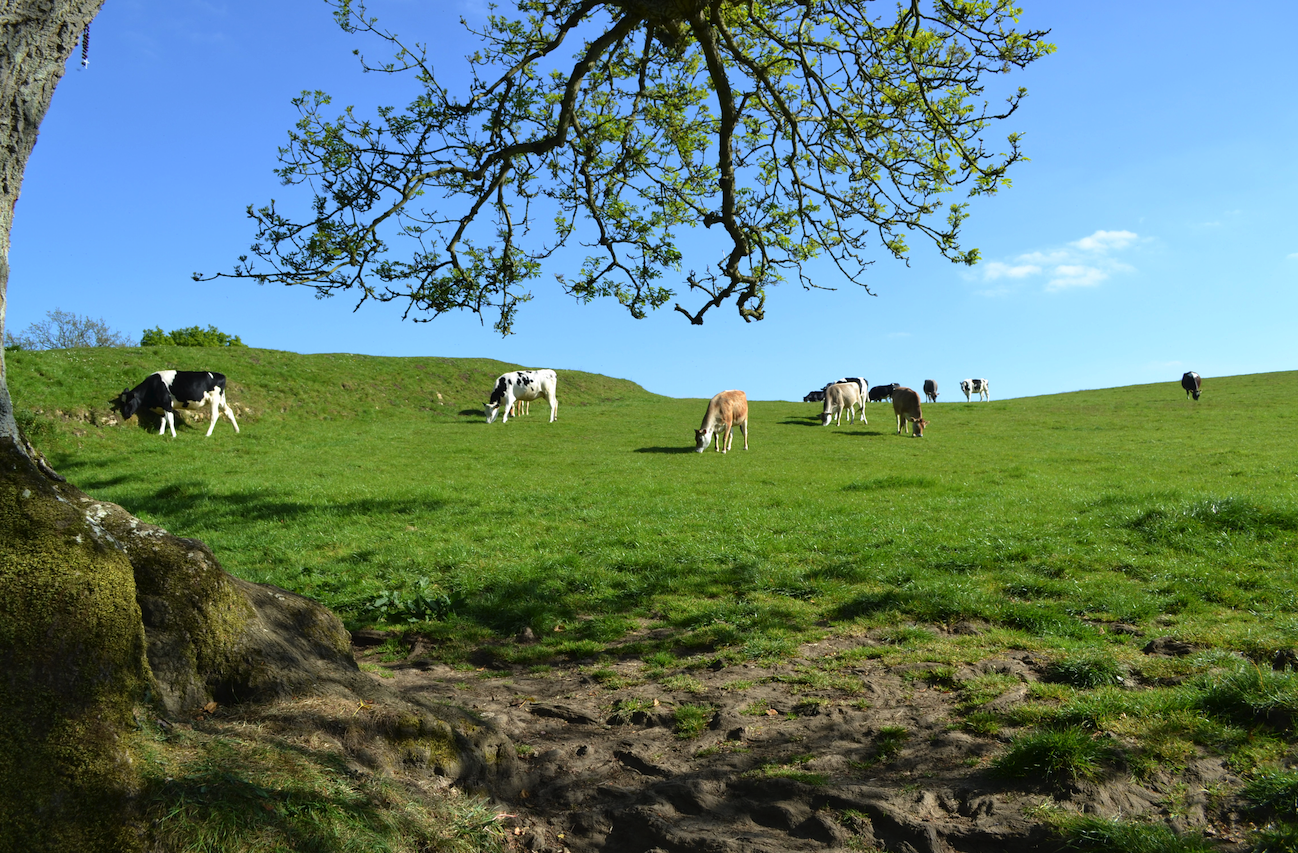
Current residents of South Cadbury Castle

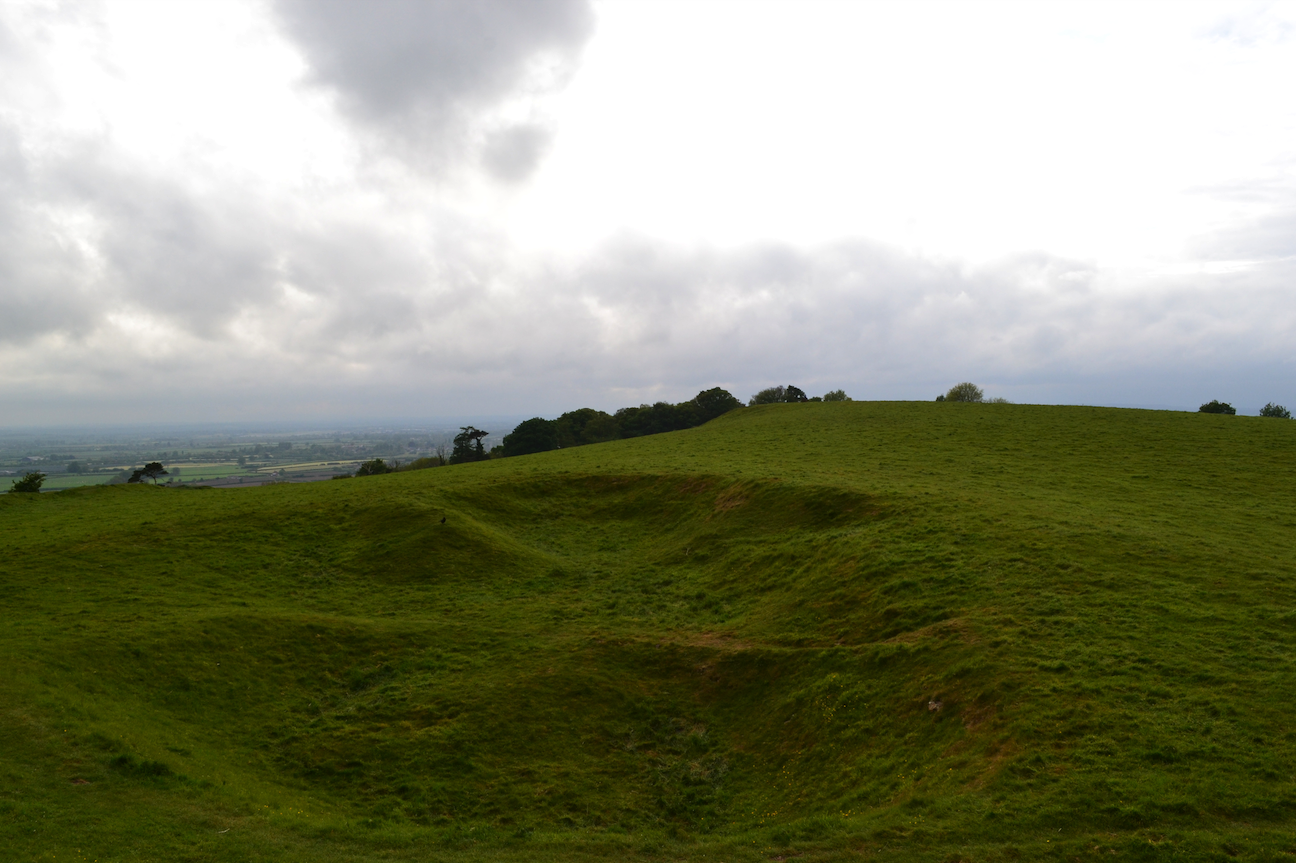
Today, South Cadbury Castle is a quiet hill in the midst of the Somerset countryside where it lies just south of the A303 motorway. The levels of its steep ring fortifications are now overgrown with trees and scrub, and cows roam the fields surrounding it. 

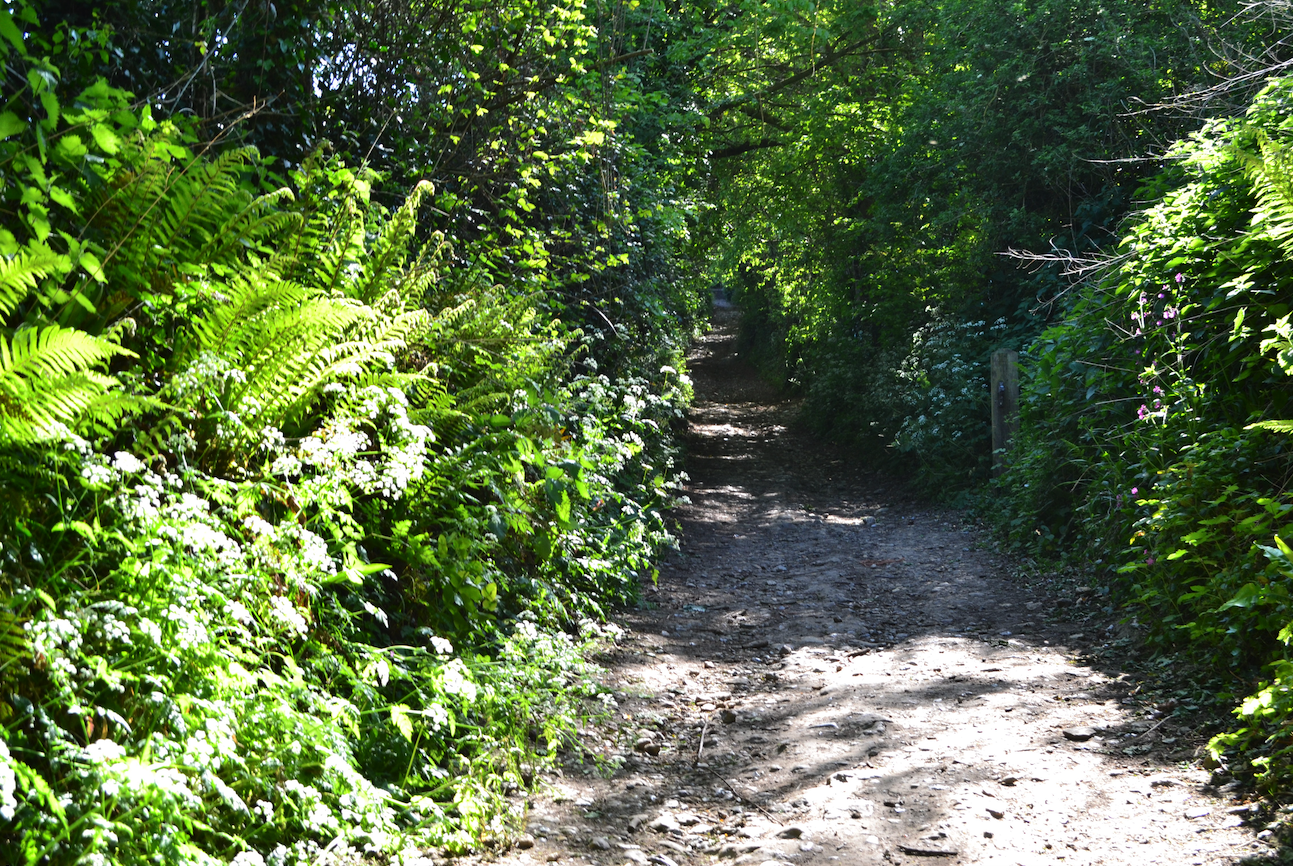
When you visit, you pull your car into the small car park at the south end of the village of South Cadbury, just east of the hillfort. From the lane, you can’t really tell what you’re looking at. It seems like a steep, forested hill with a path leading up.

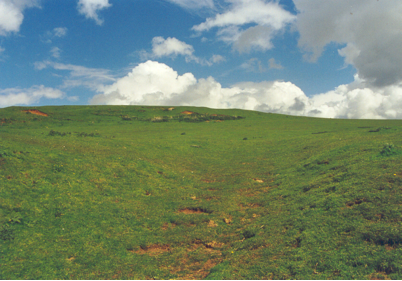
Path leading up to the north-east gate of South Cadbury Castle

This path leads up to the north-east gate of the hillfort, and for me, it was always the gateway to another time, another realm. 

It’s difficult to approach this site and reconcile the archaeologist/historian side of me with the romantic. Arthurian lore runs deep in my veins, and has had a hold on my psyche since I was very young. The first time I visited the site, I could almost hear the call of clear trumpets and the thumping of horses’ hooves upon the ground as knights returned home from their adventures, their horses brightly caparisoned, their armour shining brightly in the light of the Summer Country. 

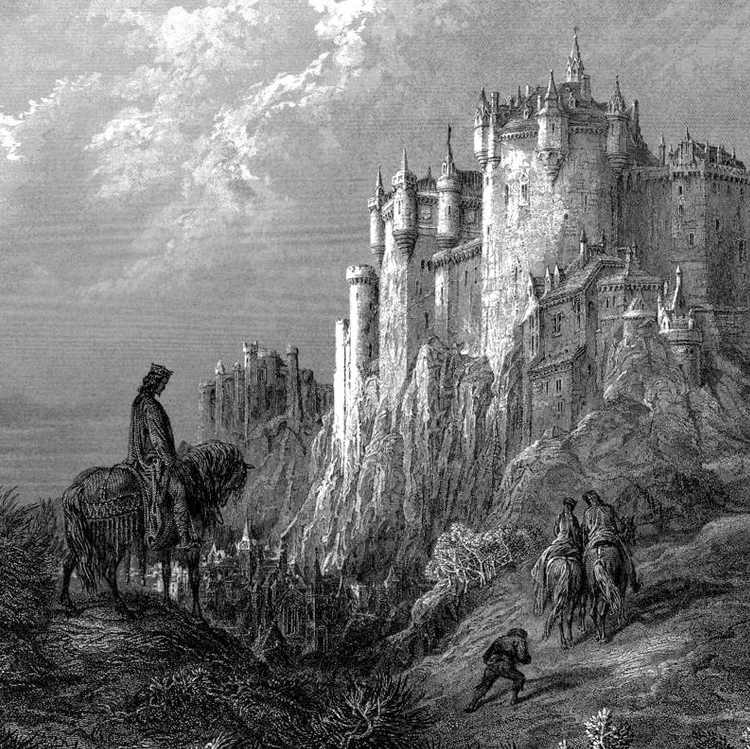
Camelot by Gustave Dore

Of course, I know that is not how it was during the Arthurian period, but this is a place and story that fires the imagination. Cadbury Castle’s associations with Arthur include a hollow hill where he sleeps until he is needed again, the site of ‘Arthur’s Well’, a place on the slopes where his horse drank when he led the Wild Hunt, and of course the location of Camelot. 

To me, however, the idea of South Cadbury as the main fortress of a Romano-British warlord leading a group of skilled cavalry in a last stand against the invading Saxons is no less romantic. 

During my subsequent visits, I would ascend the dirt and rock path leading up to the northeast gate and pause with reverence for the history of the place. I would imagine looking ahead, up the slope to the central plateau of the hillfort to the great wooden hall where smoke from the hearth of Arthur’s hall wafted into the sky as he and his warriors discussed the fight for their lives and their Romano-British heritage.
Plateau of South Cadbury where the timber hall was located

The warriors that manned the ramparts of South Cadbury, who dined in the hall, and who rode out to meet the Saxons, have been wrapped in the fabric of myth, as much as the Isle of Avalon not ten miles distant, in Glastonbury. But they certainly left a mark on the place, on history and folklore. 

As I walk the grass-covered ramparts of South Cadbury, watching the crows dive in the winds above the steep slopes, I can’t help but wonder if Arthur, Gawain, Bors, Tristan, Bedwyr, Cai and others walked that same path, a wary eye out for a sign of the enemy that would shatter the peace they had fought so hard for at the famed battle of Mons Badonicus.

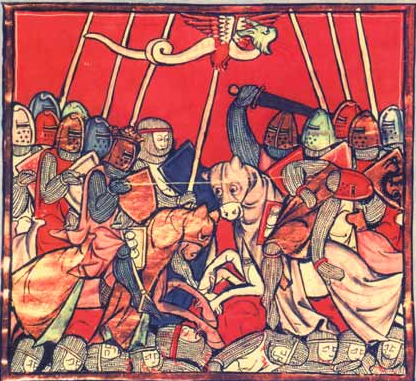
Arthur in battle beneath the Dragon banner

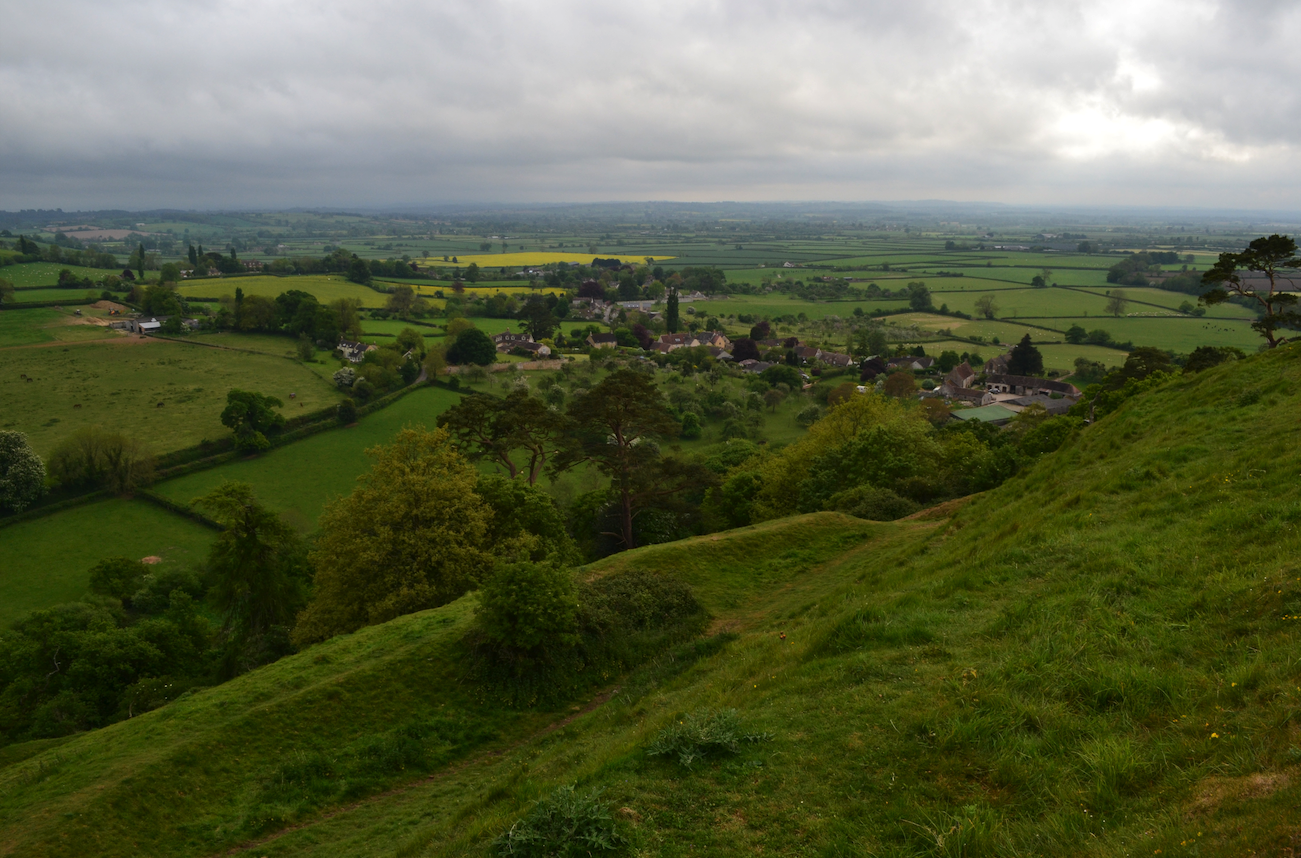
Rarely have I felt so at peace and nostalgic as I have when walking around this hillfort. I can still smell the damp grass and feel the sun on my face. In my mind, I still watch the puffs of white cloud blowing over the Somerset landscape as I pause to gaze to the north-west and see Glastonbury Tor rising out of the earth. 

In ages past, when the levels flooded, the distance between Cadbury Castle and Glastonbury might have been crossed by boat if you knew the way and which rivers to take. Indeed, one of the discoveries found around the hillfort was a boat. 

South Cadbury Castle is, in some ways, closely tied to Avalon, and you can feel that as you look from the top of one to the other. This too is explored in Isle of the Blessed.

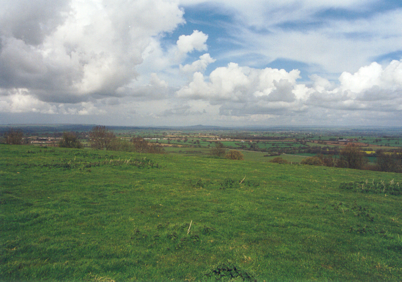
Glastonbury Tor from South Cadbury

After making a round of the ramparts, and standing on the roadway of the south-west gate, I would always spend a good amount of time on the plateau, watching the sky and letting my imagination take hold. 

The beauty of visiting a site, rather than looking at in a book or online, is that direct connection with the past, with the history of the place. 

Yes, many of the stories we know and love about Arthur and the Knights of the Round Table are medieval fabrications. But I do believe that every legend has its base in fact, and so it’s a comfort to know that the layers of myth and legend are veined with elements of possible truth and history.

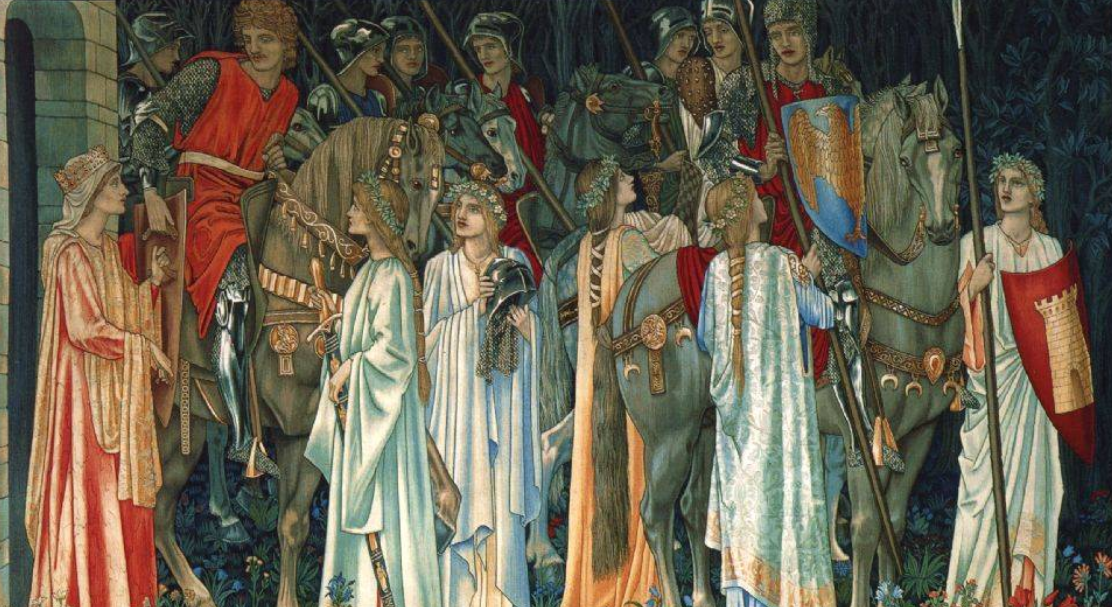
The Knights of the Round Table (Edward Burne Jones)

Many people will disagree, and that’s ok. When it comes to Arthur we will never reach a consensus.

However, considering the archaeological evidence at South Cadbury Castle, along with its location and the apparent activity during the Arthurian period, it seems quite possible that if there was an historical Arthur, he would undoubtedly have been familiar with this magnificent hillfort.

Was this just another strong point in the British defensive network? Or was it the Arthurian power centre that has come to be known as Camelot? 

Whatever the answer is, it is surely fascinating, and perhaps unattainable. But then, that is what makes these historical mysteries so intriguing. 

If you ever manage to roam the lands In Insula Avalonia, just be sure to make your way to South Cadbury Castle. Walk up the steep slopes, and through the gate, and know that you may just be walking in the footsteps of Arthur.

The steep, southern ramparts of South Cadbury Castle

I hope you’ve enjoyed this first part of The World of Isle of the Blessed.

Be sure to tune in for Part II in which we will look the history of another setting in Isle of the Blessed: the village of Ilchester, Roman Lindinis.

Thank you for reading.

Isle of the Blessed is now available in e-book and paperback from all major on-line retailers. If you haven’t read any books in the Eagles and Dragons series yet, you can start with the #1 bestselling A Dragon among the Eagles for just 0.99! Or get the first prequel novel, The Dragon: Genesis, for free by signing-up for the newsletter HERE.

Facebooktwitterpinterest

A New Eagles and Dragons Series Novel!

We’re excited to announce the official launch of Isle of the Blessed, Book IV in the #1 bestselling Eagles and Dragons historical fantasy series.

Fans of this series have been waiting quite a long time for this book, but now the wait is over.

Sound the cornu and slam your gladii against your scuta!

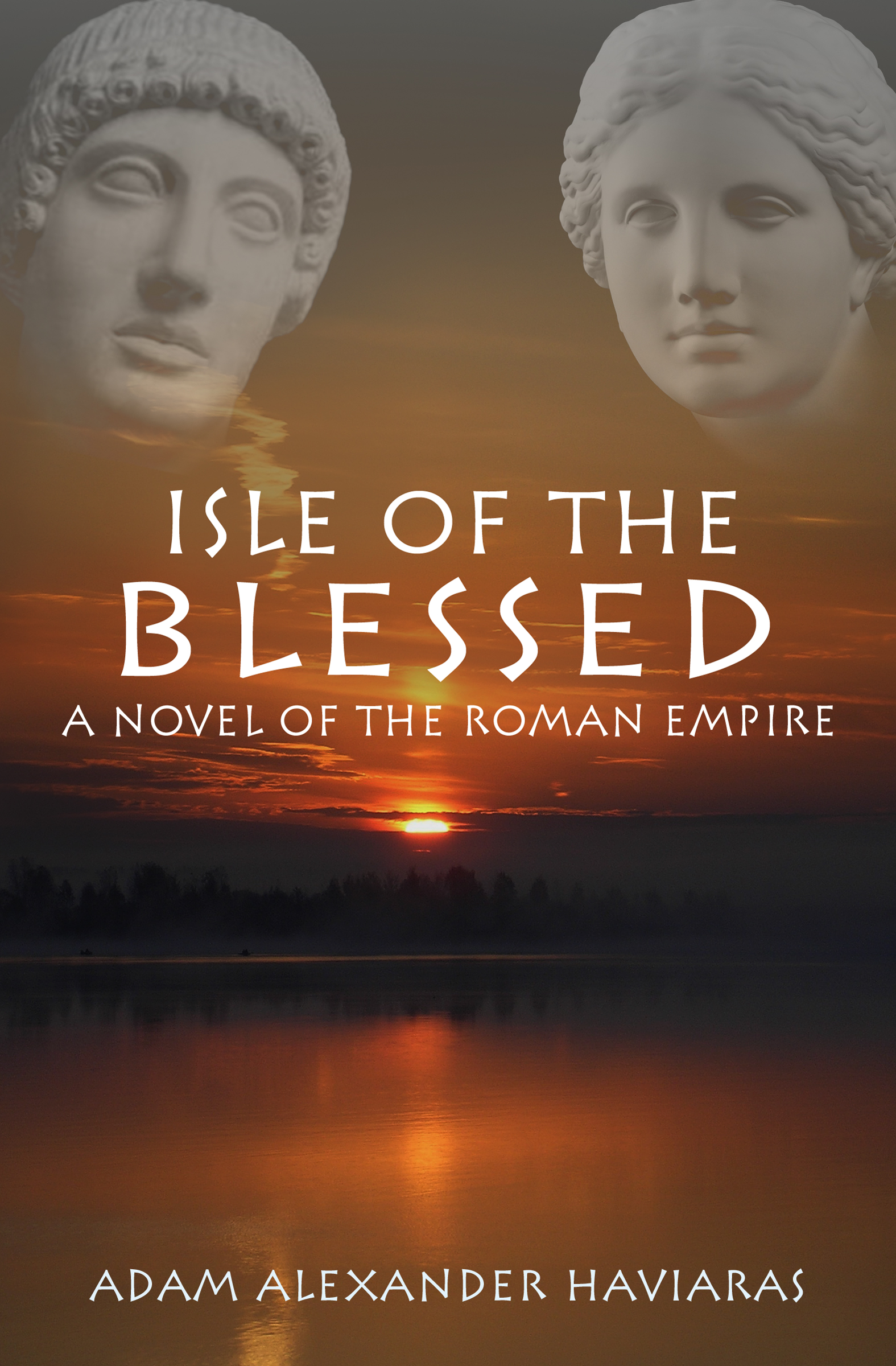
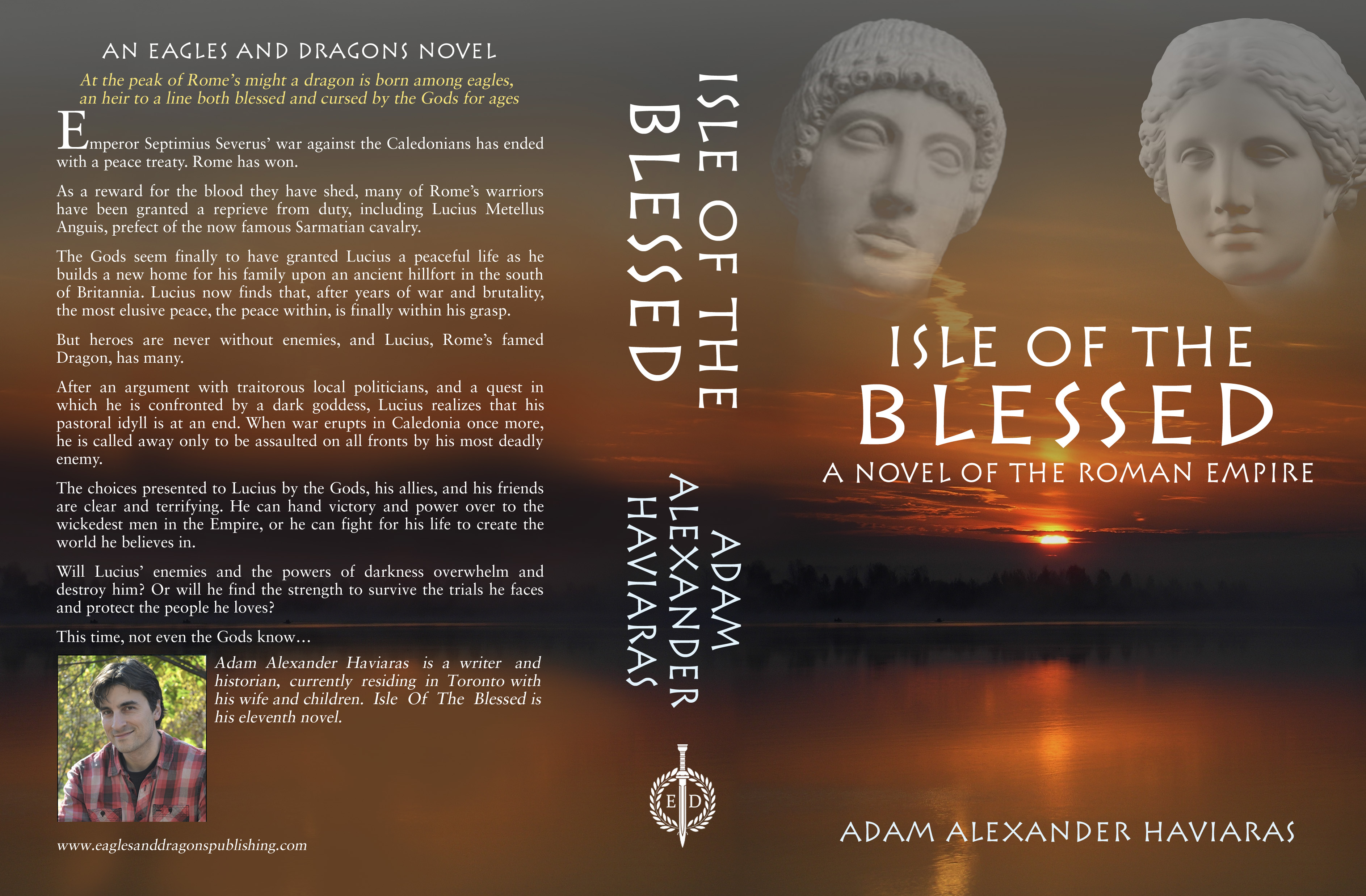
Isle of the Blessed – Eagles and Dragons Book IV

At the peak of Rome’s might, a dragon is born among eagles, an heir to a line both blessed and cursed by the Gods for ages.

Emperor Septimius Severus’ war against the Caledonians has ended with a peace treaty. Rome has won.

As a reward for the blood they have shed, many of Rome’s warriors have been granted a reprieve from duty, including Lucius Metellus Anguis, prefect of the now famous Sarmatian cavalry.

The Gods seem finally to have granted Lucius a peaceful life as he builds a new home for his family upon an ancient hillfort in the south of Britannia. Lucius now finds that, after years of war and brutality, the most elusive peace, the peace within, is finally within his grasp.

But heroes are never without enemies, and Lucius, Rome’s famed Dragon, has many.

After an argument with traitorous local politicians, and a quest in which he is confronted by a dark goddess, Lucius realizes that his pastoral idyll is at an end. When war erupts in Caledonia once more, he is called away only to be assaulted on all fronts by his most deadly enemy.

The choices presented to Lucius by the Gods, his allies, and his friends are clear and terrifying. He can hand victory and power over to the wickedest men in the Empire, or he can fight for his life to create the world he believes in.

Will Lucius’ enemies and the powers of darkness overwhelm and destroy him? Or will he find the strength to survive the trials he faces and protect the people he loves?

This time, not even the Gods know…

We hope you like the sound of this one. It promises to take you on an adventure in the Roman Empire that you won’t forget, and the editorial team and beta readers have told us that this is Adam’s best book to date!

You can learn more and find all the links to get your copy ON THIS WEB PAGE.

Isle of the Blessed is available in e-book format at all major on-line retailers, and currently in paperback from Amazon.

If you haven’t read any books in the Eagles and Dragons series, you can start the series for FREE with the full-length novel, The Dragon: Genesis, which you can download by CLICKING HERE.

Here’s to a new adventure in the Roman Empire!

Happy Reading!

Facebooktwitterpinterest

The World of A Dragon among the Eagles – Part II – The Imperial Roman Legion

The World of A Dragon among the Eagles

The world in which A Dragon among the Eagles takes place, and with which the main characters are concerned, is also the world of the Roman legion.

Indeed, the imperial Roman legion figures largely in the entire Eagles and Dragon series, and so, I thought it good to do a brief introduction of the make-up of the legion at the time the book begins in A.D. 197.

Roman legionaries on Trajan's column

Roman legionaries on Trajan’s column

At this time in the history of the Roman Empire, the Roman legion is a well-oiled machine. It, and its troops, had been perfected after centuries of warfare, of trial and error, victory and defeat.

This army, the army of the Principate, is quite different from that of the Republic. It used to be that Roman legionaries were required to meet minimum requirements of possession and wealth in order to qualify for service in the ranks.

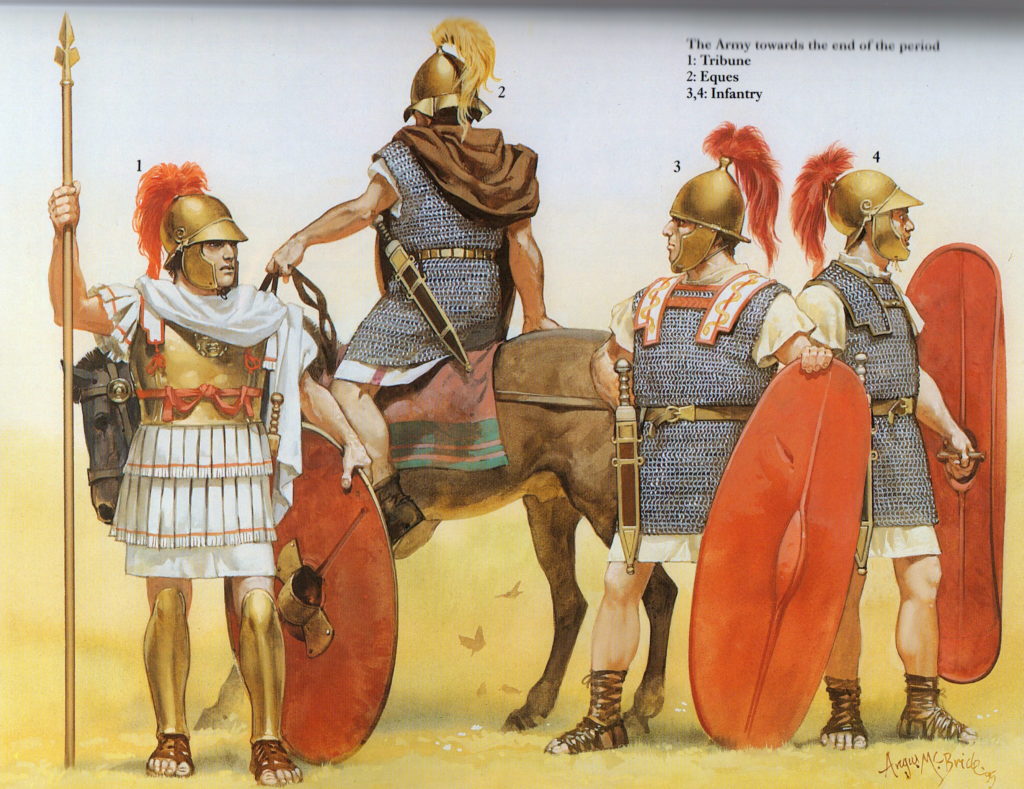
Republican Roman troops (illustration by Angus McBride)

Republican Roman troops (illustration by Angus McBride)

This all changed in 107 B.C when Caius Marius was elected consul and sent to Numidia to continue the war there. However, Marius was denied the right to raise new legions in Africa, permitted only to take volunteers with him.

Of course, Marius took advantage of this, and in a move no other had taken, he appealed to the poorest classes of citizens who became known as the capite censi.

These ‘head count’ citizens were enthusiastic about joining the legions and the new opportunity for a livelihood that it presented them with. They became the backbone of the Roman Legion, and from that time onward the link between military service and property was done away with. They need only have been citizens.

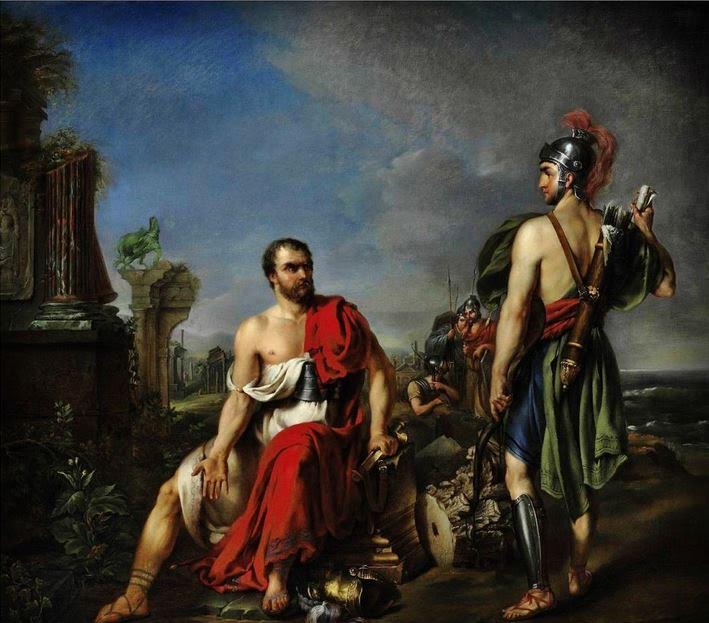
Gaius Marius among the ruins of Carthage (Joseph Verner 18th century)

Gaius Marius among the ruins of Carthage (Joseph Verner 18th century)

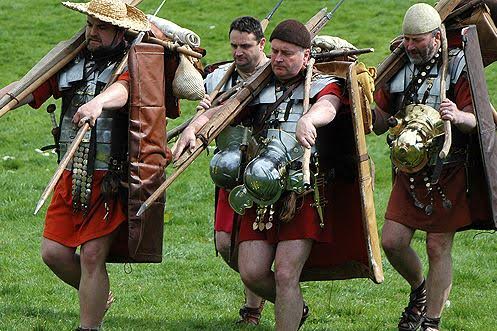
Marius made many reforms to the Roman army which I won’t go into here, however, his move contributed to the creation of a permanent, full-time citizen army, a self-sufficient fighting force of well-trained men with standard-issue equipment, food and lodging. They carried everything they needed on the march on their own backs, including weapons, spikes for palisades, pots, pans, and pick-axes for digging fortifications.

Marius' Mules - Re-enactors maching in full kit

Marius’ Mules – Re-enactors marching in full kit

Because of all the kit they carried in the field, they became known as ‘Marius’ Mules’.

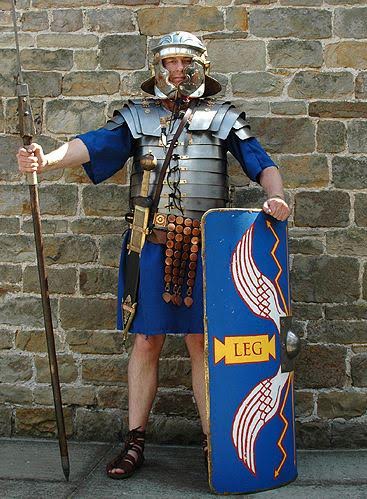
The average kit for a rank-and-file soldier in the imperial legions included hobnail sandals known as caligae, a standard tunic, a leather belt or cingulum, a lorica segmentata which was a breast plate made up of individual iron strips, a helmet, cloak, gladius (short sword), pugio (dagger), a pilum (javelin), and a scutum (shield).

Re-enactor in Roman Legionary outfit

Re-enactor in Roman Legionary outfit

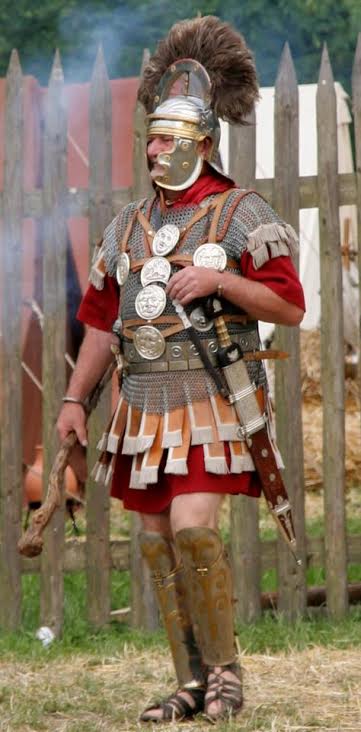
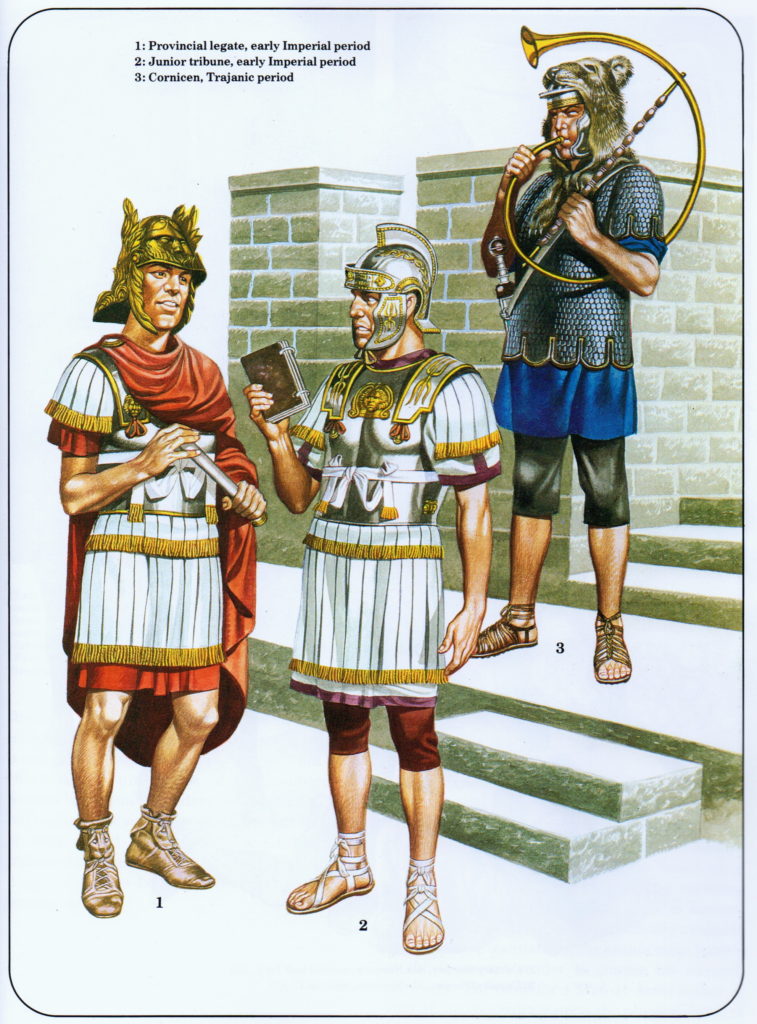
In A Dragon among the Eagles, there is mention of the various ranks and units that make up the legion, so I think it a good idea to cover the basics now.

The smallest unit of men in the imperial legion was a contubernium which consisted of eight men who shared a tent, or barrack room. These men marched, fought, lived, and cooked together.

Then there was the century. This is probably the most well-known unit of men. It consisted of 10 contubernia, and was run by a centurion with a standard bearer and an optio beneath him.

The centurion was usually a career soldier, and a harsh task-master. He wore different armour that was chain mail, usually with a harness decorated with phalerae, decorative discs that represented awards he had been given. The crest of a centurion’s helmet was horizontal, and he carried a short wooden staff called a vinerod, which gave him the right to strike his citizen soldiers in the interests of discipline.

Re-enactor dressed as a Centurion (Wikimedia Commons)

Re-enactor dressed as a Centurion (Wikimedia Commons)

There are stories about a particular centurion in the imperial legions whose nick-name was ‘give me another’ because he was constantly breaking his vinerod over the backs of his men!

Centuries of eighty men were the most flexible military units in the legion. They numbered enough to go on patrol, or building duty, and could manoeuvre effectively in battle.

Now, the next unit of the legion was the cohort.

The imperial cohort was made up of 480 men, and consisted of six centuries let by an Equestrian tribune. The first cohort of a legion, however, was led by a Patrician tribune.

Officers of the Imperial Roman Legions (illustration by Ron Embleton)

Officers of the Imperial Roman Legions (illustration by Ron Embleton)

Finally, there were ten cohorts in a legion which brought the average number of troops in the imperial legion to 5000.

The commander or general of an entire legion was known as the legatus legionis, or legate commander. This person was usually a senator, just like the patrician tribune who was his second-in-command. The third person of overall authority in the legion was the camp prefect, or praefectus castrorum. The latter was often a career soldier, perhaps a former centurion who had been promoted, and was responsible for much of the legion’s administration and logistics.

There were many other minor positions within the legions such as duplicarii, men who received double pay for skills such as engineering, or the building of siege equipment, as well as benificari, those who were aides to the legate or other officers, and who were excused for intense labour such as the digging of ditches and erecting palisades.

Roman legionary standards with an image of Emperor Severus and his family

Roman legionary standards with an image of Emperor Severus and his family

We must not forget the standard bearers who made up the imperial legion. These included the vexillarius, the person who carried the vexillum standard of each unit, the signifer, the soldier who carried a century’s standard and wore a wolf or other pelt over his helmet. There was the cornicen, the trooper who carried the cornu, the round horn used to rally the troops and give commands, as well as the imaginifer of the legion, the trooper whose task it was to carry the image of the emperor before the legion.

Probably the most important standard bearer was the aquilifer, the man whose solemn duty it was to carry the legion’s golden eagle, the aquila, into battle. This man was to protect the legion’s eagle at all cost, for it was the ultimate disgrace for a legion to lose its aquila to an enemy.

Re-enactor dressed as an Aquilifer

Re-enactor dressed as an Aquilifer

Along with the 5000 regular troops that made up an imperial legion, there were often alae, or auxiliary units, attached to the legion. These were usually units of 120 cavalrymen who acted as scouts and supported the legion on the march. They were often made up of foreign troops who had been brought into the Roman ranks such as Sarmatians, Numidians, or Scythians to name a few.

Ala units might also consist of skirmishers such as Cretan or Balearic slingers, but most often they were cavalry.

Auxiliary Cavalry troops (illustration by Ron Embleton)

Auxiliary Cavalry troops (illustration by Ron Embleton)

The imperial Roman legion was one of the most effective fighting units of the ancient world, and it is no wonder that the Empire covered so much of the known world by the time in which A Dragon among the Eagles takes place.

Disciplina, the goddess personification of discipline, was something that was taken very seriously. If a soldier obeyed her and remembered his training, he would survive the direst of circumstances.

Roman coin showing stardard bearers and the world 'Disciplina' - second century A.D.

Roman coin showing stardard bearers and the world ‘Disciplina’ – second century A.D.

When the legions marched in the field, every night they dug in, every trooper going to his assigned space to dig ditches, pile up ramparts, and raise the palisade around the entire camp.

Tent and command centre, the Principia and Praetorium, tribunes’ tents, stables etc. were always in the same position, the streets set out in the same grid every time. So, whatever happened, a Roman soldier knew where he was, and what he had to do.

Every morning, when they would break camp, they would take down the work of the previous evening, which they had done after a twenty mile march, so that the enemy could not make use of their fortifications.

Plan of a typical legionary fortress (FromThe Imperial Roman Army by Yann Le Bohec)

Plan of a typical legionary fortress (from The Imperial Roman Army by Yann Le Bohec)

It was hard work, but the imperial legion gave opportunity to the poorer classes of Roman citizens and allowed them to make something of themselves, if not at least be clothed and fed at the state’s expense.

In return, the men of the legions bled for Rome as they extended her borders into the world.

A Dragon among the Eagles takes place during the Severan invasion of the Parthian Empire, one of the biggest thorns in Rome’s side for over two hundred years.

In A.D. 197, Septimius Severus set out with one of the largest invasion forces in Rome’s history, made up of a titanic 33 legions.

The stage was set for one of the greatest military campaigns in Rome’s history.

In the next post, we’ll look at this powerful enemy and the tactics they used in battle against the legions.

Until then, check out this great video that illustrates the make-up of the Roman legion.

Thank you for reading!

https://www.youtube.com/watch?v=wCBNxJYvNsY

Facebooktwitterpinterest

The Holiday Historical Fiction Blowout! – For the Love of History

Historical fiction promotion twitter banner

Dear readers and fellow history-lovers,

I’ve got something different to share with you this week.

I’m taking part in a spectacular event from December 1st to 8th called the Holiday Historical Fiction Blowout!

During this special promotion all of the authors involved with be offering their chosen books for just .99 cents in various on-line stores. There is a lot of great storytelling here, and titantic deals to be had!

However, this isn’t just a sale, it’s an opportunity for us to learn something about various periods in history. During each day of the promotion, every writer is going to be blogging about the period of history and setting of each of their books.

We may all gravitate to different periods in time, but one thing we do share is a common love of history, reading, and writing.

The book that I am contributing to this special promotion, Children of Apollo – Eagles and Dragons Book I.

apollofinal

Children of Apollo is the first book in an exciting series set in the Roman Empire. It is a story of family, faith, love, and betrayal in time of war. This book takes you back in time to a world of gods and emperors, gladiatorial combat, chariot races, and heroes, to experience the ancient world like never before!

This story takes place during the early 3rd century A.D, during the reign of Emperor Septimius Severus.

Despite the fact that this period in Roman history is a pivotal time for the Empire, it is often ignored by historical fiction authors. It is an exciting time of change, but also a time that many historians believe to be the beginning of the end of the Roman Empire.

When Children of Apollo begins, the Roman Empire is at its greatest extent, stretching from Britannia and Germania in the north to the North African provinces in the south, and from the Pillars of Hercules in the west to the Parthian Empire in the east, newly-conquered by Severus’ legions.

Roman_Empire_3rd century

This period in Roman history fascinates me for many reasons.

First off, Severus himself was of North African descent, hailing from the great city of Leptis Magna, the jewel of Proconsular North Africa. He was a soldier, and he knew how to reward soldiers and use the army to his advantage. This was one of the reasons he came out on top in the civil war that followed the infamous reign of Commodus and the time when the Praetorian Guard auctioned the imperial throne just a few years before.

Septimius Severus made many changes to the army, transferred units, and opened up positions that had been reserved for the aristocracy to the Equestrian class and lower. He seemed to have a knack for putting the right people in the right positions, except when it came to his Praetorian Prefect, Gaius Fulvius Plautianus.

Plautianus was actually a cousin of Severus’, also from Leptis Magna, and was constantly working in the background to gather power and wealth unto himself. He hated Severus’ sons, Caracalla and Geta, but most of all he hated the empress, Julia Domna.

Julia Domna was the first of the so-called ‘Syrian Women’, and she ushered in a line of strong women rulers. She was a constant adviser to her husband, extremely intelligent, and one of Plautianus’ greatest adversaries. Scholars and scientists came from all over the empire to speak with Julia Domna and be a part of her learned circle. She commanded respect, as did her successors.

This is the time in which Children of Apollo takes place. After a civil war, and a massive campaign against the Parthians involving over 30 legions, there is the potential for peace and prosperity, a new Pax Romana, under Severus.

SPQR

However, when the blood stops running on the battlefield, war usually moves to the back rooms of imperial Rome where political machinations can be more deadly than an enemy sword.

The story’s hero, Lucius Metellus Anguis, is a young man from an ancient, but destitute family, who has found success in the legions and risen through the ranks to become a tribune.

However, once the wars are over, this idealistic young man begins to find out that peace is not what he expected, success not what he was promised. Lucius has enemies lurking the shadows, and finds himself thrust into a new war that threatens to destroy his family, his faith, and all that he has worked for.

Are the Gods on his side? Can he survive to protect those whom he loves?

You’ll need to read Children of Apollo to find out!

At the Amphitheatre of Thysdrus (El Jem) where a gladiatorial combat scene takes place

At the Amphitheatre of Thysdrus (El Jem) where a gladiatorial combat scene takes place in Children of Apollo

Researching and writing Children of Apollo has been an adventure in and of itself.

The settings are vast and varied in the book. Part one takes us across the deserts and through the cities of Roman North Africa to the remote legionary base of Lambaesis, in Numidia. The second part of the book is set in imperial Rome, from the intimacy of the Metellus household, to the palaces of the Palatine Hill, and the temples and markets of the Roman Forum.

The story also takes us to ancient Etruria where family secrets are unearthed, and finally to an ancient settlement at Cumae where an oracle of the god Apollo has words for our protagonist.

On safari in the Sahara

On safari in the Sahara

Whenever possible, I love to travel to the places I write about. A safari of Roman sites in North Africa helped a great deal with the research for Children of Apollo and its sequel, from the dunes of the Sahara desert, to the great salt lakes of Tunisia, to the magnificent remains of Roman cities such as Thysdrus (El Jem), Thurburbo Maius, and Thugga.

However, it is only when walking the streets of Rome, by seeing the Forum and experiencing the peace of the Palatine Hill, that I was able to get a sense of the scale and grandeur of the Roman Empire, its majesty, but also the great human cost building such an empire took as toll.

From the green hills and vineyards of Etruria, to the dirt and marble of Rome, to the sand seas of North Africa where ancient mosaics lay open to the sky, creating this book has been one of the great journeys of my lifetime.

If you would like to read more about the history and settings of Children of Apollo, do make sure to check out the World of Children of Apollo six-part blog series which looks at the Desert, the Settlements of Roman North Africa, the Severan Dynasty, Imperial Rome, Etruria, and Cumae and the Sibyl.

At an Etruscan tomb that figures largely in the book

At an Etruscan tomb that figures largely in the book

I hope you’ve enjoyed this short journey through Children of Apollo with me.

If you haven’t read Children of Apollo yet, and your interest is piqued, be sure to download a copy for yourself at the discounted price (from $4.99 down to .99 cents) before December 8th on Amazon, Kobo, or Apple iBooks.

If you are so inclined, I’d be grateful if you shared this with your friends and family who may also enjoy history and an adventure in the Roman Empire.

There is a lot more in to come in the Eagles and Dragons series, so don’t forget to Join the Legions and sign-up for the Newsletter by clicking HERE so you can get special offers, advanced copies of new releases, and a lot more history!

Be sure to download these titles during the Holiday Historical Fiction Blowout!

Be sure to download these amazing books during the Holiday Historical Fiction Blowout!

Time marches on, and there are many more adventures to be had in the Holiday Historical Fiction Blowout!

Don’t forget to check out the posts by all the other participating authors listed below. There’s something for everyone from Ancient Greece and the Roman Empire, to Medieval England, the Golden Age of Piracy, Regency England, and a Roman Empire of the Future.

There is a lot of talented storytelling in this group of creatives, so be sure to sign-up for everyone’s mailing lists and pick up your .99 cent treasures.

Happy Holidays and thank you for reading!

Now, here are all the other authors featured in the Holiday Historical Fiction Blowout from December 1st to 8th

Click on each author’s website link to read about the history and setting of each novel. Enjoy the journey!


A Similar Taste in Books – by Linda Banche

A Similar Taste in Books

Historical Period: Regency

Synopsis:

Book 1 of Love and the Library: Clara and Justin

“Pride and Prejudice” has always brought lovers together, even in the Regency.

Justin has a deep, dark secret—he likes that most despised form of literature, the novel. His favorite novel is “Pride and Prejudice”, and, especially, Miss Elizabeth Bennet. Intelligent, lively, fiercely loyal Miss Elizabeth. How he would love to meet a lady like her.

Clara’s favorite novel is “Pride and Prejudice” and Mr. Fitzwilliam Darcy. Intelligent, steadfast and willing to admit when he is wrong. Can such a splendid man exist? And can she find him?

One day in the library, they both check out copies of their favorite book. When Justin bumps into Clara, the magic of their similar taste in books just might make their wishes come true.

A sweet, traditional Regency romantic comedy novella, but not a retelling of “Pride and Prejudice”.

Website: http://lindabanche.blogspot.com

Sales Link: https://www.smashwords.com/books/view/247691

On sale for 99 cents at Smashwords only with coupon code FF67C


Kingdom of Rebels – by Derek Birks

Kingdom of Rebels

Historical Period: Fifteenth Century – the Wars of the Roses

Synopsis:

When all hope is gone, only death lies in wait…

England in 1468 is a nervous kingdom. King Edward IV has fallen out with his chief ally during the Wars of the Roses, the powerful Earl of Warwick. 
Ned Elder, a young lord whose sword helped to put Edward on the throne, has been forced out of England by Warwick.

Far away on the Scottish border, a beleaguered fort, Crag Tower, desperately awaits Ned’s return. Led by his fiery sister, Eleanor, the dwindling garrison is all that remains of his brave army of retainers. Unknown to all except the loyal knight, Ragwulf, Eleanor has Ned’s young son in her charge – a son who has never seen his father. But, as border clansmen batter the gates with fire, the castle seems certain to fall. 

One by one Ned’s family and friends are caught up in Warwick’s web of treason. The fate of the Elders and those who serve them lies once more in the balance as all are drawn back to Yorkshire where they face old enemies once more. Eleanor can only hope that Ned will soon return. She must fight to keep that hope alive… and when Lady Eleanor fights, she takes no prisoners…

Website: www.derekbirks.com

Purchase at Amazon UK or at Amazon.com

Author Derek Birks

Author Derek Birks


Search for the Golden Serpent (Servant of the Gods, Book 1) – by Luciana Cavallaro

GoldenSerpent

Historical period: 600 BCE – Ancient Greece

Synopsis:

The story is about Evan, an architect whose been having strange dreams. He received an unexpected phone call from an entrepreneur from Greece who wants Evan to restore his Family’s home. He dismissed the caller and regarded the person as a crank. During a dream, he met the mysterious entrepreneur, Zeus, who catapulted him back in time, five hundred years before the birth of Christ. Evan, an unwilling participant finds himself entangled in an epic struggle between the gods and his life.

Website: http://luccav.com/2015/11/28/hhfb/

Purchase at Amazon, Smashwords, and Kobo

Author Luciana Cavallaro

Author Luciana Cavallaro


Children of Apollo (Eagles and Dragons – Book I) – by Adam Alexander Haviaras

apollofinal

Historical Period:   The Roman Empire, A.D. 202

Synopsis:

At the peak of Rome’s might a dragon is born among eagles, an heir to a line both blessed and cursed by the Gods for ages.

Lucius Metellus Anguis is a young warrior who is inspired by the deeds of his glorious ancestors and burdened by the knowledge that he must raise his family name from the ashes of the past. Having achieved a measure of success in the emperor’s legions in North Africa, Lucius is recalled to Rome where he finds himself surrounded by enemies, cast into the deadly arena of Roman politics.

Amid growing fears of treachery, Lucius meets a young Athenian woman who fills his darkening world with new-found hope. Their love grows, as does their belief that the Gods have planned their meeting, but when an ancient oracle of Apollo utters a terrifying prophecy regarding his future, Lucius’ world is once more thrown into chaos. Ultimately, he must choose sides in a war that threatens to destroy his family, his faith and all that he has worked for.

Website: http://eaglesanddragonspublishing.com

Available for purchase on Amazon, iBooks, and Kobo

Adam Portrait Twitter

Author Adam Alexander Haviaras


Sea Witch (Voyage One) – by Helen Hollick

SeaWitch

Historical Period: The Golden Age of Piracy – 1716

Synopsis:

Escaping the bullying of his elder half brother, from the age of fifteen Jesamiah Acorne has been a pirate with only two loves – his ship and his freedom. But his life is to change when he and his crewmates unsuccessfully attack a merchant ship off the coast of South Africa.

He is to meet Tiola Oldstagh an insignificant girl, or so he assumes – until she rescues him from a vicious attack, and almost certain death, by pirate hunters. And then he discovers what she really is; a healer, a midwife – and a white witch. Her name, an anagram of “all that is good.” Tiola and Jesamiah become lovers, but the wealthy Stefan van Overstratten, a Cape Town Dutchman, also wants Tiola as his wife and Jesamiah’s jealous brother, Phillipe Mereno, is determined to seek revenge for resentments of the past, a stolen ship and the insult of being cuckolded in his own home.

When the call of the sea and an opportunity to commandeer a beautiful ship – the Sea Witch – is put in Jesamiah’s path he must make a choice between his life as a pirate or his love for Tiola. He wants both, but Mereno and van Overstratten want him dead.

In trouble, imprisoned in the darkness and stench that is the lowest part of his brother’s ship, can Tiola with her gift of Craft, and the aid of his loyal crew, save him?

Using all her skills Tiola must conjure up a wind to rescue her lover, but first she must brave the darkness of the ocean depths and confront the supernatural being, Tethys, the Spirit of the Sea, an elemental who will stop at nothing to claim Jesamiah Acorne’s soul and bones as a trophy.

Website: http://www.ofhistoryandkings.blogspot.com/

Helen’s books are available on Amazon

HelenH

Author Helen Hollick


INCEPTIO – by Alison Morton

INCEPTIO

Historic Period: Modern/Roman (alternate history)

Synopsis:

New York, present day, alternate timeline. Karen Brown, angry and frightened after surviving a kidnap attempt, has a harsh choice – being eliminated by government enforcer Jeffery Renschman or fleeing to mysterious Roma Nova, her dead mother’s homeland in Europe.

Founded sixteen centuries ago by Roman exiles and ruled by women, Roma Nova gives Karen safety, at a price, and a ready-made family in a strange culture she often struggles with. Just as she’s finding her feet, a shocking discovery about her new lover, Praetorian special forces officer Conrad Tellus, isolates her.

And the enforcer, Renschman, is stalking her in her new home and nearly kills her. Recovering, she is desperate to find out why this Renschman is hunting her so viciously. Unable to rely on anybody else, she undergoes intensive training, develops fighting skills and becomes an undercover cop. But crazy with bitterness at his past failures, Renschman sets a trap for her, knowing she has no choice but to spring it…

Website: http://alison-morton.com/2015/12/01/holiday-historicals/

 Available for purchase on Amazon, Kobo, iBooks UK, iBooks US, Nook Book UK, and Barnes & Noble Nook (US)

Author Alison Morton

Author Alison Morton


Men of the Cross (Battle Scars I) – by Charlene Newcomb

MenoftheCross

Historical period: Medieval – 12th century

Synopsis:

War, political intrigue and passion… heroes… friends and lovers… and the seeds for a new Robin Hood legend await you…


Two young knights’  journey to war at Richard the Lionheart’s side sweeps them from England to the Holy Land in this historical adventure set against the backdrop of the Third Crusade.
Henry de Grey leaves Southampton in high spirits, strong in his faith and passionate about the mission to take Jerusalem back from Saladin’s army. Stephan l’Aigle’s prowess on the battlefield is well known, as are his exploits in the arms of other men. He prizes duty, honour and loyalty to his king above all else. But God and the Church? Stephan has little use for either.
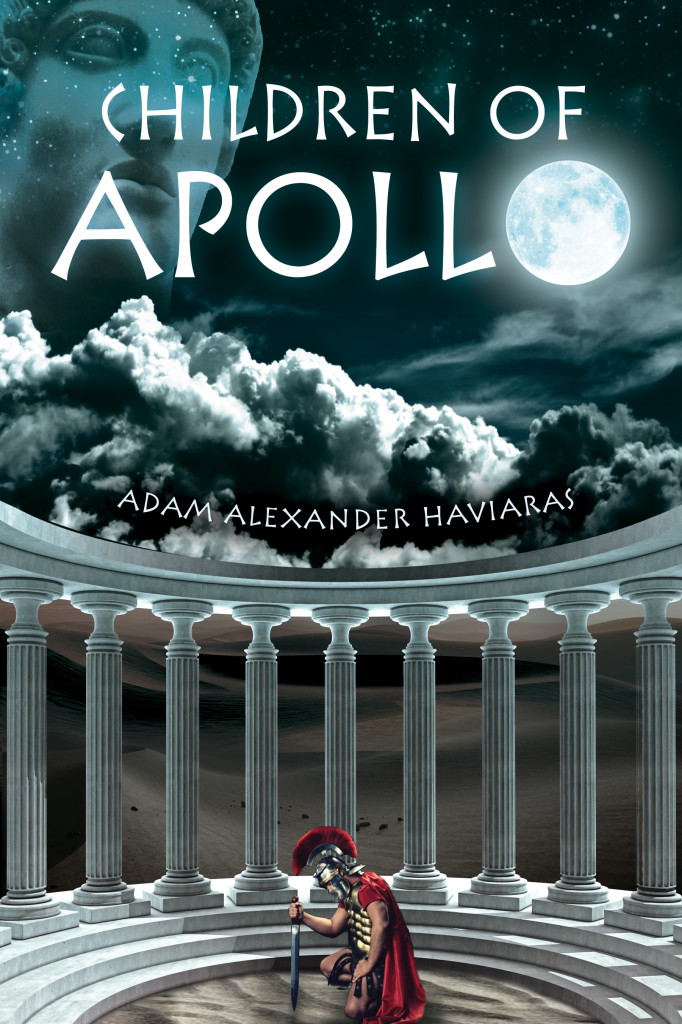
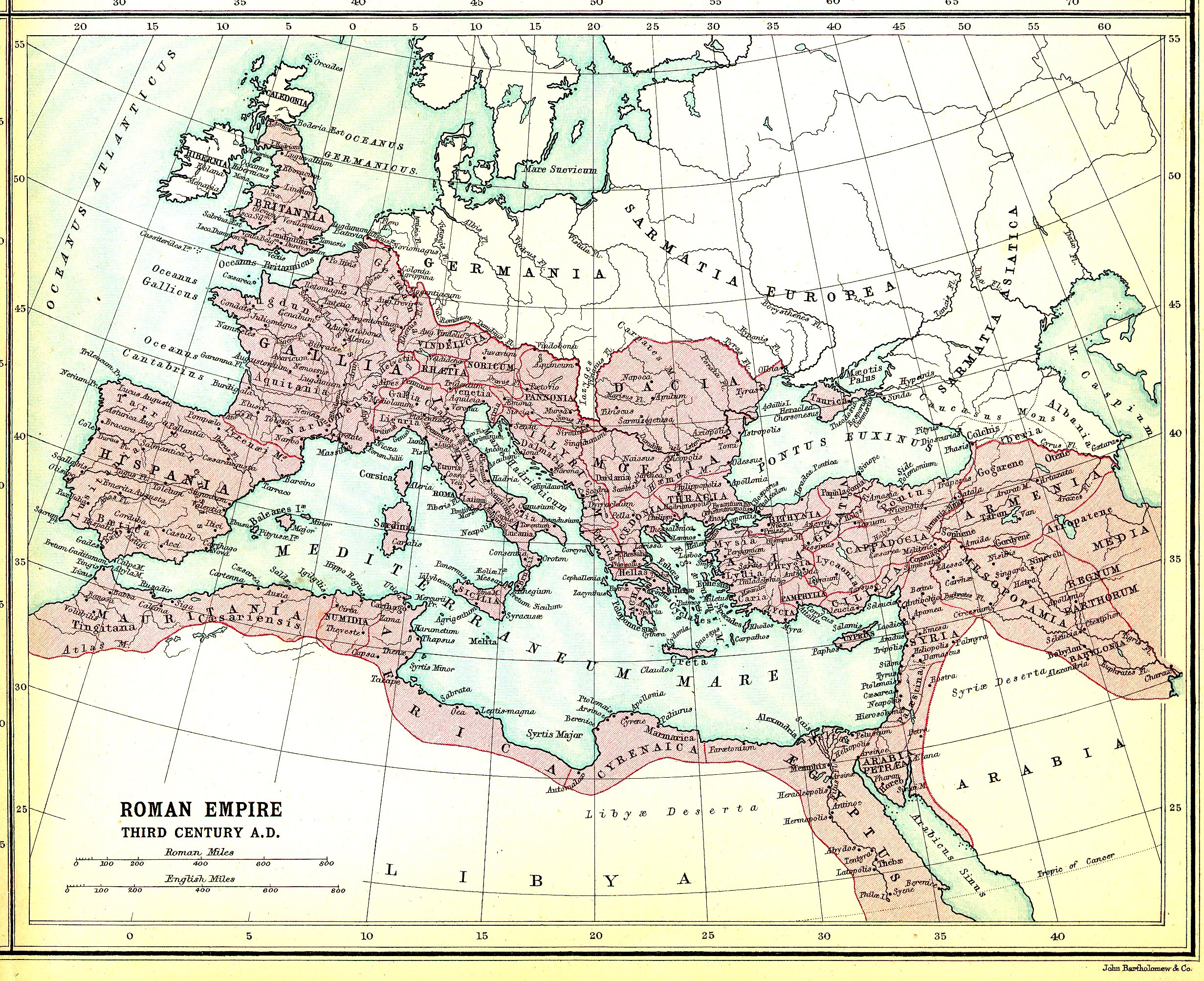
Henry’s convictions are challenged by loss and the harsh realities of bloody battles, unforgiving marches, and the politics of the day. Man against man. Man against the elements. Man against his own heart. Survival will depend on more than a strong sword arm.

Website: http://charlenenewcomb.com/2015/11/30/holiday-historical-fiction-blowout

Available for purchase on Amazon

Author Charlene Newcomb

Author Charlene Newcomb


Flavia’s Secret – by Lindsay Townsend

FlaviasSecret

Historical Period: Ancient Roman Britain, 206 AD

Synopsis:

Spirited young scribe Flavia hopes for freedom. She and her fellow slaves in Aquae Sulis (modern Bath) have served the Lady Valeria for many years, but their mistress’ death brings a threat to Flavia’s dream: her new master Marcus Brucetus, a charismatic, widowed officer toughened in the forests of Germania. Flavia finds him overwhelmingly attractive but she is aware of the danger. To save her life and those of her ‘family’ she has forged a note from her mistress. If her deception is discovered, all the slaves may die.

For his part torn between attraction and respect, Marcus will not force himself on Flavia. Flavia by now knows of his grief over the deaths of his wife Drusilla and child. But how can she match up to the serene, flame-haired Drusilla?

As the wild mid-winter festival of Saturnalia approaches, many lives will be changed forever.

Website: www.lindsaytownsend.co.uk

On sale at Bookstrand: http://www.bookstrand.com/flavias-secret

Author Lindsay Townsend

Author Lindsay Townsend


Thank you for visiting, and please help spread the word about the Holiday Historical Fiction Blowout!

historical fiction promotion facebook banner


Facebooktwitterpinterest