Greetings readers and history-lovers!
Welcome back to The World of The Lord of Annwn in which we are taking a brief look at the research for the eighth book in the Eagles and Dragons historical fantasy series.
In Part I, we looked at the myth of Apollo and Python and the foundation of the Oracle of Delphi. If you missed that post, you can read it by clicking HERE.
In Part II, we’re going to be taking a brief look at liminal places and things in Celtic mythology. These archetypes appear quite frequently in the tales of the Celts, in Welsh, Irish, and Arthurian literature and, indeed, in the Eagles and Dragons series.
We hope you enjoy…
Before we explore liminal places in Celtic myth and legend, we should first discuss what the word ‘liminal’ actually means.
The word ‘liminal’, in this context, refers to places that are, in a way, outside of normal time. They are magical in-between places of transition that serve as thresholds from the mortal world to the Otherworld.
In Celtic mythology, there are also liminal times of year when the veil is thinnest between the worlds, such as at the times of Samhain and Beltane, both of which are featured in the Eagles and Dragons series. You can read more about these ancient Celtic festivals HERE.
In Celtic and Arthurian legend, liminal places are often where magical things happen, or where supernatural encounters occur.
Let’s look at some of these places…
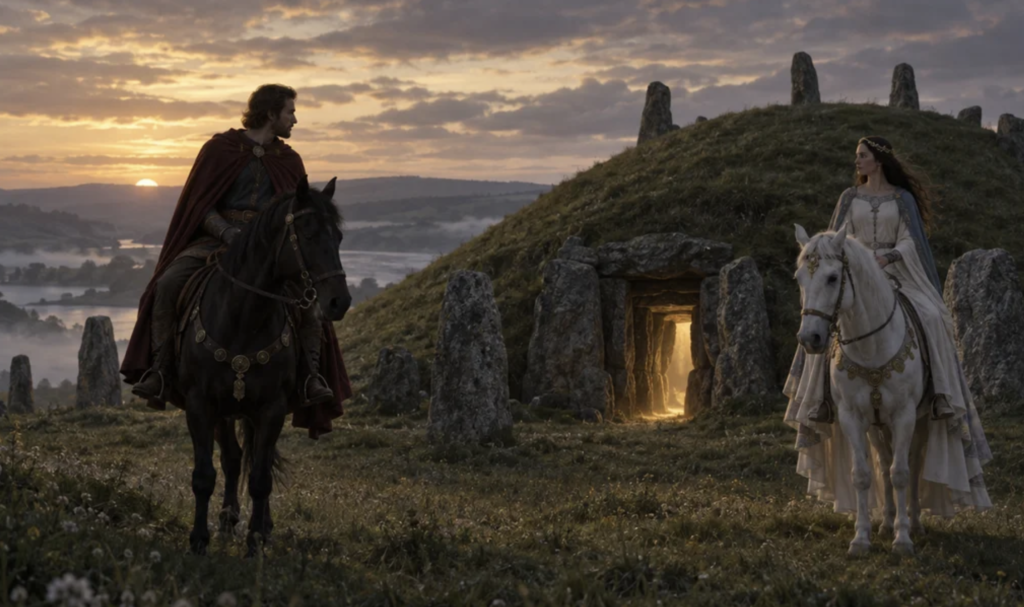
Pwyll and Rhiannon at the mound of Arberth
Sacred Mounds, Hollow Hills, and Barrows
Once upon a time, Pwyll was at Arberth his chief palace, where a feast had been prepared for him, and with him was a great host of men. And after the first meal, Pwyll arose to walk, and he went to the top of a mound that was above the palace, and was called Gorsedd Arberth. “Lord,” said one of the Court, “it is peculiar to the mound that whosoever sits upon it cannot go thence, without either receiving wounds or blows, or else seeing a wonder.” “I fear not to receive wounds and blows in the midst of such a host as this, but as to the wonder, gladly would I see it. I will go therefore and sit upon the mound.”
And upon the mound he sat. And while he sat there, they saw a lady, on a pure white horse of large size, with a garment of shining gold around her, coming along the highway that led from the mound; and the horse seemed to move at a slow and even pace, and to be coming up towards the mound.
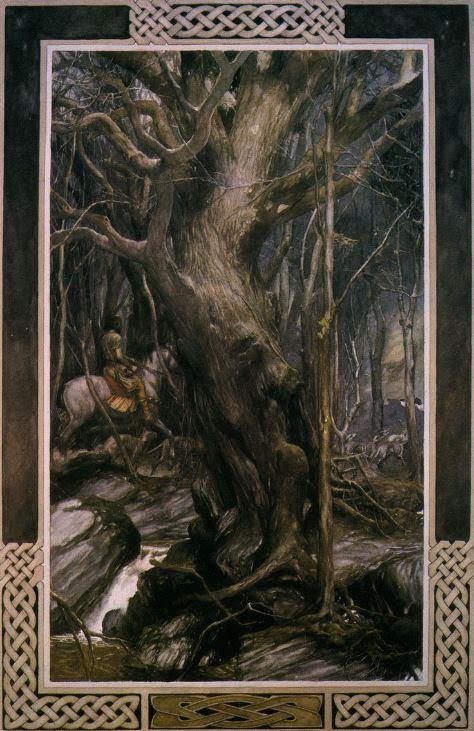
Pwyll, Prince of Dyfed (by Alan Lee)
Sacred mounds and hollow hills feature large in Celtic and Arthurian myth and legend, and the passage above from the tale of Pwyll (the ‘First Branch’ of The Mabinogion) was one of my first encounters with this magical device.
Pwyll, hoping to see a wonder by sitting on the mound that is known to be magical, sees a beautiful woman on a white horse. Two times he had his men try to pursue her, but her white, otherworldly horse moves at a speed they cannot keep up with. It is only on the third time (the number 3 being an important Celtic archetype) when Pwyll rides after her himself, and hails her, that she stops and speaks with him. The woman is, of course, Rhiannon, a lady of Annwn, the Otherworld, where Pwyll has gone to rule for a spell.
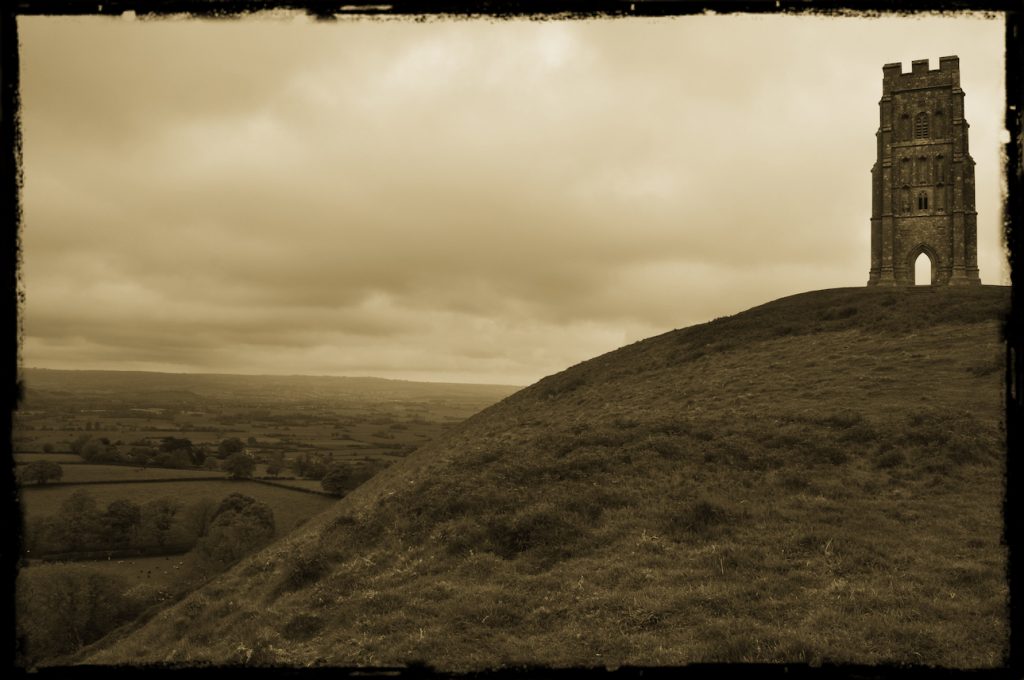
Glastonbury Tor – One of the gateways to Annwn, the Celtic Otherworld
Another sacred mound that readers of the Eagles and Dragons series will be familiar with is the Tor at Ynis Wytrin (Glastonbury Tor) which is said to have had a sacred processional labyrinth going around it, but was also believed to be one of the main gateways to Annwn. There is also a legend that King Arthur sleeps beneath the Tor until he is needed in the world again. Others believe a dragon sleeps beneath it and, to look at its shape, one might truly believe it.
In Irish myth and legend, sacred mounds and hollow hills are also very important as they are the dwelling places of the Sidhe, the otherworldly descendants of the Tuatha De Danann, the gods of ancient Ireland. These places are also referred to as ‘fairy mounds’ but that more diminutive term belies a much greater power that conceals a supernatural landscape.
Burial mounds or ‘barrows’ are also strongly connected to the Otherworld and serve as liminal places or thresholds. One location related to the Sidhe in Ireland is the Newgrange passage tomb at Bru na Boinne, in County Meath. Another is Cruachain (Rathcroghan), in County Roscommon, which was believed to be a gateway to the Otherworld that features at the beginning and the end of the Irish epic, the Táin Bó Cúailnge in which it is the stronghold of Connacht and seat of Queen Medb.
In the Eagles and Dragons series, the ancestral tomb of the protagonist, Lucius, also serves as a liminal place throughout the series, and even more so in The Lord of Annwn.
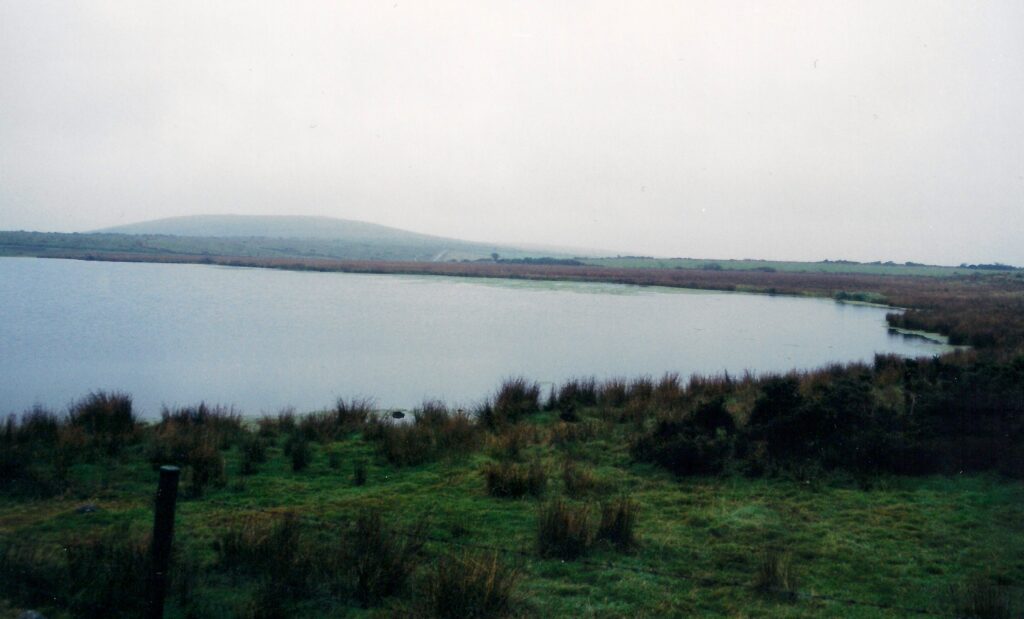
Dozmary Pool on Bodmin Moor, Cornwall
Lakes and Deep Pools
When it comes to liminal places, water in its many forms plays a very important role in Celtic myth and legend.
In Arthurian literature, the first thing that comes to mind is the lake from which Arthur receives (and to which he returns) the magical sword Excalibur from the Lady of the Lake. The site of Dozmary Pool, on Bodmin Moor in Cornwall, has long been associated with this part of the legend and is one of the main settings in the Eagles and Dragons series.
Lakes are featured throughout Celtic and Arthurian mythology, and another example is in the tale of Peredur, part of the Mabinogion collection of tales, in which a lake is a boundary that surrounds a magical castle.
Then she said to him, “Go over yonder mountain, and thou wilt find a lake, and in the middle of the lake there is a Castle, and that is the Castle that is called the Castle of Wonders; and we know not what wonders are therein, but thus is it called.”
(Peredur, The Mabinogion)
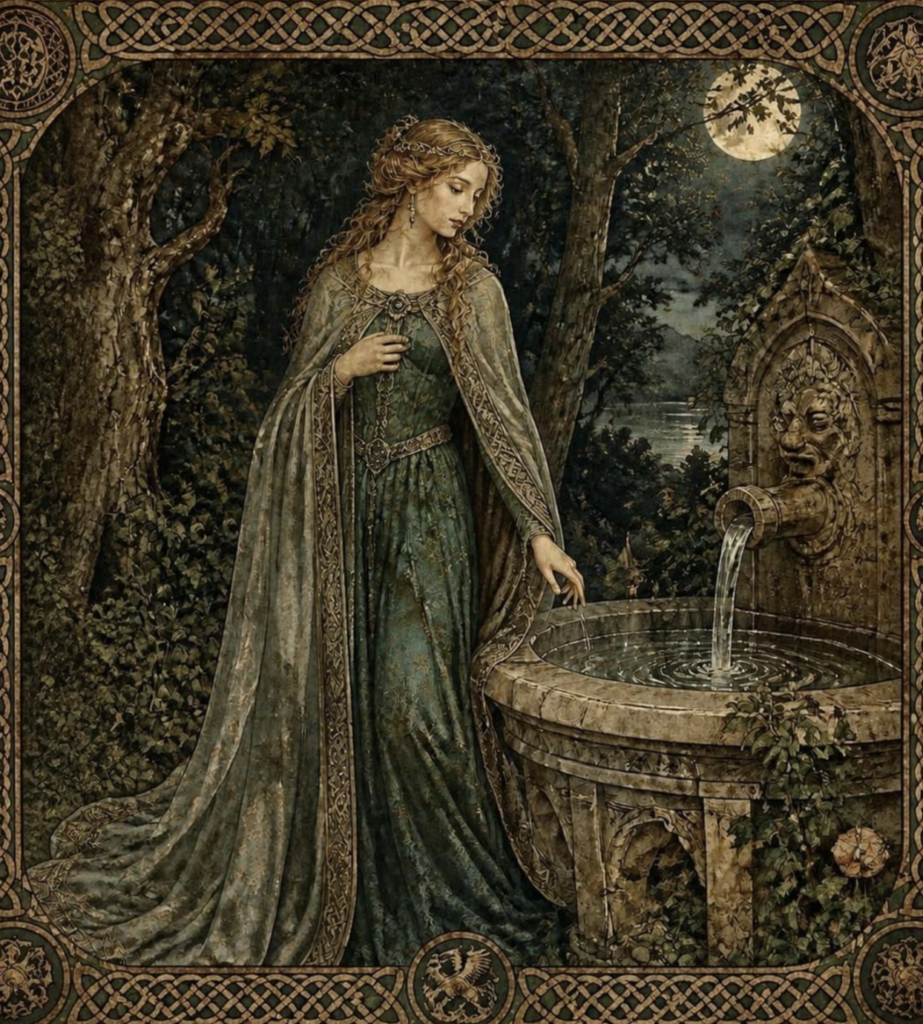
The Lady of the Fountain
Sacred Wells and Fountains
For me, when I think of sacred fountains or wells, my mind goes to the ones I have written about most. There are two at Glastonbury (Ynis Wytrin in the Eagles and Dragons series): the well of St. Joseph, that is located in the Lady Chapel, and the Chalice Well which, over the centuries, has been associated with the Holy Grail and the Blood of Christ because of the redness of the water as well as its healing properties.
In addition to being places of healing, wells and fountains are also places where magical things happen. One example from Irish mythology is Connla’s Well which was believed to be the source of the River Shannon, and others, and is associated with the drowning of Sinend, a daughter of the Tuatha de Danann. Another example of this is in the Arthurian tale of the Lady of the Fountain. In this wonderful tale, there is a fountain in a glade beside which lies a slab of marble, and when water from the magical fountain is poured onto the marble, it causes a supernatural storm and calls a supernatural knight…
‘Take,’ said he, ‘that path that leads towards the head of the glade, and ascend the wooded steep until thou comest to its summit; and there thou wilt find an open space like to a large valley, and in the midst of it a tall tree, whose branches are greener than the greenest pine-trees. Under this tree is a fountain, and by the side of the fountain a marble slab, and on the marble slab a silver bowl, attached by a chain of silver, so that it may not be carried away. Take the bowl and throw a bowlful of water upon the slab, and thou wilt hear a mighty peal of thunder, so that thou wilt think that heaven and earth are trembling with its fury. With the thunder there will come a shower so severe that it will be scarce possible for thee to endure it and live. And the shower will be of hailstones; and after the shower, the weather will become fair, but every leaf that was upon the tree will have been carried away by the shower. Then a flight of birds will come and alight upon the tree; and in thine own country thou didst never hear a strain so sweet as that which they will sing. And at the moment thou art most delighted with the song of the birds, thou wilt hear a murmuring and complaining coming towards thee along the valley. And thou wilt see a knight upon a coal-black horse, clothed in black velvet, and with a pennon of black linen upon his lance; and he will ride unto thee to encounter thee with the utmost speed. If thou fleest from him he will overtake thee, and if thou abidest there, as sure as thou art a mounted knight, he will leave thee on foot. And if thou dost not find trouble in that adventure, thou needest not seek it during the rest of thy life.’
(The Lady of the Fountain, The Mabinogion)
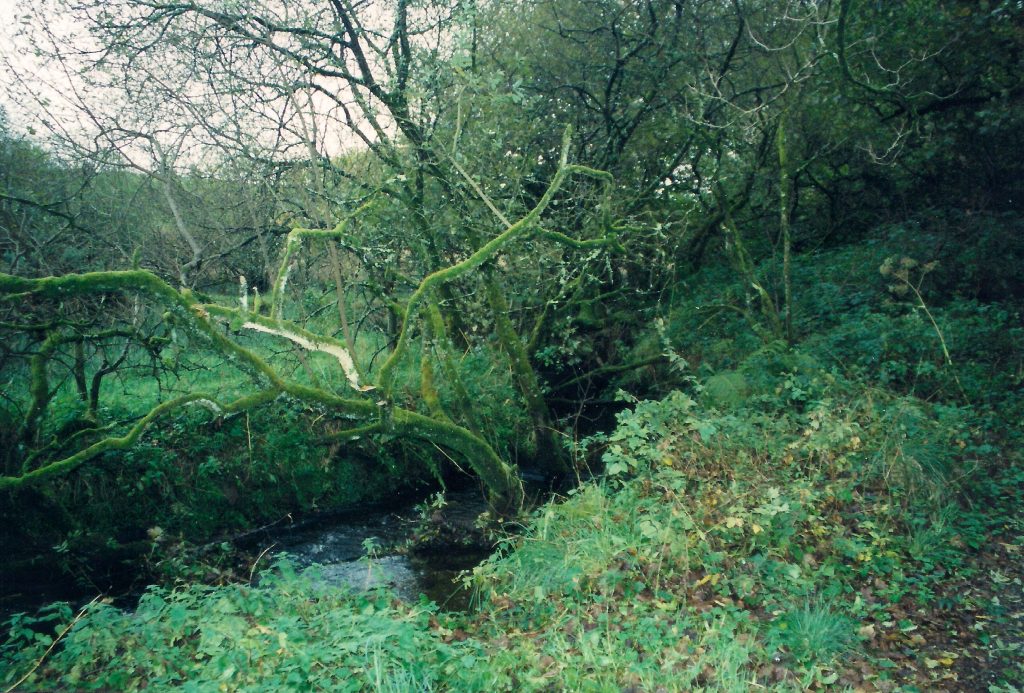
The River Camel where it runs through Slaughterbridge
Rivers or River Crossings
Remaining on the theme of water, rivers and fords are also a feature of liminal places in Celtic myth and legend. They are especially important as water boundaries or places of transition.
In the tale of Pwyll, Lord of Dyfed, Pwyll meets the otherworldly king, Havgan, in battle for the mastery of Annwn. In this instance, the river is a place where kingdoms meet, where armies cross, territories change, and the mortal world and otherworld overlap.
River crossings, fords, are magical in that the water must be stepped into to reach other other side. Once one is in the water, one is in a literal ‘in-between’ space, neither on one side or the other.
In the Eagles and Dragons series, the river at Slaughterbridge, in Cornwall, the ‘river gateway’ in the books, is the site of a magical portal from Annwn to the mortal world.
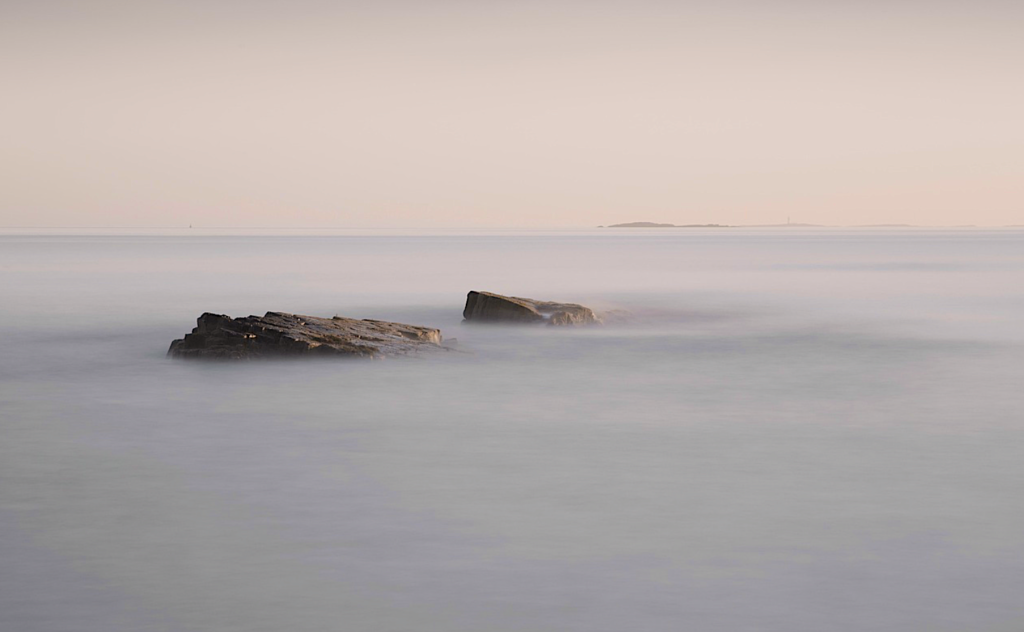
The Western Ocean
The Western Ocean
In Celtic mythology, the sea or the ‘Western Ocean’ is a magical and transitory place, the realm of the sea god, Manannan, one of the Tuatha de Danann. In Irish and Gaelic mythology, by crossing the sea, or the Western Ocean, one can reach magical lands such as Tir Tairngire (the ‘Land of Promise’), Mag Mell (the ‘Plain of Delights’), or Emain Ablach (the ‘Isle of Apples’).
In the Táin Bó Cúailnge, the hero Cuchulain prepares for battle, one of his ardornments being a magical veil of protection from Tir Tairngire, a gift from Manannan:
Next he put round his head his crested war-helm of battle and fight and combat, wherein were four carbuncle-gems on each point and each end to adorn it, whereout was uttered the cry of an hundred young warriors with the long-drawn wail from each of its angles and corners.
For this was the way that the fiends, the goblins and the sprites of the glens and the demons of the air screamed before and above and around him, what time he went forth for the shedding of blood of heroes and champions, exulting in the mighty deeds wrought underneath it. His veil of concealment was thrown over him then, of raiment from Tir Tairngirè (‘the Land of Promise’) which had been brought to him as a gift by Manannan son of Ler (‘the Sea’) from the king of Tir na Sorcha (‘the Land of Light’), his foster-father in magic. His fair, purple-red fan was placed in front of his face. Past it and through it and over it everything was visible to him and no one wounded him past it nor through it nor over it.
(Táin Bó Cúailnge, XVII, 190)
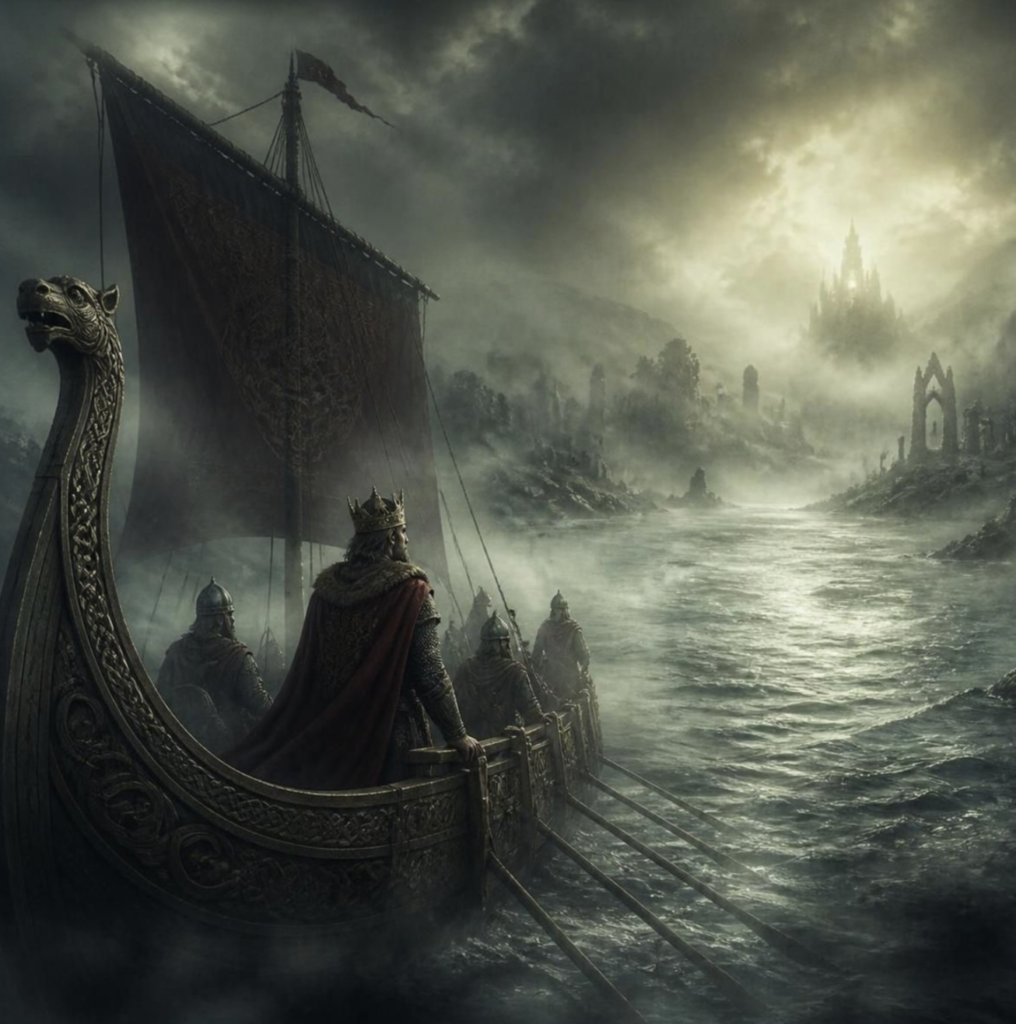
Impression of Arthur’s ship, Prydwen, travelling to Annwn.
Another example of the sea being a liminal place that is crossed to get to magical worlds is in the ancient bard Taliesin’s poem, The Spoils of Annwn, in which Arthur and his men cross the sea to magical lands in his warship, Prydwen:
Three full loads of Prydwen we sailed there; And seven men only returned from Caeir Sidi…
…We voyaged with Arthur, famed for his labours; Seven men only returned from Caer Medwit…
…Three full loads of Prydwen we sailed on that sea; And seven men only returned from Caer Rigor…
…Three full loads of Prydwen voyaged with Arthur; And seven men only returned from Caer Golud…
…When we voyaged with Arthur – that ill-starred journey – Seven men only returned from Caer Manddwy…
…When we voyaged with Arthur – that ill-starred conflict – Seven men only returned from Caer Ochren…
(Taliesin, The Spoils of Annwn)
A voyage across the sea is required to reach these magical, otherworldly places, and there the heroes will find victory or defeat.
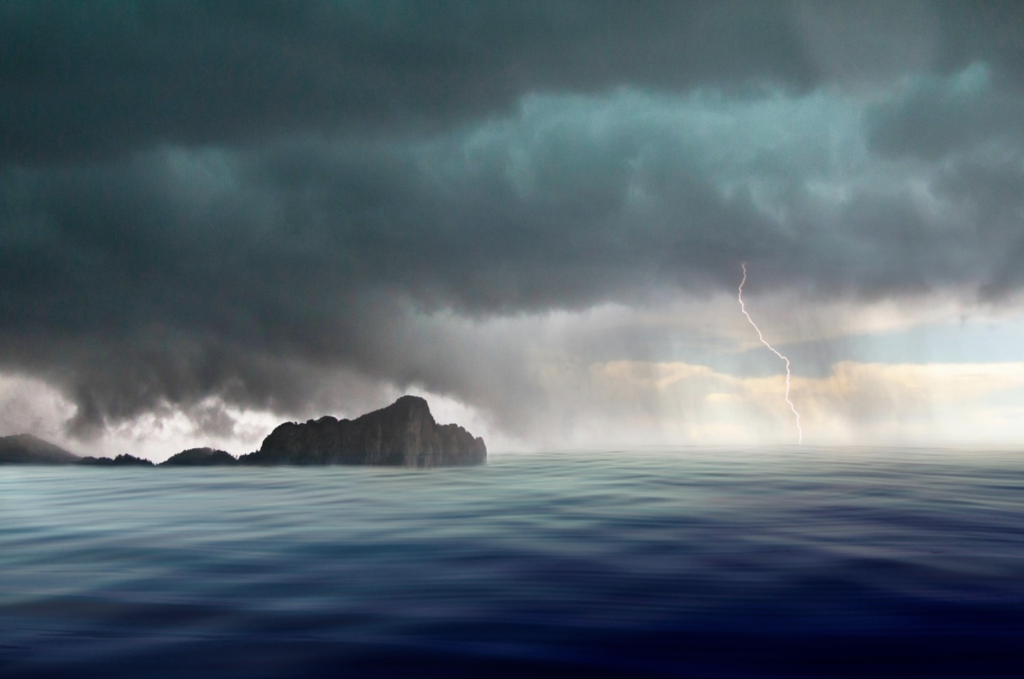
An island in the mist…
Islands Beyond the Sea
We have already touched on this archetype above, how magical lands lie on the other side of the sea, such as those which Arthur goes to in The Spoils of Annwn.
Fans of Tolkien’s writings will also recognize this archetype from The Lord of the Rings and its accompanying mythology in the ‘Undying Lands’, Valinor, across the sea to the west, the home of the gods, the Valar, the Maiar, and the Elves. Tolkien took this from Celtic mythology.
In Celtic mythology, one of the mysterious islands across the sea is Emain Ablach (‘Emain of the Apples’), a sort of island paradise belonging to the sea god, Manannan. This has been associated with the Isle of Man, and even the Isle of Arran. Either way, Emain Ablach was a magical island where gods such as Lug Lamfada were reared and lived, a sort of Celtic Garden of Eden.
A perpetual place is Sioth-Eamhna,
Beauteous the territory in which it is found
A fair Eath above every fort,
In which fair apple-trees are plenty.
Eamhain of the apples, the freshest.
The Tara of the victorious households,
Few the duns and hills more fair,
In their young, fresh, green garments…
…Many in Emliain of the estuaries
(From which their deep floods have not departed)
The fields tilled in harvest
With clear corn of the Lord’s body.
Joyous the estate of the man of the dumha
Which has drunk the showers of honey;
To go to the sweet sidh of the Brug;
Is to go to the smooth Rath of mead.
The appley Emhain of the yews,
Smooth, top-coloured are its trees ;
A new place under the black thorn,
In which was nursed Lugh, descendant of the poet…
(Baile Suthain Sith Eamhna, fragment of Medieval Irish poem)
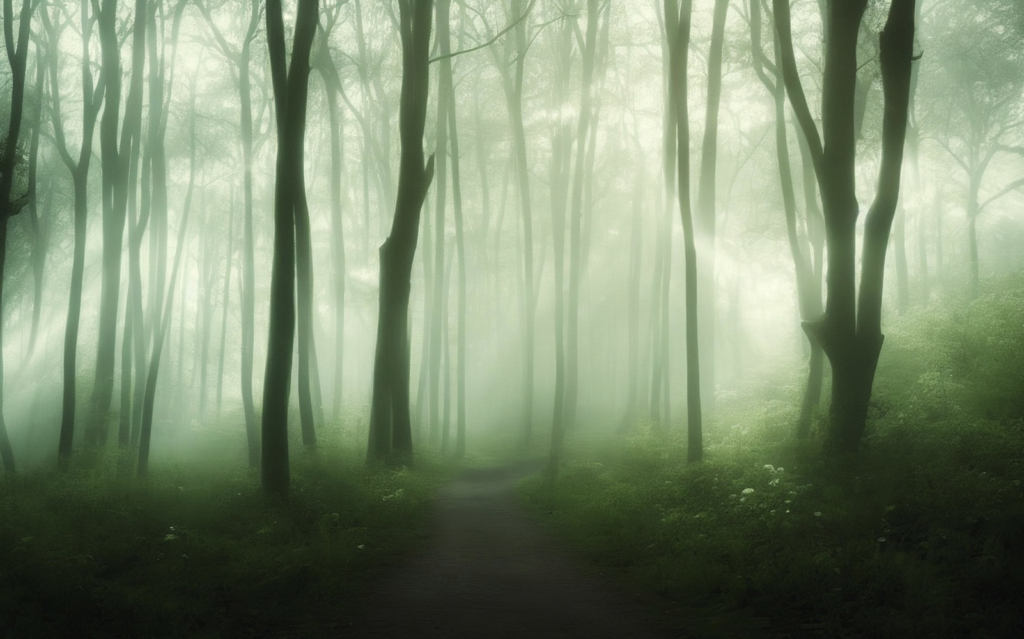
A magical fog
Mists and Magical Fog
Mists and magical fogs are another interesting liminal space in Celtic mythology, for there is not really a clear border that one passes. There is an uncertainty, a magic about passing through a mist or fog, whether one is on water, or on land.
The obvious connection is the Isle of Avalon, or ‘Ynis Wytrin’ in the Eagles and Dragon series, which is accessed by water that is often covered in fog that cloaks the magical isle. The fog serves as a sort of liminal threshold to the Otherworld, but it also cloaks places to protect them.
Fog and mist also cloak otherworldly beings or gods from the prying eyes of men. An example of this is the Tuatha De Danann in Irish mythology who are hidden by, and move about in, a magical veil of fog or mist.
…Ferdiad spake: “Not alike are our foster-brothership and our comradeship, O Cuchulain,” quoth he. “How so, then?” asked Cuchulain. “Thy friends of the Fairy-folk have succoured thee, and thou didst not disclose them to me before,” said Ferdiad. “Not easy for me were that,” answered Cuchulain; “for if the magic veil be once revealed to one of the sons of Milè, none of the Tuatha De Danann (‘the Folk of the Goddess Danu’) will have power to practise concealment or magic.
(Táin Bó Cúailnge, XX, 255)
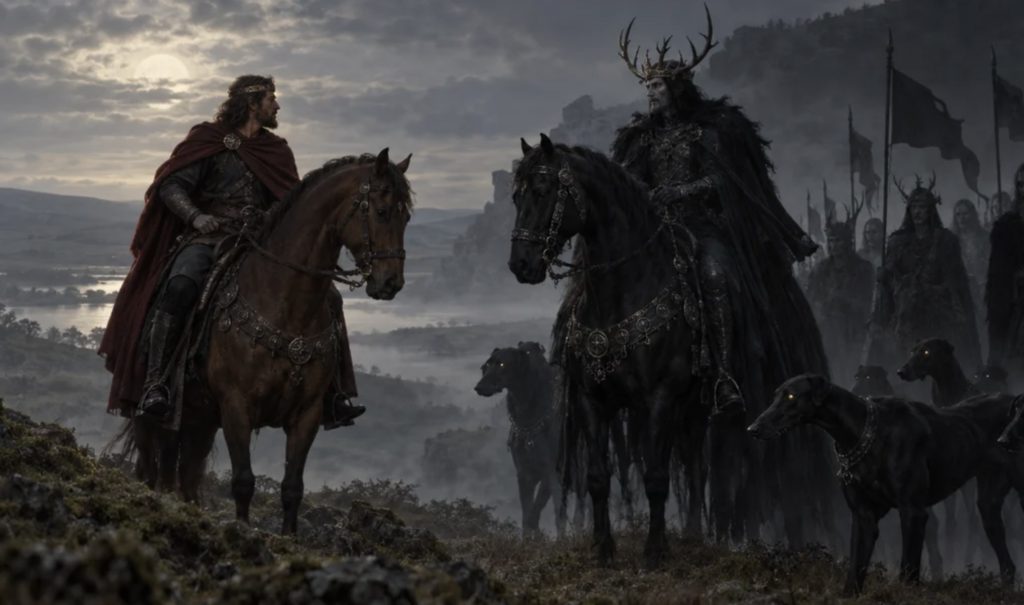
Pwyll, Prince of Dyved, meets Arawn, Chief of Annwn
Forests and Wilderness
Forests and the wilderness are important, for they represent the leaving of the cultivated, ‘man-made’ world for the realm of the mysterious and untamed. Often they are the vehicle by which heroes in Celtic myth are able to begin their adventures, as is the case for other liminal places.
The tale of Pwyll begins in a forest hunting scene, and in that forest Pwyll meets the otherworldly Lord of Annwn, Arawn:
Pwyll Prince of Dyved was lord of the seven Cantrevs of Dyved; and once upon a time he was at Narberth his chief palace, and he was minded to go and hunt, and the part of his dominions in which it pleased him to hunt was Glyn Cuch. So he set forth from Narberth that night, and went as far as Llwyn Diarwyd. And that night he tarried there, and early on the morrow he rose and came to Glyn Cuch, when he let loose the dogs in the wood, and sounded the horn, and began the chase. And as he followed the dogs, he lost his companions; and whilst he listened to the hounds, he heard the cry of other hounds, a cry different from his own, and coming in the opposite direction.
And he beheld a glade in the wood forming a level plain, and as his dogs came to the edge of the glade, he saw a stag before the other dogs. And lo, as it reached the middle of the glade, the dogs that followed the stag overtook it and brought it down. Then looked he at the colour of the dogs, staying not to look at the stag, and of all the hounds that he had seen in the world, he had never seen any that were like unto these. For their hair was of a brilliant shining white, and their ears were red; and as the whiteness of their bodies shone, so did the redness of their ears glisten. And he came towards the dogs, and drove away those that had brought down the stag, and set his own dogs upon it.
And as he was setting on his dogs he saw a horseman coming towards him upon a large light-grey steed, with a hunting horn round his neck, and clad in garments of grey woollen in the fashion of a hunting garb.
(Pwyll: Lord of Dyved, The Mabinogion)
Throughout Arthurian literature and romance, forests are ever present and, often, the questing hero will emerge from the forests, or a time in the wilderness, to find a magical fortress, beast, or some other supernatural item awaiting them.
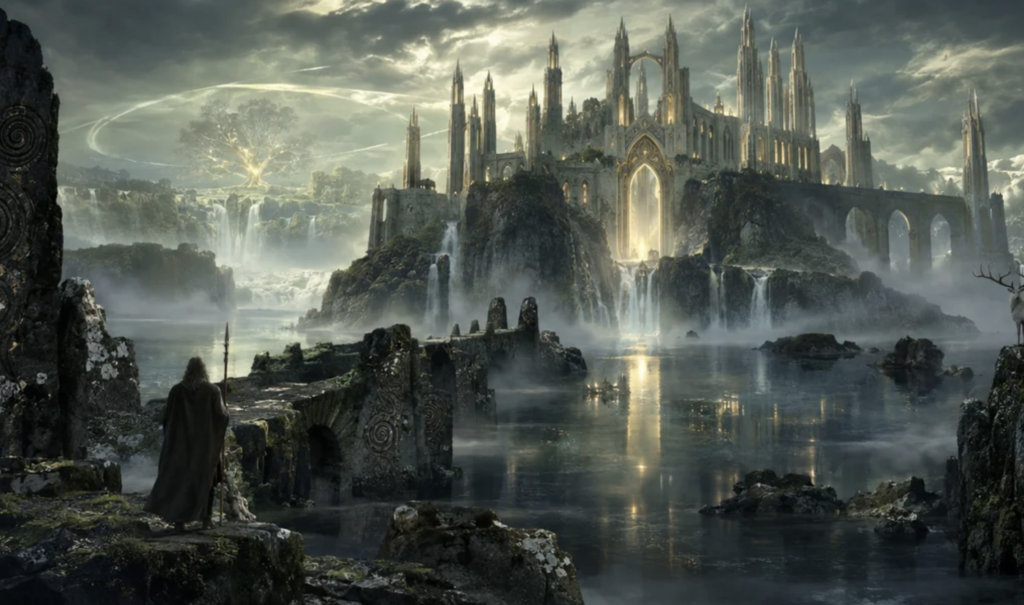
Impression of Annwn’s magical fortress of Caer Sidi.
Castles, Fortresses, and Feasting Halls
Celtic and Arthurian myth and legend is riddled with many instances of magical castles, fortresses and feasting halls where there are supernatural encounters or magical occurrences. Many are mentioned in Taliesin’s poem, The Spoils of Annwn, mentioned above in regard to Arthur’s raids on the Otherworld.
Castles or fortresses can represent civilization on the other side of reality in these instances, but they can also represent trials and suffering. Perhaps one of the most important of these otherworldly fortresses is Caer Sidi. It has been debated as to whether the name means the ‘revolving’ fortress, or the fortress of the fairies (the ‘Sidhe’).
In The Spoils of Annwn, we hear of Caer Sidi as the prison of Gweir, one of the three distinguished prisoners of the island of Britain in Welsh mythology:
I will praise the sovereign, supreme king of the land,
Who hath extended his dominion over the shore of the world.
Complete was the prison of Gweir in Caer Sidi,
Through the spite of Pwyll and Pryderi.
No one before him went into it.
The heavy blue chain held the faithful youth,
And before the spoils of Annwvn woefully he sings,
And till doom shall continue a bard of prayer.
Thrice enough to fill Prydwen, we went into it;
Except seven, none returned from Caer Sidi
(Taliesin, The Spoils of Annwn)
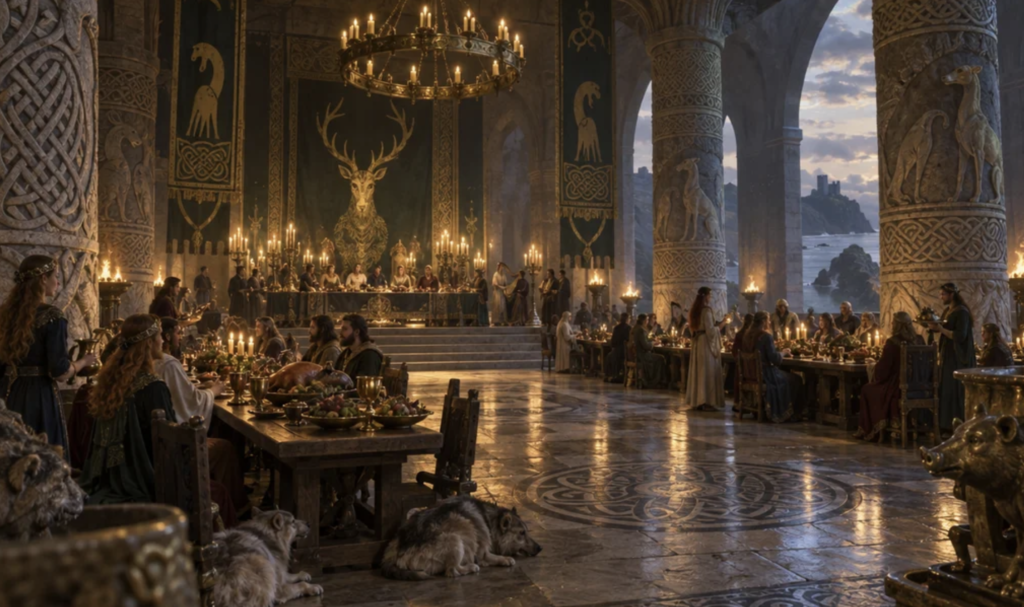
A magical feasting hall
Within castles and fortresses, feasting halls are also the site of many supernatural encounters, especially at liminal times of year. One example of this is when the Green Knight appears at Arthur’s court at Christmas to lay down his challenge.
In the second branch of the Mabinogion, the tale of Branwen: Daughter of Llyr, for seven years, the seven survivors (including Manawydan, Taliesin, and Pryderi, son of Pwyll) of the battle in Ireland to save the British princess, Branwen, stay in the court of Harlech upon their return with the magical head of the British High King, Bendigeidfran (Bran the Blessed), who was fatally wounded in the battle. On their way to London to bury his still-speaking head beneath the ‘White Tower’ as he instructed them before his death, they linger at Harlech.
And Bendigeid Vran commanded them that they should cut off his head. “And take you my head,” said he, “and bear it even unto the White Mount, in London, and bury it there, with the face towards France. And a long time will you be upon the road. In Harlech you will be feasting seven years, the birds of Rhiannon singing unto you the while. And all that time the head will be to you as pleasant company as it ever was when on my body. And at Gwales in Penvro you will be fourscore years, and you may remain there, and the head with you uncorrupted, until you open the door that looks towards Aber Henvelen, and towards Cornwall. And after you have opened that door, there you may no longer tarry, set forth then to London to bury the head, and go straight forward.”
(Mabinogion; Branwen: Daughter of Llyr)
Another example of the enchanted feast hall within a fortress is in Pwyll: Lord of Dyved when Pwyll exchanges places with Arawn, the Lord of Annwn, for a year and occupies his hall, and place, and even his appearance.
The list goes on, but if one reads through the rich annals of Celtic and Arthurian literature, one will see that there are numerous magical castles and feasting halls that play important roles in each of the heroes’ journeys.
In The Lord of Annwn, one such fortress appears that is straight out Arthurian legend, and which is related to a great battle of dragons…
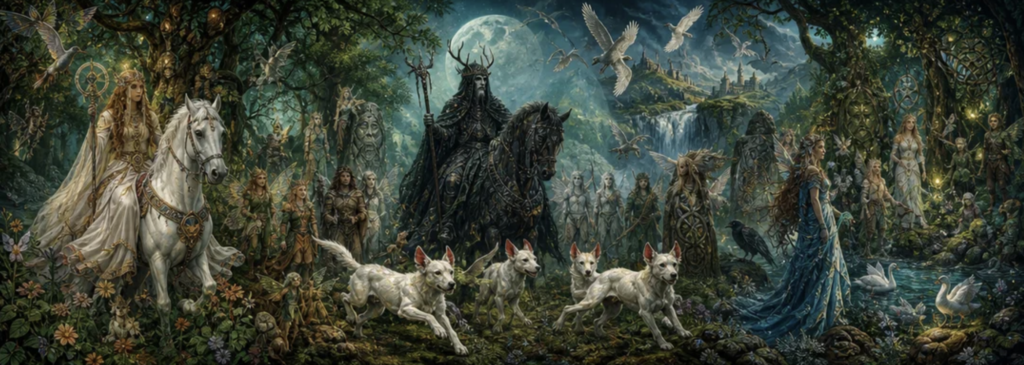
The Celtic otherworld of Annwn
We have explored but a minute fraction of one aspect of Celtic mythology and Arthurian legend, explored a tiny portion of the labyrinth that is carved into the bones of Britain.
There are many other liminal places where the veil is thin and supernatural encounters occur such as crossroads and meeting places, boundary stones, and standing stones. There are liminal times of year such as at Samhain and Beltane, and there are liminal phenomena such as enchanted sleeps, magical feasts, humans straying into other worlds, and even births and deaths. All of these carry mystery and magic.
The important thing to remember is that in ancient Celtic lore, belief in the Otherworld, in Annwn, and in otherworldly meetings, was strong and, to an extent, normal. The veils between worlds were not solid and impenetrable, but rather fluid, open to those who dared to (or were able or allowed to) pass into those worlds beyond.
With hope, we have tickled your curiosity such that you will step over the threshold into the rich world of the myths and legends of Ancient Britain to get lost in some of the texts themselves…
Thank you for reading.
P.S. If you would like to read further and keep the adventure going, here are links to free versions of some of the texts mentioned above:
The Mabinogion
The Book of Taliesin
The Táin Bó Cúailnge
We hope you’ve enjoyed this second post in The World of The Lord of Annwn blog series. Stayed tuned for Part III in which we will look at Annwn and its people, the Tylwyth Teg.
The Lord of Annwn: A Novel of the Otherworld is available ebook, paperback and deluxe hardcover editions from all major online retailers, independent bookstores, brick and mortar chains, and your local public library.
CLICK HERE to buy a copy and get ISBN#s for the edition of your choice.
If you are new to the Eagles and Dragons historical fantasy series, you can start your epic adventure with the award-winning, #1 bestselling prequel, A Dragon among the Eagles.