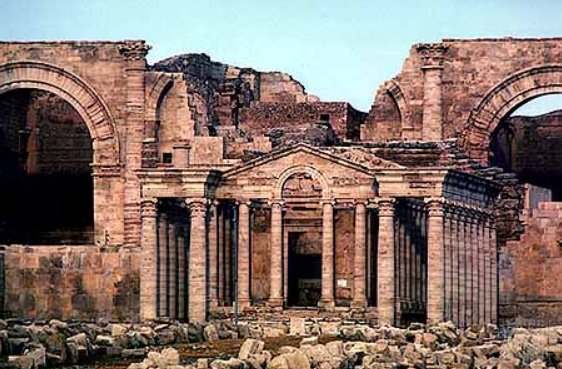
Hatra – The Sad Death of an Historic Site

Hatra Temple

My research for the current book I’m writing has taken me to a place that has been in the news of late.

The news from the Middle East has not been good for many years, especially on the human scale. But things have taken another sad turn with the added destruction of cultural heritage in Iraq. A couple weeks ago, we heard of the wanton destruction of the ancient, Assyrian Bronze Age city of Nimrud, and this loss of world heritage has shaken the archaeological and historical communities.

But last week, came yet another catastrophic blow. The ancient city of Hatra, just 290 kms northwest of Baghdad, was bulldozed to the ground. The supposed reasons for this vile act being that Hatra did not represent the religion of the group in question.

Hatra.
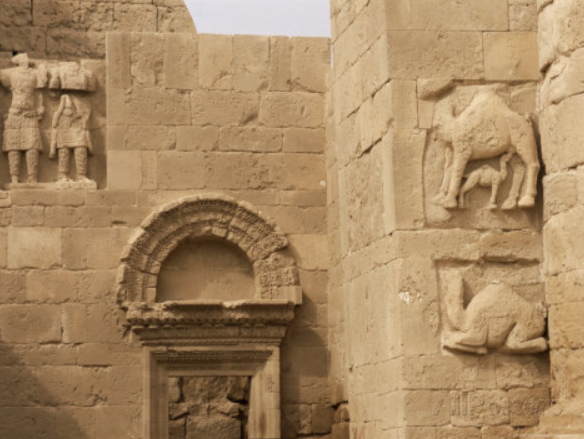
Hatra details

Prior to the levelling of this ancient site, I had been admiring its magnificent, intact ruins as part of my research for a prequel to my novel, Children of Apollo. This is… was… an amazing place.

Hatra was built in the third century B.C. under the Seleucid Empire, founded by Alexander the Great’s general, Seleucas. It was later located on the edge of the mighty Parthian Empire with which Rome would wage terrible war.

The city of Hatra was one of the best-preserved Parthian cities in the Middle East. It had inner and outer walls that were about 6 kms around, with 160 towers. These walls were so strong and well-fortified that of all the Parthian possessions, including the capital of Ctesiphon, Hatra was the only frontier city that withstood attacks from Rome’s legions.
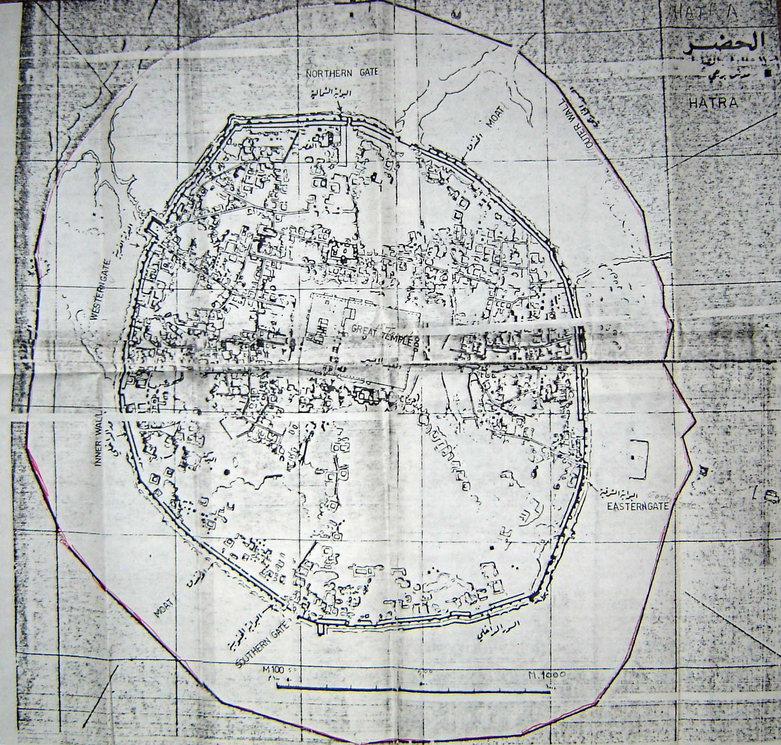
Map of Hatra (source: UNESCO)

Map of Hatra (source: UNESCO)

The emperors who laid siege to Hatra were no slouches either! Both the warlike emperors Trajan (in A.D. 116/117) and Septimius Severus (in A.D. 198/199) attacked the city, only to be turned away by the walls, the defenders, and the harsh environment outside of those walls. Some say, the gods themselves had a hand in the successful defence of Hatra…

Eventually, the city fell to the Sassanid Emperor, Shapur I in A.D. 241, but that warrior ruler did not destroy the city. Hatra stood for over two thousand years… that is, until last week.
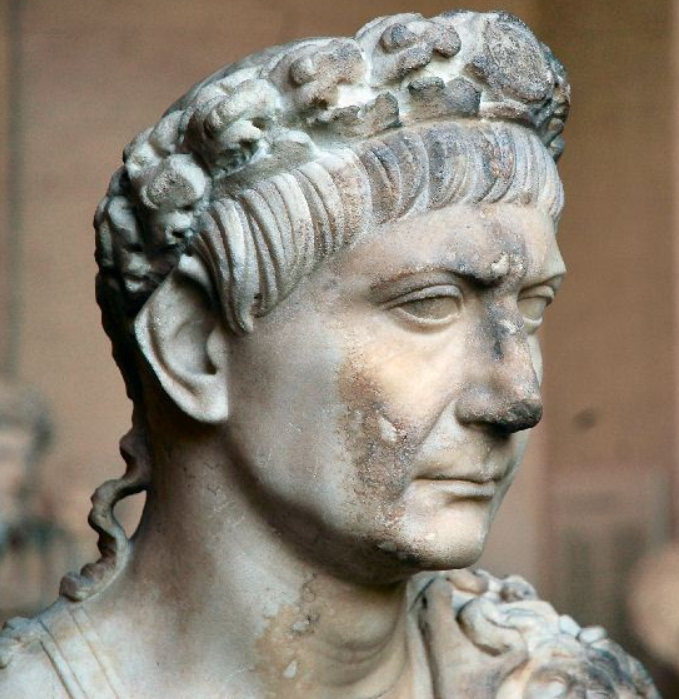
Emperor Trajan

Emperor Trajan

It wasn’t the walls that kept Hatra standing, nor the power of the Parthians, for both of those things were breeched in the end. What kept Hatra alive, so to speak, was respect and a common sense of heritage.

In my research, it has been interesting to read about how Hatra was a place of religious fusion, of great harmony among faiths.

The architecture may have been a beautiful melding of Hellenistic and Roman styles, but the great temples at the heart of Hatra belonged to the Assyrian and Babylonian faiths, to the beliefs of Greeks, Syrians and Aramaeans, Arabians and Mesopotamians. The age-old gods of all of these faiths co-existed at the heart of this circular city in the desert, standing proud and protected around the base of the Great Temple itself, with its 30 meter columns.
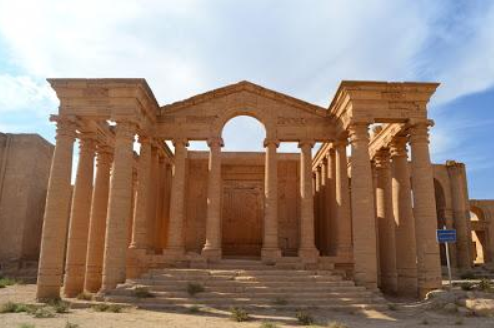
The Great Temple

The Great Temple

I’ve not seen recent pictures, but from what I’ve heard, Hatra has been levelled.

There are no words, really.

Think of it this way – even Saddam Hussein saw value (however selfishly) and wanted to restore Hatra, as well as Nineveh, Nimrud, Ashur, and Babylon. He didn’t bulldoze them.

For over a thousand years, Muslims have preserved these ancient sites, including Hatra, because they represented a glorious past, humankind’s past. The towering columns and temple pediments, the ornate reliefs carved by our ancient ancestors did not represent a threat. They were artistic glories, the ornamentations of the houses of many gods, side by side.

In my prequel to Children of Apollo, I’ll be writing about Septimius Severus’ two sieges of Hatra, and how, despite his rage and being repelled twice, the city yet stood. Some stories say it was the threat of mutiny, others that it was the Empress, Julia Domna who urged him to spare the city because of the magnificent temples within that honoured so many gods.
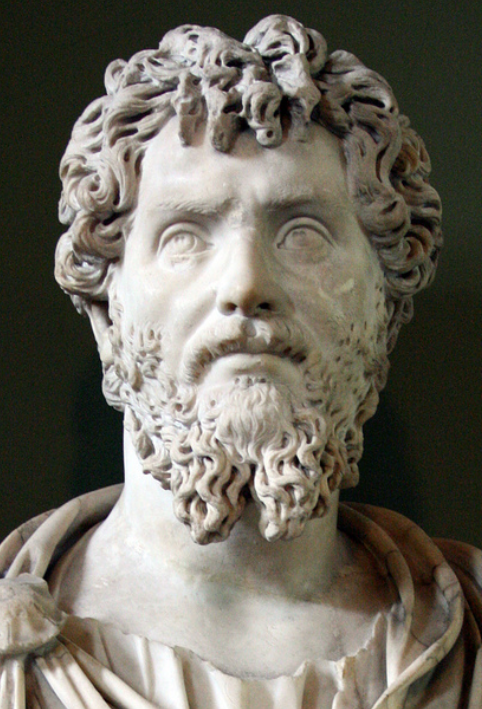
Septimius Severus

Septimius Severus

Whether the story is true or not, Severus respected the gods, and the monuments built in their honour. He left them alone, even though the Hatrans angered him with their stubbornness.

Severus now crossed Mesopotamia and made an attempt on Hatra, which was not far off, but accomplished nothing; on the contrary, his siege engines were burned, many soldiers perished, and vast numbers were wounded…

…He himself made another expedition against Hatra, having first got ready a large store of food and prepared many siege engines; for he felt it was disgraceful, now that the other places had been subdued, that this one alone, lying there in their midst, should continue to resist. But he lost a vast amount of money, all his engines, except those built by Priscus, as I have stated above, and many soldiers besides. A good many were lost on foraging expeditions, as the barbarian cavalry (I mean that of the Arabians) kept assailing them everywhere in swift and violent attacks. The archery, too, of the Atreni was effective at very long range, since they hurled some of their missile by means of engines, so that they actually struck many even of Severus’ guards; for they discharged two missiles at one and the same shot and there were many hands and many bows hurling the missiles all at the same time. But they inflicted the greatest damage on their assailants when these approached the wall, and much more still after they had broken down a small portion of it; for they hurled down upon them, among things, the bituminous naphtha, of which I wrote above, and consumed the engines and all the soldiers on whom it fell. Severus observed all this from a lofty tribunal. When a portion of the outer circuit had fallen in one place and all the soldiers were eager to force their way inside the remainder, Severus checked them from doing so by ordering the signal for retreat to be clearly sounded on every side. For the place enjoyed great fame, containing as it did a vast number of offering to the Sun-god as well as vast sums of money; and he expected the Arabians to come to terms voluntarily, in order to avoid being forcibly captured and enslaved. At any rate, he allowed one day to pass; then, when no one came to him with any overtures for peace, he commanded the soldiers to assault the wall once more, though it had been built up during the night. But the Europeans, who alone of his army had the ability to do anything, were so angry that not one of them would any longer obey him, and the others, Syrians, who were compelled to make the assault in their place, were miserably destroyed. Thus Heaven, that saved the city, first caused Severus to recall the soldiers when they could have entered the place, and in turn caused the soldiers to hinder him from capturing it when he later wished to do so.

(Cassius Dio – Roman History LXXVI)

Who was living in Hatra last week, when it was ground to dust? No one.

All that was there were the silent stone monuments of history, tufts of grass and wildflower sprouting up from around the column bases, and the desert sand whirling about them, as it had for so many centuries.
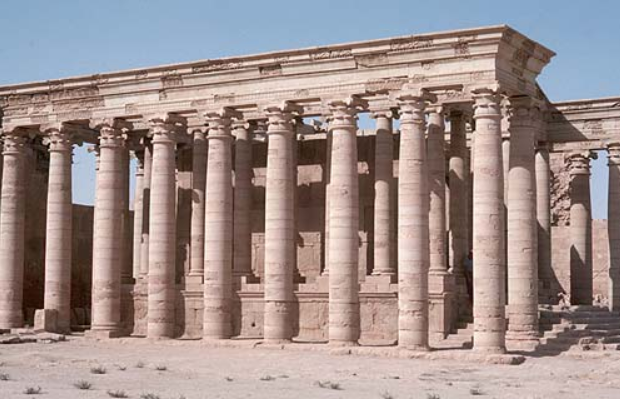
Hatra columns

You may not have known of Hatra before last week, but now, I would urge you to spare a thought for its ghost and the shared history of the peoples who called it home over the ages.

Thank you for reading…

What are your thoughts on the destruction of Hatra and other sites? Let us know in the comments below…

For further reading, click HERE to see the UNESCO pages on Hatra.

Here is a video from UNESCO that will give you a short tour of this once-beautiful city:


Facebooktwitterpinterest

Dancing Priests and the Month of Mars

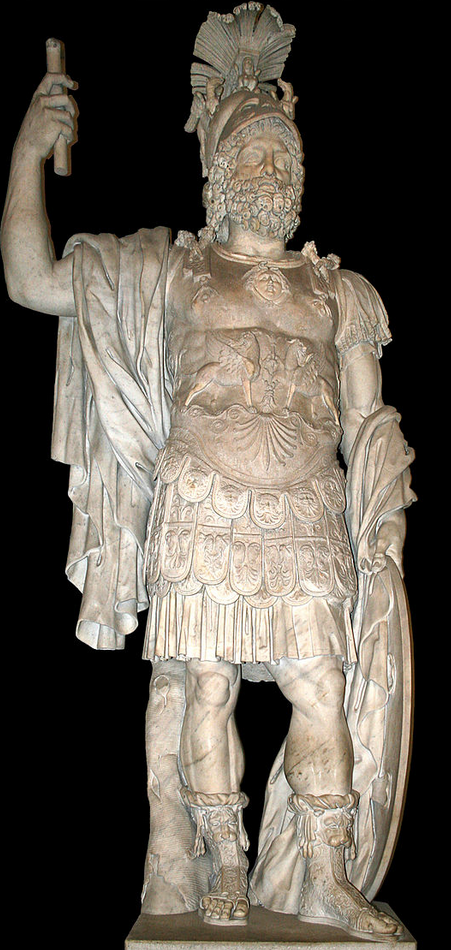
Mars - God of War

Mars – God of War

We’re finally into the month of March and Spring is in our sights.

If we were living in ancient Rome, this would have been a very exciting time. Mars’ month, or mensis Martius, was almost entirely taken up with various celebrations to honour the Roman god of War.

The festival of Mars included the Equirria, a horse-racing festival at Rome, and the Tubilustrium, the day when the sacred war trumpets were purified. The festival of Mars also coincided with the Matronalia, the festival of Juno, mother of Mars, to whom prayers were offered. During the latter, husbands gave gifts to their wives, and female slaves were feasted by their masters.

One of the fixtures of the Festival of Mars were the dancing, or leaping, priests of Mars known as the Salii.

Artist impression of Salii

Artist impression of Salii

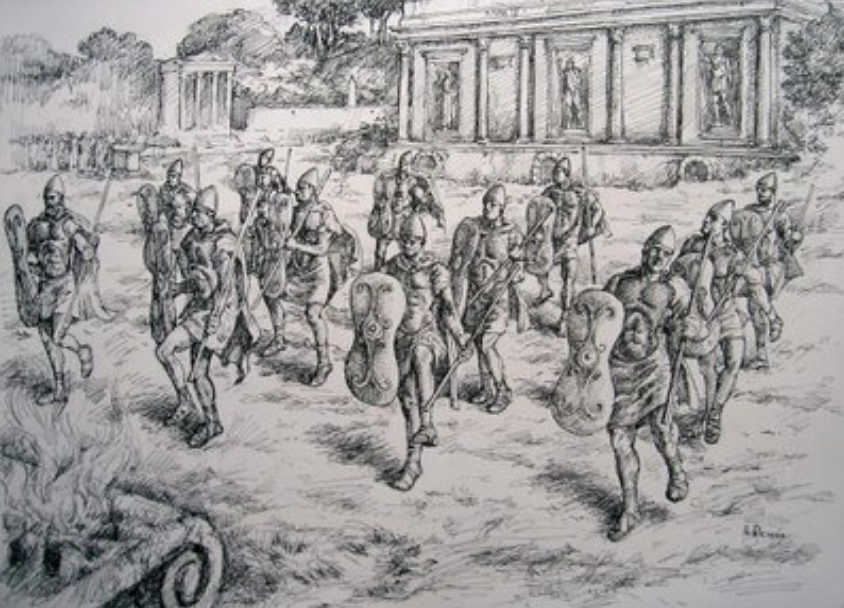
Throughout the festival, the Salii would process through the streets of Rome wearing military dress and armour, and stop at certain places along the way to perform ritual dances and sing their ancient hymns known as the Carmen Saliare, sung at the beginning (March) and end (October) of the military campaign season. Here is a small fragment:

Sing of him, the father of the gods! Appeal to the God of gods!

When thou thunderest, O God of light, they tremble before thee!

All gods beneath thee have heard thee thunder!

but to have acquired all that is spread out

Now the good … of Ceres … or Janus

In the Roman state religion, there were no full-time, professional priests. Most were taken from the aristocracy, including the Salii who were supposed to be patricians with both parents still living.

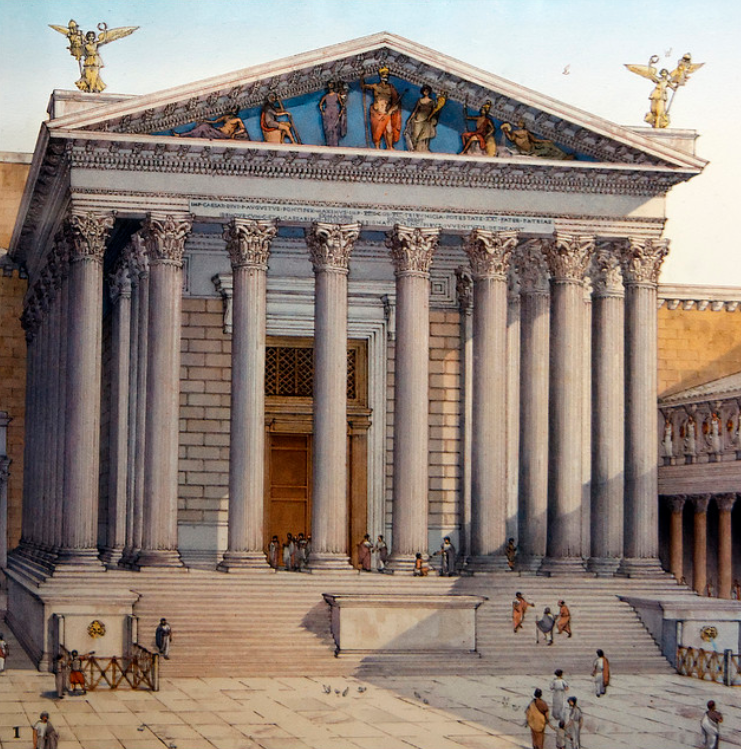
Artist impression of theTemple of Mars Ultor

Artist impression of theTemple of Mars Ultor

But where did the order of Salii come from?

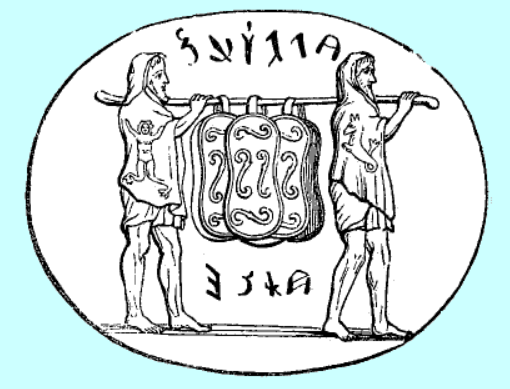
Legend has it that Rome’s second king, Numa Pompilius (715 – 673 B.C.) created them in order to protect the sacred shields of Mars, called the ancilia, which the Salii carried in their processions, and which were stored in the Temple of Mars. Dionysius of Halicarnassus relates the legend:

Among the vast number of bucklers [the ancilia] which both the Salii themselves bear and some of their servants carry suspended from rods, they say there is one that fell from heaven and was found in the palace of Numa, though no one had brought it thither and no buckler of that shape had ever before been known among the Italians; and that for both these reasons the Romans concluded that this buckler had been sent by the gods. They add that Numa, desiring that it should be honoured by being carried through the city on holy days by the most distinguished young men and that annual sacrifices should be offered to it, but at the same time being fearful both of the plot of his enemies and of its disappearance by theft, caused many other bucklers to be made resembling the one which fell from heaven, Mamurius, an artificer, having undertaken the work; so that, as a result of the perfect resemblance of the man-made imitations, the shape of the buckler sent by the gods was rendered inconspicuous and difficult to be distinguished by those who might plot to possess themselves of it.

(Dionysius of Halicarnassus; Roman Antiquities)

King Numa instituted twelve Salii to guard the sacred shields and perform the rites for Mars, and his successor, King Tullus Hostilius, is said to have instituted another twelve Salii, bringing the number to twenty-four which became the norm for generations.

Salii carrying the sacred Ancilia

Salii carrying the sacred Ancilia

It must have been quite a sight to see these patrician priests dancing through Rome’s streets, carrying the sacred shields while singing, and dancing or leaping before the crowds.

We should remember that this was not some clown-like activity. Mars, war, and the rites to honour both were extremely sacred to the Roman people. When the Salii came into a square, or stood before a temple, I can imagine a hush falling over the people of Rome as they watched the dances and listened to the ancient hymns. Or perhaps the crowd chanted and stomped their feet along with the Salii, all of them honouring the god who had helped to make Rome the superpower it had become?

This dance they perform when they carry the sacred bucklers [the ancilia] through the streets of the city in the month of March, clad in purple tunics, girt with broad belts of bronze, wearing bronze helmets on their heads, and carrying small daggers with which they strike the shields. But the dance is chiefly a matter of step; for they move gracefully, and execute with vigour and agility certain shifting convolutions, in quick and oft-recurring rhythm. (Plutarch; Numa)

Artist impression of the Salii performing the ritual dance to honour Mars

Artist impression of the Salii performing the ritual dance to honour Mars

I love learning about ancient religions not only for what they tell us about ancient cultures, but also for the uniqueness of the rites themselves, the origins and mythologies of the beliefs, and the glimpse they give us of what life was like in the ancient world.

Armed and dancing priests during the month of Mars? Who doesn’t like that?

Thank you for reading.

Ruins of the Temple of Mars Ultor

Ruins of the Temple of Mars Ultor (Mars the ‘Avenger’)

Facebooktwitterpinterest

Historical Horror – The Carpathian Interlude Series

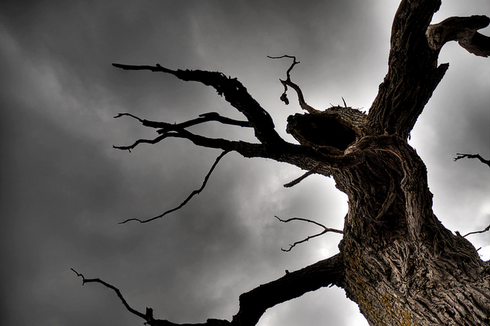
dead tree

Summer is dead, it’s golden sun-splashed days relegated to the realm of distant memory.

I’ve been writing a lot, focussing on Eagles and Dragons Book III – Warriors of Epona. The first draft of that book is finished and, like idyllic, warm summer hours, it will now be set aside for a while.

October has arrived and, as is usual, my thoughts have turned dark. What else can you expect from the month in which the trees shed shrivelled leaves, the month in which our ancestors believed the dead walk among us?

It should come as no surprise then that I am now drawn back into the Carpathian Interlude.

Part II of the series is called LYKOI (pronounced ‘LEE-kee’), and it will soon be ready for release. LYKOI promises to take the reader to a dark, horror-filled place that would fill any Roman legionary with fear.

In the ancient world, men of war could be especially superstitious. When major disasters or defeats would occur, many would seek explanations that our modern minds might see as supernatural.

Fear of foreign gods and darker powers beyond the realm of their knowledge was not uncommon. When you control the greatest army the world has ever seen, and you experience a crushing defeat, you naturally look for an explanation.

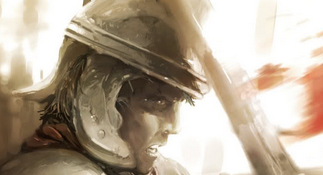
distraught legionary

It is precisely this fear and superstition that inspired me to write the Carpathian Interlude series which, from the larger perspective of the Empire, revolves around one particular event – the Varus Disaster. I’ll talk about that event next week.

Writing historical horror has allowed me to do something different with historical fantasy. It has allowed me to experiment a little, to explore different types of character trauma and beliefs. It’s a nice change of pace and an opportunity for me, as a writer, to dip into some darker themes.

In IMMORTUI, the first part of the Carpathian Interlude, Gaius Justus Vitalis and his men head into the Carpathian Mountains in search of their comrades who were on a patrol north of the Danube frontier. There they meet an enemy unlike any other they’ve ever met – Zombies.

In LYKOI, Gaius Justus Vitalis and his group of ‘broken’ warriors are ordered to investigate the massacre of thousands of Romans in Germania. But this time, it’s not the undead that Gaius and his men must face.

If you like Werewolves, this is a story you won’t want to miss.

So, when will LYKOI be released?

October 25th, 2014 is the official launch day for this book – something new to add to the Halloween reading list!

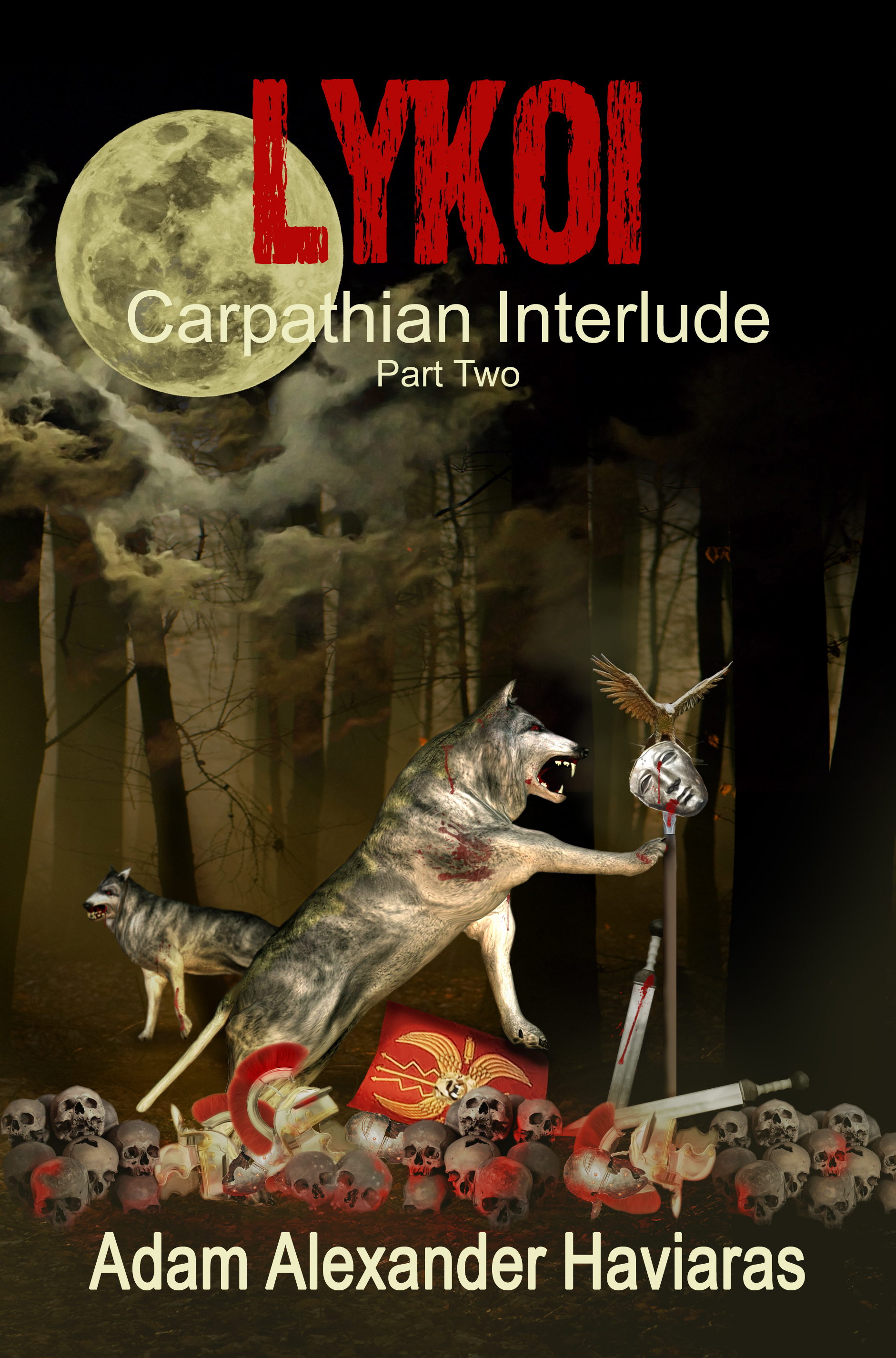
For now, I’m very pleased to unveil the cover for LYKOI – Carpathian Interlude Part II…

Lykoi Cover

Many thanks once again to Laura at LLPIX Photography for putting together a suitably-dark cover.

I hope you like it.

For my Newsletter subscribers, stay tuned for a separate e-mail soon with a special offer just for you. Thank you to all of you for your interest and support. You make the Eagles and Dragons Legion strong!

So, off we go on another journey into the past. Be sure to keep your faith and your gladius close, my friends. You’re going to need them.

Facebooktwitterpinterest