The World of The Hearts of Heroes – Part I – Cassius Dio: Chronicler of the Severans

Salvete, Readers and Romanophiles!

Welcome to this first post in our exciting new blog series The World of The Hearts of Heroes! In this seven-part series, we’re going to be taking a look at some of the history, people, and places that appear in, and provide the settings for, this seventh book in the award-winning, #1 bestselling, Eagles and Dragons historical fantasy series set in the Roman Empire.

If you’re a fan of the series, and don’t want any spoilers at all, then you may wish to hold off until you’ve read the book.

However, if you just want to get stuck into the history and research that went into this novel, read on! We hope you enjoy it!

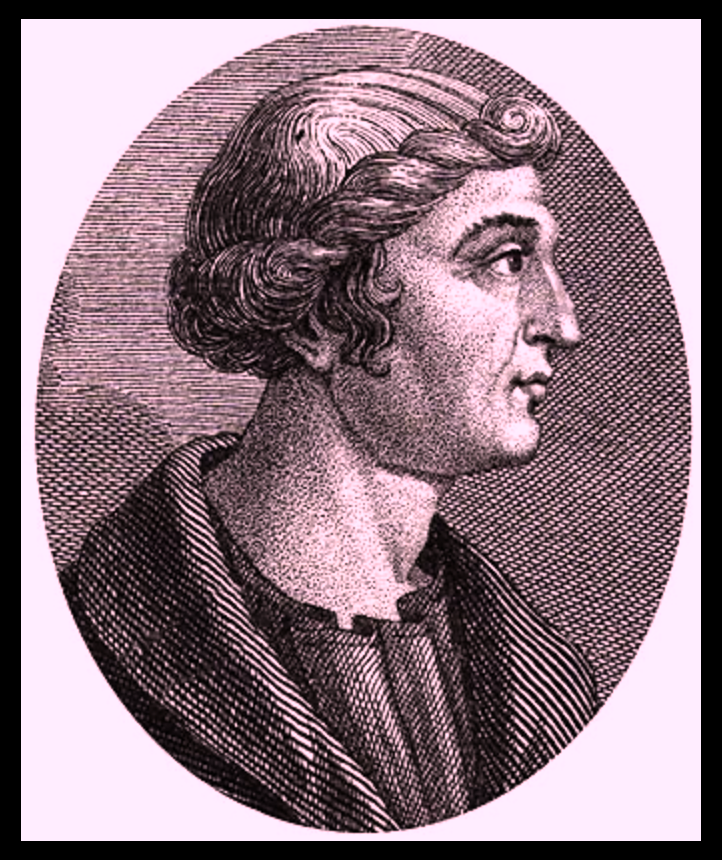
17th Century Illustration of Cassius Dio

It is my desire to write a history of all the memorable achievements of the Romans, as well in time of peace as in war, so that no one, whether Roman or non-Roman, shall look in vain for any of the essential facts.

Although I have read pretty nearly everything about them that has been written by anybody, I have not included it all in my history, but only what I have seen fit to select. I trust, moreover, that if I have used a fine style, so far as the subject matter permitted, no one will on this account question the truthfulness of the narrative, as has happened in the case of some writers; for I have endeavoured to be equally exact in both these respects, so far as possible. I will begin at the point where I have obtained the clearest accounts of what is reported to have taken place in this land which we inhabit.

This land in which the city of Rome has been built.

(Cassius Dio; Roman History, Book I)

The quote above is the opening of Cassius Dio’s Roman History, the main source, and only truly contemporary one of the period of the Severan dynasty of Ancient Rome, when the Eagles and Dragons series takes place.

But who was Cassius Dio? How did he gain such a personal perspective of the Severans? Is he a reliable source for the period? How does he fit into our epic Eagles and Dragons saga?

In this article, we will explore all of these questions to try and get at some idea of the man behind the history.

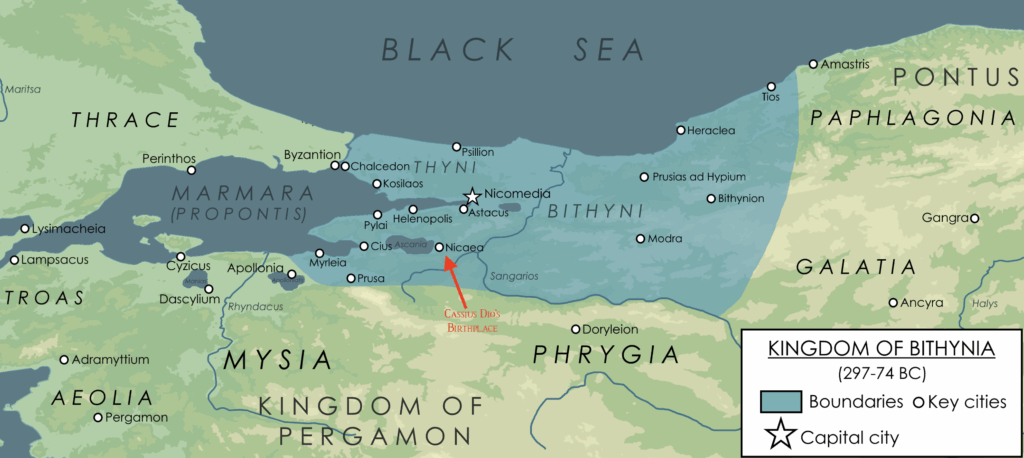
Cassius Dio Cocceianus was born at Nicaea in Bithynia c. A.D. 164 (maybe A.D. 155) to a Roman father and a Greek mother. He was the son of Cassius Apronianus, a Roman senator who was the Governor of Dalmatia and Cilicia under Emperor Marcus Aurelius. Dio was also the grandson of the famous Greek orator, writer, historian and philosopher, Dio Chrysostom (c. A.D. 40-115), after whom he was named.

Growing up the son of a prominent Roman senator, Dio was no stranger to Roman politics. He was with his father when he was Governor of Dalmatia.

After his father died, Dio then went to Rome in about A.D. 180 where he became a senator under Emperor Commodus at about the age of twenty-five. This was the start of a successful political career where he subsequently became a praetor under Pertinax in A.D. 193.

But Cassius Dio really came into his own during the reign of Emperor Septimius Severus (A.D. 193-211), a ruler whom Dio clearly admired. Under Severus, Dio was made Suffect Consul in A.D. 205, and then later became Consul for a second time under Emperor Alexander Severus, the last of the Severan emperors, in A.D. 229.

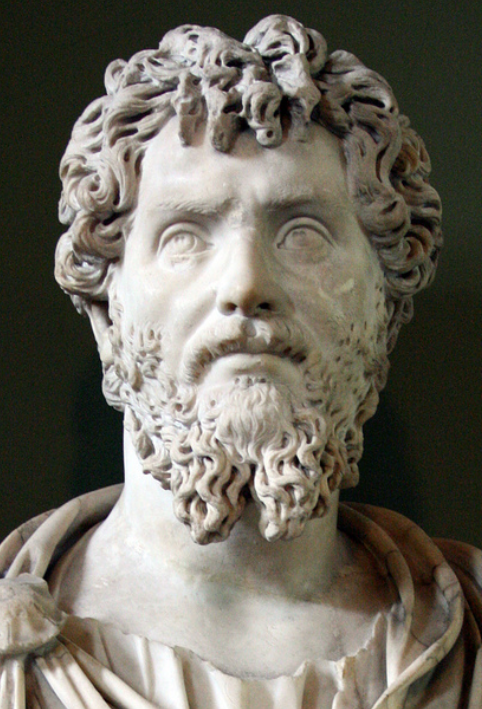
Emperor Septimius Severus

Cassius Dio’s Roman History is vital to our understanding of the events of the late 2nd and early 3rd centuries in Ancient Rome. Not only is his work the main contemporary source for the period, but as one who was close to the imperial court and a first-hand observer of the events that unfolded, from the reign of Commodus and throughout the Severan period, he offers a perspective that is entirely unique.

It is Dio’s first-hand account of the period, as well as his personal observations that, though sometimes in doubt, are unique and have proved invaluable in the creation of the Eagles and Dragons series.

Truthfully, Dio’s history has been crucial to my research throughout the entire series to date. Not only that, he is also a character in some books in the series, truly coming to the fore in The Hearts of Heroes.

Cassius Dio’s Roman History is not the only work which he produced. He also wrote a biography of Arrian, who was a fellow Bithynian, as well as an account of the reign of Emperor Hadrian. Another fascinating work which he wrote was a book about the dreams of Septimius Severus whom we know placed a great deal of stock in astrology and dreams. The Roman History, however, is Dio’s greatest work without which we would actually know very little about the Severans. Herodian, whom I have also used in research for the period, is our only other source, but as he was not as close to the people about whom he was writing, Dio is preferred.

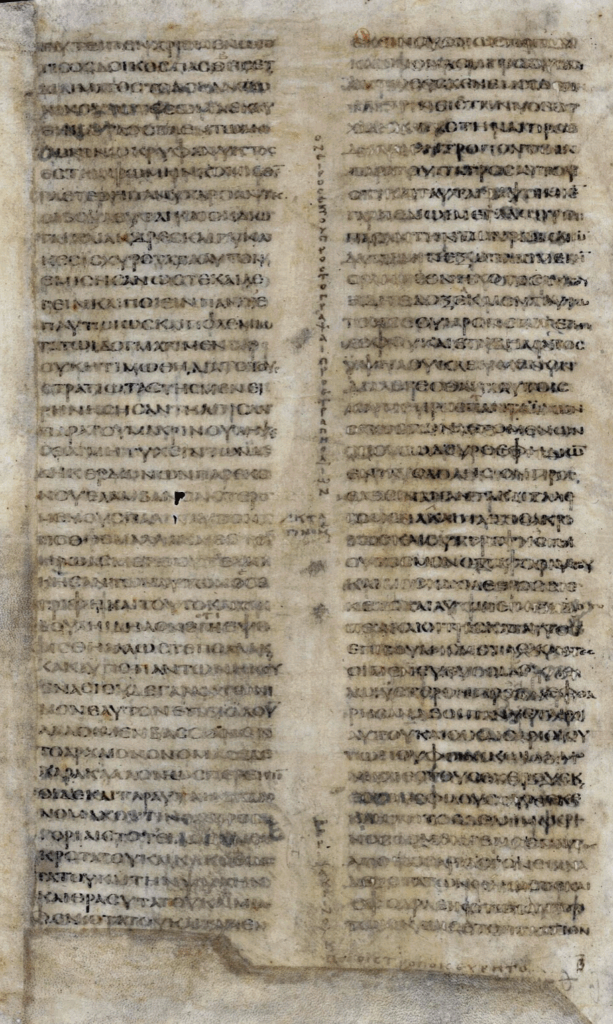
Excerpt of Cassius Dio’s Roman History from a 5th-century manuscript (Wikimedia Commons)

But what about Cassius Dio’s Roman History as a source? What did it cover?

The Roman History is made up of about eighty books which took Dio about twenty-two years to write. Most of the text survives, but other parts are in fragments. Thankfully, more complete text has come down to us by way of an eleventh century epitome (an abridgement or summary) by Xiphilinus, and the twelfth century Epitome of Historical Works by Zonoras, a private secretary of Emperor Alexis I.

In his work, Dio attempts to cover the history of Rome from the landing of Aeneas to his second consulship in A.D. 229, when The Hearts of Heroes takes place. Cassius Dio wrote in Greek, in the Atticist tradition of ancient historians such as Thucydides.

The Roman History, which covers roughly a thousand years, can be divided into three sections: 1) the Republic, 2) the establishment of the Principate (monarchy) until the death of Marcus Aurelius, and 3) the period of Dio’s own life from the ascent of Commodus.

For the periods before his own, it is believed that Dio may have relied heavily upon the works of Livy, but also other historians of Rome such as Pliny the Elder, Tacitus, Caesar’s own commentaries and others. He may also have done more research by delving into the records of Rome, as is evidenced by his naming of minor magistrates.

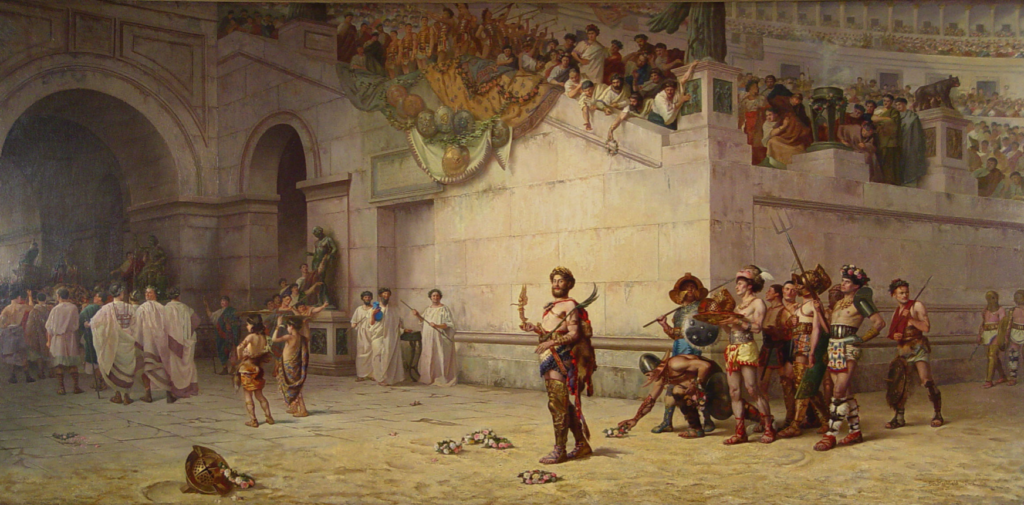
The Emperor Commodus Leaving the Arena at the Head of the Gladiators (by Edwin Howland Blashfield)

For the period covering his own life, there is a sense from Dio of a falling from greatness during Commodus’ reign, leading to hope at the arrival of Septimius Severus. After Severus, there is certainly a returned sense of decline, and this period, from the reign of Caracalla on, could be considered the true beginning of the end of the Roman Empire.

The details of Dio’s own life can be gleaned from casual statements in his history and, when it comes to the period of Rome’s history in which he lived, his observations are based personal experience and not hearsay. He knew most of the people about whom he was writing, and that is what makes his work such a valuable source from the reign of Commodus, when he became a senator, right through to the last Severan, Alexander Severus, under whom he held his second consulship.

This man [Commodus] was not naturally wicked, but, on the contrary, as guileless as any man that ever lived. His great simplicity, however, together with his cowardice, made him the slave of his companions, and it was through them that he at first, out of ignorance, missed the better life and then was led on into lustful and cruel habits, which soon became second nature. And this, I think, Marcus clearly perceived beforehand. Commodus was nineteen years old when his father died, leaving him many guardians, among whom were numbered the best men of the senate. But their suggestions and counsels Commodus rejected, and after making a truce with the barbarians he rushed to Rome; for he hated all exertion and craved the comfortable life of the city.

(Cassius Dio; Roman History, Book LXXIII)

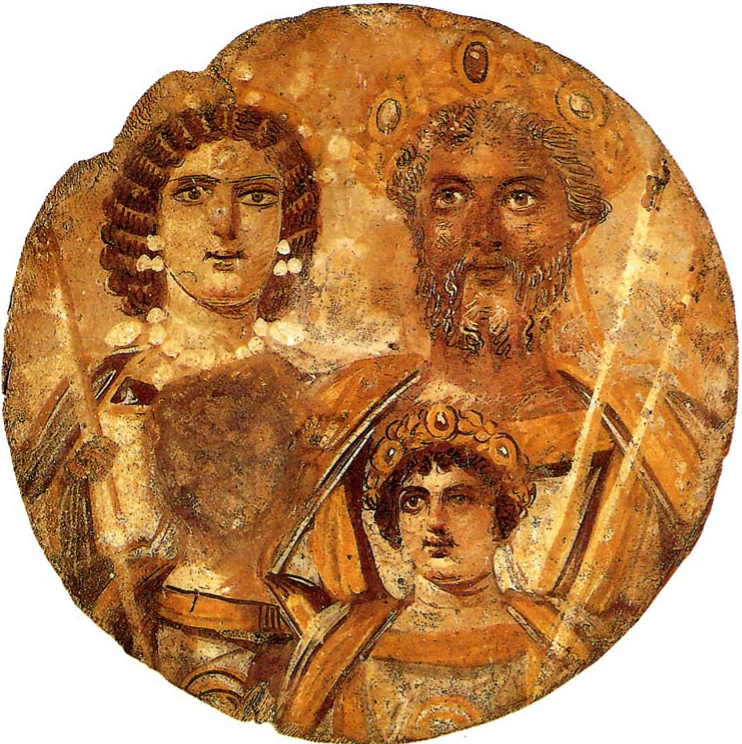
Portrait of the Severan family with Geta’s face erased.

Cassius Dio began writing his history during the reign of Septimius Severus. The fact that he wrote a book about the dreams and omens of Severus makes scholars think he had a great deal of personal interaction with the Emperor. After receiving praise from the Emperor and the public, he undertook the larger Roman History.

With Septimius Severus’ accession to the imperial throne, Cassius Dio’s tone in the history appears hopeful, almost as if he was seeing a new, golden era for Rome. It was clear that Dio admired Severus…

The following is the manner of life that Severus followed in time of peace. He was sure to be doing something before dawn, and afterwards he would take a walk, telling and hearing of the interests of the empire. Then he would hold court, unless there were some great festival. Moreover, he used to do this most excellently; for he allowed the litigants plenty of time and he gave us, his advisers, full liberty to speak. He used to hear cases until noon; then he would ride, so far as his strength permitted, and afterward take some kind of gymnastic exercise and a bath. He then ate a plenti­ful luncheon, either by himself or with his sons. Next, he generally took a nap. Then he rose, attended to his remaining duties, and afterwards, when walking about, engaged in discussion in both Greek and Latin. Then, toward evening, he would bathe again and dine with his associates; for he very rarely invited any guest to dinner, and only on days when it was quite unavoidable did he arrange expensive banquets. He lived sixty-five years, nine months, and twenty-five days, for he was born on the eleventh of April. Of this period he had ruled for seventeen years, eight months, and three days. In fine, he showed himself so active that even when expiring he gasped: “Come, give it here, if we have anything to do.”

(Cassius Dio; Roman History, Book LXXVII)

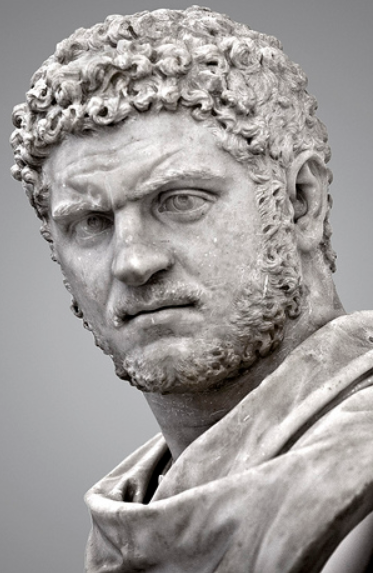
Emperor Caracalla

When one considers the rulers whom Cassius Dio lived and worked under – Commodus, Severus, Caracalla, Macrinus, Elagabalus, and Alexander Severus – you would not be wrong to assume he was quite politically astute, and that he was a survivor. Despite the golden and hopeful period of Severus’ reign, it was a time of terror for many. Here, Dio describes the fear they felt at Commodus’ reign, when the Emperor made them watch him as a gladiator:

This fear was shared by all, by us senators as well as by the rest. And here is another thing that he did to us senators which gave us every reason to look for our death. Having killed an ostrich and cut off his head, he came up to where we were sitting, holding the head in his left hand and in his right hand raising aloft his bloody sword; and though he spoke not a word, yet he wagged his head with a grin, indicating that he would treat us in the same way. And many would indeed have perished by the sword on the spot, for laughing at him (for it was laughter rather than indignation that overcame us), if I had not chewed some laurel leaves, which I got from my garland, myself, and persuaded the others who were sitting near me to do the same, so that in the steady movement of our armies we might conceal the fact that we were laughing.

(Cassius Dio; Roman History, Book LXXIII)

Later, after the murder of Caracalla by Macrinus and the Praetorians, Dio carried on surviving and was made curator ad corrigendum statum civitatum of Pergamun and Smyrna by Macrinus, a role which he carried on in under the insane Elagabalus. When Alexander Severus came to the throne, Dio was made Proconsul of Africa and then Governor of Dalmatia and Upper Pannonia.

Unfortunately, the final book of Dio’s Roman History is fragmented. Little is said of the reign of the young Alexander Severus (he was just fourteen when his grandmother, Julia Maesa, and his mother, Julia Mamaea, put him on the throne). What we know comes from the sixth book of Herodian’s History of the Roman Empire from the death of Marcus Aurelius in A.D. 180 to A.D. 238. At the end of his Roman History, Dio appears rushed, even stating that:

Thus far I have described events with as great accuracy as I could in every case, but for subsequent events I have not found it possible to give an accurate account, for the reason that I did not spend much time in Rome. For, after going from Asia into Bithynia, I fell sick, and from there I hastened to my province of Africa; then, on returning to Italy I was almost immediately sent as governor first to Dalmatia and then to Upper Pannonia, and though after that I returned to Rome and to Campania, I at once set out for home. For these reasons, then, I have not been able to compile the same kind of account of subsequent events as of the earlier ones.

(Cassius Dio; Roman History, Book LXXX)

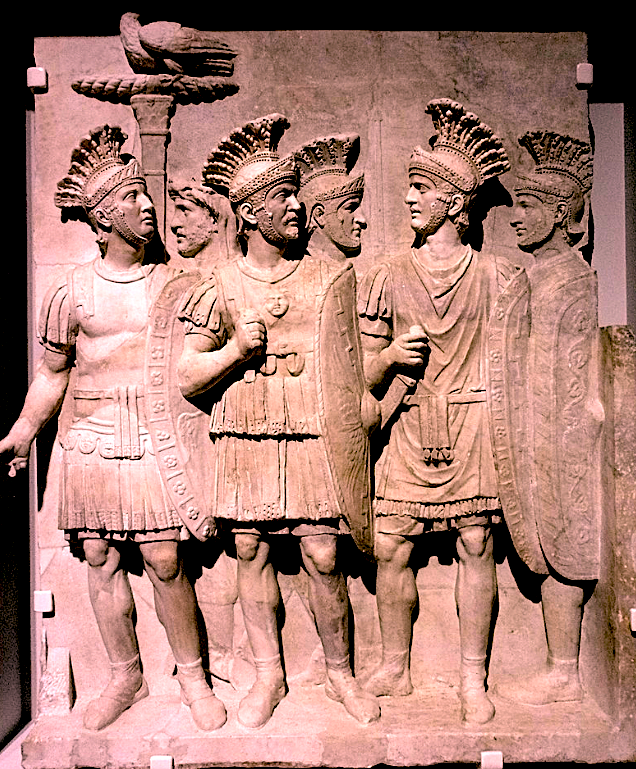
The Praetorian Guard

Though Dio had survived a few emperors whom many would consider to be unstable, or even insane, it appears that the greatest threat he faced was from the dreaded Praetorian Guard. Apparently, after he took disciplinary measures in Pannonia in his role as governor, he became unpopular with the Praetorians, such that he feared for his life.

Emperor Alexander Severus, who seems to have liked Dio, attempted to keep Dio safe by allowing him to live and work away from Rome in Campania.

…I ruled the soldiers in Pannonia with a strong hand; and they demanded my surrender, through fear that someone might compel them to submit to a régime similar to that of the Pannonian troops.

Alexander, however, paid no heed to them, but, on the contrary, honoured me in various ways, especially by appointing me to be consul for the second time, as his colleague, and taking upon himself personally the responsibility of meeting the expenditures of my office. But as the malcontents evinced displeasure at this, he became afraid that they might kill me if they saw me in the insignia of my office, and so he bade me spend the period of my consul­ship in Italy, somewhere outside of Rome. And thus later I came both to Rome and to Campania to visit him, and spent a few days in his company, during which the soldiers saw me without offering to do me any harm;

(Cassius Dio; Roman History, Book LXXX)

Thankfully, Herodian fills in the gaps of Alexander Severus’ reign for us while Dio was distracted with duty, illness, and fear for his life at the hands of the Praetorians.

One can imagine that Dio would have continued to serve Alexander Severus long and faithfully but, as it was, for his safety and because of his illness and aching body, Cassius Dio was permitted to retire to Nicaea, in his native Bithynia, where he is supposed to have died shortly thereafter over the age of seventy.

having asked to be excused because of the ailment of my feet, I set out for home, with the intention of spending all the rest of my life in my native land, as, indeed, the Heavenly Power revealed to me most clearly when I was already in Bithynia. For once in a dream I thought I was commanded by it to write at the close of my work these verses:

“Hector anon did Zeus lead forth out of range of the missiles, 

Out of the dust and the slaying of men and the blood and the uproar.”

(Cassius Dio; Roman History, Book LXXX)

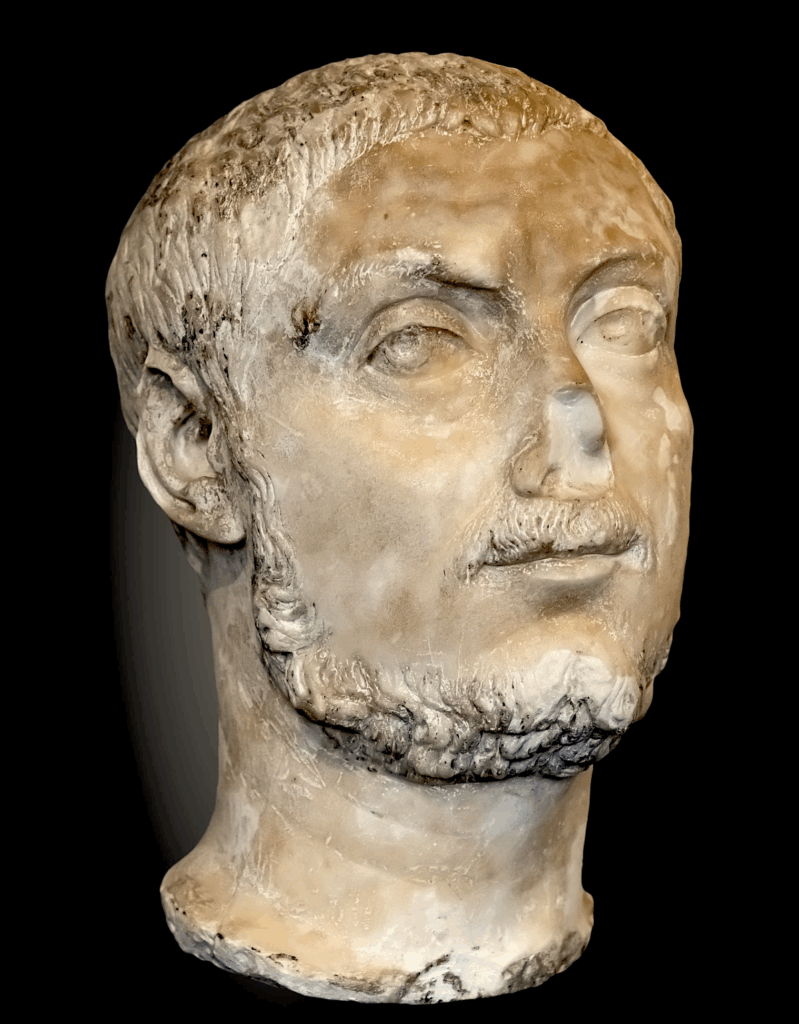
Bust of Alexander Severus, the last Severan Emperor (Wikimedia Commons)

And so ended the Roman History, and the life of Cassius Dio.

Despite the importance of Dio’s Roman History for our knowledge of the Severan period, he has not been without criticism by modern historians. Some point out his use of adornment and personal anecdotes as a flaw when relaying significant events. Though not as salacious as Herodian, he does opt for more dramatic presentation at times. Dio has also been criticized for clouding things with his personal impressions. Sometimes names and exact dates are left out, and some speeches are believed to express Dio’s own views rather than actual events. An example of this is when Agrippa and Maecenas make speeches to Octavian when discussing the establishment of a monarchy in Book LII.

However, apart from his being the main source for the Severan period, Cassius Dio has much to commend him and his history. He pays a great deal of attention to constitutional and administrative matters, showing that he did his due diligence by consulting public records. He used a variety of sources in an attempt to arrive at the truth.

Cassius Dio, though half Greek, writes from a purely Roman viewpoint. And, interestingly, though he was a senator, he appeared to be a true believer in monarchy.

Personally, I have greatly enjoyed reading Dio’s work over the years, as well as including him in the Eagles and Dragons saga. This story would have been very different without his insights, and the personal anecdotes which some historians criticize him for, I actually find to be a boon. The personal, though not always unbiased, touch which Dio brings to the Roman History gives us a personal peek into the private lives of the Severans in a way that other histories do not.

For me, Cassius Dio has been a knowledgeable, accessible, and entertaining travel companion through the Severan age.

Thank you for reading.

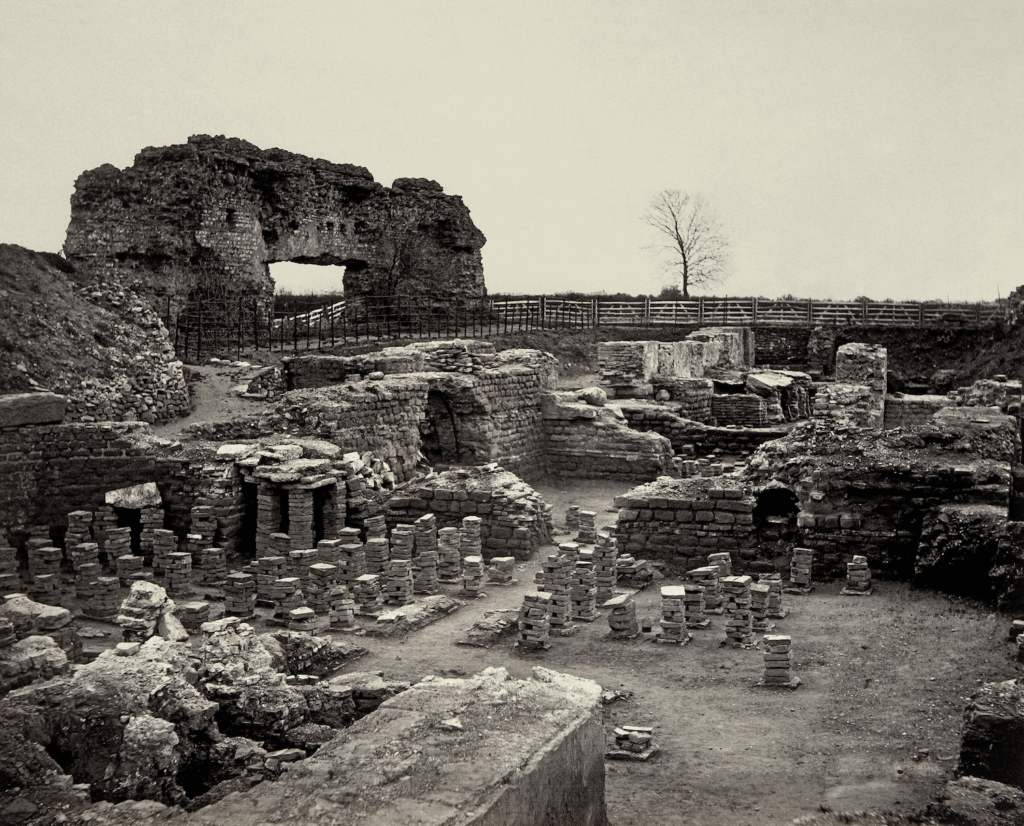
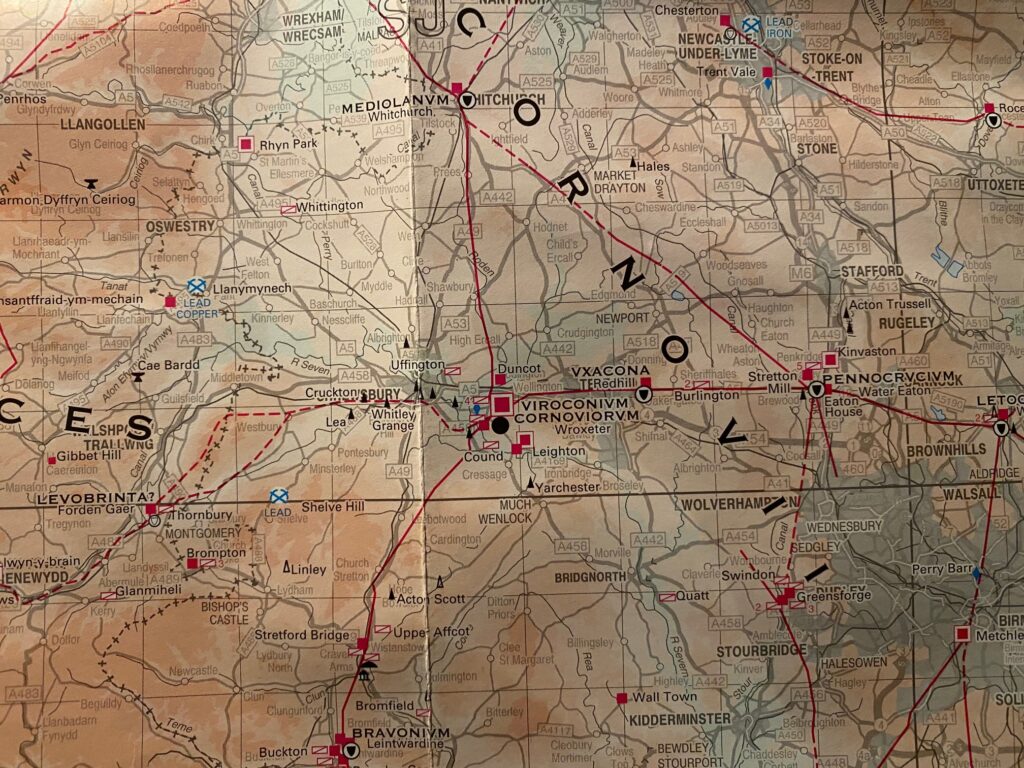
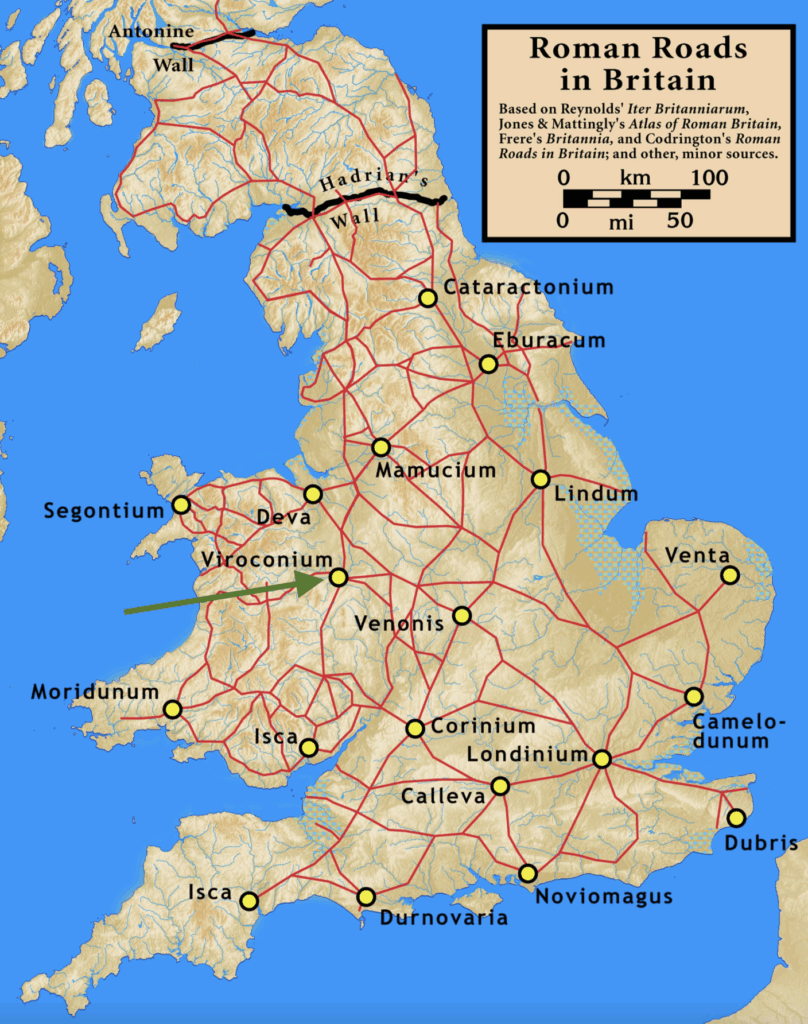
We hope you’ve enjoyed this first post in The World of The Hearts of Heroes blog series. Stayed tuned for Part II in which we will look at the Roman-British civitas of Viroconium Cornoviorum.

If you are interested in reading the full, surviving text of Cassius Dio’s Roman History, you can do so for free by CLICKING HERE.

To read the text of Herodian, the other source for the period, click HERE.

The Hearts of Heroes: A Novel of the Roman Empire is available ebook, paperback and deluxe hardcover editions from all major online retailers, independent bookstores, brick and mortar chains, and your local public library.

CLICK HERE to buy a copy and get ISBN#s for the edition of your choice.

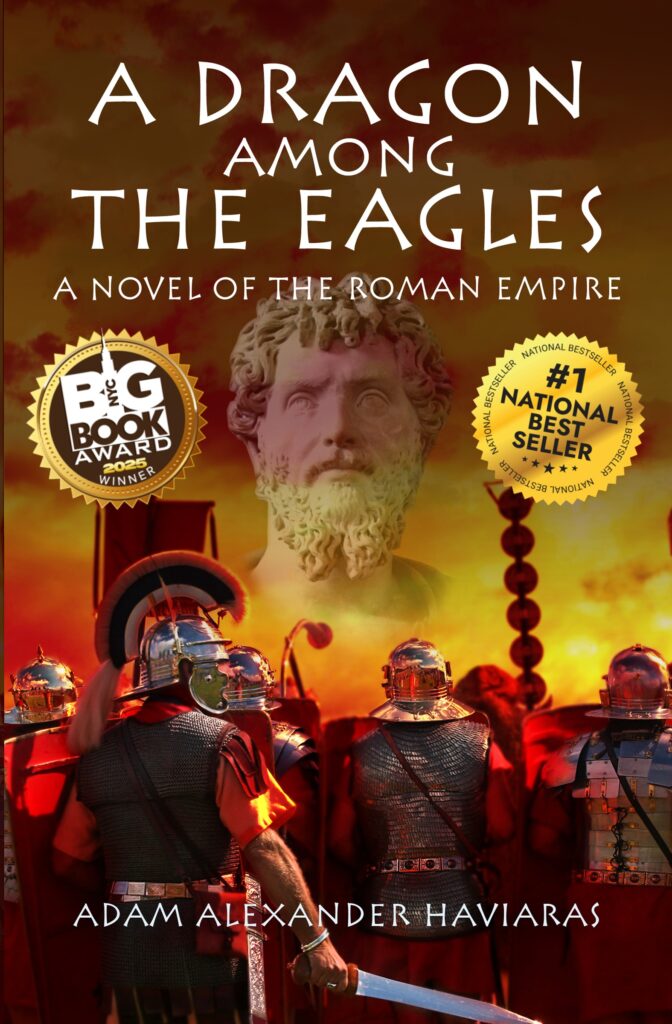
If you are new to the Eagles and Dragons historical fantasy series, you can start your epic adventure with the award-winning, #1 bestselling prequel, A Dragon among the Eagles.
Facebooktwitterpinterest

Lest We Forget…

Today is November 11th – Remembrance Day and Veterans Day

This is a sacred day.

A heartfelt Thank You to the men and women in uniform, past and present, who risked and are risking their lives to keep us safe at home and abroad, and protect us from threats both foreign and domestic.

Thank you for your courage, dedication, and service.

Lest We Forget.

Facebooktwitterpinterest

New Release! – Eagles and Dragons – Book VII

Greetings Readers and History-Lovers!

Today, Eagles and Dragons Publishing is pleased to announce the launch of the newest title in our marquee, award-winning and bestselling Eagles and Dragons historical fantasy series set in the Roman Empire!

The Hearts of Heroes: A Novel of the Roman Empire takes place roughly ten years after the end of The Blood Road (Book VI).

Fans of the series have been waiting a long time for this book and so, without further ado, we present to you The Hearts of Heroes

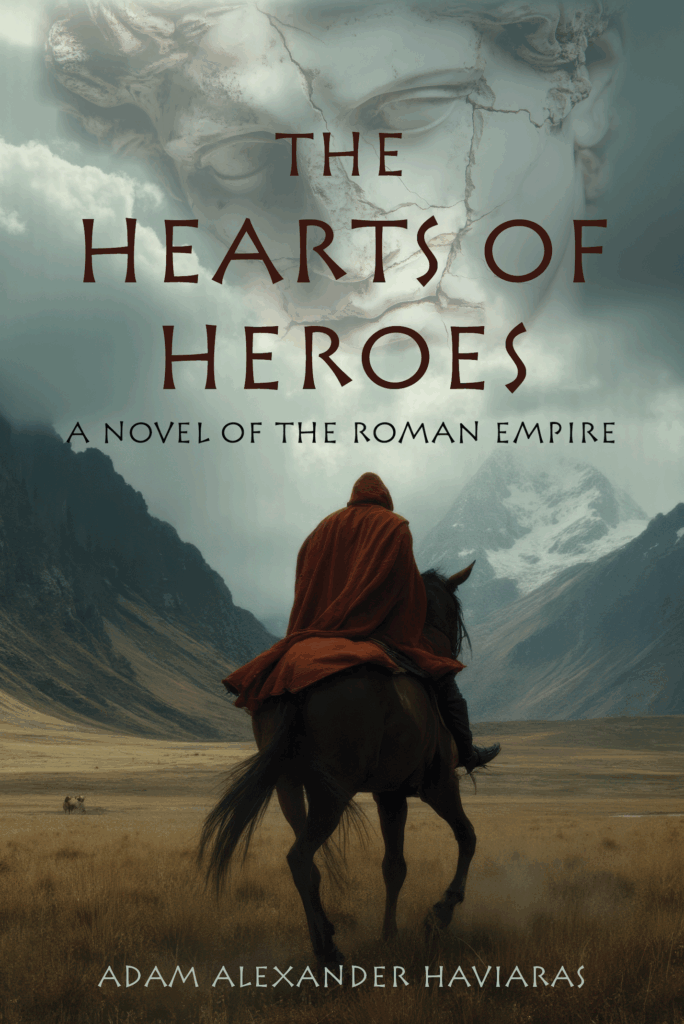
The Hearts of Heroes: A Novel of the Roman Empire

At the peak of Rome’s might a dragon is born among eagles, an heir to a line both blessed and cursed by the Gods for ages. 

In the year A.D. 228, the Roman Empire, newly emerged from the trauma of a mad emperor’s reign, faces new threats from within and without.

In the distant province of Britannia, the family and friends of Lucius Pen Dragon have remained in hiding for over ten years, safe from the henchmen of Rome. But they have been struggling to come to terms with Lucius’ death. While most have accepted the loss, his wife and children yet cling to his memory. Grief has torn their family apart.

Having quit the sanctuary of Ynis Wytrin some years before, Adara Pen Dragon has not been heard from or seen by anyone. When her son, Phoebus, sets out in search of his mother, his sister, Calliope, fears that she has lost the remainder of her family.

Though it is widely known that Lucius is dead, Rome remembers the Dragon, his family, and his Sarmatian warriors. Augusta Julia Mamaea, paranoid and worried for the safety of her son, Emperor Alexander Severus, maintains that Lucius Pen Dragon lives. She decides to seek him out and recruit him to protect her imperial son. To that end, she sends a force of Praetorians to Britannia to search for the Dragon, his family, and his men to make them an offer they cannot possibly refuse. Once again they are hunted by Rome.

Can Lucius’ family and friends overcome their grief and find the strength to fight Rome one more time? Or will Rome finally succeed in wiping out the Dragon’s line once and for all?

Ultimately, survival rests on their faith, forgiveness, love, and the hidden strength found in the hearts of heroes…

We hope that fans of the Eagles and Dragons series will enjoy this newest instalment!

The Hearts of Heroes is available now in e-book, paperback, and deluxe hardcover editions from all major online retailers, brick and mortar chains, independent bookshops, public libraries, and direct from Eagles and Dragons Publishing.

To learn more and get ISBN# information for the edition of your choice CLICK HERE.

If you have not read any books in the Eagles and Dragons series, be sure to start with the prequel novel, A Dragon among the Eagles, which was recently named the WINNER of the 2025 NYC Big Book Award competition in the category of ‘Historical Fiction’.

We would like to thank all of the extremely loyal fans of the Eagles and Dragons series who have waited so patiently for this latest book.

We hope you enjoy the adventure!

Facebooktwitterpinterest

NEW VIDEO TOUR! – The Sanctuary of Asklepios: A Meditative Walk Through the Archaeological Site at Ancient Epidaurus

Greetings History-Lovers!

Today, Eagles and Dragons Publishing is pleased to announce the release of a new video tour on our YouTube and Rumble channels.

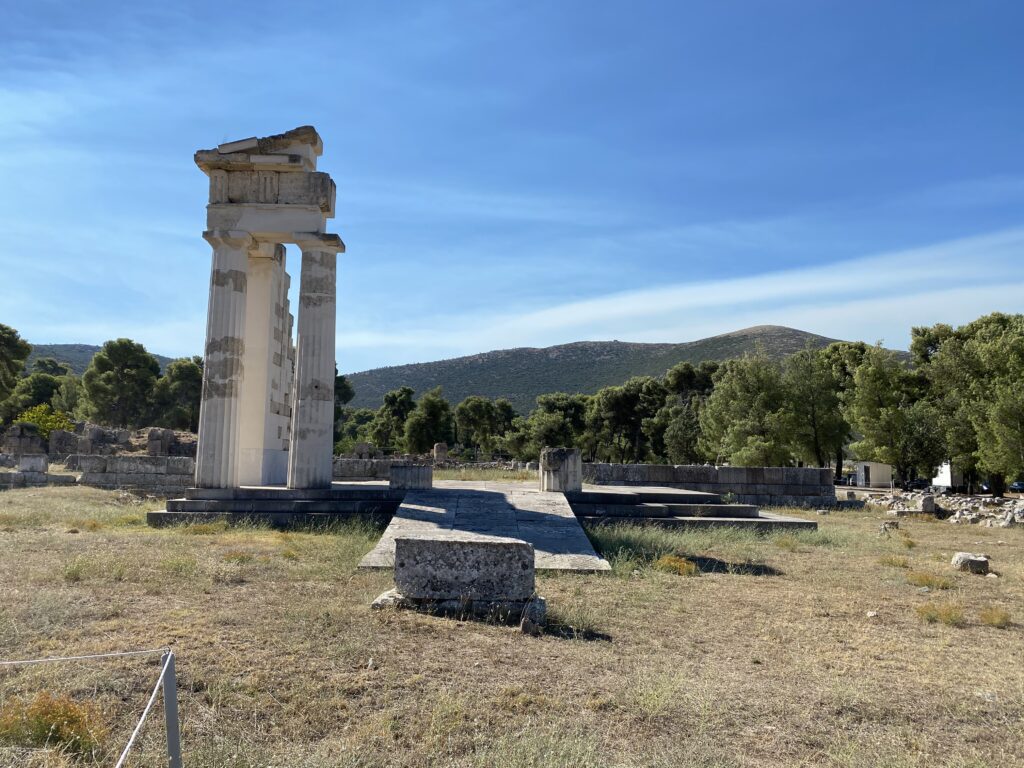
The Sanctuary of Asklepios lies on the Argolid plain, with Mt. Arachnaio and Mr. Titthion to the north. The former was said to have been a home of Zeus and Hera, and the latter, whose gentle slopes lead down to the plain, was said to have been where Asklepios was born.

To the south of the sanctuary is Mt. Kynortion, where there was a shrine to Apollo, Asklepios’ father. Farther to the south are the wooded slopes of Mt. Koryphaia, where the goddess Artemis is said to have wandered. 

This is a land of myth and legend, a world of peace and healing, green and mild, dotted with springs. The sanctuary was actually called ‘the Sacred Grove’.

Asklepios, as a god of healing, was worshiped at Epidaurus from the 5th century B.C. to the 4th century A.D. According to archaeologists, it was the sick who turned to Asklepios, people who had lost all hope of recovery – the blind, the lame, the paralyzed, the dumb, the wounded, the sterile – all of them wanting a miracle.

We hope you enjoy this calming, meditative journey through the ruins of the Sanctuary of Asklepios at Ancient Epidaurus!

After the video, be sure to check out our popular articles on Ancient Epidaurus at the links below:

The Ancient Theatre of Epidaurus

Epidaurus: Place of Dreams and Healing

Also…

Don’t forget to check out our video tour of the Ancient Theatre of Epidaurus.

Lastly…

If you are planning on visiting Ancient Epidaurus, you can get amazing, discounted deals on tours and tickets with our travel partners at Viator by CLICKING HERE.

*If you love Greek Mythology and Ancient History, then be sure to check out the Eagles and Dragons Publishing AGORA on Etsy at the link below for a wide range of history-related books, gifts, clothing, housewares and more. CLICK HERE to shop now.

More video tours are coming soon, so be sure to SUBSCRIBE on YouTube or Rumble so you don’t miss any.

Thank you for watching!

Facebooktwitterpinterest

News Release – Victory for Eagles and Dragons!

FOR IMMEDIATE RELEASE

Adam Alexander Haviaras receives national recognition through the NYC BIG BOOK AWARD®!

Stratford, Ontario — The NYC Big Book Award recognized A Dragon among the Eagles: A Novel of the Roman Empire as the WINNER in the category of ‘Historical Fiction’.

The competition is judged by experts from different aspects of the book industry, including publishers, writers, editors, designers, booksellers, librarians and professional copywriters. Winners and distinguished favourites are based on overall excellence.

A Dragon among the Eagles: A Novel of the Roman Empire

At the peak of Rome’s might a dragon is born among eagles, an heir to a line both blessed and cursed by the Gods for ages.

In A.D. 197, Emperor Septimius Severus led one of the largest invasion forces in Rome’s history against the Parthian Empire.

Among the men of thirty-three legions is Lucius Metellus Anguis, a young man from an ancient Equestrian family. Against the wishes of his conservative father, Lucius is determined to pursue a career in the military and resurrect the glory of his family name on the battlefield rather than the marble of the Senate.

However, as in all conflicts, Lucius’ ideals and his faith are challenged as he witnesses the worst in humanity.

As the imperial legions fight their way through Mesopotamia to the Parthian capital of Ctesiphon, Lucius discovers the inner strength that may well ensure that this young dragon rises from the ranks of Rome’s eagles.
Can a man survive the trials of war unscathed? Do the Gods indeed favour the bold?

March to war with Rome’s legions and find out!

NYC Big Book Award received book submissions worldwide. Journalists, well established authors, small and large press, and first time indie authors participated in record numbers.  Entries this year were received from the United States as well as countries such as Australia, Canada, China, Dubai, France, Germany, Italy, Portugal, Scotland, Singapore, Sweden, Switzerland, and the United Kingdom. Cities represented among the entries were Chicago, Hamburg, Los Angeles, Melbourne, New York, Quebec, Rome, San Francisco, Seattle, Singapore, Stratford, and Victoria.

Publishers included Berrett-Koehler; Brown Books Kids; Central Avenue / Simon & Schuster; Eagles and Dragons Publishing; Forbes Books; Muse Literary; New Harbinger Publications; New York University Press; Oxford University Press; Pegasus Books; She Writes Press; University of Massachusetts Press to name a few.

“With so many quality publishers and authors from around the world participating this year, I’m eager to share these books with a global readership,” said awards sponsor Gabby Olczak.

To view the list of NYC Big Book winners and distinguished favourites, please visit: https://www.nycbigbookaward.com/

Congratulations to all the 2025 award winners and distinguished favourites!

###

END

To learn more about this book, purchase a copy, and watch the epic series trailer, CLICK HERE. 

*Available in hardcover, paperback, and e-book editions.

Facebooktwitterpinterest

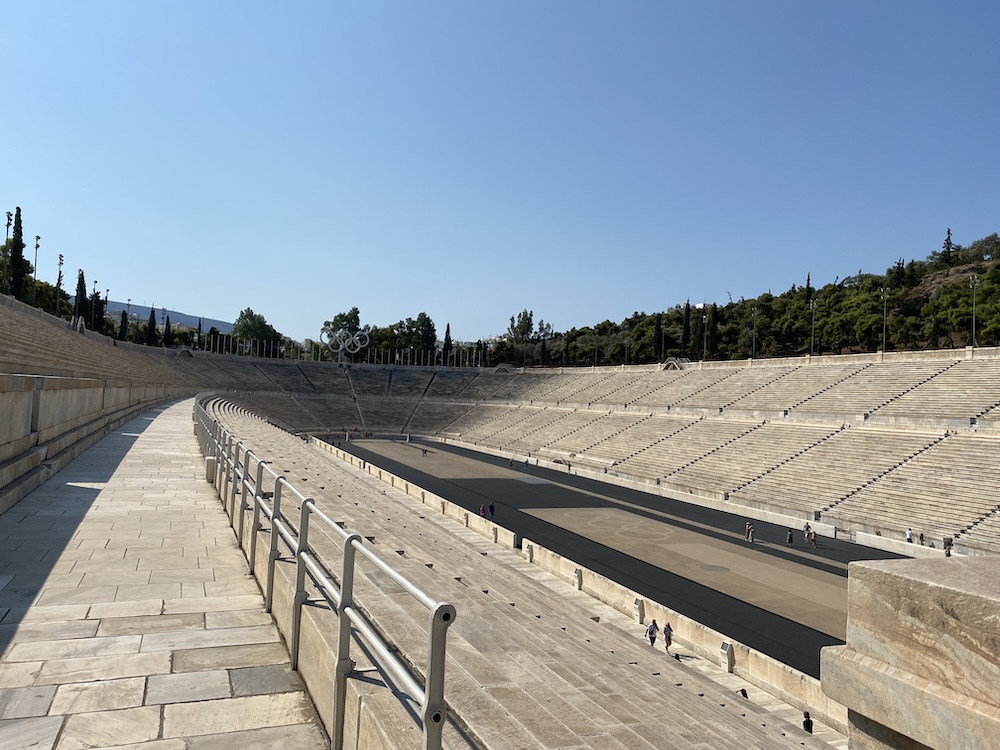
The Panathenaic Stadium – A Tour of the Ancient Monument

Greetings Readers and History-Lovers!

When it comes to the world of Ancient Greece, the subjects we find most interesting are religious festivals and sacred athletic competitions such as the Olympic Games. These events, in a way, portray the ancient world in microcosm. ‘War minus the shooting’, as George Orwell famously said of ancient sport.

When it came to ancient Athens, the greatest event on the Attic calendar was, no doubt, the Panathenaic Festival in honour of the city’s patron goddess, Athena. To read all about the Panathenaic Festival, CLICK HERE.

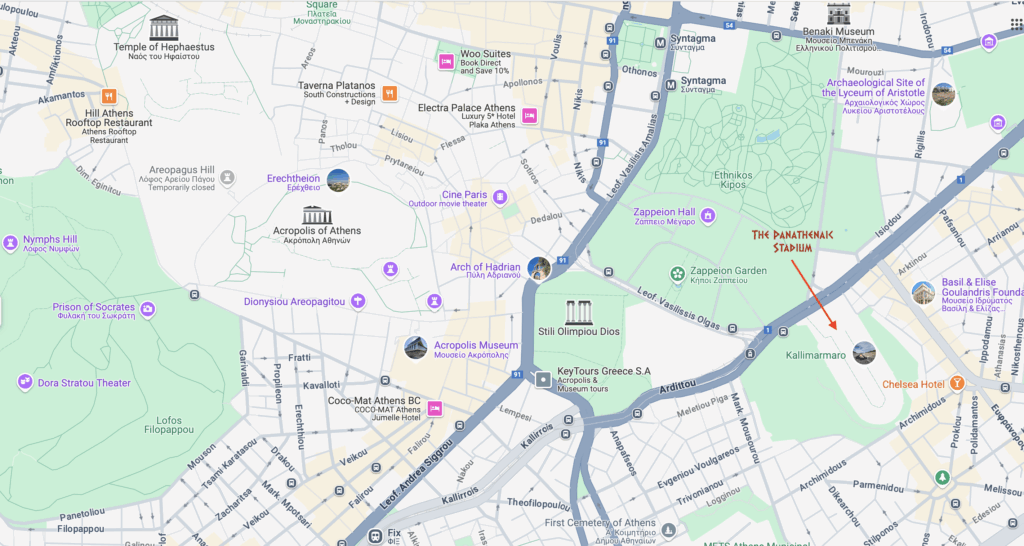
The celebrations that took place during the Great Panathenaea of Athens took place all over the city at different venues, and the venue where the athletic competitions took place was the Panathenaic Stadium, or ‘Kallimarmaro’ as it is also known, ‘Nice Marble’.

In this article, we’re going to take a brief look at the history of the stadium and, at the end, take a full video walking tour of the site.

This magnificent stadium in the heart of Athens, on the edge of the modern neighbourhood of Pangrati, is located in what was a small valley between the sacred hills of Agras and Ardittos where there were also temples to the Goddess Tyche, and to Artemis Agrotera.

Originally, this was the site of a horse racing course from the 6th century B.C., but during the archonship of Lykourgos in the 4th century B.C. a new stadium was constructed as part of a string of public works projects carried out at that time.

The new stadium, which had earthen embankments where spectators sat to watch the games, was used for the first time during the celebration of the Greater Panathenaea of 330/329 B.C.

Panathenaic amphora depicting a synoris, or two-horse chariot

A few hundred years later, during the reign of the Roman Emperor Hadrian (A.D. 117-138), who was a great philhellene, the orator and philanthropist, Herodes Atticus, sponsored the renovation and redesign of the stadium. It was at that time that the stadium was completely rebuilt in white, Pentelic marble from the quarries outside the city.

A vaulted passage through which athletes entered the stadium was also built at this time, and the entire stadium was adorned with statuary.

This renovated, permanent Panathenaic Stadium could seat well over 50,000 spectators. It was unrivalled in the ancient world.

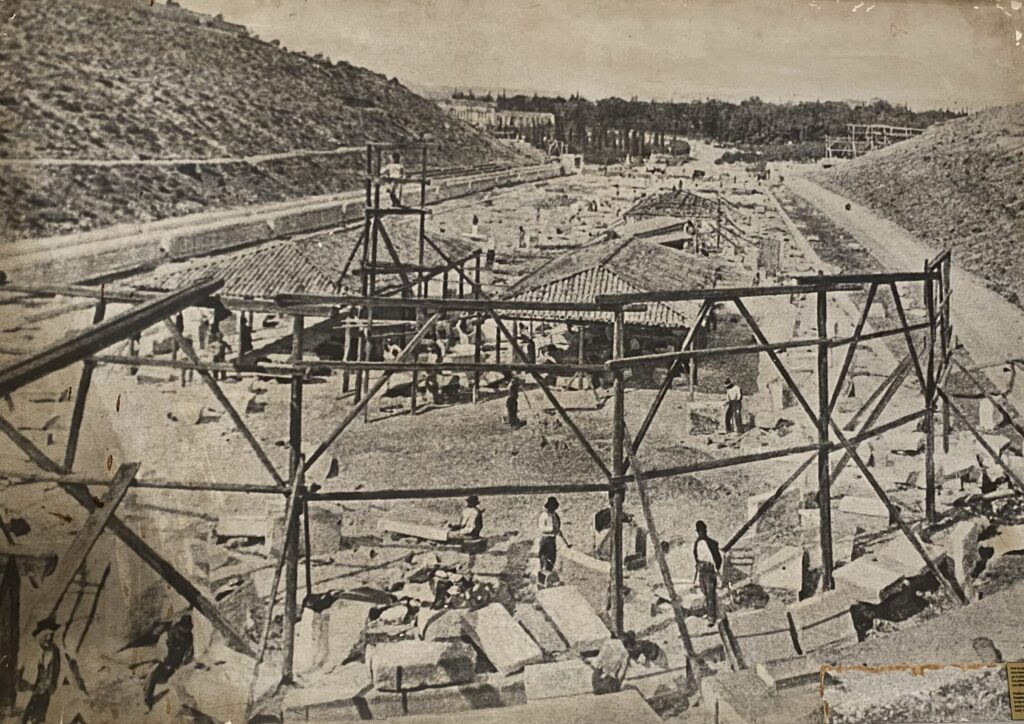
Reconstruction work on the ancient stadium in 1895

Sadly, when the Christian Roman emperors banned all pagan festivals, including the Panathenaea, the stadium fell into a state of disrepair that worsened during the Ottoman occupation of Greece from 1456 to 1821.

Thankfully, in the 1870s, a movement began to revive the idea of the Olympic Games and events were organized in the ruins of the Panathenaic Stadium. In 1896, two years after Pierre de Coubertin’s International Olympic Conference in Paris, the first modern Olympic Games were held in the newly reconstructed Panathenaic Stadium in Athens.

The Olympic Games were back, and new life was pumped into the long-dormant stadium.

First day of the modern Olympic Games held in 1896 in Athens at the Panathenaic Stadium

Since then, the Panathenaic Stadium has hosted numerous musical and athletic events and served as a venue for the marathon (the finish line) and archery events in the highly successful 2004 Athens Olympic Games.

Today, this magnificent stadium is one of the most recognizable and beloved monuments of Ancient Greece and the city of Athens.

In the summer of 2024, on a scorching day in July when the temperatures soared to 45 degrees Celsius, we took our cameras back to the Panathenaic Stadium one morning to film a walking tour of the site.

We’re thrilled to be able to present this video to you here.

We hope that you enjoy walking around the Panathenaic Stadium with us.

Thank you for reading, and thank you for watching.

The Great Panathenaea of Athens is the central event in An Altar of Indignities, Book II in our multi award-winning series, The Etrurian Players.

For more information about archaeological sites, ancient history, and Greek Mythology, be sure to visit the Article Archive.

If you are interested in visiting Athens, Greece, and are looking for discounts on airfare, accommodation, and personal tours of the archaeological sites, be sure to visit our Ancient World Travel page at the link below to take advantage of the deals we have curated for our followers:

https://eaglesanddragonspublishing.com/ancient-world-travel/

To get discounted tickets (just for our subscribers!) to archaeological sites like the Panathenaic Stadium, museums and other amazing tours and experiences in Athens, click the links below:

Tiquets: https://tiqets.tpx.lt/XRbEqVpu

Viator: https://viator.tpx.lt/jem8HgE4 

Lastly, if you are a fan of Ancient Greece, Greek Mythology, or the history of the Roman Empire, be sure to check out Eagles and Dragons Publishing’s range of unique clothing, art, housewares and more in the AGORA on Amazon. CLICK HERE to shop now.

Facebooktwitterpinterest

Hadrian’s Library – A Tour of the Archaeological Site in Athens

Greetings Readers and History-Lovers!

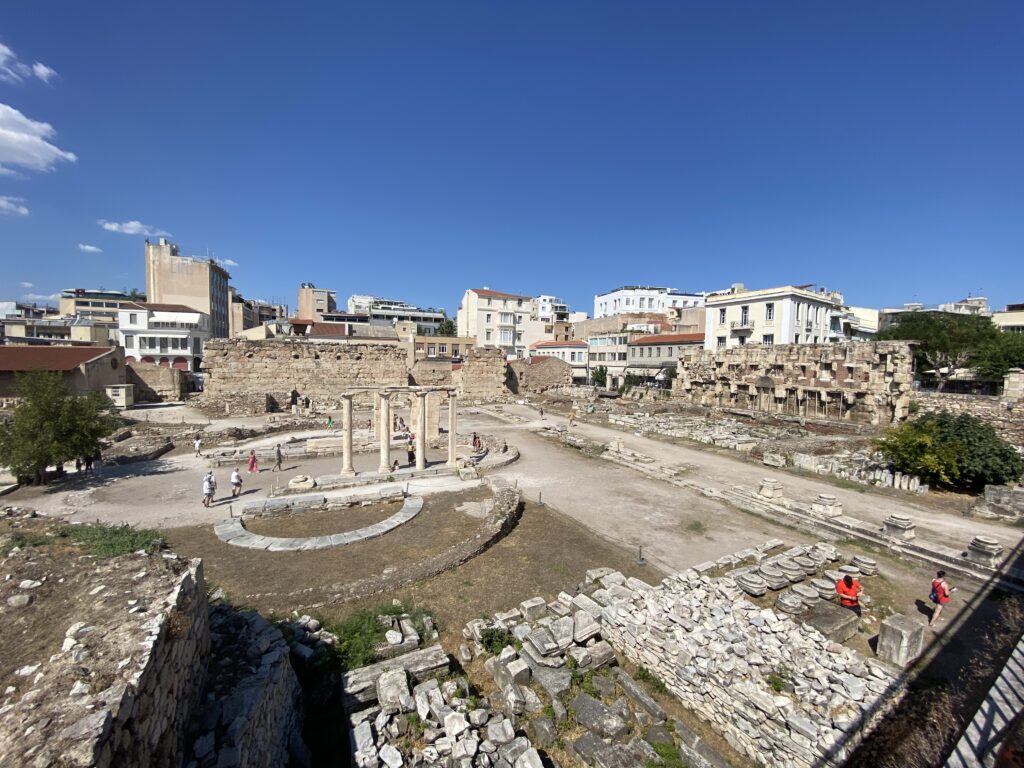
In this article we’re going to be taking a brief look at one of the great monuments of Roman Athens: Hadrian’s Library

This magnificent centre of learning at the heart of Roman Athens was, arguably, the greatest gift given to the city by Emperor Hadrian, a great philhellene (lover of all things Greek!)

We will discuss what the ‘library’ structure entailed (hint, hint! – it was much more than a library), and if you read until the end there is a special surprise in the form of a new release!

Emperor Hadrian

Roman Athens was a rich and vibrant place in its day with many monuments added to that already great city, including the Roman Agora and the Odeon of Herodes Atticus.

But the Library of Hadrian was more than a functional structure for the city. It was a symbol Athens’ great culture and tradition of learning, as well as a symbol of the respect and esteem in which Emperor Hadrian held the city.

Hadrian had the library built on his third visit to Athens in A.D. 132. It was located just north of the Roman Agora of Athens which had been built one-hundred and fifty years before.

The western facade with the propylon, the monumental entrance to the library (Wikimedia Commons)

The library was accessed by way of a grand, monumental entrance, or propylon, on the west side which was flanked by Corinthian columns of pink marble and green rock, each topped by a statue.

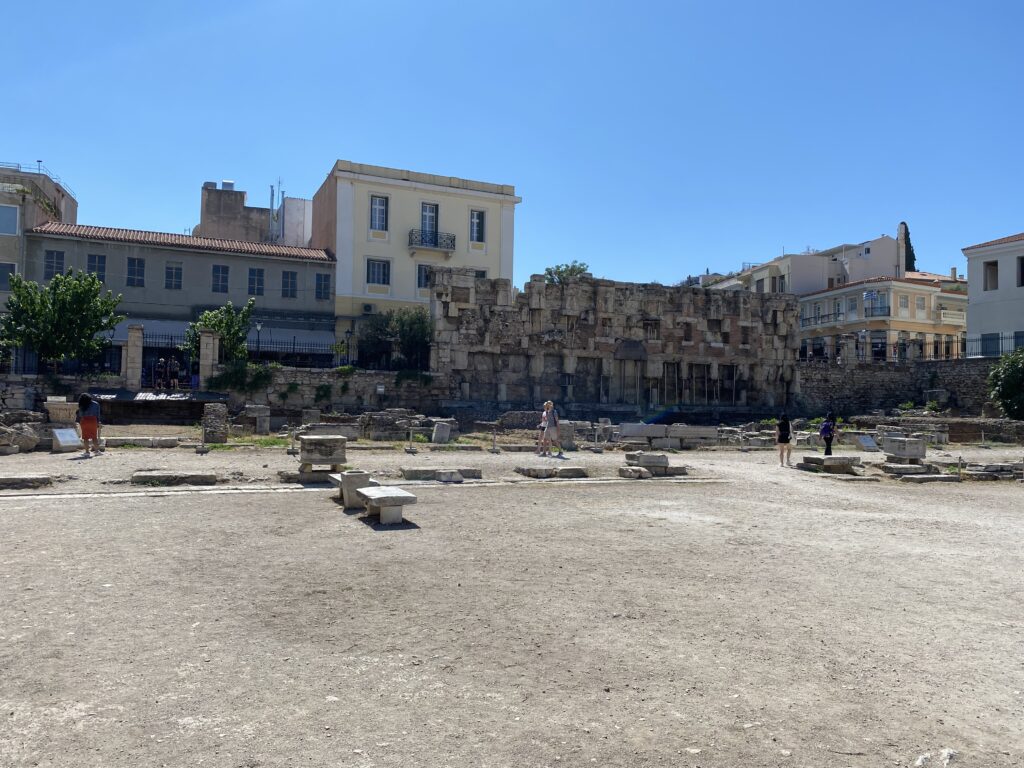
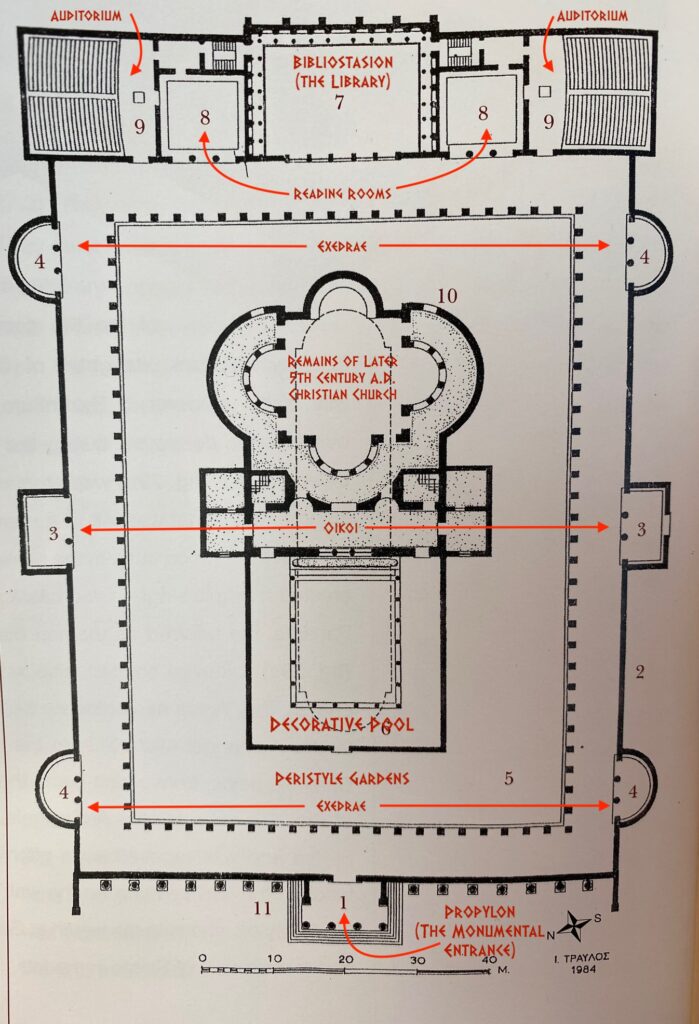
The entire complex of Hadrian’s Library was approximately 122 x 82 meters and was comprised of a high-walled enclosure with a colonnaded courtyard garden, or peristylium, at the centre of which was a large, rectangular pool, possibly surrounded by trees and benches where people could sit and read or talk.

On the north and south sides of the courtyard were two exedrae (semi-circular rooms) and one oikos (a rectangular room) which were open to the gardens and which could be used for teaching, relaxation or study.

The bibliostasion (the library) at the eastern end of the complex.

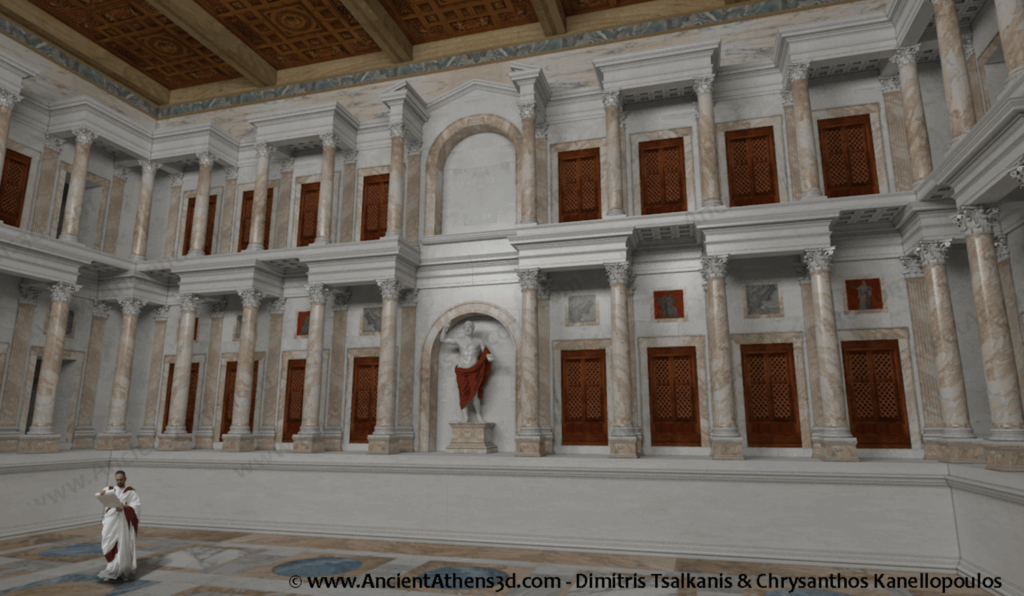
At the back of the complex, on the western side, was the bibliostasion, the library itself where the papyrus scrolls were safely kept in cedar cabinets with shelves known as armaria. 

The bibliostasion was two storeys high and had an ornate marble floor, cedar roof, and marble columns with a statue of Emperor Hadrian in a large niche in the middle.

The library held everything from histories and philological texts, to legal and state documents, and philosophical and mathematical treatises.

On either side of the bibliostasion there were also two lecture halls, or auditoria, with seating, and two large reading rooms.

Plan of Hadrian’s Library

Hadrian’s Library was, no doubt, an oasis of learning in the heart of Athens, a quiet place to study and learn, away from the raucous atmosphere of the Roman Agora which lay next door, immediately to the south.

3D model recreation of Hadrian’s Library beside the Roman Agora of Athens (courtesy of AncientAthens3D.com)

When we visited the site, it was on a scorching day in July. That morning, we got an early start but even so, by the time we arrived at the archaeological site, the temperature was already pushing forty degrees Celsius.

However, we quickly forgot about the heat as we walked through the ruins of this once-great library of Athens, making our way over the ruins of the western wall, beside the propylon, and on into the courtyard where the gardens and pool once formed a quiet place of repose and study.

At the far end, the ruins of the bibliostasion rose up before us and we imagined the armaria filled with ancient texts, many of which are lost to time.

3D model recreation of the bibliostasion with two levels of armaria (courtesy of AncientAthens3D.com)

Sadly, Hadrian’s Library did not stand for very long. In A.D. 267, it was badly damaged in the Herulian invasion of the city which laid waste to so many of Athens’ great monuments.

It was eventually repaired by the Praefectus of Illyricum, Herculius, in the early 5th century A.D., at which time a Christian church was erected where the decorative pool had been.

The library, however, would never be the same.

Inscription found onsite which mentions Emperor Hadrian

And now for the new release we mentioned earlier!

If you are unable to visit Hadrian’s Library for yourself, you can now take a tour of the archaeological site with us in our new video Hadrian’s Library – A Tour of the Archaeological Site in Athens.

You can watch this on the Eagles and Dragons Publishing YouTube and Rumble channels, or by clicking below.

We hope you enjoy the tour!

The Library of Hadrian is one of the settings in An Altar of Indignities, Book II in our multi award-winning series, The Etrurian Players.

For more information about this site and others, ancient history, and Greek Mythology, be sure to visit the Article Archive.

If you are interested in visiting Athens, Greece, and are looking for discounts on airfare, accommodation, and personal tours of the archaeological sites, be sure to visit our Ancient World Travel page by CLICKING HERE to take advantage of the deals we have curated for our followers.

To get discounted tickets (just for our subscribers!) to archaeological sites, museums and other amazing tours and experiences in Athens, click the links below:

Tiquets: https://tiqets.tpx.lt/yWNAK6g3

Viator: https://viator.tpx.lt/HY7lVjgZ

Lastly, if you’re a fan of Ancient Greece, Greek Mythology, or the history of the Roman Empire, be sure to check out Eagles and Dragons Publishing’s range of unique clothing, art, housewares and more in the AGORA on Amazon. CLICK HERE to shop now!

Thank you for reading!

Facebooktwitterpinterest

NEW VIDEO TOUR! – Epidaurus: A Tour of the Ancient Theatre

Greetings History-Lovers!

Today, Eagles and Dragons Publishing is pleased to announce the release of a new video tour on our YouTube and Rumble channels.

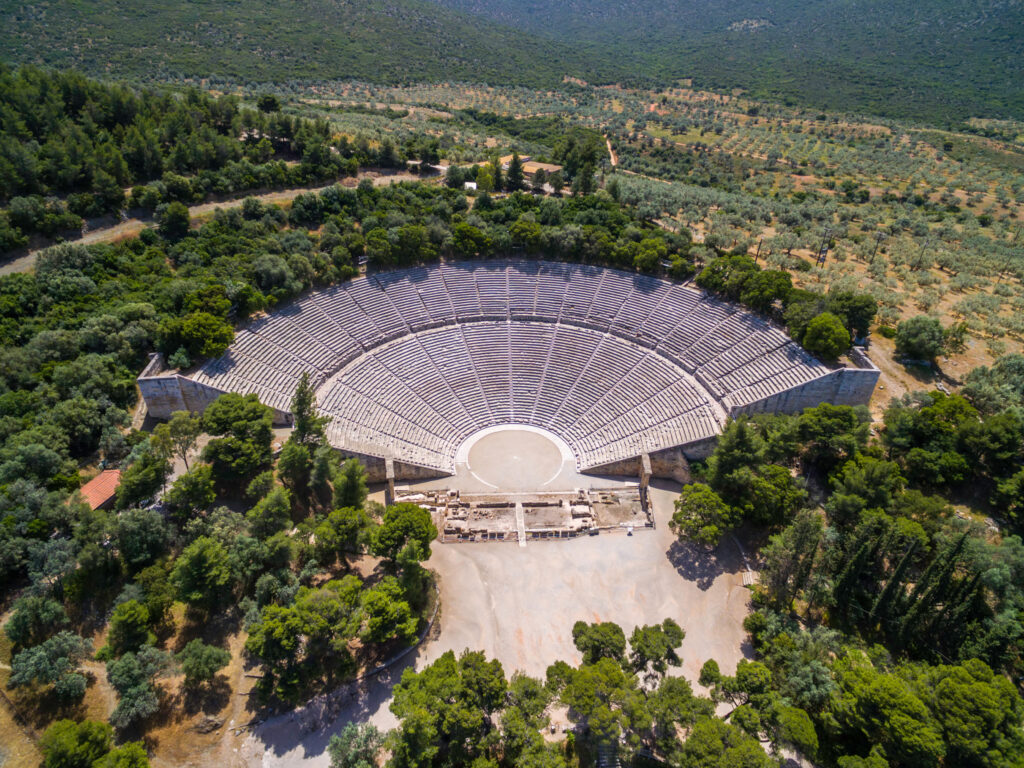
One of our favourite archaeological sites to visit when we are in the Peloponnese in Greece is the Ancient Theatre of Epidaurus.

Not only is this ancient theatre beautiful to behold, it is also a marvel of ancient engineering with amazing acoustics and a seating capacity of up to 14,000 spectators!

It was built during the 4th century B.C. by the architect Polykleitos and is still in use today for theatrical performances.

If you can’t manage a trip to this amazing site, this video tour is the next best thing.

We hope you enjoy the tour…

Be sure to check out the following articles on Ancient Epidaurus and Drama and Theatres in Ancient Greece by clicking on the titles below:

The Ancient Theatre of Epidaurus

Epidaurus: A Place of Dreams and Healing

Drama and Theatres in Ancient Athens

Also…

If you are planning on visiting the ancient theatre of Epidaurus, you can get amazing, discounted deals on tours and tickets with our travel partners at Viator at the following link:

https://viator.tp.st/7KGOTAj5 


Lastly…

If you love ancient theatre and ancient history, then be sure to check out our Ancient Theatre Collection and more on Eagles and Dragons Publishing’s AGORA on Amazon by clicking the headings below:

 Ancient Theatre Collection

Ancient History and Mythology Merchandise

Thank you for watching, and thank you for reading!


Facebooktwitterpinterest

The World of An Altar of Indignities – Part XI – Terence: From Slavery to the Roman Stage

Greetings Readers and History-Lovers!

Welcome to the final post in The World of An Altar of Indignities, the blog series in which we’ve explored some of the research that went into our latest dramatic and romantic comedy set in the Roman Empire.

If you missed Part X on the Odeon of Herodes Atticus, you can read that by CLICKING HERE.

In Part XI, we’re going to take a brief look at the life and work of the ancient playwright who is central to the story of An Altar of Indignities: Terence.

We hope you enjoy…

Terence, 9th-century illustration, possibly copied from 3rd-century original

Whatever fortune brings, we will patiently bear.

– Terence

The Etrurian Players series is about the life, loves, struggles, and theatrical misadventures of a troupe of players in the Roman Empire in the early 3rd century C.E. Every book in the series revolves around the production of a particular Roman play, usually at the Gods’ command.

In the first book in the series, the multi award-winning Sincerity is a Goddess, The Etrurian Players put on a production of Plautus’ Menaechmi. Plautus was, of course, one of the great comedic playwrights of Ancient Rome, and his plays were raucous and comical, using wordplay and slapstick comedy. He really was the playwright of the Roman people. You can read our article about Plautus HERE.

For An Altar of Indignities, the choice of playwright was clear. It had to be Terence, certainly, but there were a few questions that needed answering before embarking on this story’s escapade… Which of Terence’s plays would The Etrurian Players perform? How did Terence’s life and personality differ from other playwrights, and how would that affect the story? Was the cast up to the challenge? Was I?

In the end (but really, it’s a beginning!), I chose to tackle what some believe to be Terence’s most difficult play: The Heautontimorumenos , ‘The Self-Tormentor’.

The research into this play, and the personage of Terence, has been an adventure in and of itself. What little is known of Terence hints at a short and difficult life filled with both tragedy and a degree of adulation. But, like most writers, it is the work that often speaks for the person, and in reading and re-reading Heautontimorumenos several times over, attempting to plumb the complex depths of the work’s meaning, I came to see that Terence truly was – is – one of history’s greatest, most sympathetic and insightful authors.

Engraving of Terence, though he did not live to be so old…

Obsequiousness begets friends; sincerity, dislike.

– Terence

Who was Publius Terentius Afer (c. 185 – 159 B.C.E.)?

Let’s take a brief look at the man and his origins.

According to Suetonius in his Life of Terence, Terentius was born in Carthage in North Africa between the end of the Second Punic War and the start of the Third Punic War. Generally, his birth is thought to be around 185 B.C.E, but 195 B.C.E is also a possibility. 

We do not know who his parents were, but we do know that he was born into slavery, the ‘property’ of a Roman senator by the name of Terentius Lucanus who was kind to Terence and gave the young man an education and his freedom.

A page from a manuscript of Terence, written about 825 AD

Terence was apparently a handsome young man who proved to be quite astute and brilliant. After being given his freedom and education, he made his way to Rome where he ended up moving in important and influential literary circles and was accepted into the family of the Roman consul, Lucius Aemilius Paulus, the general who had conquered Macedonia.

The story goes that at a dinner party in Rome, Terence was asked to read his own work to the famous playwright, Caecilius Statius, who was so impressed that he invited the young man to join him for dinner. Suetonius relays the events of that evening:

He wrote six comedies, and when he offered the first of these, the “Andria,” to the aediles, they bade him first read it to Caecilius. Having come to the poet’s house when he was dining, and being meanly clad, Terence is said to have read the beginning of his play sitting on a bench near the great man’s couch. But after a few lines he was invited to take his place at table, and after dining with Caecilius, he ran through the rest to his host’s great admiration.

(Suetonius – The Life of Terence)

Sometime after this entrance onto the Roman literary scene, Terence became a part of what was known as the ‘Scipionic Circle’, an informal group of Hellenophile intellectuals, poets, philosophers, and politicians who gathered around Scipio Aemilianus (185–129 B.C.E), the adoptive grandson of Scipio Africanus. This circle was deeply influenced by Greek culture, particularly Stoic philosophy, and played a key role in the Roman reception of Hellenistic thought and literature.

Artist impression of the ‘Scipionic Circle’

It is with human life as with a game of dice: if the throw you wish for happens not to come up, that which does come up by chance, you must correct by art.

– Terence

In his relatively short life, Terence wrote six comedic plays which were produced between 166 and 160 B.C.E. All of them survive.

He wrote what were known as fabulae palliatae, comedies based on Greek plays, mostly by Menander, and perhaps Apollodorus. You can read more about Roman drama by CLICKING HERE.

Terence’s six plays are as follows:

Andria (The Girl from Andros) – first performed at the Ludi Megalenses (the Festival of Cybele at Rome) in 166 B.C.E.

Hecyra (The Mother-in-Law) – first performed at the Ludi Megalenses in 165 B.C.E.

Heautontimorumenos (also Heauton-Timorumenos, The Self-Tormentor) – first performed at the Ludi Megalenses in 163 B.C.E.

Eunuchus (The Eunuch) – first performed at the Ludi Megalenses in 161 B.C.E.

Phormio (about a clever slave) – first performed at the Ludi Romani (the Roman Games) in 161 B.C.E.

and

Adelphoe (The Brothers) – first performed at the funeral games of Aemilius Paulus in 160 B.C.E.

All of the plays were produced by one Lucius Ambivius Turpio, an actor, stage manager, patron, promoter and entrepreneur who had also produced Statius’ plays. He also performed the lead in most of Terence’s plays. The music for the plays was composed by a musician, or tibicen, named Flaccus.

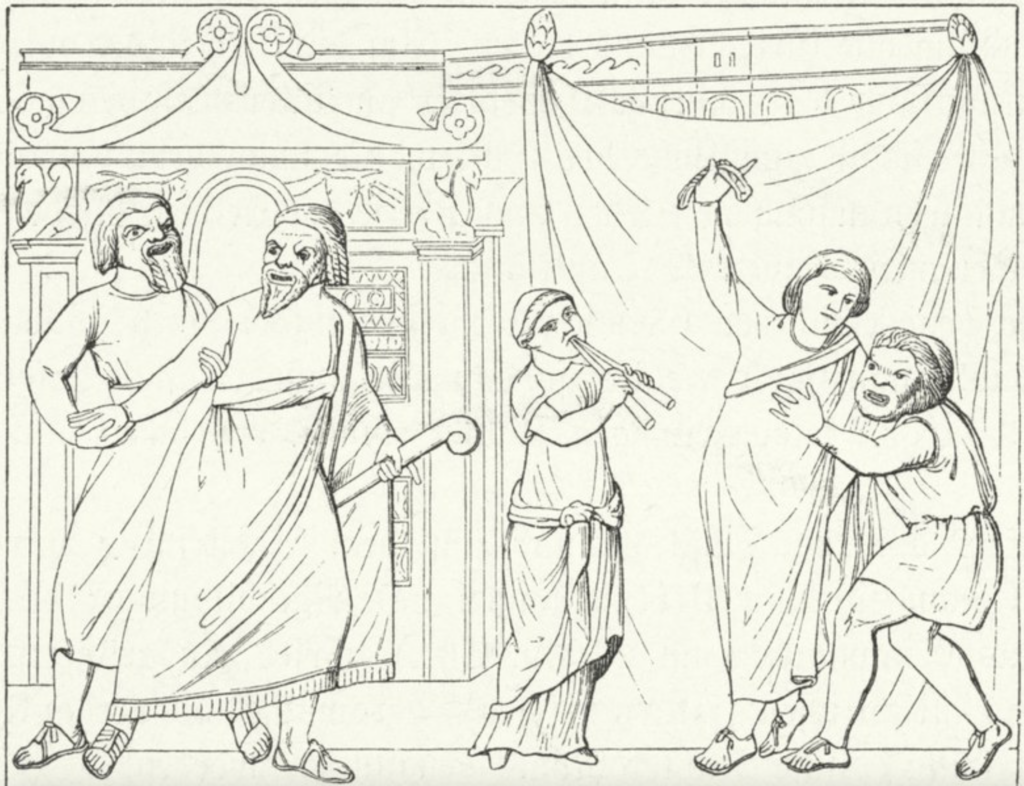
Scene from the Roman Playwright Terence’s Play Andria (engraving) by German School.

Do not do what is done.

– Terence

Terence’s work was celebrated for its refined language, realistic characterizations, and subtle humour which were a marked departure from the more boisterous style of earlier Roman comedy, including his predecessor, Plautus. His plays adapted elements of Greek New Comedy while emphasizing dialogue that was closer to natural speech. There was less musical accompaniment than in the average Roman comedy at the time, and his meters were much simpler than those used by Plautus, something that enhanced that natural feel of the dialogue. He had an uncanny ability to keep the audience’s interest.

He also used the prologus of his plays in a way that was different to others before him. Where playwrights such as Plautus used the prologus to explain the plot of the play to come, Terence used it to address criticisms of his own work such that his prologues were rhetorical in nature.

But Terence is perhaps best known for his impressive understanding of the human condition and ability to illustrate, through his dialogue and storytelling, the complexities of human behaviour. His work is truly heartfelt.

This wish to understand the human condition is perhaps best illustrated in what might be considered Terence’s most famous quote from Heautontimorumenos:

Homo sum: humani nil a me alienum puto.

I am human: nothing human is alien to me.

– Terence

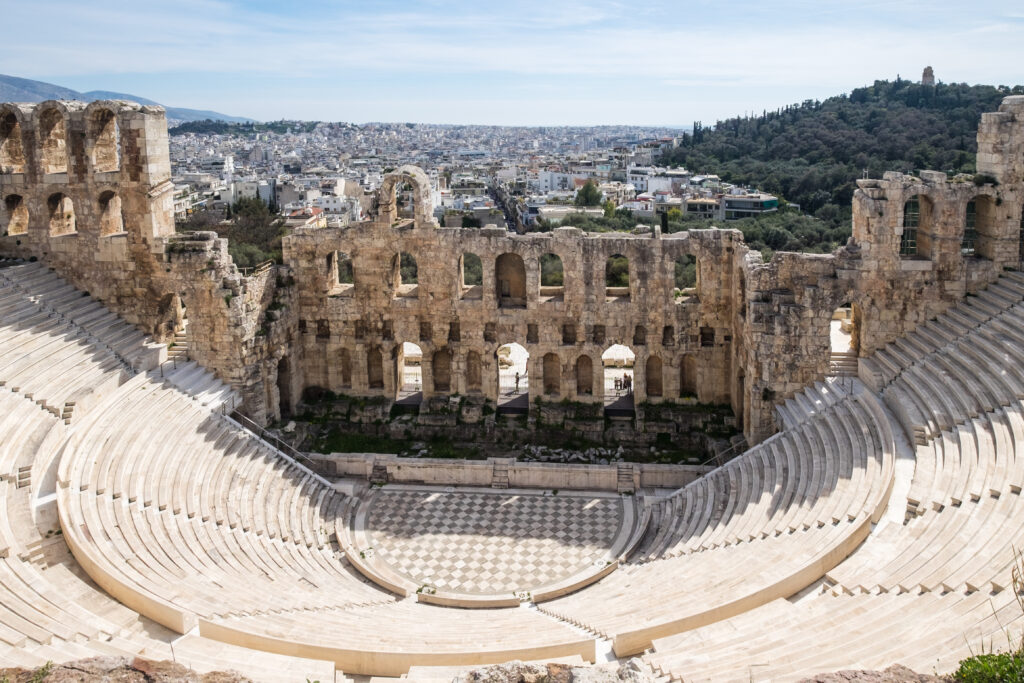
The Odeon of Herodes Atticus in Athens where the drama plays out in An Altar of Indignities

Using Heautontimorumenos (The Self-Tormentor) as the play for An Altar of Indignities was quite a deliberate choice.

As the translator, A.J. Brothers, said,  it is “the most neglected of the dramatist’s six comedies… Yet the Self-Tormentor, for all its occasional imperfections, in many ways shows Terence at his best; the plot is ingenious, complex, fast-moving, and extremely skilfully constructed, its characters are excellently drawn, and the whole is full of delightful dramatic irony. It deserves to be better known.”

In truth, the play is so complex, so nuanced, that it required several readings to fully grasp all that Terence was trying to say. Perhaps in tackling this play, I discovered that there was something of a ‘self-tormentor’ in myself!

Nevertheless, I cannot imagine having chosen a different play to be featured in this novel for, in reading through it and developing an understanding of it, I came to admire the brilliance of Terence.

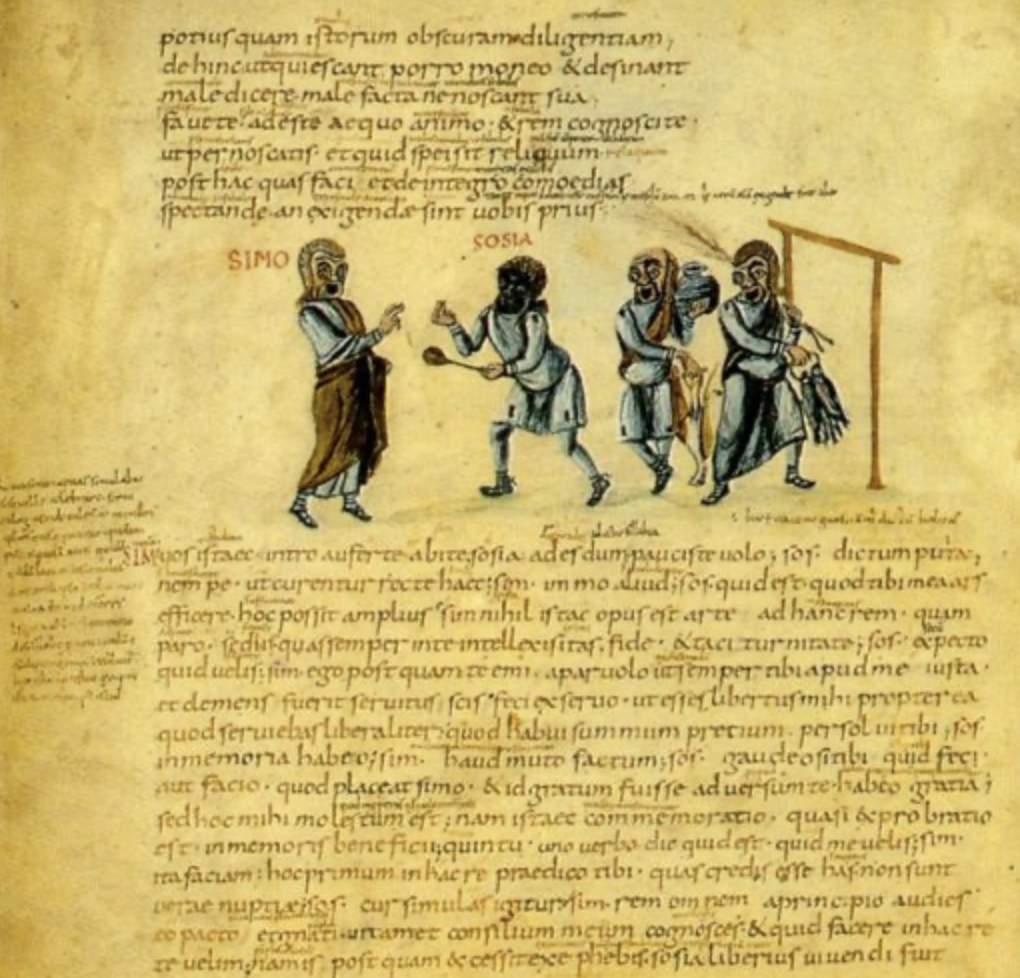
An image from a manuscript of Terence’s Heautontimorumenos depicting the characters Menedemus and Chremes

Heautontimorumenos, and Terence’s other plays, could be said to be ‘smart-funny’ as opposed to the slapstick humour of Plautus’ work. This is nicely illustrated in a review of the play by Sir Richard Steele, the 17th-18th century Anglo-Irish writer, in the Spectator (No. 502) when he aptly described the play:

“The Play was The Self-Tormentor. It is from the beginning to the end a perfect picture of human life, but I did not observe in the whole one passage that could raise a laugh. How well-disposed must that people be, who could be entertained with satisfaction by so sober and polite mirth! In the first Scene of the Comedy, when one of the old men accuses the other of impertinence for interposing in his affairs, he answers, ‘I am a man, and can not help feeling any sorrow that can arrive at man.’ It is said this sentence was received with a universal applause. There can not be a greater argument of the general good understanding of a people, than their sudden consent to give their approbation of a sentiment which has no emotion in it. If it were spoken with ever so great skill in the actor, the manner of uttering that sentence could have nothing in it which could strike any but people of the greatest humanity—nay, people elegant and skillful in observation upon it. It is possible that he may have laid his hand on his heart, and with a winning insinuation in his countenance, expressed to his neighbour that he was a man who made his case his own; yet I will engage, a player in Covent Garden might hit such an attitude a thousand times before he would have been regarded.”

Whereas Plautus’ plays had great appeal, especially among the Roman people, Terence’s plays seem to have appealed more to the upper educated classes. In fact, during the imperial period, long after his death, Terence was considered second only to Virgil as the most widely read Latin poet. His plays were read in Latin canonical schools on into the Middle Ages and beyond, and Terence himself was often quoted as an authority on human nature, including by St. Augustine who, though not always full of praise for the pagan playwright, quotes Terence thirty-eight times in his own works.

A gathering in Rome

As many men, so as many opinions.

– Terence

As praising as many were Terence and his work, he also had his detractors, and this is one reason for his use of the prologus in defending his work. Suetonius highlights some of the common gossip that swirled around Terence:

It is common gossip that Scipio and Laelius aided Terence in his writings, and he himself lent colour to this by never attempting to refute it, except in a half-hearted way, as in the prologue to the “Adelphoe”:

“For as to what those malicious critics say, that men of rank aid your poet and constantly write in concert with him; what they regard as a grievous slander, he considers the highest praise, to please those who please you and all the people, whose timely help everyone has used without shame in war, in leisure, in business.”

Now he seems to have made but a lame defence, because he knew that the report did not displease Laelius and Scipio; and it gained ground in spite of all and came down even to later times. Gaius Memmius in a speech in his own defence says: “Publius Africanus, who borrowed a mask from Terence, and put upon the stage under his name what he had written himself for his own amusement at home.”

– Suetonius (The Life of Terence)

Julius Caesar too criticized Terence, showing himself to not be the greatest of fans:

Thou too, even thou, art ranked among the highest, thou half-Menander, and justly, thou lover of language undefiled. But would that thy graceful verses had force as well, so that thy comic power might have equal honour with that of the Greeks, and thou mightest not be scorned in this regard and neglected. It hurts and pains me, my Terence, that thou lackest this one quality.

– Julius Caesar

Print from a manuscript of Terence’s work

Despite the few critics of his work, Terence’s plays have stood the test of time, being used to teach Latin in schools and influencing great playwrights. Even William Shakespeare is said to have been influenced by Terence’s comedy and scenic structure in plays such as The Taming of the Shrew, Love’s Labour’s Lost, Othello, and The Merry Wives of Windsor.

Despite the success in Rome of his six initial plays, Terence, for some reason, felt that he had to leave Rome and Italy, and appears to have made his way to Greece, the birthplace of drama:

After publishing these comedies before he had passed his twenty-fifth year, either to escape from the gossip about publishing the work of others as his own, or else to become versed in Greek manners and customs, which he felt that he had not been wholly success­ful in depicting in his plays, he left Rome and never returned.

– Suetonius (The Life of Terence)

Sadly, Terence seems not to have survived for long, leaving this world at far too young an age at twenty-five years (or thirty-five, depending on the birth date). It is supposed that either he died in a shipwreck on the journey to or from Greece, or that he died of illness when in Greece while seeking to increase his knowledge and skill in the home of the playwrights he had so admired.

Suetonius writes that he was to return “from Greece with one hundred and eight plays adapted from Menander”, but due to his death, or the wrecking of the ship that contained his new works, all of them were lost. And so, the six, brilliant plays of Terence’s that have come down to us today are all that we have of this wonderful, young Roman poet’s work.

Artist impression of Terence writing in Athens along the banks of the Ilissos river

It does indeed seem tragic that a poet and artist who was so lauded after his death, appeared to struggle so much in life, despite some brief, shining moments.

Naught availed him Scipio, naught Laelius, naught Furius, the three wealthiest nobles of that time. Their aid did not even give him a rented house, to provide at least a place where his slave might announce his master’s death.

– Suetonius (The Life of Terence)

In An Altar of Indignities, it is this seemingly unfinished and, perhaps, glorious but ultimately unfulfilled life of the artist that is explored, and this is in large part due to Terence and his masterpiece, Heautontimorumenos.

It has been an adventure and a privilege to write about Terence, and explore his life and works. I think it fitting then to end with a quote by one of Terence’s most renowned admirers from the world of Ancient Rome:

Thou, Terence, who alone dost reclothe Menander in choice speech, and rendering him into the Latin tongue, dost present him with thy quiet utterance on our public stage, speaking with a certain graciousness and with sweetness in every word.

– Cicero

Thank you for reading.

Well, that is the end of The World of An Altar of Indignities. The curtain has fallen.

If you would like to read the plays of Terence for yourself, you can download a complete, FREE version for any device from Project Gutenberg by CLICKING HERE. To read Terence’s masterpiece, Heautontimorumenos (The Self-Tormentor), you can do so on-line HERE.

We hope you have enjoyed this blog series, and that you enjoy An Altar of Indignities if you read it. If you have read it, please leave a review on the Eagles and Dragons Publishing website or on the store web page where you purchased the book. Reviews are a wonderful way for new readers to find this dramatic and romantic comedy of ancient Rome and Athens!

If you missed any of the posts in this eleven-part blog series, you can read all of them on one web page by CLICKING HERE.

An Altar of Indignities: A Dramatic and Romantic Comedy of Ancient Rome and Athens is available in ebook, paperback and deluxe hardcover editions from all major online retailers, independent bookstores, brick and mortar chains, and your local public library.

CLICK HERE to buy a copy and get the ISBN# for the edition of your choice.

Brace yourselves! The Etrurian Players are back!

Facebooktwitterpinterest

The World of An Altar of Indignities – Part X – The Odeon of Herodes Atticus

Greetings Readers and History-Lovers!

Welcome back to The World of An Altar of Indignities, the blog series in which we’re taking a look at some of the research that went into our latest novel set in the Roman Empire.

If you missed Part IX on Spirits in Roman Religion, you can read that by CLICKING HERE.

In Part X, we’re going to take a brief look at one of the climactic settings in An Altar of Indignities: the Odeon of Herodes Atticus.

We hope you enjoy…

This is unrivalled in size and magnificence, and was built by Herodes, an Athenian, in memory of his dead wife.

(Pausanias, Description of Greece, 7.20)

When writing historical fiction, bringing the setting of the time period and locations to life is everything. It anchors the reader in the chosen period and transports them.

Over the course of An Altar of Indignities, which is set in early third century Roman Athens, there have been many locations that have had a part to play, including the Parthenon, the Roman Agora, the Temple of Artemis Agrotera and several more. However, one could say that the location with the most important role in our dramatic and romantic comedy of ancient Rome and Athens is the Odeon of Herodes Atticus.

The Odeon of Herodes Atticus (c. 1870)

This theatre, the youngest of ancient Athens, is where The Etrurian Players are set to undertake their exciting, climactic performance before the Athenian people at the end of the Panathenaic Games. It is a place of haunting realization and transformation, a place of entertainment and of comic chaos.

For our Etrurian theatre troupe, the Odeon of Herodes Atticus is the setting of one of their most difficult trials to date…

So… What was this theatrical structure of ancient Athens, and how did it differ from the other theatres in the city?

The Odeon of Herodes Atticus was a covered theatre located on the southwestern slope of the Acropolis of Athens. Herodes Atticus, the wealthy and well-connected Greek who lavished gifts on Athens as well as other places across the Roman Empire, built the odeon in honour of his recently deceased wife, Annia Regilla, in 161 C.E. If you missed the article about Herodes Atticus, you can read that by CLICKING HERE.

While the Romans did perform plays and put on theatrical productions in odea, they were primarily used for musical performances and poetry recitations.

The Odeon of Herodes Atticus was the third odeon built in Athens, the previous two being the Odeon of Pericles, built directly beside the Theatre of Dionysus, and the Odeon of Agrippa, which was built in the middle of the ancient Agora.

This impressive Roman odeon seated 5000 spectators in a marble, semi-circular cavea that had thirty-two rows of seats divided into two horizontal sections with a gallery at the top. The marble orchestra before the raised stage, or pulpitum, was also a semi-circle. The cavea curved around this to the edges of the stage, enveloping the orchestra. Stairs at the sides of the pulpitum led to the upper level of the cavea. High above, the ceiling of the odeon was constructed of cedar from Lebanon and roofed with tiles.
Recreation of the Scaena Frons of the Odeon of Herodes Atticus (from Ancient Greece: the famous monuments Past and Present – by Muses Publications)

Like most Roman theatres, the Odeon of Herodes Atticus had an elaborate scaena frons that was part of the twenty-eight meter high stage house that faced the audience and which was part of the scene. It was made up of three levels, two of which survive to this day. On the bottom level of the scaena frons, there were columns and statues in niches, and three doorways which could serve as part of the set for performances and from which the musicians and actors could come and go. The first two storeys were faced with marble while the third storey was dressed stone.

On the second and third storeys of the scaena frons, there were aspidal (arched) openings with statues flanked by pilasters. Behind these there was a gallery, or metaskenio, from where other performers could participate or look on. The second and third storeys of the scaena frons were reached by way of staircases that flanked the pulpitum.

Though smaller than other theatres around the Roman Empire and the Greek world, this odeon was an impressive addition to the polis where theatre was born.

At the back of the scaena frons of the odeon was a closed stage-house or basilica where set pieces could be kept and performers could prepare before taking to the stage. Today, this is visible as one approaches the Odeon of Herodes Atticus from the pedestrian street of Dionysiou Areopagitou. It is believed that this part of the odeon may have had a mosaic floor.

The Odeon of Herodes Atticus was a part of a sort of ancient theatre district on the southern slope of the Acropolis. It was connected to the great, open-air theatre and sanctuary of Dionysus by a long, covered stoa built by Eumenes II, King of Pergamon, around 160 B.C.E. This stoa was 163 meters long and provided shelter for theatre goers up until the third century C.E. Nearby, there were also fountains and monuments to past theatrical performers and patrons of Athens such as Thrasyllos and Nikias. In addition to an Asklepion (a healing sanctuary) behind the Stoa of Eumenes, there were fountains and a sanctuary of the Nymph.

Plan of the southern slope of the Acropolis of Athens (from South Slope of the Acropolis – Publication of the Association of Friends of the Acropolis) – labels added

The Odeon of Herodes Atticus was certainly a magnificent addition to the Goddess Athena’s city.

Sadly, like the stoa and so many other monuments of beauty and art in Athens, the Odeon of Herodes Atticus was gravely damaged during the Herulian invasion of the city in 267 C.E., a little over one hundred years after its completion.

Thankfully, between 1950 and 1961, the seating of the cavea was restored using Pentelic marble, and the orchestra floor was restored with marble from Mount Hymettus.

Modern performance during the Athens Epidaurus Festival

As a result, the Odeon of Herodes Atticus lives on as it is the primary venue for the modern Athens Epidaurus Festival which runs from May to October every year, and which has featured such world-renowned artists as Maria Callas, Luciano Pavarotti, Andrea Boccelli, Nana Mouskouri, Vangelis, Frank Sinatra and many others.

If you are ever in Athens (or Epidaurus!) during the festival, try and get tickets to one of the performances in this ancient odeon for an experience beneath the timeless stars that you will never forget.

Thank you for reading.

An Altar of Indignities: A Dramatic and Romantic Comedy of Ancient Rome and Athens is available ebook, paperback and deluxe hardcover editions from all major online retailers, independent bookstores, brick and mortar chains, and your local public library.

CLICK HERE to buy a copy and get ISBN#s for the edition of your choice.


Facebooktwitterpinterest